 Pyeongye
Artwork · 15th century · Giovanni di ser Giovanni Guidi
LeoTurn on Magnifier at the lower right and move slowly across the painting.
Full screen opens it edge to edge.Tap the painting to fill the screen.
Spread two fingers to look closer.
The Triumph of Fame; (reverse) Impresa of the Medici Family and Arms of the Medici and Tornabuoni Families
Giovanni di ser Giovanni Guidica. 1449Tempera, silver, and gold on wood
At a glance
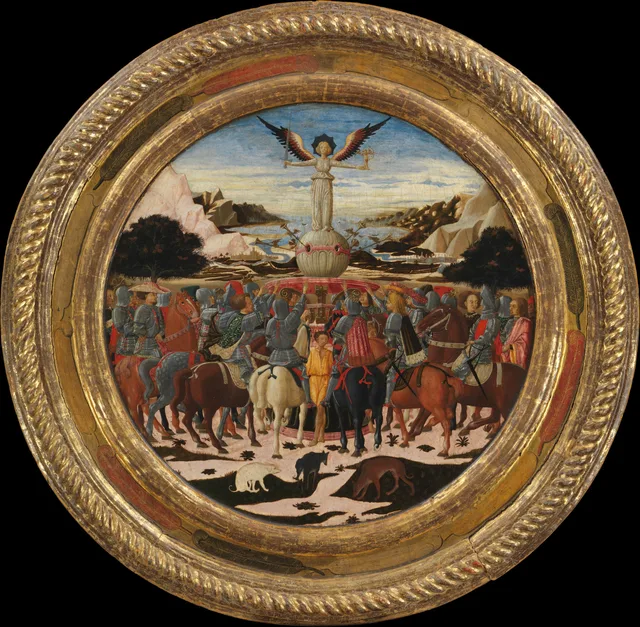
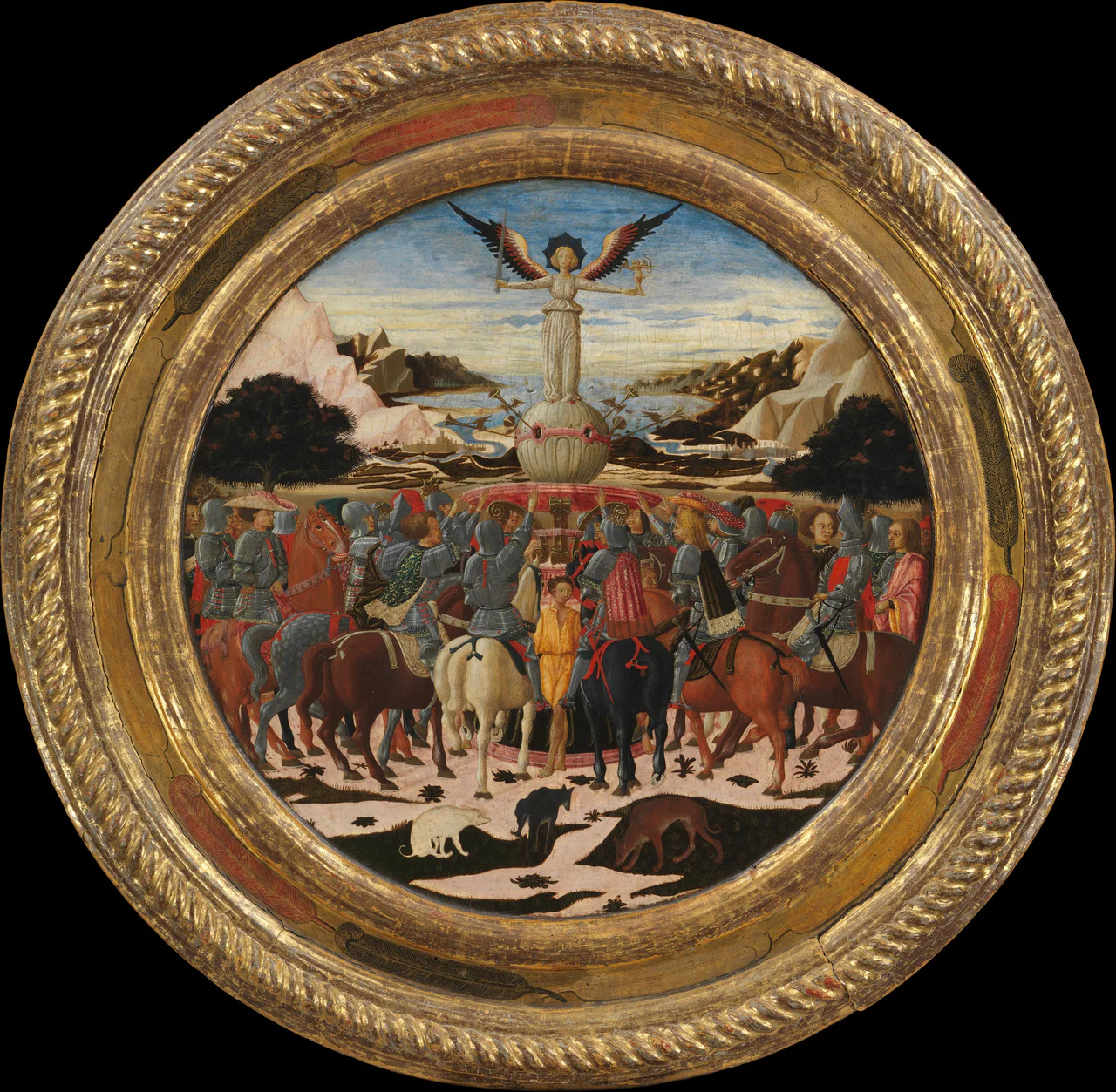
- A winged figure of Fame stands high above the land holding a sword and a tiny Cupid, while knights in armor on horseback reach their hands up toward her.
- The Florentine painter Giovanni di ser Giovanni Guidi, nicknamed Scheggia, made it around 1449 in tempera, silver, and gold on wood.
- It is known as a birth tray made to celebrate the birth of Lorenzo de' Medici in 1449, and its back is painted with the Medici family emblem and coats of arms.
Reading the picture
5 places to look closer
Tap a number on the painting to jump to its note, or a close-up to see that spot in the whole picture.
Zoom in on Fame in the sky. She spreads huge wings striped with black, red, and gold. In her right hand she holds a sword, and on her left hand stands a little Cupid with a bow. Behind her head is a dark, disk-like shape, and her face is calm and blank.
Look at the round base she stands on. It is a ribbed ball, and from holes around its middle, small winged trumpets stick out at an angle. Trumpets stand for fame, the sound of a name being spread far and wide.
Zoom in on the knights in the middle. Men in silver armor stretch their arms up toward Fame. The painter picked out every joint of the plate armor and the edges of the chain mail. Among them stands a barefoot boy in a yellow tunic.
Look at the ground below. On the pinkish earth stands a black dog, and on the right a brown dog lowers its head to sniff the ground. On the left, a white dog keeps its head low too. While the scene above is solemn, the dogs are busy with their own business.
Zoom in on the frame. Inside the twisted rope pattern, long feathers are painted. Red feathers and dark ones take turns around the circle. Feathers like these appear in an emblem the Medici family liked to use.
When it was painted
On New Year's Day 1449, a baby boy was born into the Medici family of Florence. His father was Piero de' Medici and his mother was Lucrezia Tornabuoni. His grandfather Cosimo ran the family bank and was the leading figure in the city. They named the baby Lorenzo.
Florentines had a custom for births like this one. A round painted tray, first used to carry food to the new mother, became a keepsake for the house. Turn this tray over and you find the coats of arms of the Medici and the Tornabuoni side by side, a record of the marriage that joined the two families.
The man who painted it, Scheggia, was in his early forties. His older brother was Masaccio, the painter who changed Florentine art and then died in Rome in 1428, at just twenty-six. Scheggia's nickname means splinter. He made his living painting wedding chests, birth trays, and other furnishings for wealthy Florentine homes.
The subject comes from Petrarch's poem the Triumphs. In it, Fame rides out in triumph after Death, because a good name outlives the body. For a newborn heir, it was a clear wish: may your name last.
The wish came true. Lorenzo lost his father at twenty and took over the leadership of Florence. People called him Lorenzo the Magnificent. When he died in 1492, an inventory of his belongings listed this tray in his own rooms in the Medici palace. More than five centuries later, in 1995, it entered the Metropolitan Museum of Art in New York.
Look up at Fame once more. The knights stretch toward her and never quite reach. That was the picture the grown-up Lorenzo kept in his room.
Questions to think about
- Look for itAmong all the helmets, can you find a man wearing a wide-brimmed hat?
- Why?Why would a gift for a newborn baby show a sword-holding Fame and a crowd of armed knights instead of a baby?
- What about you?This baby was handed a wish for fame on the day he was born. When adults expect success and fame from children early on, is that a source of strength for them, or a weight to carry?
Same period
Painted around the same time,
somewhere else
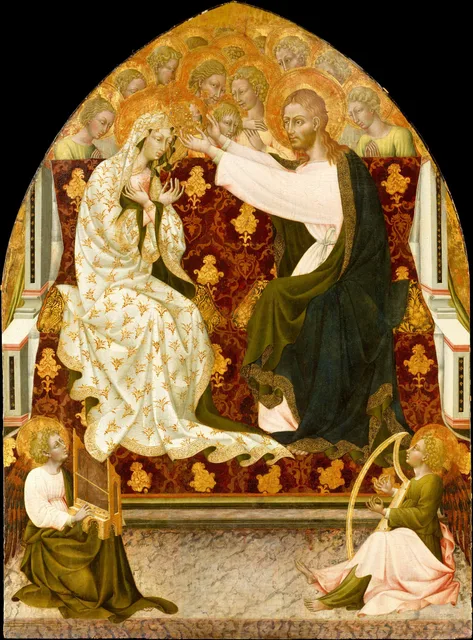 Coronation of the VirginGiovanni di Paoloca. 1455
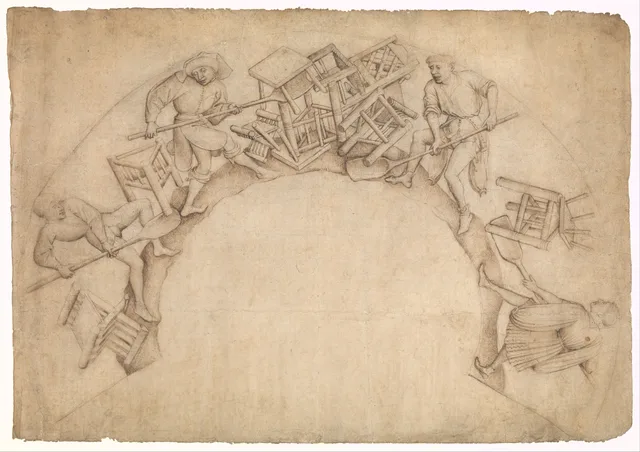 Men Shoveling Chairs (Scupstoel)Vranke van der Stockt1444–50
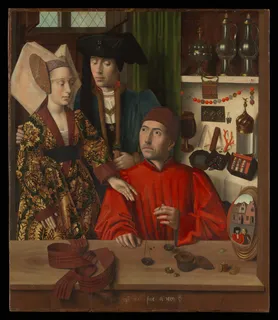 A Goldsmith in his ShopPetrus Christus1449
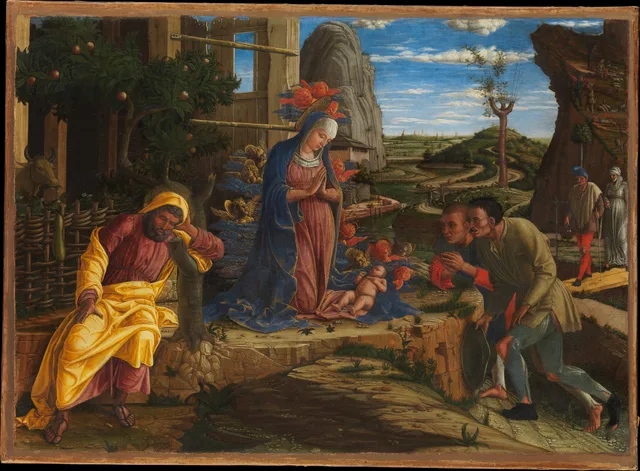 The Adoration of the ShepherdsAndrea Mantegnashortly after 1450
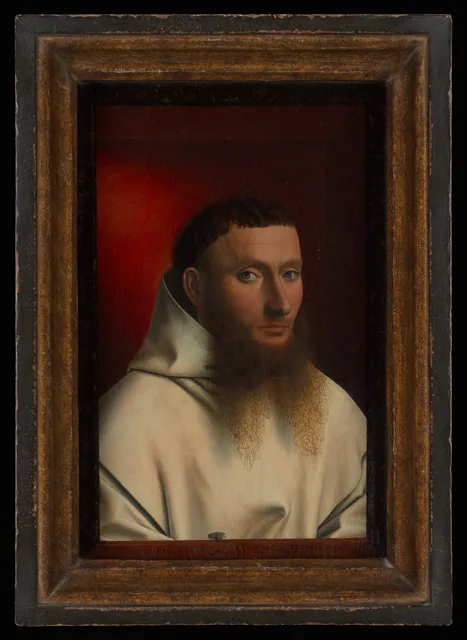 Portrait of a CarthusianPetrus Christus1446
 Portrait of a Woman with a Man at a CasementFra Filippo Lippica. 1440
Too good to keep to yourself
This painting,
for someone who comes to mind
They open it at full size
and see every brushstroke.
About this work
- Artist
- Giovanni di ser Giovanni Guidi · 1406–1486
- Date
- ca. 1449
- Medium
- Tempera, silver, and gold on wood
- Collection
- The Metropolitan Museum of Art
- Image
- Original long edge 3885px · shown at 2560px
- Original
- View on the museum's website ↗