Pyeongye

Painters · 19th century
George Inness
1825–1894
An American landscape painter who started out painting a railroad's commission and ended up painting light that dissolves into mist, stillness and mood.
Scenes from a life
The life of George Inness,
scene by scene
- 1851Rome
In 1851, a twenty-six-year-old New York painter named George Inness crosses the Atlantic for the first time. The man who makes it possible is Ogden Haggerty, a New York businessman and Inness's first patron. Haggerty helps him get a passport and pays for the trip to Italy.
In Italy he studies the seventeenth-century landscapes of Claude Lorrain and Nicolas Poussin. Their wide skies and calmly ordered fields begin to work their way into his brush.
- 1855Pennsylvania
Around 1855, a railroad orders a painting from Inness. It is the Delaware, Lackawanna and Western Railroad.
Inness paints the valley near Scranton, Pennsylvania, where the company had its first roundhouse. A train puffs smoke as it crosses a field of cut stumps. The picture is The Lackawanna Valley. Years later, it would turn up somewhere very far away.
- 1864Eagleswood, New Jersey
In the fall of 1863, the Eagleswood community at Perth Amboy, New Jersey, invites Inness to teach drawing. Its founder, Marcus Spring, even builds a stone house for the family. The Innesses live there from about 1864 until 1867.
A neighbor is the painter William Page. Page introduces Inness to the teachings of the Swedish thinker Emanuel Swedenborg. By the time Inness leaves, he is a committed believer. The idea that the visible world carries spiritual meaning guides his painting for the rest of his life.
- 1870Rome
In 1870, Inness heads back to Italy. This time the trip is a business deal. Under an arrangement with his Boston dealers, Williams & Everett, he sends them paintings from Europe and receives a living allowance in return.
American buyers love Italian views. So Inness paints well-known sites around Rome, such as Tivoli and the Alban Hills. He spends several years abroad on this trip before coming home.
- 1891Mexico City
In 1891, Inness walks into a curiosity shop in Mexico City. There he finds a familiar picture. It is The Lackawanna Valley, the railroad painting he made decades earlier.
The company had sold it off along with a lot of office furniture, and somehow it had drifted to Mexico. Inness buys it back. In a letter, he wrote that he had picked it up in an old curiosity shop in Mexico City. Today it hangs in the National Gallery of Art in Washington.
- 1894Scotland
On August 3, 1894, while traveling in Europe, Inness dies at sixty-nine in Bridge of Allan, a spa town in Scotland. Back in New York, the National Academy of Design holds his funeral service. He had long been one of its members.
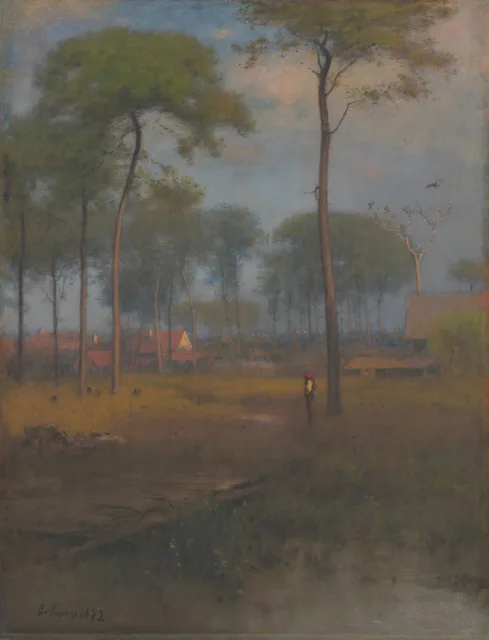
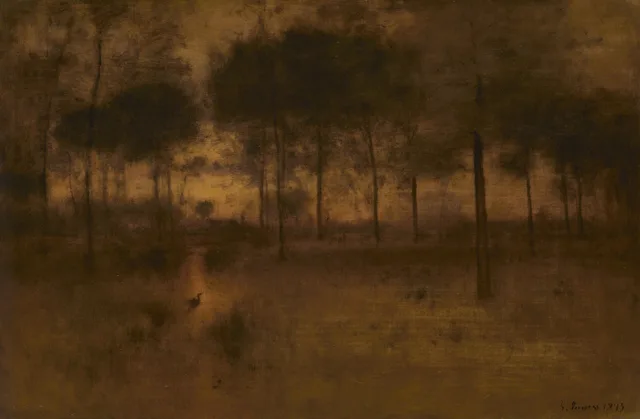
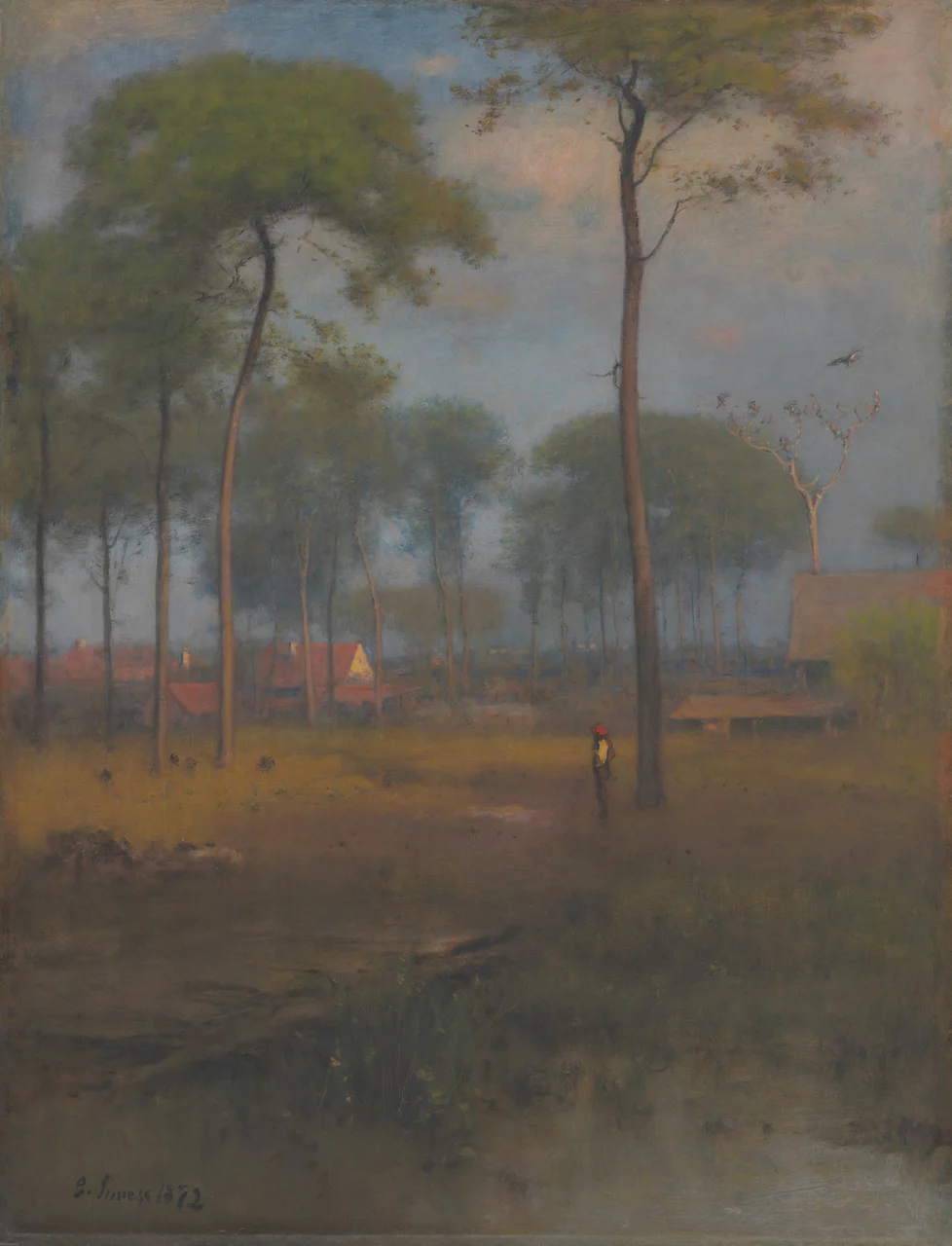
In his last years he spent the winters in Tarpon Springs, a small town on Florida's Gulf Coast, where he kept a house and studio. A sunrise among tall pines and a lone heron come from this time. Both paintings entered the Art Institute of Chicago in 1911, and both are on this site.
 Painted around this timeEarly Morning, Tarpon Springs
People around them
- Ogden Haggertya New York businessman and his first patron, who paid for his first trip to Italy in 1851.
- Marcus Springfounder of the Eagleswood community, who hired Inness to teach and built a house for his family.
- William Pagea painter and neighbor at Eagleswood who introduced him to Swedenborg's teachings.
- George Inness Jr.his son, also a painter, who later published a book about his father's life and letters.
Works