 Pyeongye
Artwork · 16th century
LeoTurn on Magnifier at the lower right and move slowly across the painting.
Full screen opens it edge to edge.Tap the painting to fill the screen.
Spread two fingers to look closer.
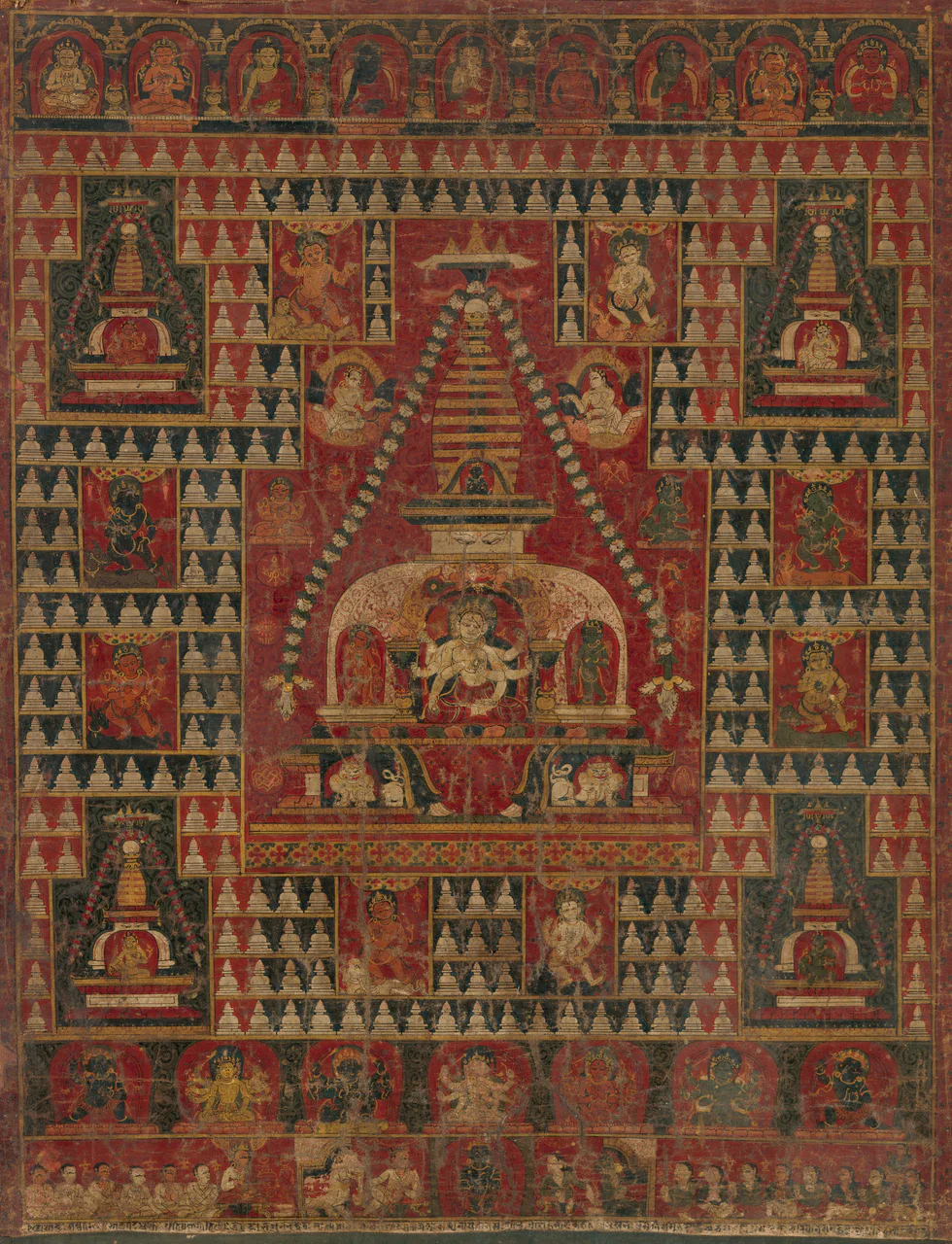
Ushnishavijaya Enthroned in the Womb of a Stupa
Unknown artist · Nepaldated 1510–19Distemper on cloth73.3 × 58.7 cm
At a glance
- The white goddess Ushnishavijaya sits inside the round body of a great stupa, surrounded by countless tiny stupas packed into every space.
- An unknown painter in Nepal made it in the 1510s with distemper on cloth.
- Along the bottom are the people who offered it and a line of writing, clues to who made it and why.
Reading the picture
5 places to look closer
Tap a number on the painting to jump to its note, or a close-up to see that spot in the whole picture.
Look into the opening at the heart of the central stupa. A white goddess sits on a lotus. She has many arms, and her hands fan out on both sides. She is usually shown with three faces and eight arms, but in this painting her side faces are hard to make out.
Zoom in on the spire rising above her. Its pointed body is built from stacked bands of yellow and red. From the top, garlands of white flowers hang down on both sides. Decorating a stupa with flowers is a way of making an offering.
Look at the small stupa in the upper left corner. On the square block above its dome, a pair of eyes is painted. The great stupas of the Kathmandu Valley have eyes painted on them in just the same way. Inside its dome sits yet another deity.
Now zoom in along the right edge. White stupas stand in rows, as if set on shelves. Little stupas like these fill nearly every gap in the painting. It is as if the painter built a whole forest of stupas on a single cloth.
Look at the bottom row on the left. A line of men sit side by side, hands pressed together. At the far right sits another row, several with long hair. They appear to be the family who offered the painting, and below them runs a band of writing.
When it was painted
Do you feel like counting all those little white stupas? For the people in this painting, the number mattered. The goal was one hundred thousand.
Look at the bottom row. The museum explains that it shows a consecration scene from the Lakshachaitya ritual. Lakshachaitya means the offering of one hundred thousand stupas. The tiny stupas packed into every gap of the painting call that great offering to mind.
This ritual was an important event in Newar Buddhism, the Buddhism of Nepal's Kathmandu Valley. The Newars call painted cloths like this one paubha. When it was made, in the early 1500s, the Kathmandu Valley was ruled by kings of the Malla dynasty.
The goddess seated in the heart of the great stupa, Ushnishavijaya, is the ushnisha, the rounded crown of the Buddha's head, imagined as a goddess. People prayed to her for long life. So this one cloth brings together the merit of a hundred thousand stupas and the goddess of long life.
Paintings like this were made more than once in the valley around this time. The Art Institute of Chicago owns a similar one painted between 1508 and 1518. The Met dates this painting to between 1510 and 1519, and it bought the work in 2012 from the Zimmerman Family Collection.
Look at the whole cloth again. Rows of stupas like goods on shelves, gods seated inside stupas, and along the bottom, people with their hands pressed together. All that crowding is a way of trying to fit a hundred thousand into a single painting.
Questions to think about
- Look for itHow many stupas with painted eyes can you find?
- Why?Why do you think the painter filled every gap around the goddess with tiny stupas instead of leaving some empty space?
- What about you?These donors offered a painting of a goddess of long life; what would you take the time to make for someone you love?
Same period
Painted around the same time,
somewhere else
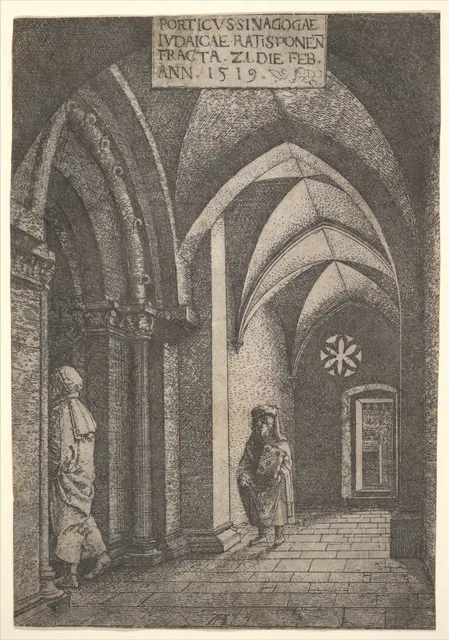 The Entrance Hall of the Regensburg SynagogueAlbrecht Altdorfer1519
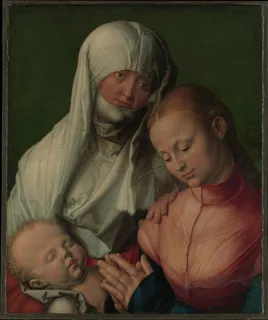 Virgin and Child with Saint AnneAlbrecht Dürerprobably 1519
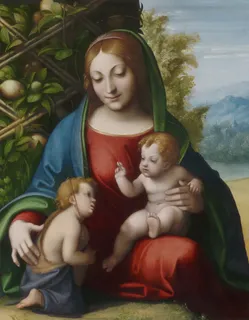 Virgin and Child with the Young Saint John the BaptistAntonio da Correggioc. 1515
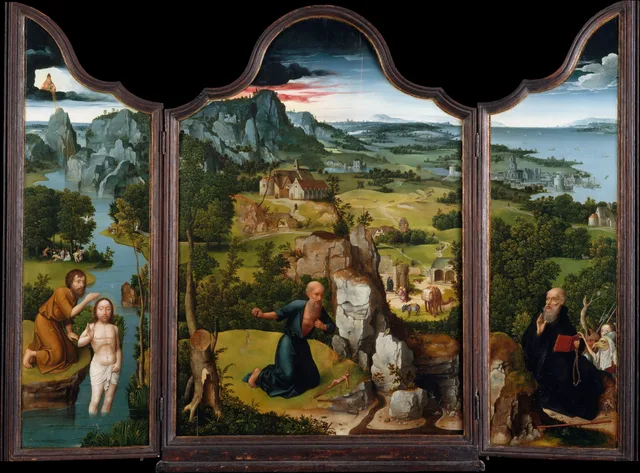 The Penitence of Saint JeromeJoachim Patinirca. 1515
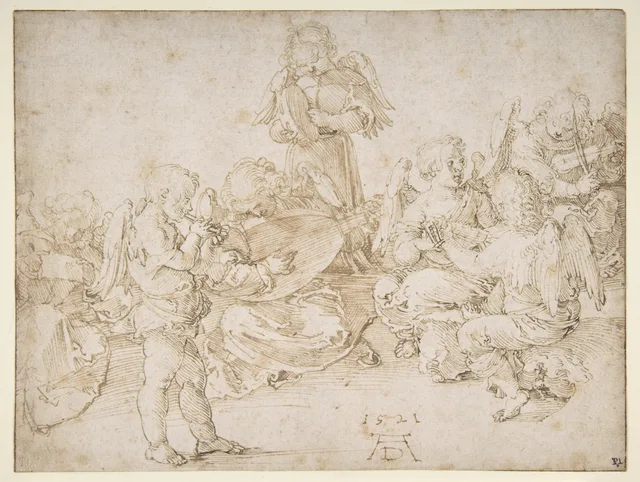 Music-Making AngelsAlbrecht Dürer1521
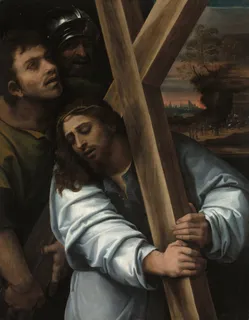 Christ Carrying the CrossSebastiano del Piomboc. 1515–17
Too good to keep to yourself
This painting,
for someone who comes to mind
They open it at full size
and see every brushstroke.
About this work
- Artist
- Unknown artist · Nepal
- Date
- dated 1510–19
- Medium
- Distemper on cloth
- Size
- 73.3 × 58.7 cm
- Culture
- Nepal
- Collection
- The Metropolitan Museum of Art
- Image
- Original long edge 4000px · shown at 2560px
- Original
- View on the museum's website ↗