 Pyeongye
Artwork · 19th century · Mary Cassatt
LeoTurn on Magnifier at the lower right and move slowly across the painting.
Full screen opens it edge to edge.Tap the painting to fill the screen.
Spread two fingers to look closer.
At a glance
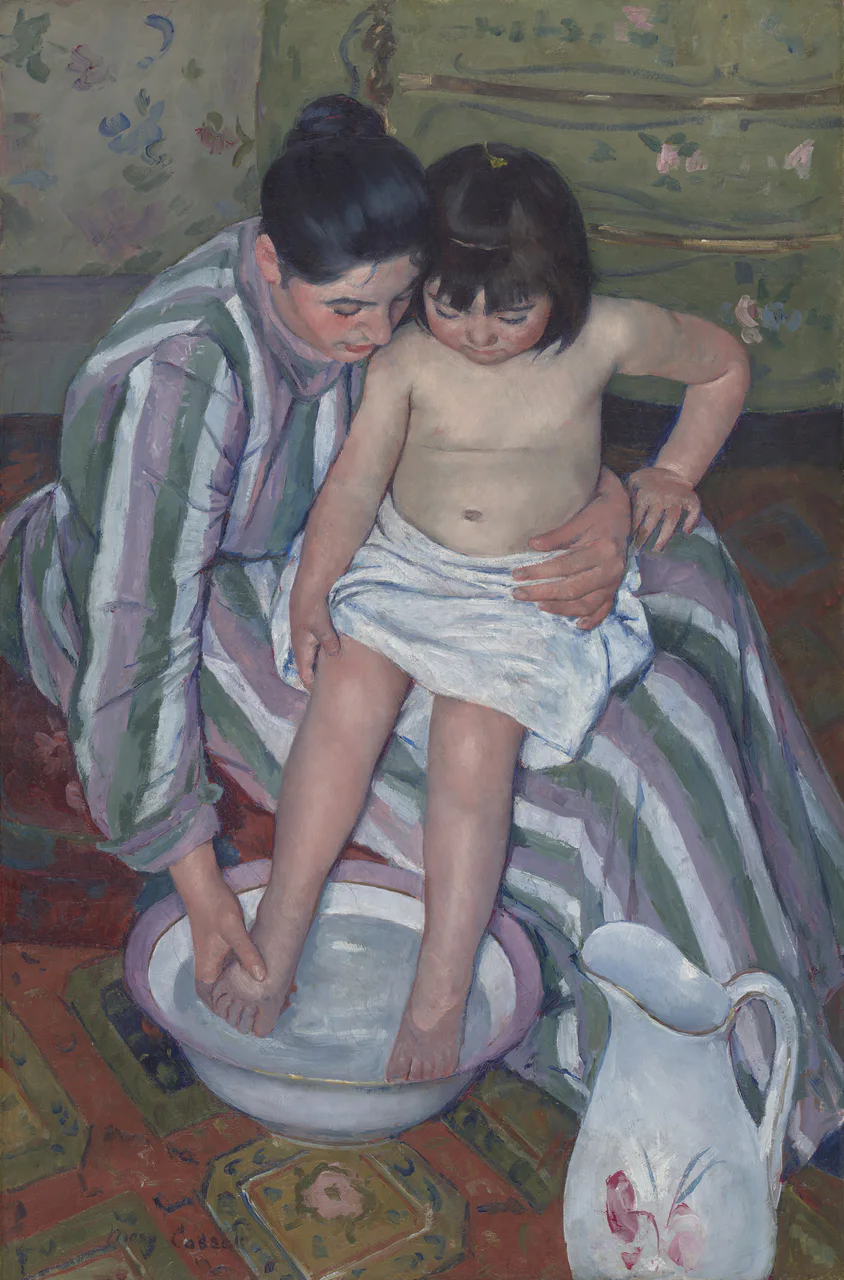
- A woman holds a little girl on her lap and washes the child's foot in a basin of water.
- Mary Cassatt, an American painter based in Paris, painted it in oil on canvas in 1893.
- The view from above and the patterns filling every corner show how closely she had studied Japanese woodblock prints.
Reading the picture
5 places to look closer
Tap a number on the painting to jump to its note, or a close-up to see that spot in the whole picture.
Begin with the two heads. The woman and the child are looking at the same spot: the feet in the water. Their faces almost touch, and both have rosy cheeks. We can't tell whether the woman is the mother or someone else who looks after the child, but the painting makes clear how close they are.
Zoom into the basin. The woman's hand wraps around the child's small foot. Each toe is outlined in a thin reddish line. The water is just a few strokes of bluish gray.
Now look at the hands on the child's stomach. The woman's left hand holds the girl steady. Next to it, the child presses her left hand into the striped dress over the woman's knee. A large hand and a small hand sit side by side, and you can see at once who is leaning on whom.
Move to the white pitcher at the lower right. A gold line runs around the rim and handle, and pink flowers with blue leaves decorate the body. The bottom edge of the painting cuts the pitcher off. Boldly cropping objects at the edge was a device Cassatt had seen again and again in Japanese prints.
Zoom into the rug at the lower left. Red and olive bands cross each other in a diamond pattern. Because we are looking down from above, the floor seems to stand up like a wall instead of lying flat. Painted right on top of the pattern, in dark strokes, is the signature Mary Cassatt.
When it was painted
In 1893 Mary Cassatt was forty-nine, and two big projects marked her year. The first was a huge mural, Modern Woman, for the Woman's Building at the World's Columbian Exposition in Chicago. It was commissioned under Bertha Palmer, the Chicago philanthropist who led the fair's board of women. The second was a solo exhibition at the Durand-Ruel gallery in Paris.
In that show's sales catalogue, The Child's Bath was number one. Cassatt had grown up in Pennsylvania and had been living in Paris for close to twenty years. At Edgar Degas's invitation she had shown with the Impressionists, the only American asked to join the original group. Now she had a show under her own name, and this was the picture she put first.
Cassatt never married and had no children of her own. Yet women and children together became the subject she returned to most. The Art Institute of Chicago describes these scenes as sensitive but unsentimental.
After 1893 the painting crossed the Atlantic and kept traveling. In 1895 it hung at Durand-Ruel's New York gallery under a French title, La Toilette. In 1898 it appeared at the Pennsylvania Academy of the Fine Arts in Philadelphia, the school where Cassatt had trained as a young woman. In 1910 the Art Institute of Chicago bought it, the first work by Cassatt to enter the museum.
The Chicago mural did not survive in the same way. After the fair closed, Modern Woman disappeared, and no one knows where it is today. Look again at the two heads bent over the basin. The wall-sized painting is gone, but this quiet moment of washing a child's feet is still here.
The painter
Mary Cassatt
1844–1926
When painting this, the artist was about 49 years old
All paintings by Mary Cassatt →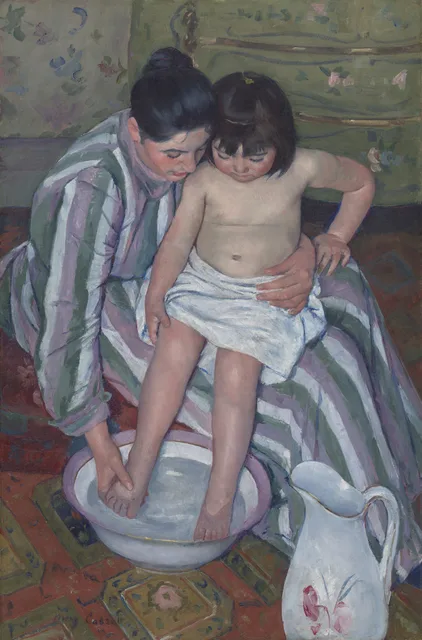
Questions to think about
- Look for itWhere can you find stripes, flowers and diamond shapes in this picture?
- Why?Why do you think Cassatt chose to look down on this scene from above instead of painting it at eye level?
- What about you?Caring for small children has long been treated as invisible work. Do you think the people who do it today get enough respect and fair pay?
Same period
Painted around the same time,
somewhere else
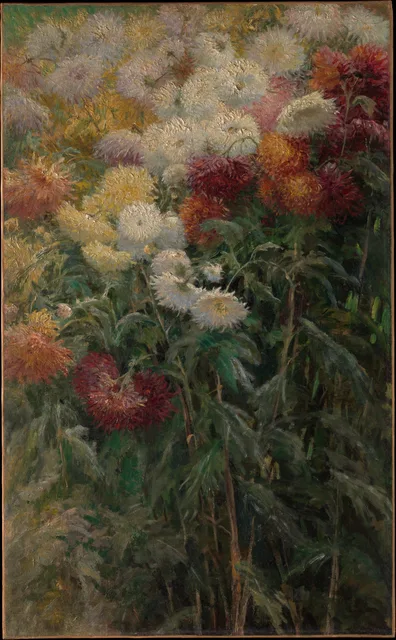 Chrysanthemums in the Garden at Petit-GennevilliersGustave Caillebotte1893
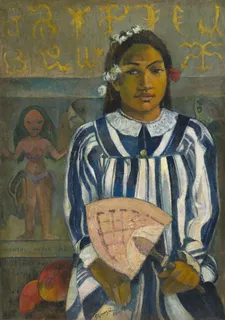 Merahi metua no Tehamana (Tehamana Has Many Parents or The Ancestors of Tehamana)Paul Gauguin1893
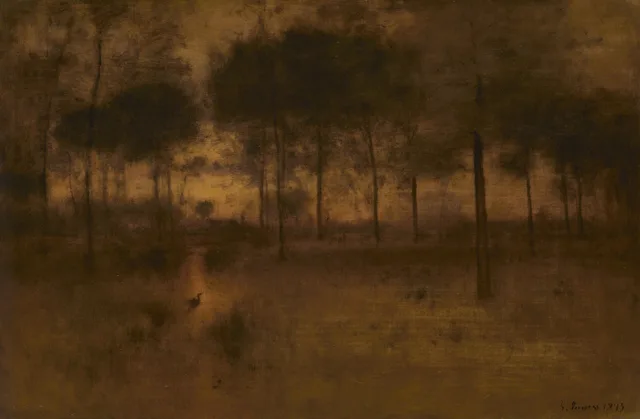 The Home of the HeronGeorge Inness1893
 The Girl by the WindowEdvard Munch1893
 The Card PlayersPaul Cézanne1890–92
 Early Morning, Tarpon SpringsGeorge Inness1892
Too good to keep to yourself
This painting,
for someone who comes to mind
They open it at full size
and see every brushstroke.
About this work
- Artist
- Mary Cassatt · 1844–1926
- Date
- 1893
- Medium
- Oil on canvas
- Size
- 101.3 × 67.3 cm
- Culture
- France
- Collection
- The Art Institute of Chicago
- Image
- Original long edge 12853px · shown at 2560px
- Original
- View on the museum's website ↗