Pyeongye
A painting on a museum wall only ever shows you one side. Turn this small canvas around, though, and you find a completely different picture. Back to back with the man in the yellow straw hat sits someone peeling potatoes.
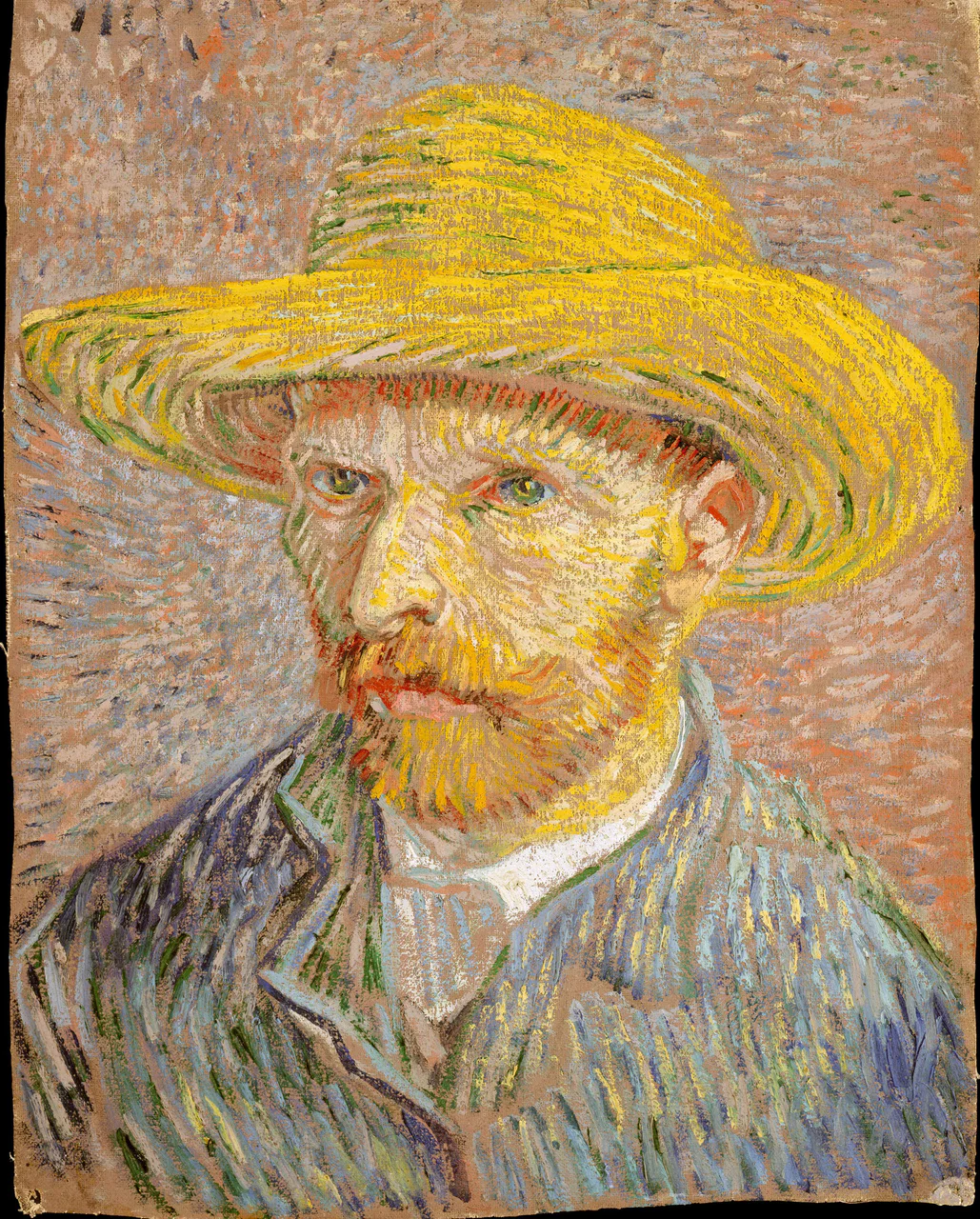
You can see it in the museum's own label. The Metropolitan Museum of Art lists the work as Self-Portrait with a Straw Hat, and then adds a second title in parentheses: The Potato Peeler. Two paintings, one piece of cloth. Why did Vincent van Gogh do that?
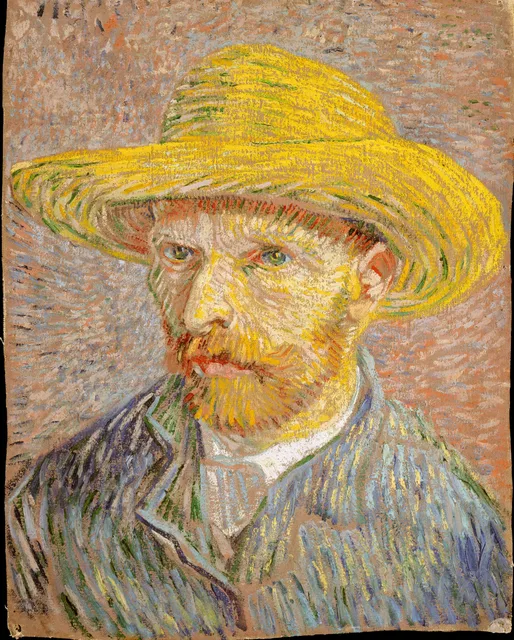
Start with the face that looks out at us. The canvas is only 16 by 12 1/2 inches, about the size of an open notebook. Van Gogh painted it in Paris in 1887. He had moved to the city in 1886 to live with his brother Theo, and he stayed for close to two years.
Look closely at the background in the upper left.
Short dabs of orange, pale blue, and violet sit side by side. Between them the rough weave of the canvas shows through. He did not cover the cloth completely. He let its plain brown tone work as part of the color.
Those quick, separate strokes were new for him. In Paris he saw the bright colors of the Impressionists. He also saw painters like Georges Seurat and Paul Signac, who built pictures out of small dots and touches of pure color. The dark, earthy palette he had used in the Netherlands lightened dramatically here.
Now move to the eyes.
The irises are green, yellow, and blue at once. Yellow lines run under the eyes and down the nose. Orange and green strokes line up along the lids. Skin is not one flesh tone here. It is woven from many short lines of different colors.
So when was The Potato Peeler made? It comes from before Paris, when Van Gogh lived in the Dutch village of Nuenen and painted farm workers. In those years he was working toward The Potato Eaters, and he painted and drew peasant heads and hands again and again.
Paris was not an easy place for him. He sold almost nothing, and Theo supported him. Models cost money he did not have, so he often turned to the face in his own mirror. He painted more than twenty self-portraits during his Paris years.
When even a fresh canvas felt like a luxury, using the other side of an old painting made sense. The potato peeler from the countryside and the painter in his new Paris colors ended up sharing one piece of cloth, back to back.
Finally, look at the brim of the hat.
Green lines run through the yellow straw. He did not paint the hat in a single yellow. He wove it from stripes of yellow and green. Think of the dark Nuenen colors on the other side, and this yellow looks even brighter.