 Pyeongye
Artwork · 17th century
LeoTurn on Magnifier at the lower right and move slowly across the painting.
Full screen opens it edge to edge.Tap the painting to fill the screen.
Spread two fingers to look closer.
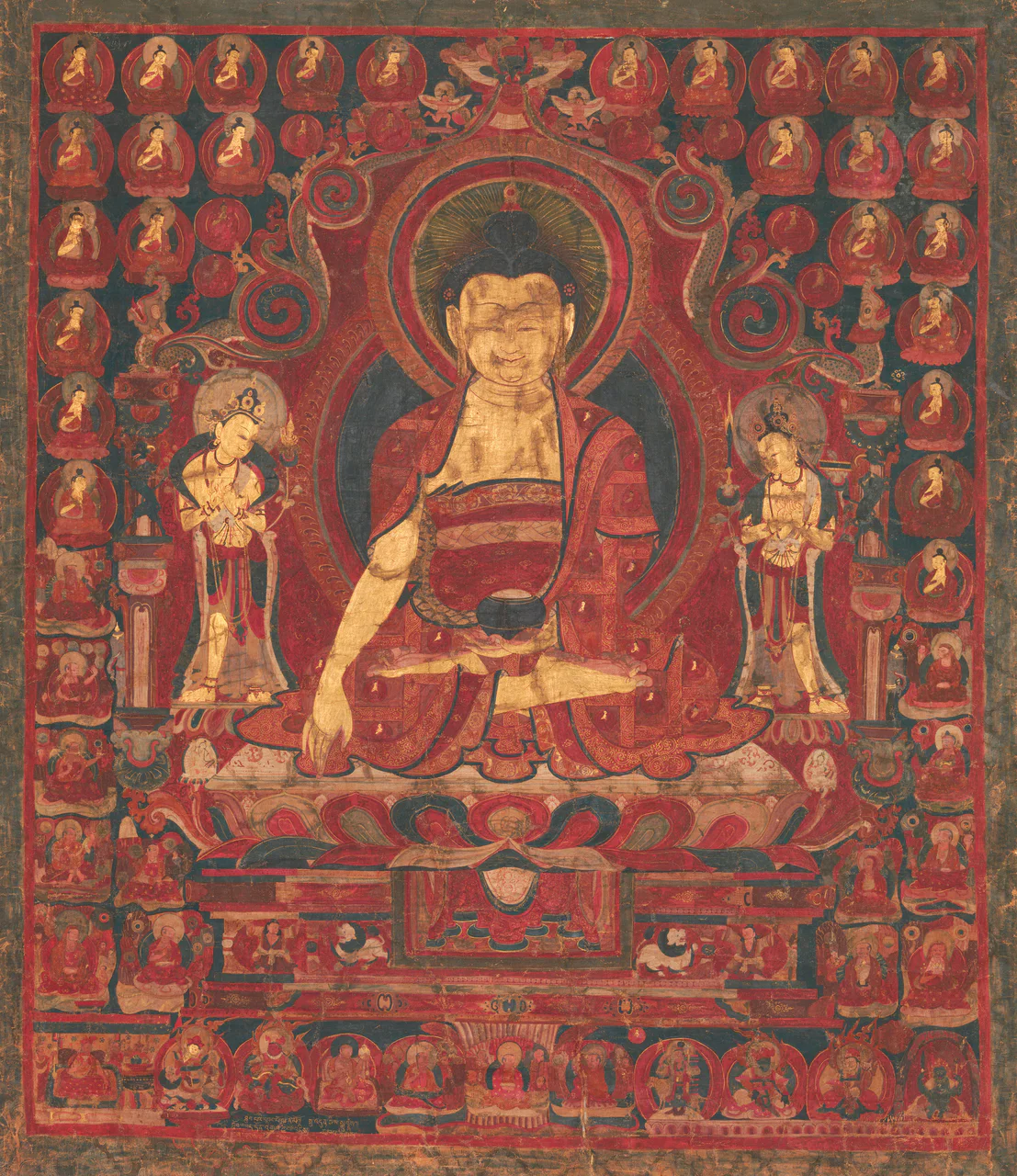
Buddha Shakyamuni as "Lord of the Munis"
Unknown artist · Western Tibet, Gugemid-17th centuryDistemper on cloth79.4 × 67.9 cm
At a glance
- The Buddha Shakyamuni, golden-faced, sits on a lotus throne touching the earth with his right hand, surrounded by rows of small buddhas, bodhisattvas, and guardians.
- An unknown painter in the Guge region of western Tibet made it in the mid-1600s with distemper on cloth.
- Red covers almost the whole surface, and the Buddha's golden body glows out of it.
Reading the picture
5 places to look closer
Tap a number on the painting to jump to its note, or a close-up to see that spot in the whole picture.
Look at the Buddha's face. It is golden, the eyes lowered to narrow slits, and a smile spreads across the lips. On top of the rounded bump on his head sits a red jewel. Behind him, golden lines spread through the halo like rays of sunlight.
Follow his right arm down. The hand drops over his knee, and the fingertips reach straight down. This gesture recalls the story of his enlightenment: when the demon Mara challenged him, the Buddha touched the earth and called it as his witness. His other hand rests in his lap, holding a dark alms bowl.
Zoom in on the top left corner. Small buddhas in red robes sit in neat rows. Each has a round halo and hands raised in front of the chest. There are dozens of them running all around the edges of the painting.
Look at the very top of the throne back. A bird-like figure spreads huge wings in the center, and smaller winged figures fly on either side. Below them, creatures with curling, dragon-like tails decorate the throne back. They are guardians of the Buddha's seat.
Now the lower part of the throne. A white lion with a dark blue-green mane turns its head, and there is a second lion on the other side. A seat held up by lions, called a lion throne, marks the place of the Buddha in Buddhist art.
When it was painted
In 1624, a Portuguese Jesuit named António de Andrade crossed the Himalayas and reached Tsaparang, the capital of Guge. At that time Guge was a Buddhist kingdom in western Tibet, known for its temples and wall paintings.
The kingdom did not last much longer. Around 1630, armies from neighboring Ladakh took Tsaparang, and the kingdom of Guge fell. This painting was made in the same region later, in the middle of the 1600s. Even after the kingdom was gone, paintings like this were still being made there.
Who asked for it to be made? Along the bottom edge runs a line of Tibetan writing. It is worn in places, but it says the painting was ordered by a lama named Lobzang Dondrup. The museum believes the lama leading a ritual in the lower left corner is probably that patron.
The museum's description also explains the figures around the Buddha. His golden skin shows that he has gone beyond the ordinary world, and his robe, stitched from patches, shows that he has let go of attachment. The two bodhisattvas standing at his sides are Maitreya and Manjushri. Sixteen arhats, enlightened disciples, surround the lotus throne, and the four guardian kings and three monks sit along the bottom.
The museum suggests the painting's style may be linked to the monasteries of Tsaparang, Tholing, and Tabo, all in or near Guge. The Zimmerman Family gave the painting to the Metropolitan Museum in 2008.
Now find the lower left corner. A lama in red sits beside a small table with a round bowl on it. If the museum is right, the person who had this painting made is sitting right there inside it.
Questions to think about
- Look for itBesides the lions, what other animals or creatures can you find around the throne?
- Why?Why do you think the painter made only the Buddha golden and covered almost everything around him in red?
- What about you?The Buddha touched the earth to call a witness when he was challenged; what keeps you steady when you feel shaken or doubted?
Same period
Painted around the same time,
somewhere else
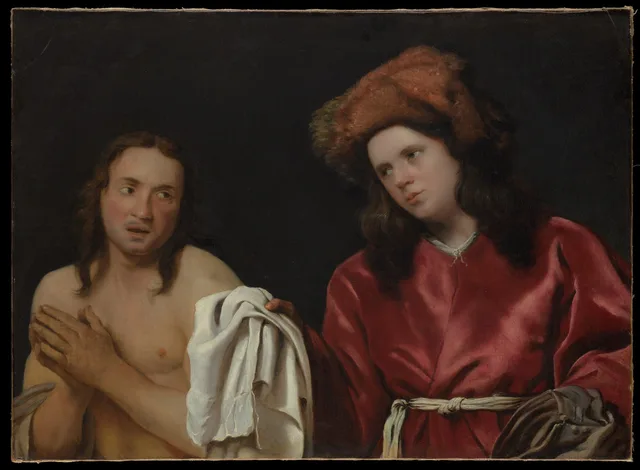 Clothing the NakedMichiel Sweertsca. 1661
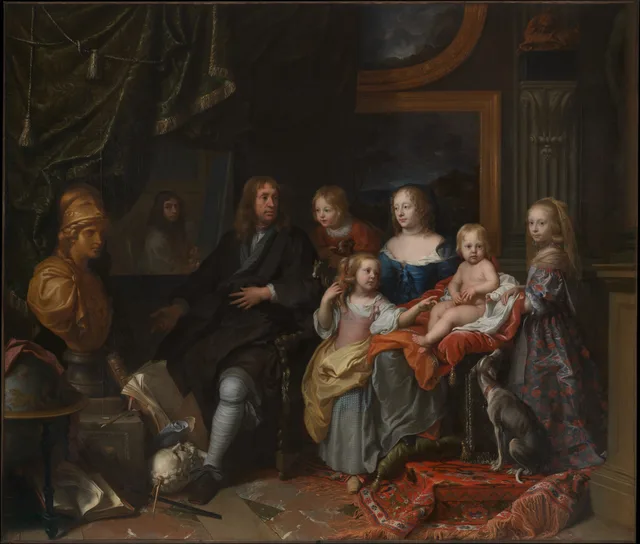 The Jabach FamilyCharles Le Brunca. 1660
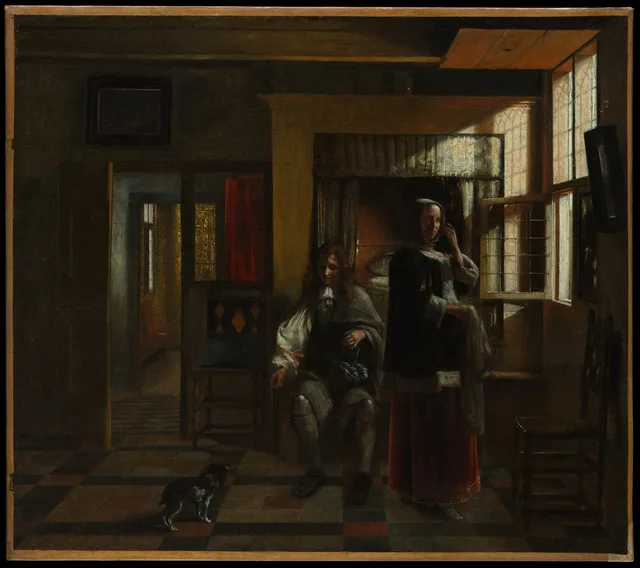 Interior with a Young CouplePieter de Hoochprobably ca. 1662–65
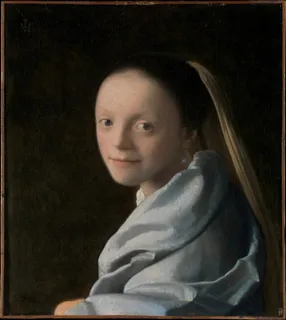 Study of a Young WomanJohannes Vermeerca. 1665–67
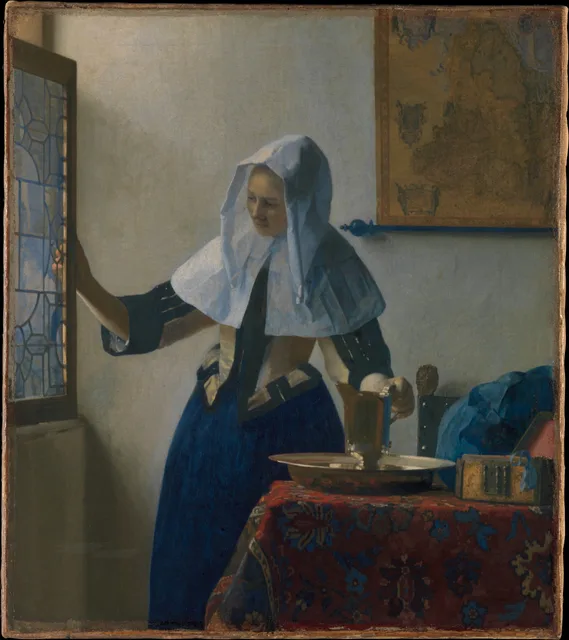 Young Woman with a Water PitcherJohannes Vermeerca. 1662
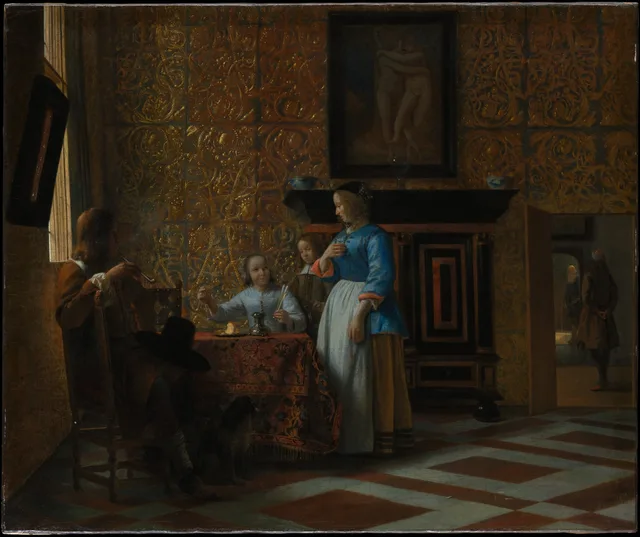 Leisure Time in an Elegant SettingPieter de Hoochca. 1663–65
Too good to keep to yourself
This painting,
for someone who comes to mind
They open it at full size
and see every brushstroke.
About this work
- Artist
- Unknown artist · Western Tibet, Guge
- Date
- mid-17th century
- Medium
- Distemper on cloth
- Size
- 79.4 × 67.9 cm
- Culture
- Western Tibet, Guge
- Collection
- The Metropolitan Museum of Art
- Image
- Original long edge 4000px · shown at 2560px
- Original
- View on the museum's website ↗