 Pyeongye
Artwork · 19th century
LeoTurn on Magnifier at the lower right and move slowly across the painting.
Full screen opens it edge to edge.Tap the painting to fill the screen.
Spread two fingers to look closer.
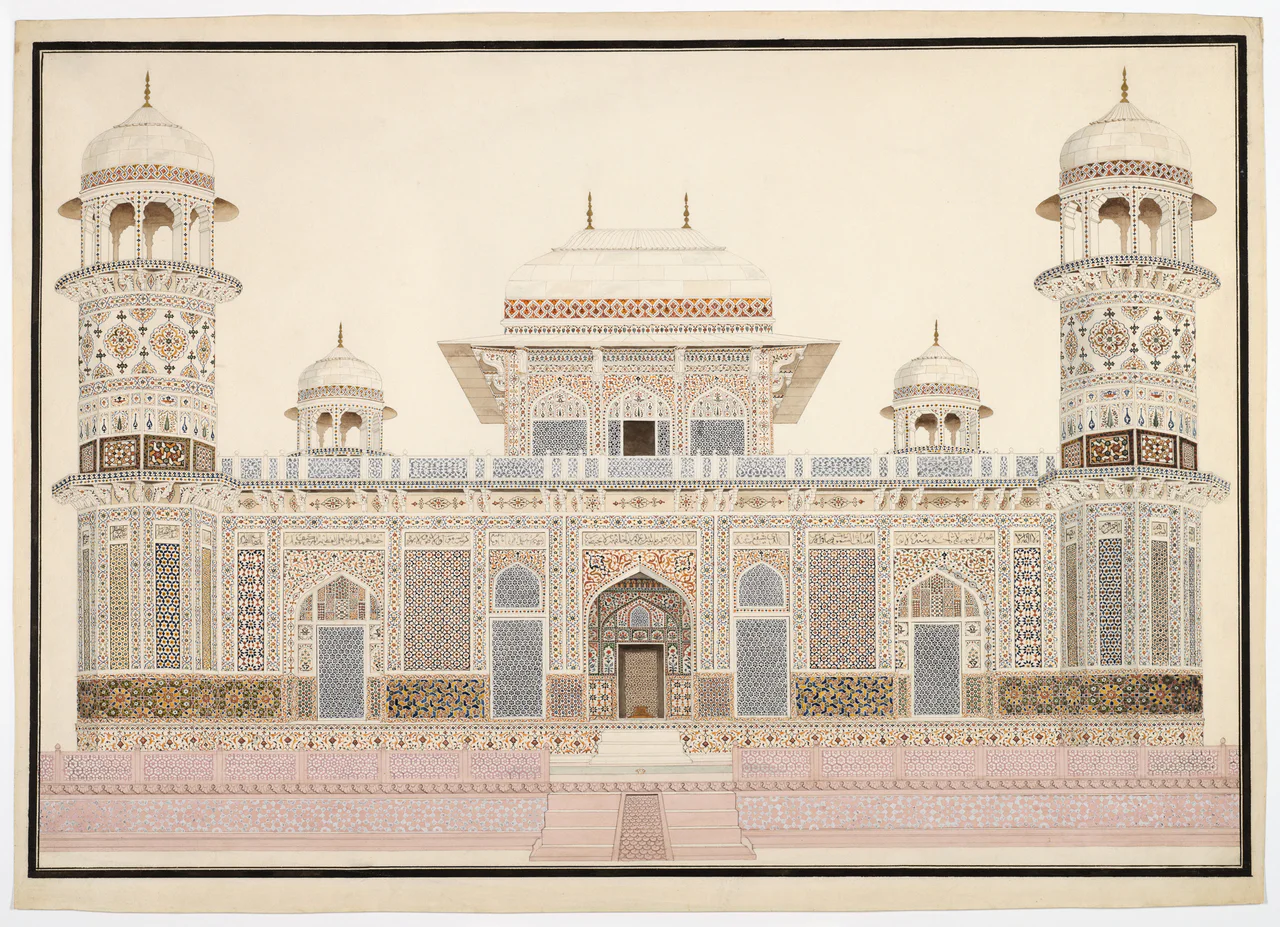
I'timad-ud-Daula's Tomb at Agra
Unknown artist · Indiac. 1820Watercolor on paper watermarked J. Whatman with pencil, pen, ink and gold51 × 74 cm
At a glance
- A head-on view of the front of I'timad-ud-Daula's Tomb, a white marble mausoleum in Agra, India, painted in watercolor.
- An artist whose name was not recorded made it around 1820, with pencil, pen, ink, watercolor, and gold on English Whatman paper.
- Every inlaid stone pattern and pierced marble screen is copied out, so the sheet reads almost like an architect's elevation.
Reading the picture
5 places to look closer
Tap a number on the painting to jump to its note, or a close-up to see that spot in the whole picture.
Zoom in on the central doorway. Inside the pointed arch, the walls are divided into panels of vases and flowering sprays. On the real building these flowers are not painted. They are cut from colored stones and set into the white marble, a technique called pietra dura.
Look at the gray window just left of the door. It is a stone screen pierced with tight rows of hexagons. In India such a screen is called a jali. It lets in air and light while keeping the inside private. Down to its left, yellow and blue shapes lock together like pinwheels.
Climb the left tower. Big floral medallions wrap around its shaft, and below them runs a row of tall vase shapes. On top sits a little open pavilion, a dome raised on slim pillars. The darker band at the bottom holds stars and geometric knots.
Now zoom in on the small structure in the middle of the roof. Three arches sit under a wide overhanging eave, each fitted with a stone screen below. Above them an orange band of ornament ripples around the top. The painter left out cast shadows and lit the surfaces evenly.
Find the pale gray strip above the patterned panel. It carries a long line of Arabic script. The real tomb is wrapped in bands of inscription like this. The painter copied even these.
When it was painted
Two hundred years before this picture, Agra was a Mughal capital. Nur Jahan, wife of the emperor Jahangir, held great power at court. Coins were even struck bearing her name.
Her father, Mirza Ghiyas Beg, rose to become Jahangir's prime minister. The emperor gave him the title I'timad-ud-Daula, Pillar of the Empire. After his death, Nur Jahan built this tomb for him between 1622 and 1628. It was a nobleman's tomb, not an emperor's, so it stayed modest in size. She did not hold back on the decoration.
The family story runs on to the Taj Mahal. Nur Jahan's brother Asaf Khan was the father of Mumtaz Mahal. Her husband, Shah Jahan, built the Taj Mahal as her tomb. This smaller building went up first.
By about 1820, Agra was home to officers and officials of the British East India Company. With no cameras yet, they wanted drawings of everything they saw. Indian artists painted famous buildings for these clients, often on paper shipped from England. The style is called Company painting, after the Company itself. It faded once photography arrived.
No one recorded this artist's name. The sheet came to the Art Institute of Chicago in 2011. Look again at the vases inside the central arch. A painter we cannot name copied, flower by flower, the stonework of craftsmen we cannot name either.
Questions to think about
- Look for itHow many vase-shaped motifs can you find across the whole building?
- Why?Why do you think the artist left out shadows, people, and even clouds in the sky?
- What about you?Today we take dozens of photos of a place in a few minutes. Do we remember it better or worse than someone who spent a long time drawing a single view by hand?
Same period
Painted around the same time,
somewhere else
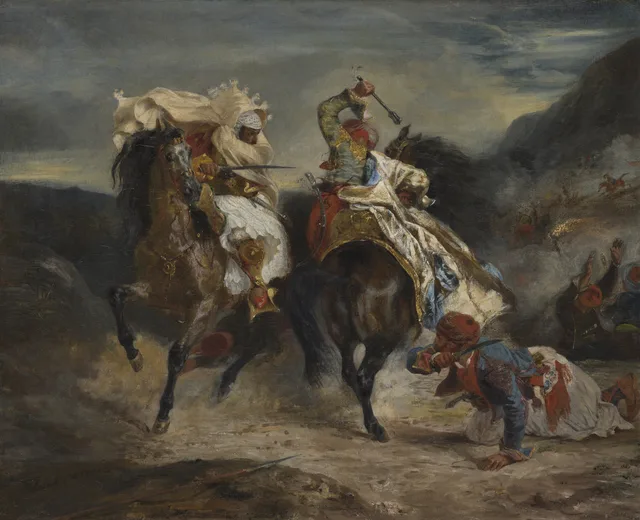 The Combat of the Giaour and HassanEugène Delacroix1826
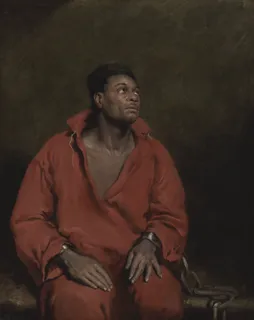 The Captive Slave (Ira Aldridge)John Philip Simpson1827
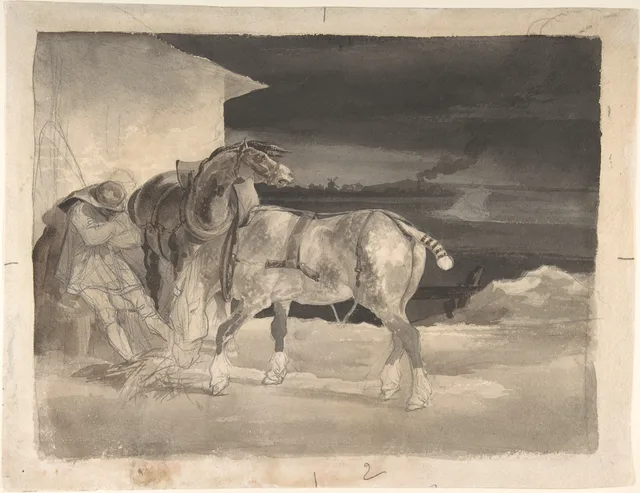 Two Draft Horses with a Sleeping DriverThéodore Géricault1820–22
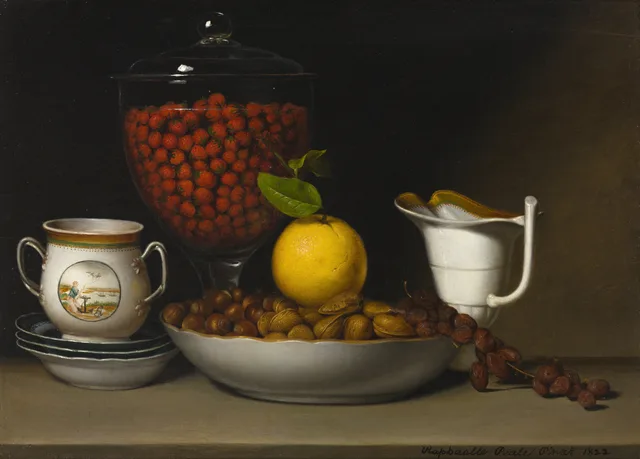 Still Life—Strawberries, Nuts, &c.Raphaelle Peale1822
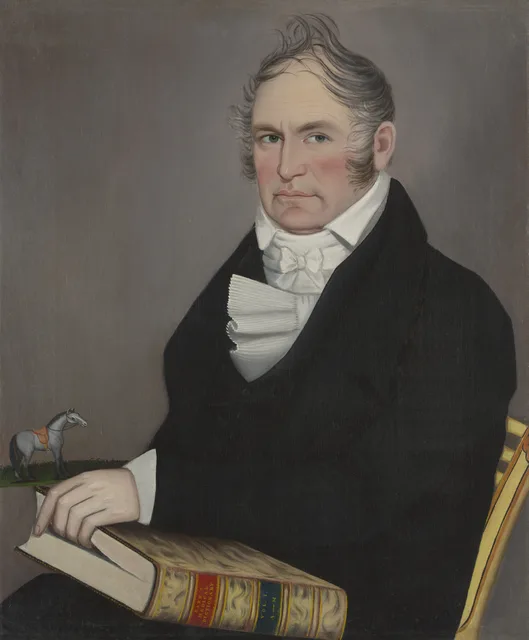 Cornelius AllertonAmmi Phillips1821–22
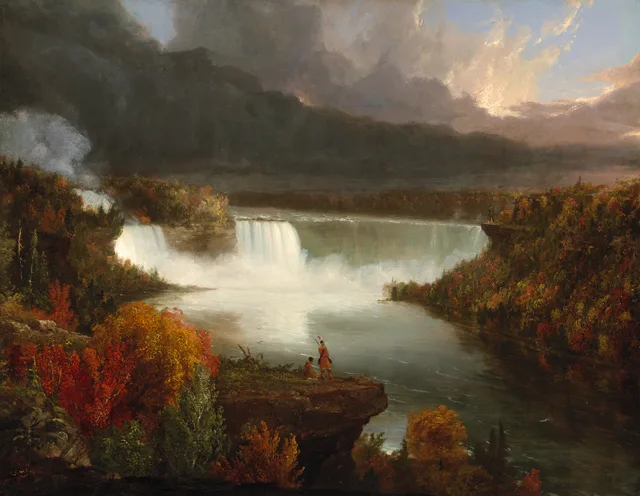 Distant View of Niagara FallsThomas Cole1830
Too good to keep to yourself
This painting,
for someone who comes to mind
They open it at full size
and see every brushstroke.
About this work
- Artist
- Unknown artist · India
- Date
- c. 1820
- Medium
- Watercolor on paper watermarked J. Whatman with pencil, pen, ink and gold
- Size
- 51 × 74 cm
- Culture
- India
- Collection
- The Art Institute of Chicago
- Image
- Original long edge 5620px · shown at 2560px
- Original
- View on the museum's website ↗