 Pyeongye
Artwork · 19th century · Raphaelle Peale
LeoTurn on Magnifier at the lower right and move slowly across the painting.
Full screen opens it edge to edge.Tap the painting to fill the screen.
Spread two fingers to look closer.
At a glance
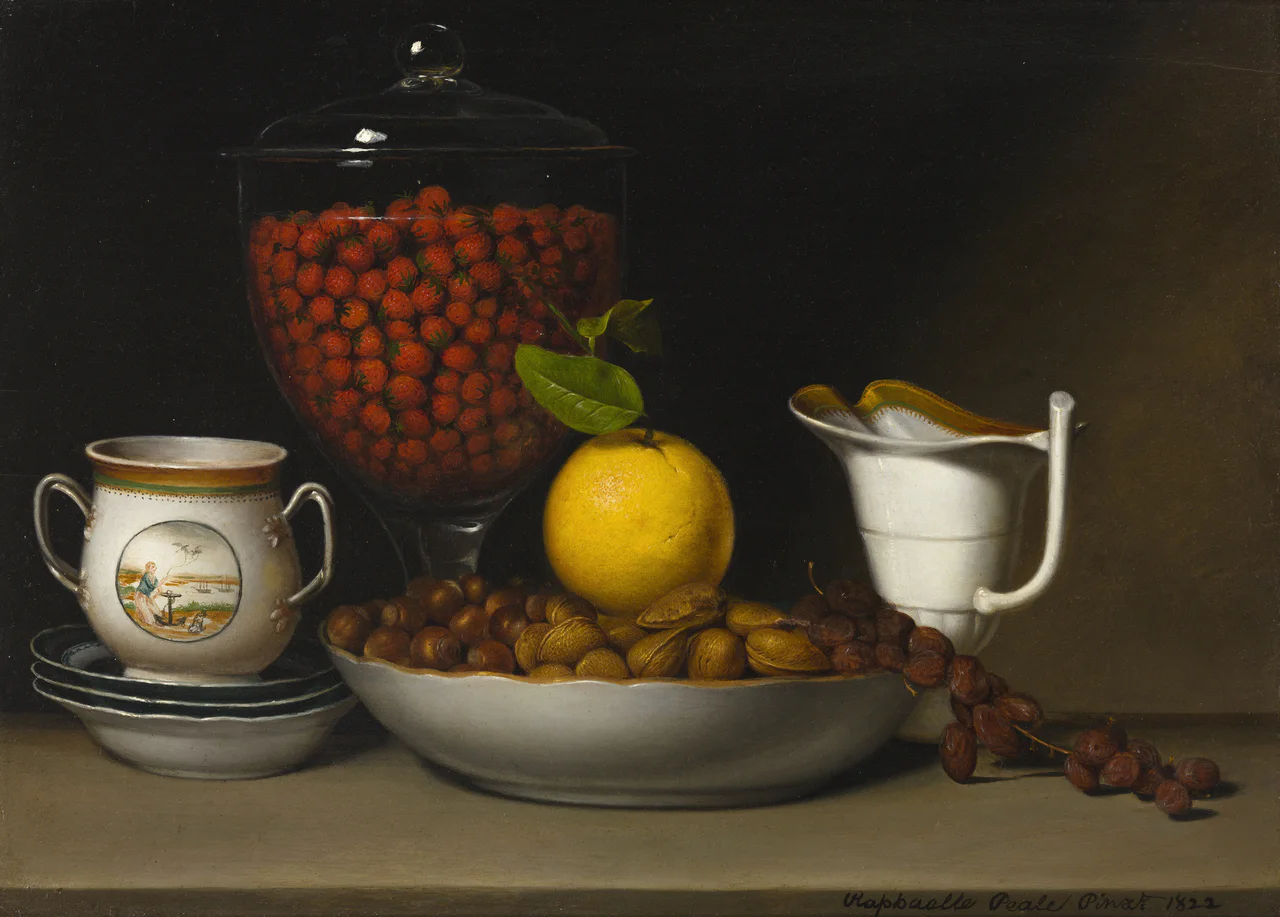
- A glass urn heaped with strawberries, a white bowl of nuts, a yellow orange, a Chinese porcelain sugar bowl, a white cream jug and a spray of raisins are lined up on a tabletop.
- The American painter Raphaelle Peale painted it in oil on a wood panel in 1822.
- At a time when still life was looked down on, Peale was one of the first painters in the United States to make it his specialty.
Reading the picture
4 places to look closer
Tap a number on the painting to jump to its note, or a close-up to see that spot in the whole picture.
Zoom in on the strawberries in the glass urn. Hundreds of tiny berries are packed together, each with a green cap and dotted seeds. A single dab of white paint makes the glass lid gleam. The museum suggests these may be out-of-season strawberries grown in a heated greenhouse.
Zoom in on the round picture on the sugar bowl at the left. A woman sits beside an anchor flying a kite, and two sailing ships float behind her. This two-handled bowl is Chinese porcelain made for the American market. Imported goods like this were luxuries, signs of a young nation growing richer.
Look at the orange in the middle. You can see every tiny pore in the peel, and a thin crack near the top. A glossy green leaf sweeps up and away from it. Below the orange, almonds, walnuts and hazelnuts are piled high.
Zoom in on the raisins at the lower right. Wrinkled, dried grapes hang from a thin stem and trail off the bowl onto the table. Each one drops its own small shadow. The museum notes how this diagonal branch of grapes turning into raisins brings the whole arrangement to life.
When it was painted
In 1822 Raphaelle Peale was forty-eight. He had grown up in a famous family of Philadelphia painters. His father, Charles Willson Peale, was a painter who also opened a natural history museum in Philadelphia. He named his sons after old masters: Raphaelle, Rembrandt, Rubens and Titian.
In those days, kinds of painting were ranked. History painting sat at the top, and still life at the very bottom. Raphaelle ignored the ranking and poured his skill into fruit and dishes. His uncle James Peale painted still lifes too.
These were hard years. His health was poor, and he struggled with drinking and money. Even so, around 1822 he painted his famous trick picture, Venus Rising from the Sea—A Deception, in which a white cloth seems to hang right in front of the painting.
According to the Art Institute of Chicago, the Peale family experimented with growing plants in a hothouse at their farm outside Philadelphia. The strawberries in this urn may have come from that experiment, ripened ahead of season. Raphaelle died in 1825, three years after painting this picture.
In 1943 the painting was shown at the Museum of Modern Art in New York, in an exhibition of American realists. It entered the Art Institute in 1991.
Now look at the lower right corner. In black script are the artist's name and the year 1822. The hand that painted every berry and every raisin signed off here.
The painter
Raphaelle Peale
1774–1825
When painting this, the artist was about 48 years old
All paintings by Raphaelle Peale →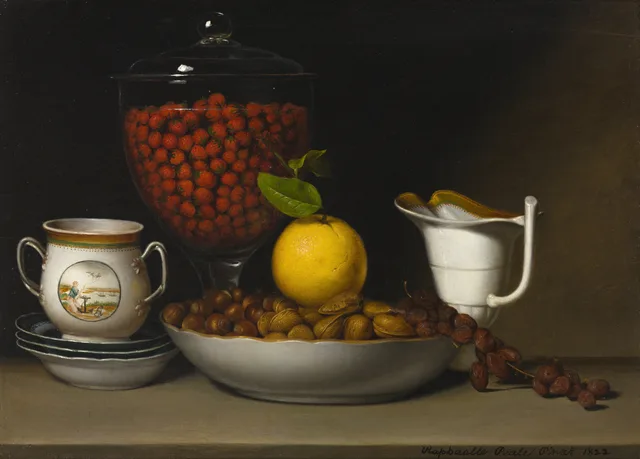
Questions to think about
- Look for itHow many spots of bright white light can you find in the picture?
- Why?Why do you think Peale put so much effort into still life, a kind of painting most people ranked lowest?
- What about you?Two hundred years ago, out-of-season strawberries and porcelain from far away were signs of wealth. What plays that role on our tables today?
Same period
Painted around the same time,
somewhere else
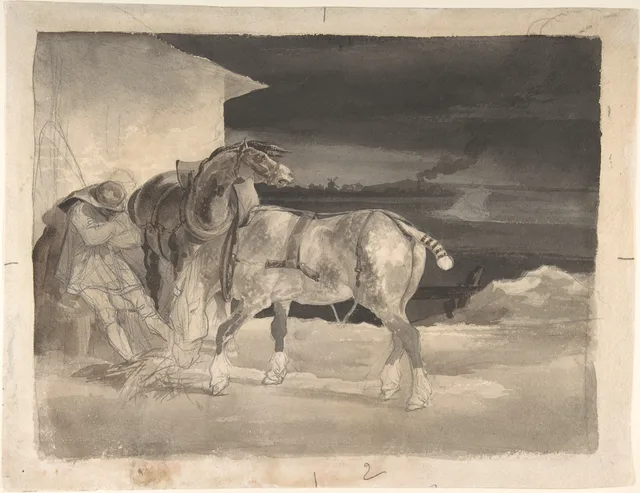 Two Draft Horses with a Sleeping DriverThéodore Géricault1820–22
 Cornelius AllertonAmmi Phillips1821–22
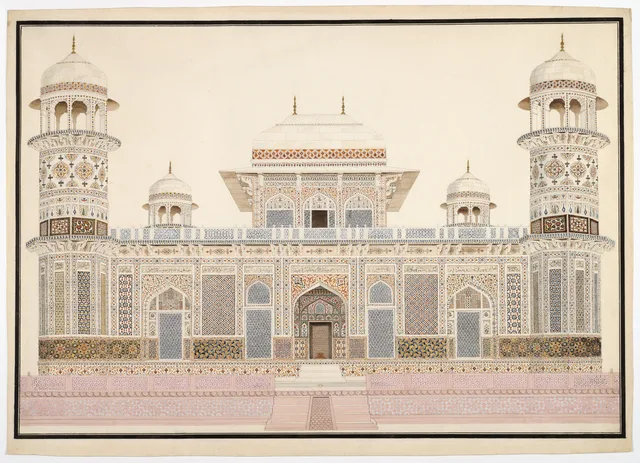 I'timad-ud-Daula's Tomb at AgraUnknown artist · Indiac. 1820
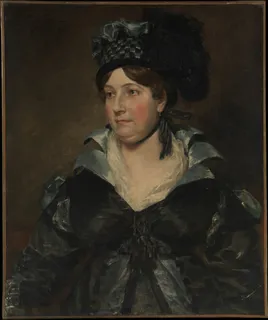 Mrs. James Pulham Sr. (Frances Amys, ca. 1766–1856)John Constable1818
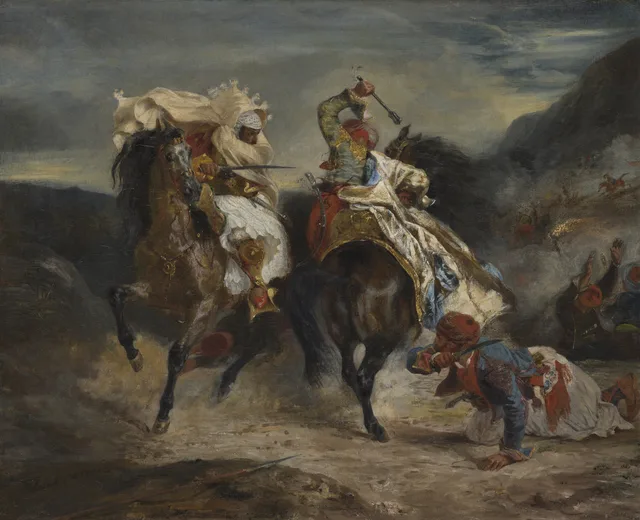 The Combat of the Giaour and HassanEugène Delacroix1826
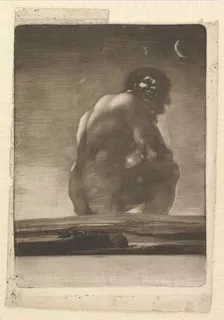 Seated GiantGoyaby 1818 (possibly 1814–18)
Too good to keep to yourself
This painting,
for someone who comes to mind
They open it at full size
and see every brushstroke.
About this work
- Artist
- Raphaelle Peale · 1774–1825
- Date
- 1822
- Medium
- Oil on wood panel
- Size
- 41.1 × 57.8 cm
- Culture
- Philadelphia
- Collection
- The Art Institute of Chicago
- Image
- Original long edge 5617px · shown at 2560px
- Original
- View on the museum's website ↗