 Pyeongye
Artwork · 19th century · Eugène Delacroix
LeoTurn on Magnifier at the lower right and move slowly across the painting.
Full screen opens it edge to edge.Tap the painting to fill the screen.
Spread two fingers to look closer.
At a glance
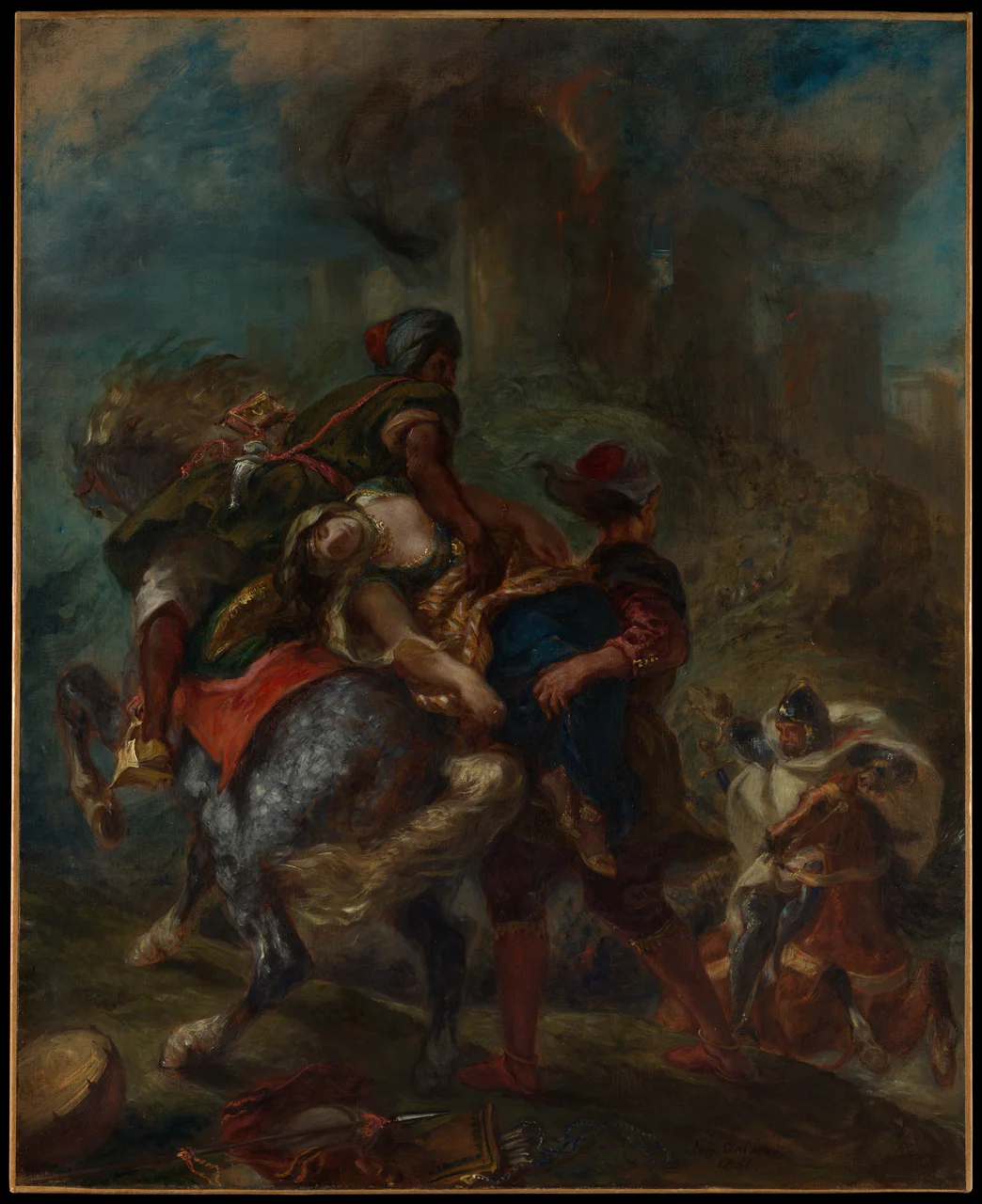
- Two men heave the unconscious Rebecca up onto a horse, while a knight in a white cloak charges in from the right. It is a scene from a novel.
- The French painter Eugène Delacroix painted it in 1846.
- He turned a moment from Walter Scott's novel Ivanhoe into a picture full of motion, with rough brushwork and hot color.
Reading the picture
5 places to look closer
Tap a number on the painting to jump to its note, or a close-up to see that spot in the whole picture.
Zoom in on Rebecca's face in the middle. Her eyes are closed and her head has fallen back. Her headscarf is slipping, and only the gold ornaments at her brow and throat catch the light. The face is shaped with just a few strokes, yet you can feel her dead weight.
Look at the foot of the man on the left as he climbs onto the horse. Next to the red saddlecloth, his yellow shoe is left as a thick, visible brushstroke. He is twisting his whole body to lift Rebecca.
Zoom in on the dappled gray horse that will carry her off. Delacroix dabbed short strokes of white, gray, and black to build the spotted coat. Up close it is just lumps of paint. Step back, and it becomes a horse with muscles rippling under its skin.
Look at the knight on the right. He wears a dark helmet and drives a brown horse, his white cloak flying. A touch of red shows at the shoulder of the cloak. A white mantle with a red cross was the dress of the Knights Templar.
Zoom in on the ground at the lower right. On the dark earth is the signature Eug. Delacroix 1846. The painter left his name at the lowest, quietest spot in this noisy scene.
When it was painted
Picture the Paris Salon of 1846. Delacroix's new canvas hung there under a very long title: Rebecca, carried off on the orders of the Templar Bois-Guilbert during the sack of Front-de-Boeuf's castle. Visitors who knew Walter Scott's 1819 novel Ivanhoe could place the scene at once.
At the time, Delacroix was deep into years of mural work. He was painting the ceilings of the library in the French parliament building and the library of the Luxembourg Palace. Even so, he kept turning scenes from books into easel paintings. Shakespeare, Byron, and Scott had fed his imagination since he was young.
In the novel, the knight does not seize Rebecca himself. Two Saracen slaves do it on his orders. That is why the men lifting her in the middle of the picture wear cloth wrapped around their heads instead of armor.
The poet Charles Baudelaire wrote about this painting in his review of that year's Salon and praised how its colors worked together. Its first owner was a Parisian named Paul Collot, whose collection was sold at auction in 1852. The Metropolitan Museum acquired the picture in 1903. Delacroix painted the same scene again in 1858, and that second version now hangs in the Louvre.
Now look back at the top center of the canvas. Above a dark mass of building, red strokes curl upward. That is the fire eating the castle in Scott's story.
The painter
Eugène Delacroix
1798–1863
When painting this, the artist was about 48 years old
All paintings by Eugène Delacroix →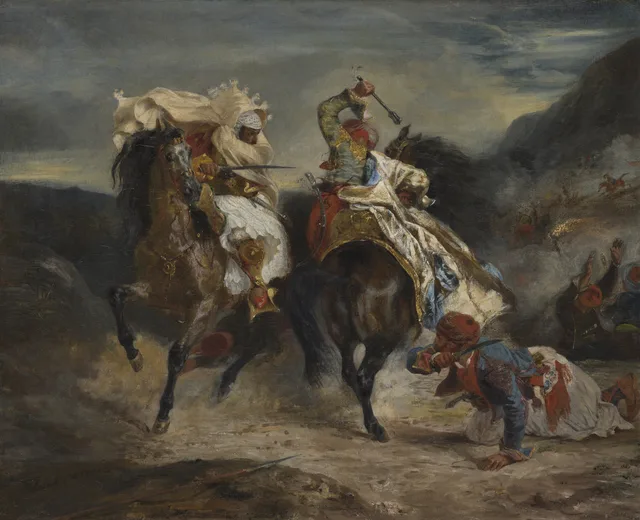
Questions to think about
- Look for itCan you find the round object in the lower left corner, and the arrows lying on the ground at the bottom center?
- Why?Why do you think Delacroix left the faces blurry and rough instead of painting them sharply?
- What about you?Novels and paintings sometimes make a kidnapping look like a thrilling adventure. When films and TV shows make violence look beautiful today, how should we watch them?
Same period
Painted around the same time,
somewhere else
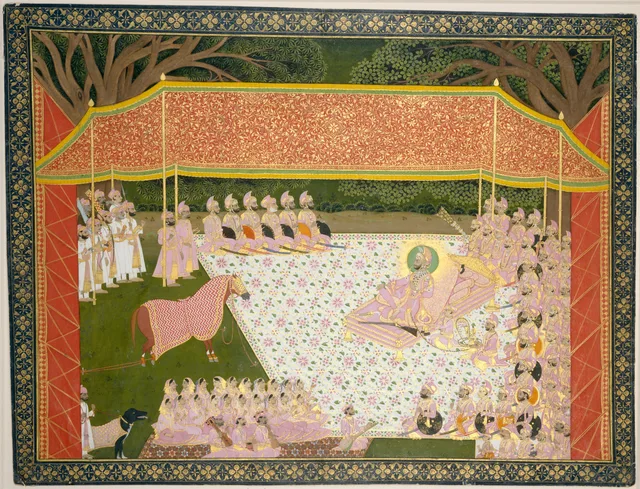 Maharana Sarup Singh Inspects a Prize StallionTara1845–46
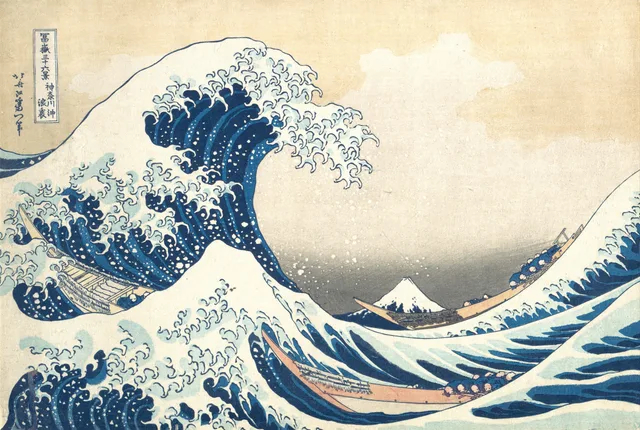 Under the Wave off Kanagawa (Kanagawa oki nami ura), also known as The Great Wave, from the series Thirty-six Views of Mount Fuji (Fugaku sanjūrokkei)Katsushika Hokusaica. 1830–32
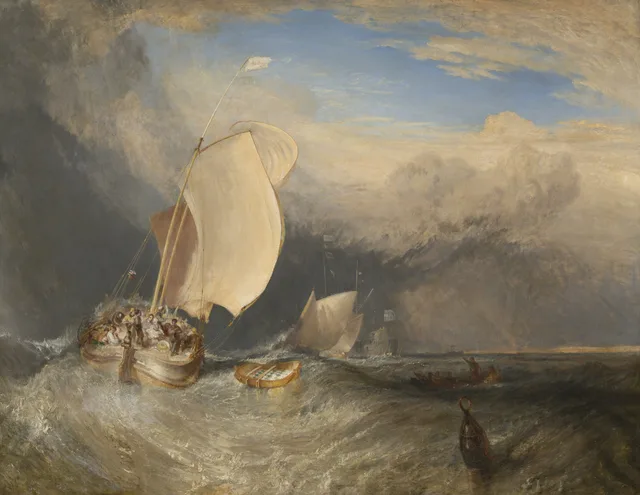 Fishing Boats with Hucksters Bargaining for FishJoseph Mallord William Turner1837–38
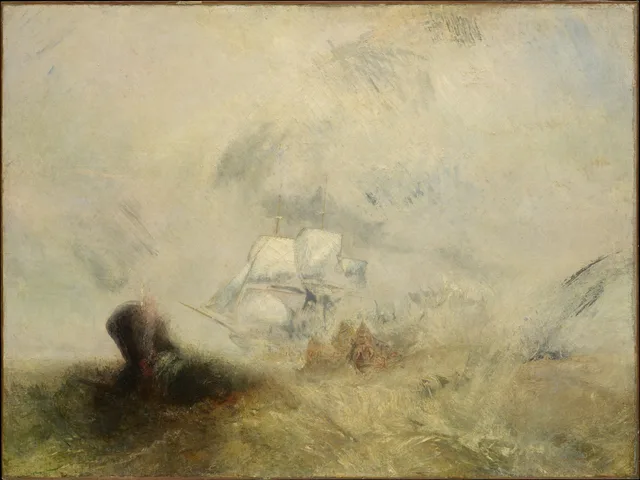 WhalersJoseph Mallord William Turnerca. 1845
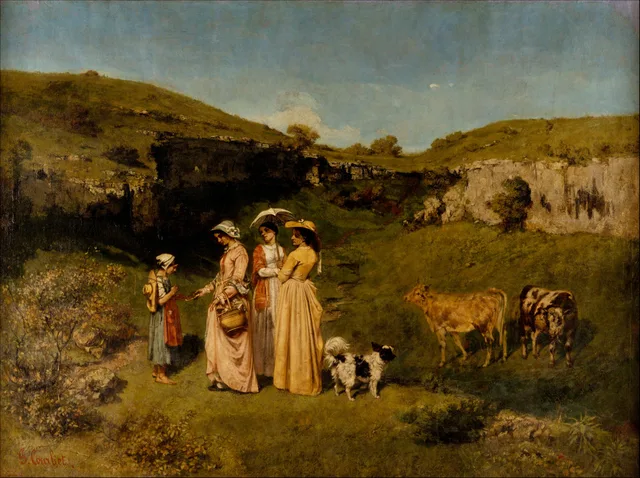 Young Ladies of the VillageGustave Courbet1851–52
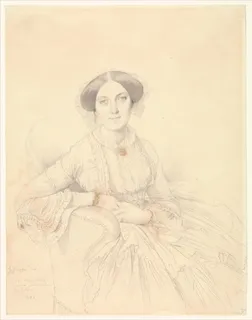 Madame Félix GalloisJean Auguste Dominique Ingres1852
Too good to keep to yourself
This painting,
for someone who comes to mind
They open it at full size
and see every brushstroke.
About this work
- Artist
- Eugène Delacroix · 1798–1863
- Date
- 1846
- Medium
- Oil on canvas
- Size
- 100.3 × 81.9 cm
- Collection
- The Metropolitan Museum of Art
- Image
- Original long edge 4000px · shown at 2560px
- Original
- View on the museum's website ↗