 Pyeongye
Artwork · 19th century · Jean-Léon Gérôme
LeoTurn on Magnifier at the lower right and move slowly across the painting.
Full screen opens it edge to edge.Tap the painting to fill the screen.
Spread two fingers to look closer.
At a glance
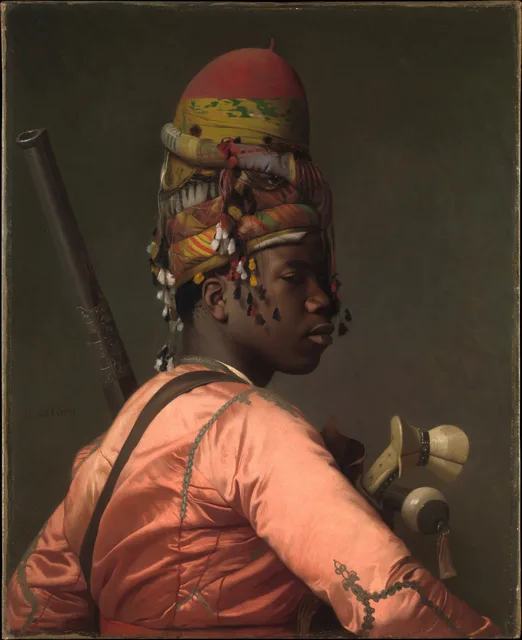
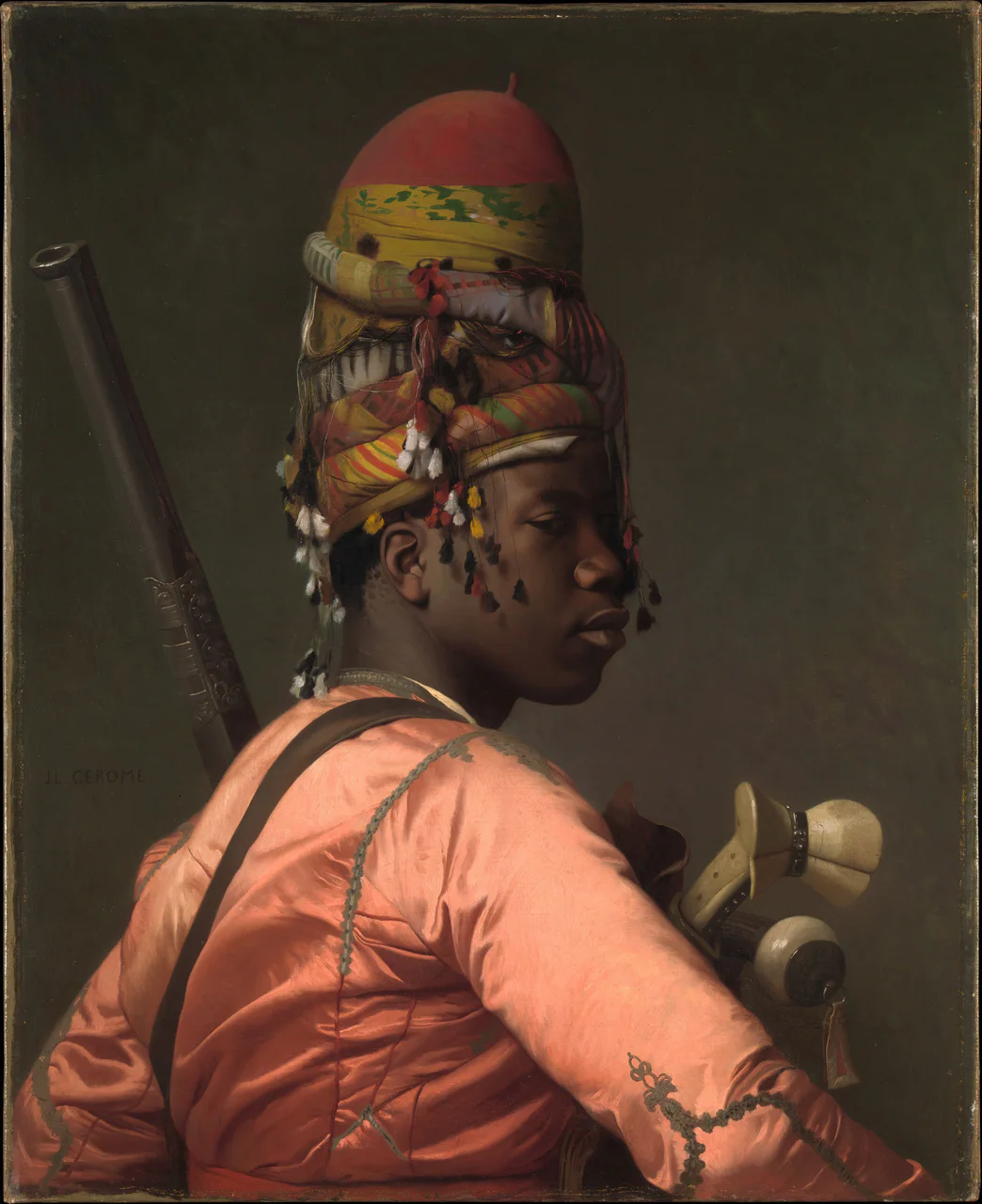
- A young soldier in a towering, many-layered turban and a pink silk coat glances sideways over his shoulder.
- Jean-Léon Gérôme painted it in 1868–69. A bashi-bazouk was an irregular soldier in the army of the Ottoman Empire.
- Silk, tassels, metal and ivory are painted with almost photographic care.
Reading the picture
5 places to look closer
Tap a number on the painting to jump to its note, or a close-up to see that spot in the whole picture.
Zoom into the turban. Striped cloths in yellow, green and red are wound together with white ones, layer on layer. Tassels of white, black and red hang between them like loose threads. Every cloth has its own pattern and weave, so you can almost feel the difference.
Look at his face. His body is turned away from us, but his head swings around to look to the side. His lips are pressed shut, and his eyes are fixed somewhere other than on us. Soft light falls on his ear and the back of his neck.
Zoom into the sleeve at lower right. A gray cord is stitched onto the pink silk in loops and curls. Wherever the silk folds, a white gleam slides across it. Gérôme smoothed the paint so the brushwork almost disappears.
Find the long metal tube rising at an angle behind his left shoulder. It is the barrel of a gun slung across his back. A metal band around it is engraved with curling vines. Against the dark background, only the raised parts of the pattern glint.
Move to his right hip. Two ivory-colored handles poke out. One splits at the end into two ear-like lobes, and the other is round like a ball. These are the grips of weapons tucked into his belt.
When it was painted
In January 1868, Gérôme set off for Egypt. He was forty-three. With him went the painter Léon Bonnat, his pupil Paul Lenoir, and his brother-in-law Albert Goupil, who brought a camera. They stayed on the road until April.
A few years later Lenoir wrote a book about the journey. It was a trip where painters with sketchbooks traveled alongside a man with a camera.
By then Gérôme was already a star in Paris. He had taught at the École des Beaux-Arts since 1864. In 1863 he married Marie Goupil, the daughter of the art dealer Adolphe Goupil. The Goupil firm turned Gérôme's paintings into prints and photographs and sold them across Europe and America, so people who never saw the originals knew his pictures well.
Yet this painting was not made on the road. It was made in his Paris studio. Gérôme dressed a model in clothes and accessories he had brought back from abroad, then posed him under the studio light. The museum's records do not give the young man's name. The painting entered the Metropolitan Museum's collection in 2008.
Look again with that in mind. The turban and the pink silk traveled a long way to reach this canvas. The turned head and the dark, empty background were chosen in a Paris studio. Where does the record end and the staging begin? That question is a big part of why paintings like this are now also criticized as the East seen and arranged through European eyes.
Questions to think about
- Look for itCan you find the painter's name hidden in the dark background on the left?
- Why?Why do you think Gérôme had the soldier turn his head away instead of looking at us?
- What about you?This painting is named for a type of soldier, not for the person in it. When we see one photo of someone from another country, how quickly do we sort them into a group?
Same period
Painted around the same time,
somewhere else
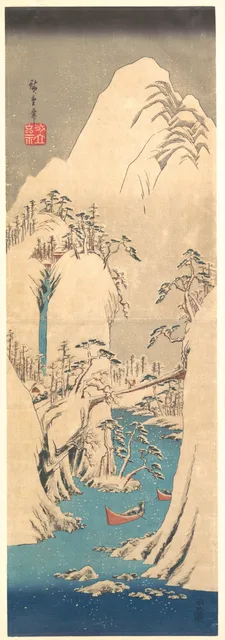 Snowy GorgeUtagawa Hiroshige1868
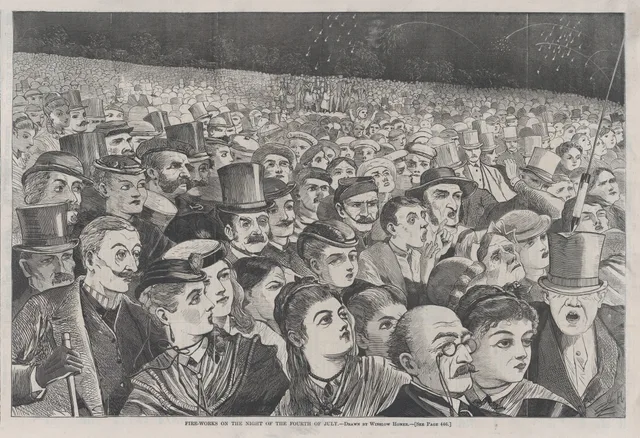 Fire-Works on the Night of the Fourth of July (from "Harper's Weekly," Vol. XII)Winslow HomerJuly 11, 1868
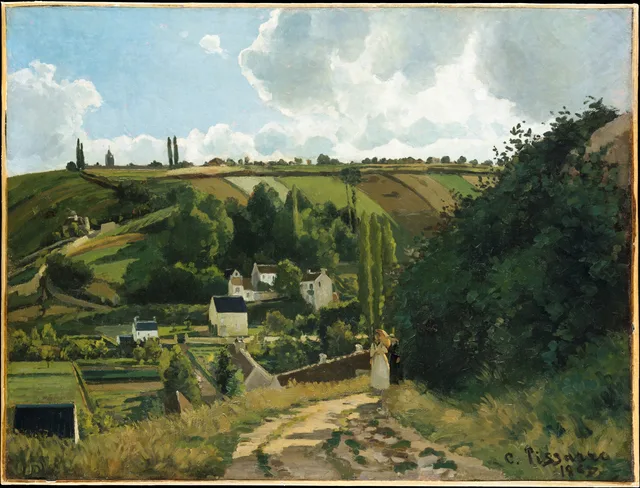 Jalais Hill, PontoiseCamille Pissarro1867
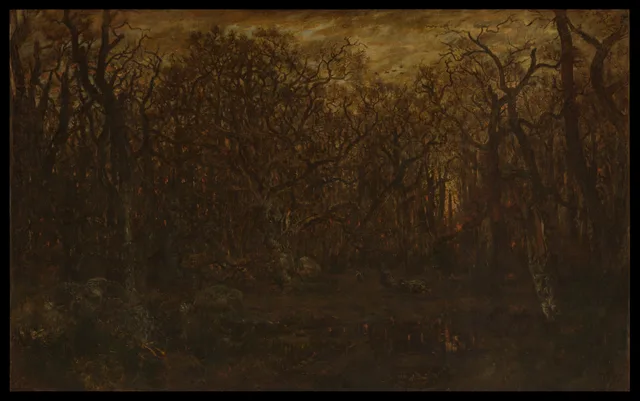 The Forest in Winter at SunsetThéodore Rousseauca. 1846–67
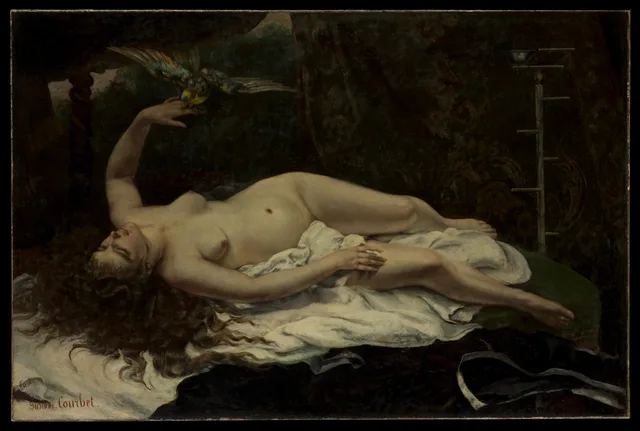 Woman with a ParrotGustave Courbet1866
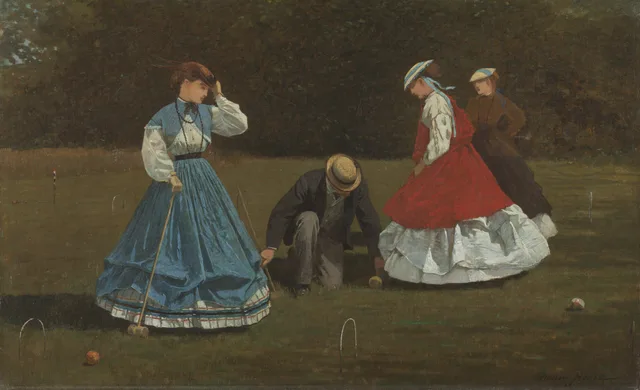 Croquet SceneWinslow Homer1866
Too good to keep to yourself
This painting,
for someone who comes to mind
They open it at full size
and see every brushstroke.
About this work
- Artist
- Jean-Léon Gérôme · 1824–1904
- Date
- 1868–69
- Medium
- Oil on canvas
- Size
- 80.6 × 66 cm
- Collection
- The Metropolitan Museum of Art
- Image
- Original long edge 3863px · shown at 2560px
- Original
- View on the museum's website ↗