 Pyeongye
Artwork · 19th century · Gustave Courbet
LeoTurn on Magnifier at the lower right and move slowly across the painting.
Full screen opens it edge to edge.Tap the painting to fill the screen.
Spread two fingers to look closer.
At a glance
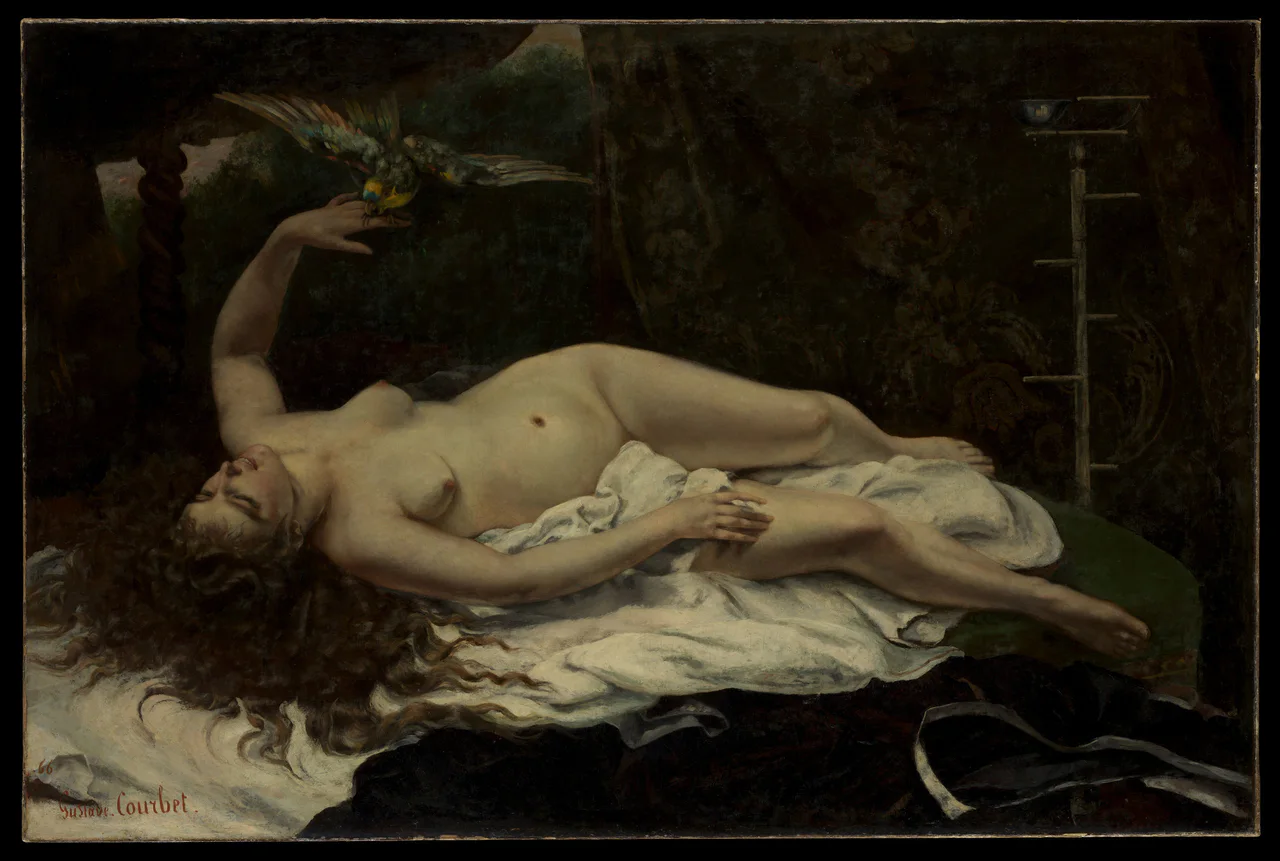
- A woman lying on a white sheet raises one arm high to greet a parrot as it lands, wings spread, on her fingers.
- The French painter Gustave Courbet painted it in 1866, and it hung in the Paris Salon that same year.
- It is a Realist painter, known for painting the world as he saw it, taking on the nude, one of the Salon's favorite subjects.
Reading the picture
4 places to look closer
Tap a number on the painting to jump to its note, or a close-up to see that spot in the whole picture.
Zoom in on her fingertips at the upper left. The parrot has just landed, wings still wide open. Its yellow head, blue cheek and streaks of green, red and orange glow against the dark background. Its claws grip her finger tightly.
Now look at her head. She has thrown it back so far that her face seems upside down, and her long, curly brown hair pours out across the white sheet. Each lock bends and twists like a wave. Courbet gave almost the whole lower left corner of the canvas to that hair.
Zoom into the darkness on the right. A wooden pole with several crossbars stands there. It is the parrot's perch, and near the top you can make out what looks like a small dish. Did the bird just fly over from there?
Look at the bottom left corner. On the white sheet, the painter's name, Gustave Courbet, is written in red, and above it to the left you can see a small number 66, short for 1866. Even the signature sits on the folds of the cloth as if it were part of the picture.
When it was painted
In 1866 Courbet was in his mid-forties, and he already had a reputation as a troublemaker. Around 1850 he had painted a village funeral and men breaking stones at the huge size usually kept for history and religion. When some of his work was turned down for the 1855 World's Fair in Paris, he built his own exhibition hall nearby and called it Realism.
The nude had burned him before. In 1864 the Salon refused his Venus and Psyche as indecent. Two years later he came back with another nude, this one, and this time the Salon let it in.
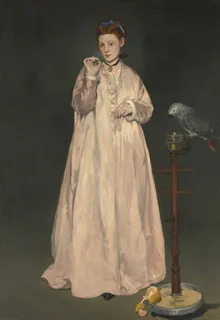
The welcome was mixed. Some critics scolded Courbet for his lack of taste and called the model's pose ungainly. Around the same time, Édouard Manet painted a young woman standing beside a parrot on a perch. Many scholars read it as Manet's answer to Courbet. That painting now hangs in the same museum, the Met.
A few years later Courbet's life turned upside down. He joined the Paris Commune in 1871 and was jailed after the toppling of the Vendôme Column, which he was held responsible for. After his release he left for Switzerland, where he died in 1877.
The painting was sold in 1898 to Henry and Louisine Havemeyer in New York. Louisine later recalled begging her husband to buy it. It came to the Met with her bequest in 1929. Now look again at the upper left. The pose the critics called ungainly ends in a raised hand, with a parrot opening its wings on her fingers.
The painter
Gustave Courbet
1819–1877
When painting this, the artist was about 47 years old
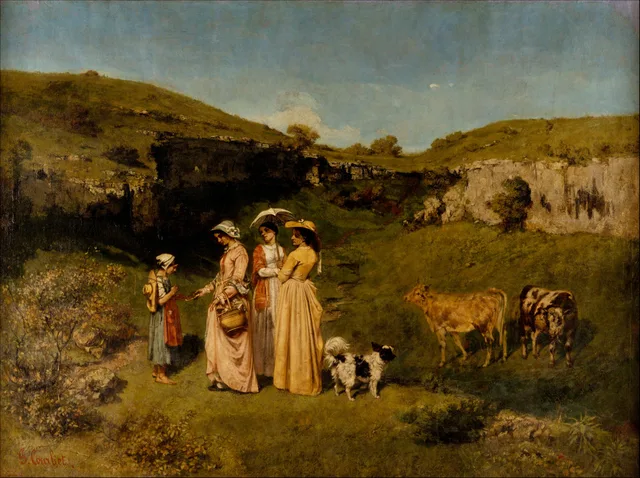
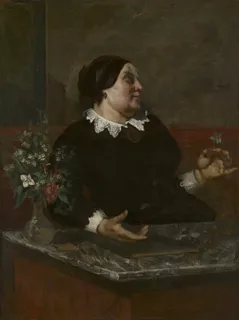
All paintings by Gustave Courbet →More by the same painter
Questions to think about
- Look for itHow many different colors can you find in the parrot's wings?
- Why?Why do you think Courbet gave so much of the canvas to the spilling hair and the fluttering parrot?
- What about you?For centuries, most nudes in museums were women's bodies painted by men. If we look at a picture like this with both the painter's eye and the model's point of view in mind, what changes?
Same period
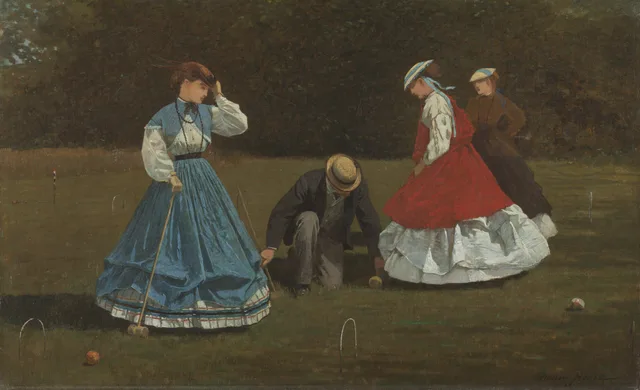
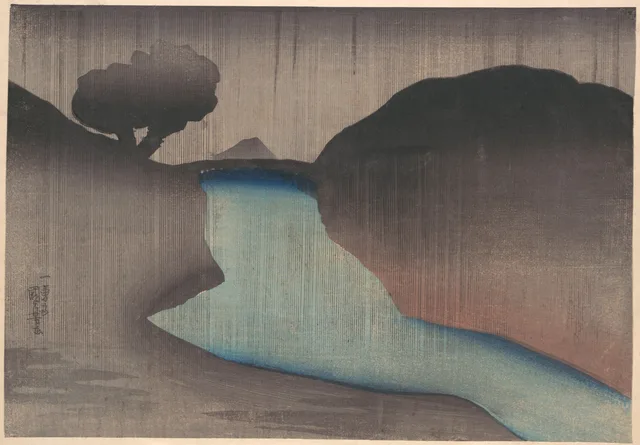
Painted around the same time,
somewhere else
Too good to keep to yourself
This painting,
for someone who comes to mind
They open it at full size
and see every brushstroke.
About this work
- Artist
- Gustave Courbet · 1819–1877
- Date
- 1866
- Medium
- Oil on canvas
- Size
- 129.5 × 195.6 cm
- Collection
- The Metropolitan Museum of Art
- Image
- Original long edge 4000px · shown at 2560px
- Original
- View on the museum's website ↗