 Pyeongye
Artwork · 17th century · Claude Lorrain
LeoTurn on Magnifier at the lower right and move slowly across the painting.
Full screen opens it edge to edge.Tap the painting to fill the screen.
Spread two fingers to look closer.
At a glance
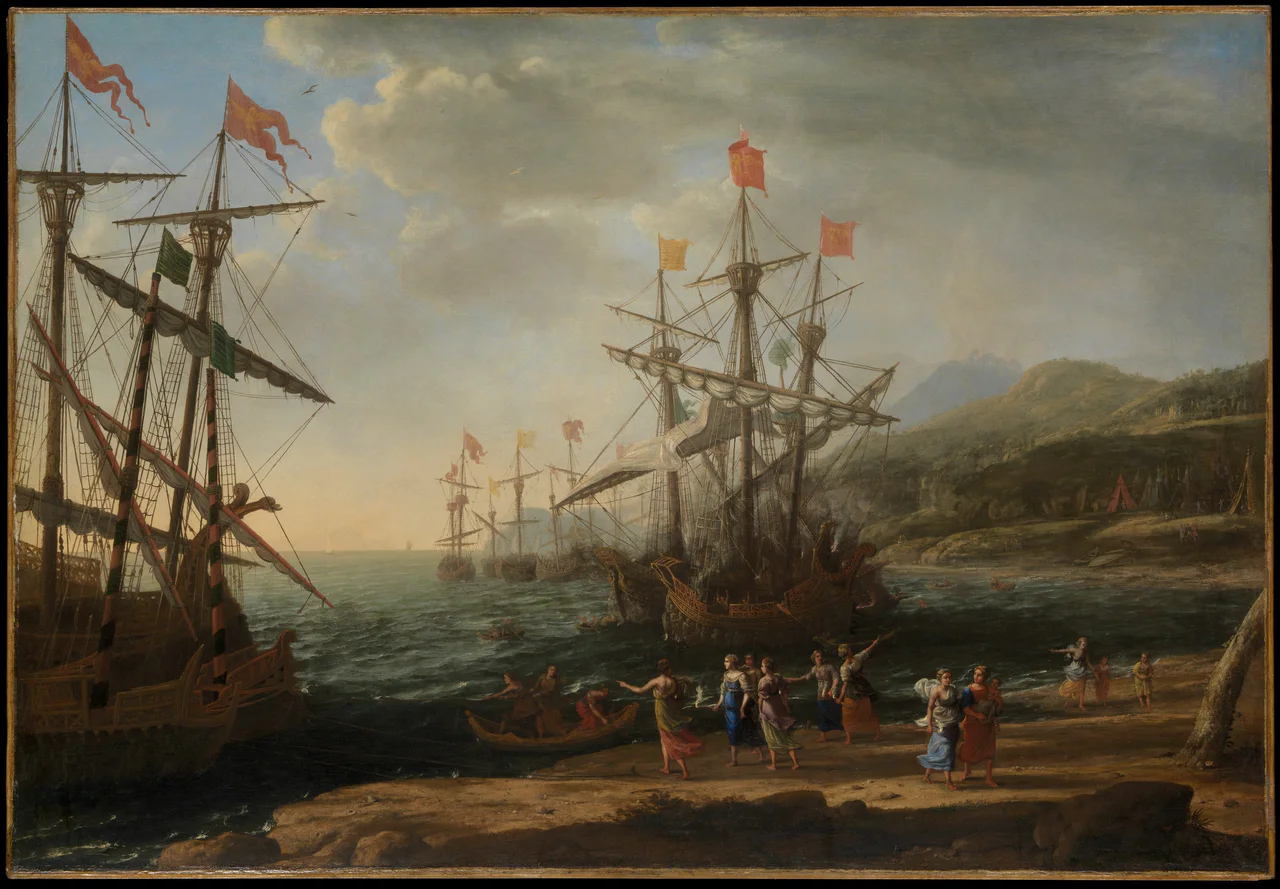
- Women run along a beach with torches and set fire to the ships anchored offshore. The scene comes from the Aeneid, the epic poem by the Roman poet Virgil.
- Claude Lorrain, a French painter who spent almost his whole career in Rome, painted it around 1643, in oil on canvas.
- Something terrible is happening, yet most of the canvas is given to open sea, sky and bright air. It shows how a story and a landscape can share one picture.
Reading the picture
5 places to look closer
Tap a number on the painting to jump to its note, or a close-up to see that spot in the whole picture.
Zoom in on the right end of the big ship. Under its carved, decorated woodwork, red flames lick at the wood, and white smoke curls up between the masts. The fire is still small. On a wooden ship, it will not stay small for long.
Now find the women in the middle of the beach. Their blue, pink and orange dresses whip in the wind. One woman carries a burning torch. The one on the right flings her arm out toward the ships. All of them are barefoot, hurrying across the sand.
Look at the little boat on the left. Three figures crouch low in it on the rough, choppy water. A woman on the shore points straight at them.
Under the hill on the right, red and blue tents stand in a row among the trees, and two small boats lie on the shore below them. This is the Trojan camp. The people near the tents do not seem to have noticed the fire yet.
Now climb up to the top left. Long red pennants stream from the tops of the two tall masts, each marked with a golden winged design. They all blow toward the right. That same wind is blowing toward the burning ship.
When it was painted
Around 1643, Claude was already a sought-after landscape painter in Rome. Born in the duchy of Lorraine in eastern France, he came to Rome while still young and learned his trade working for the landscape painter Agostino Tassi. After that he hardly ever left the city.
The man who ordered this picture was Girolamo Farnese. He was a churchman who had spent years in what is now Switzerland as the pope's envoy, and he came back to Rome in 1643. Later he became a cardinal. Claude himself noted that he painted this canvas in Rome for Farnese.
That note sits in a book of drawings now called the Liber Veritatis, the Book of Truth. As Claude grew popular, imitations of his style began to circulate. So from the mid-1630s, each time he finished a painting, he drew a record of it on paper and kept the drawings together.
The Aeneid stayed with Claude for a long time. According to the Met, this is the earliest of eight paintings he based on Virgil's poem, and six of the others came near the end of his life.
Later the picture went to England. By 1823 it was in a private collection in London. It came to the Met in 1955.
Now look at the sky at the upper right. A wide sheet of grey cloud is spreading. In the poem, it is a sudden downpour that finally puts out the fire. The Met reads these clouds as a hint of that coming rain.
More by the same painter
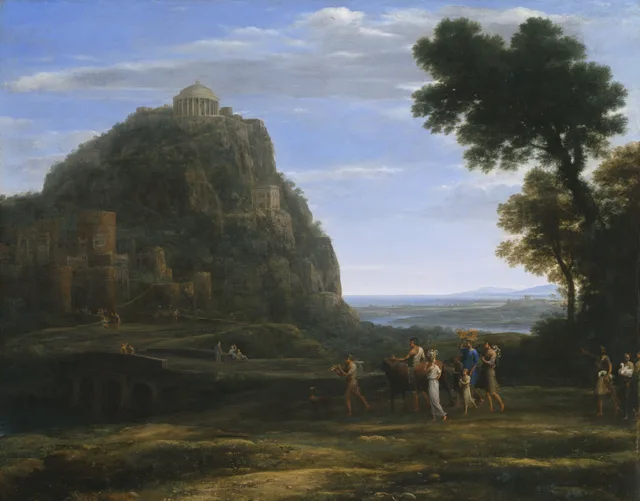
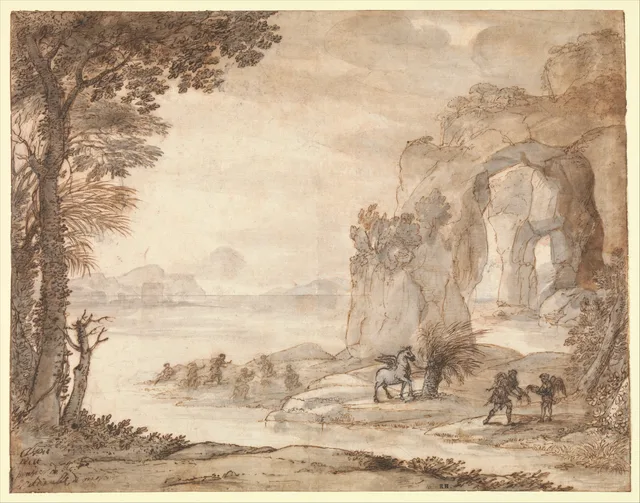
Questions to think about
- Look for itHow many people can you count in the little boat on the left?
- Why?Why do you think Claude made the sea and sky so much bigger than the burning ship?
- What about you?After seven years adrift, these women would rather burn the ships than keep moving. When people today are forced from home and wander for years, how well do the rest of us listen to how tired they are?
Same period
Painted around the same time,
somewhere else
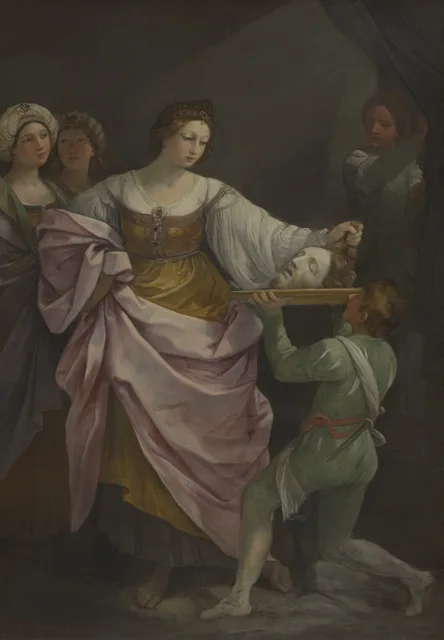 Salome with the Head of Saint John the BaptistGuido Renic. 1639–42
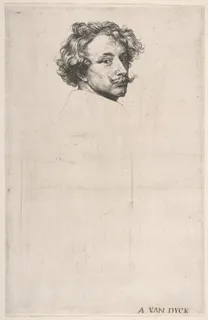 Self-Portrait, from "The Iconography"Anthony van Dyckca. 1640
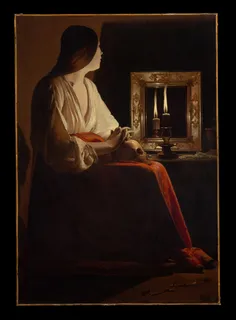 The Penitent MagdalenGeorges de La Tourca. 1640
 Krishna Revels with the Gopis: Page from a Dispersed Gita Govinda (Song of the Cowherds)Unknown artist · India (Madhya Pradesh, Malwa)ca. 1630–40
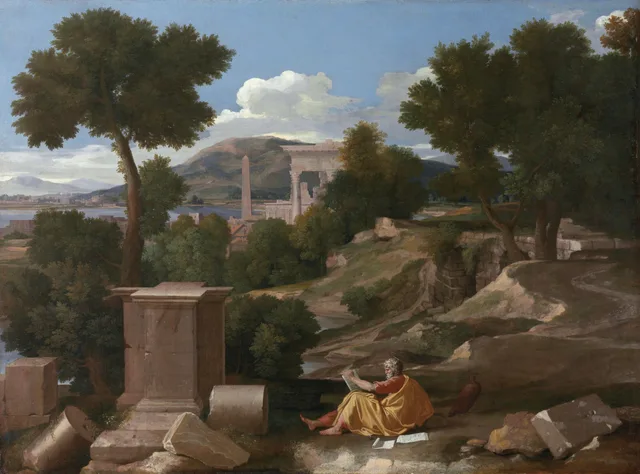 Landscape with Saint John on PatmosNicolas Poussin1640
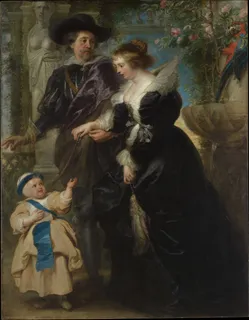 Rubens, Helena Fourment (1614–1673), and Their Son Frans (1633–1678)Peter Paul Rubensca. 1635
Too good to keep to yourself
This painting,
for someone who comes to mind
They open it at full size
and see every brushstroke.
About this work
- Artist
- Claude Lorrain · 1604–1682
- Date
- ca. 1643
- Medium
- Oil on canvas
- Size
- 105.1 × 152.1 cm
- Collection
- The Metropolitan Museum of Art
- Image
- Original long edge 3915px · shown at 2560px
- Original
- View on the museum's website ↗