 Pyeongye
Artwork · 17th century · Peter Paul Rubens
LeoTurn on Magnifier at the lower right and move slowly across the painting.
Full screen opens it edge to edge.Tap the painting to fill the screen.
Spread two fingers to look closer.
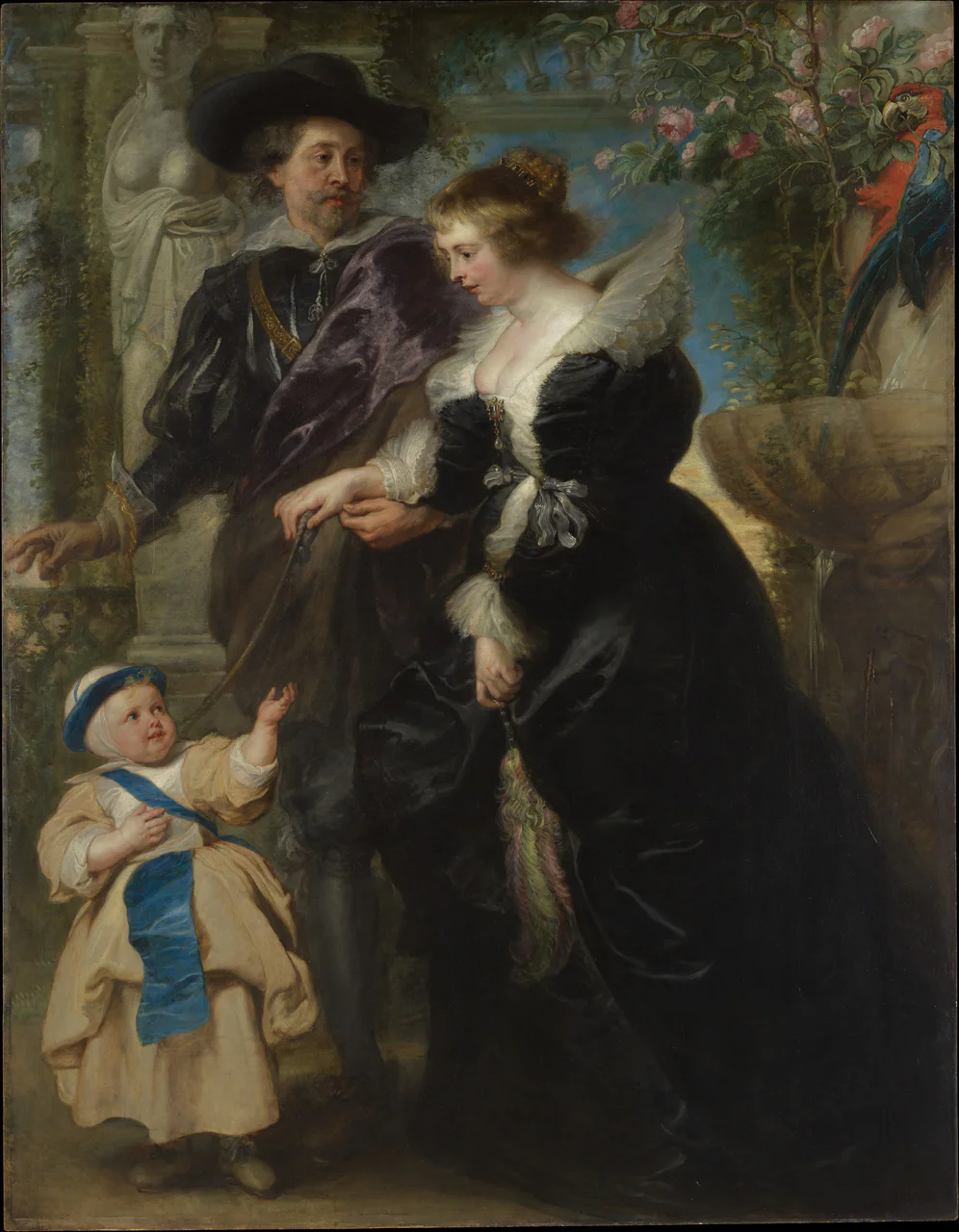
Rubens, Helena Fourment (1614–1673), and Their Son Frans (1633–1678)
Peter Paul Rubensca. 1635Oil on wood203.8 × 158.1 cm
At a glance
- A family out for a walk in a garden: the painter Rubens, his young wife Helena Fourment, and their toddler son Frans.
- Peter Paul Rubens painted it in oil on a wooden panel around 1635, in Antwerp.
- The panel is more than two meters tall, so the family appears close to life size.
Reading the picture
5 places to look closer
Tap a number on the painting to jump to its note, or a close-up to see that spot in the whole picture.
Start under the broad black hat. That face is the painter himself. His beard and the hair at his temples are going gray.
Now look at their hands. Helena rests her pale hand on his arm, and his thicker fingers hold it from below. Even the pattern on her lace cuff is there. If this portrait has a tender center, it is this small knot of hands.
Drop down to the child at the lower left. Frans wears a blue hat and a blue sash. One hand is pressed to his chest, and the other reaches up. His cheeks are round and his mouth is open. Doesn't he look like a toddler asking for something?
Follow Helena's black dress downward. A feather fan hangs from her hand. Rubens laid in the feathers with short, curling strokes of lime green and pink. Against all that black, the colors almost glitter.
Look up to the far right corner. A macaw in red and blue clings among the rose branches. Its beak is open and its head is turned, as if it is about to squawk. Below it sits a stone fountain basin.
When it was painted
Around 1635, Rubens was about fifty-eight. Helena, on his arm, was about twenty-one, and little Frans was about two. This is a portrait of the second family the painter found late in life.
That family came after grief. Rubens lost his first wife, Isabella Brant, in 1626. Four years later, at fifty-three, he married sixteen-year-old Helena Fourment, the daughter of an Antwerp merchant. In a 1634 letter to his friend, the French scholar Peiresc, he explained that he had chosen a young wife from a respectable middle-class family rather than a lady of the court, someone who would not be embarrassed to see him with a brush in his hand.
By then Rubens had stepped back from the diplomatic missions that had carried him to the courts of Spain and England, and he was back in his Antwerp studio. 1635 was a busy year. He directed the decorations for the city's grand welcome of its new governor, the Cardinal-Infante Ferdinand, and he bought a country house called Het Steen. His body, though, was increasingly troubled by gout.
Rubens died in 1640. He and Helena had five children, and the youngest, a daughter, was born after his death. Frans, the toddler in this picture, grew up and lived until 1678.
The painting had its own adventures. It spent a long time with the family of the Dukes of Marlborough in England and later belonged to Baron Édouard de Rothschild in Paris. During the Second World War it was seized by the Nazis. It was returned to him in 1946, and in 1981 it came to the Metropolitan Museum as a gift of Charles Wrightsman and his wife.
Look again at Frans's raised hand. That small reaching gesture, from a child toddling along the garden path beside his parents, brings this grand family portrait to life.
More by the same painter
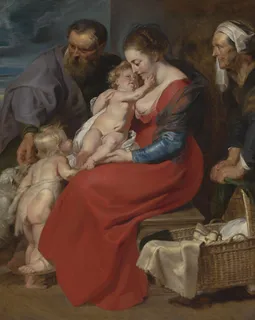
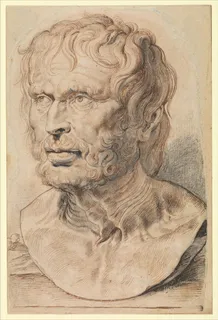
Questions to think about
- Look for itCan you find the white stone statue beside the column at the upper left, and what does it seem to be doing in this garden?
- Why?Why do you think Rubens painted his family out walking together in a garden?
- What about you?Today we snap family photos on our phones in a second, so what do we gain, and what do we lose, compared with a big painted portrait meant to last for centuries?
Same period
Painted around the same time,
somewhere else
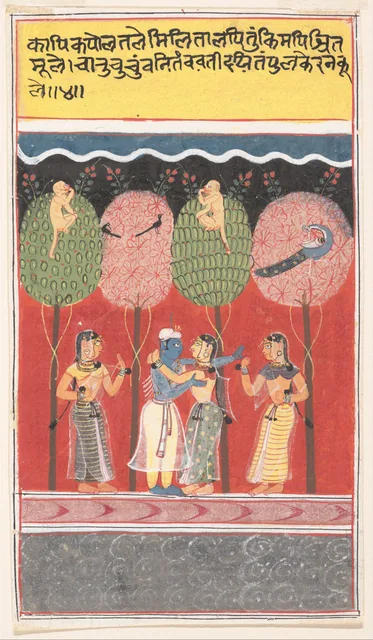 Krishna Revels with the Gopis: Page from a Dispersed Gita Govinda (Song of the Cowherds)Unknown artist · India (Madhya Pradesh, Malwa)ca. 1630–40
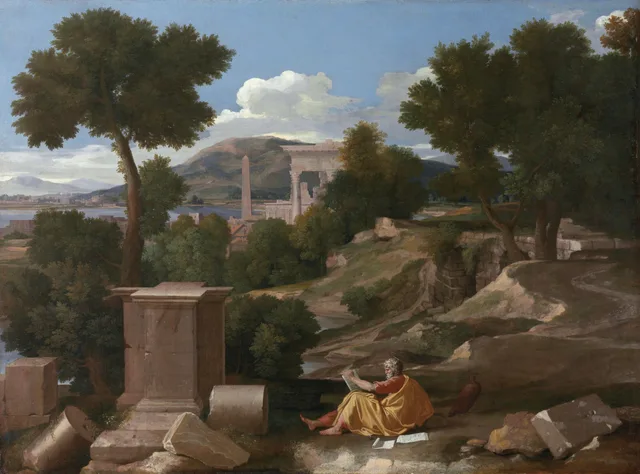 Landscape with Saint John on PatmosNicolas Poussin1640
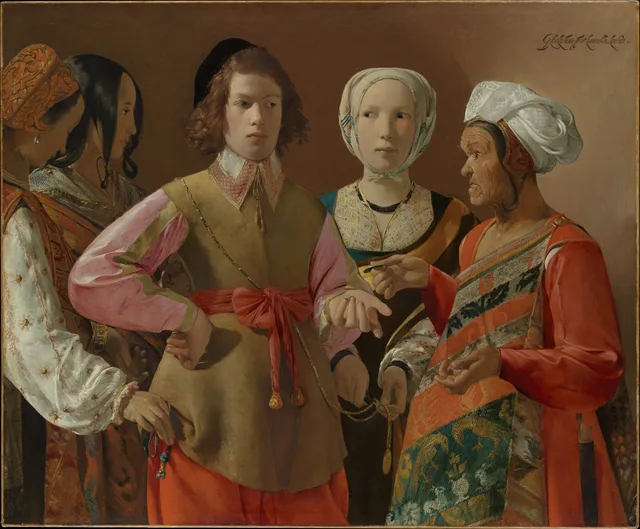 The Fortune-TellerGeorges de La Tourprobably 1630s
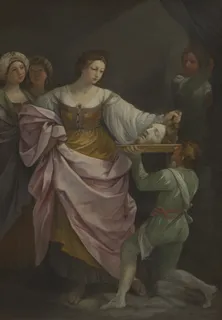 Salome with the Head of Saint John the BaptistGuido Renic. 1639–42
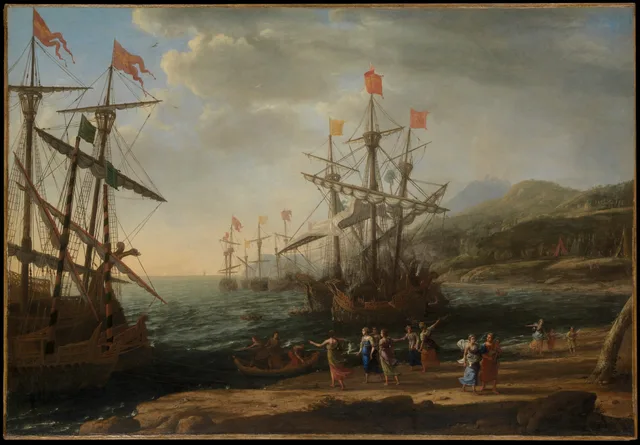 The Trojan Women Setting Fire to Their FleetClaude Lorrainca. 1643
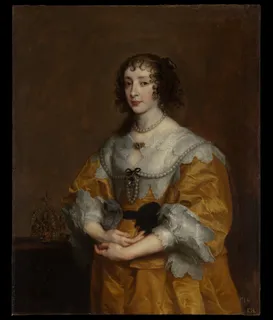 Queen Henrietta MariaAnthony van Dyck1636
Too good to keep to yourself
This painting,
for someone who comes to mind
They open it at full size
and see every brushstroke.
About this work
- Artist
- Peter Paul Rubens · 1577–1640
- Date
- ca. 1635
- Medium
- Oil on wood
- Size
- 203.8 × 158.1 cm
- Collection
- The Metropolitan Museum of Art
- Image
- Original long edge 3973px · shown at 2560px
- Original
- View on the museum's website ↗