 Pyeongye
Artwork · 17th century · Claude Lorrain
LeoTurn on Magnifier at the lower right and move slowly across the painting.
Full screen opens it edge to edge.Tap the painting to fill the screen.
Spread two fingers to look closer.
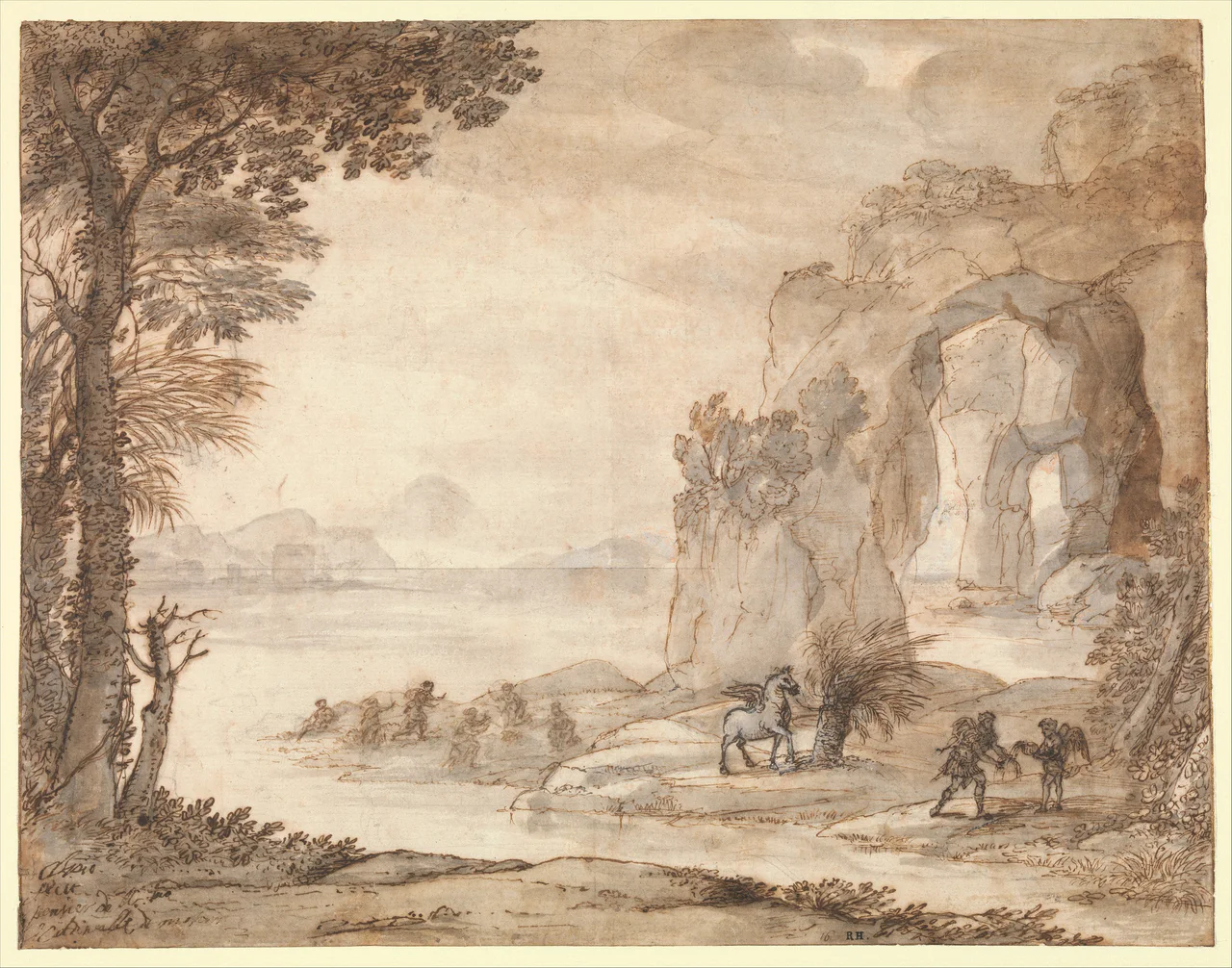
Perseus and the Origin of Coral
Claude Lorrainca. 1671Black chalk, sepia and black ink, sepia and gray wash heightened with white25.4 × 32.5 cm
At a glance
- An old myth on a quiet shore: the hero Perseus rests after a fight, and sea plants turn hard as stone to become the first coral.
- Claude Lorrain drew it around 1671 with ink, chalk, and thin washes of brown and gray.
- The people are tiny and the rocks, trees, and sea are huge, so the story hides inside the landscape.
Reading the picture
4 places to look closer
Tap a number on the painting to jump to its note, or a close-up to see that spot in the whole picture.
Zoom in on the two figures at lower right. A man in a helmet holds up a bundle of something long and drooping, like strands of seaweed. A winged child faces him, holding the same kind of tangle. They are no bigger than a fingertip, yet the title of the drawing sits right in their hands.
Just to their left stands a white horse with wings. This is Pegasus from Greek myth, said to have sprung from the blood of Medusa when Perseus cut off her head. Most of the sheet is washed in brown, but the horse's body is pale, so your eye lands on it quickly.
Now go to the water on the left. Small figures run, crouch, and carry things. A few pen lines and a touch of gray wash make them look as if they are standing in sea mist.
Look at the great rock arch on the right. Layers of deep brown and soft gray wash build up its shadows. Through the arch the sheet stays pale, and light seems to pour in from beyond.
When it was painted
Picture Rome around 1671. Claude Lorrain is in his late sixties, and a new cardinal wants a painting from him. Camillo Massimi had received his red hat only the year before, in 1670. He was a serious collector, and he had been a patron of the French painter Nicolas Poussin.
The subject the cardinal had in mind was the origin of coral, from Ovid's Metamorphoses. Medusa's severed head is laid on a bed of seaweed, and the plants turn to stone. Poussin had once drawn this same story. One reading is that Massimi wanted to see a Poussin theme reborn as a Claude landscape.
Now zoom in on the lower left corner of this sheet. A few lines of Italian are scrawled there in brown ink, and you can make out the words for cardinal and Massimi. The note records that the idea for the picture came from him.
Claude did not rush the job. Seven preparatory drawings for the painting are known today, and four of them lay out the whole scene. This one is among the quicker, sketchier ones. The Met also owns a far more finished study of the same composition, dated 1674.
The oil painting was done in 1674. It hangs today at Holkham Hall in Norfolk, England. Claude kept working in Rome until his death in 1682. This drawing later belonged to the New York banker Robert Lehman and came to the Met in 1975 with the rest of his collection.
So look once more at the two small figures at lower right. That little exchange of seaweed is the moment Claude drew again and again, from one cardinal's request through seven sheets of paper to a finished canvas.
More by the same painter
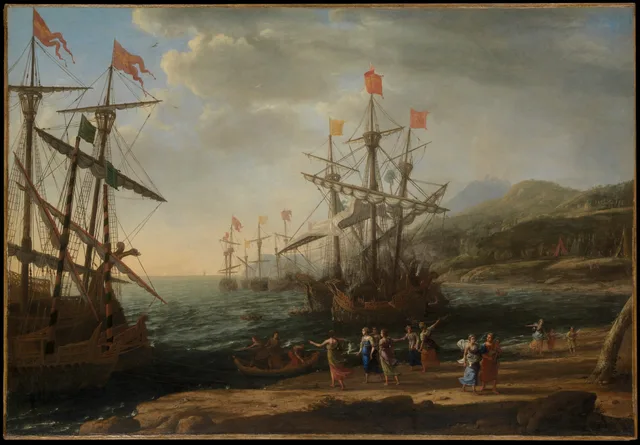
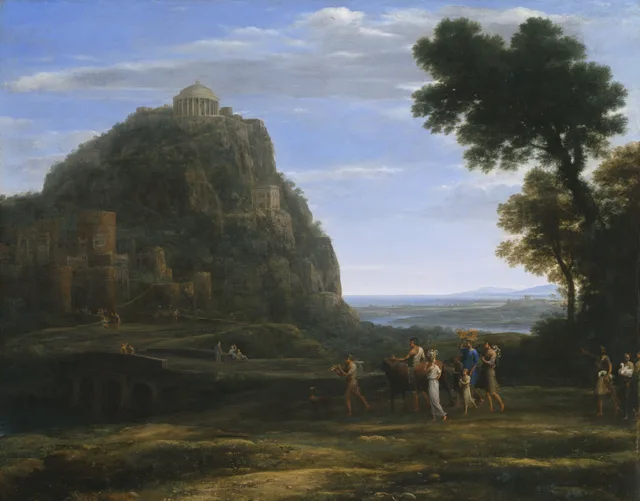
Questions to think about
- Look for itHow many people can you find in the whole drawing?
- Why?Why would Claude tell a hero's story and make the hero so small?
- What about you?People once explained coral with a myth. Today reefs are turning white and dying. What story will we tell about that?
Same period
Painted around the same time,
somewhere else
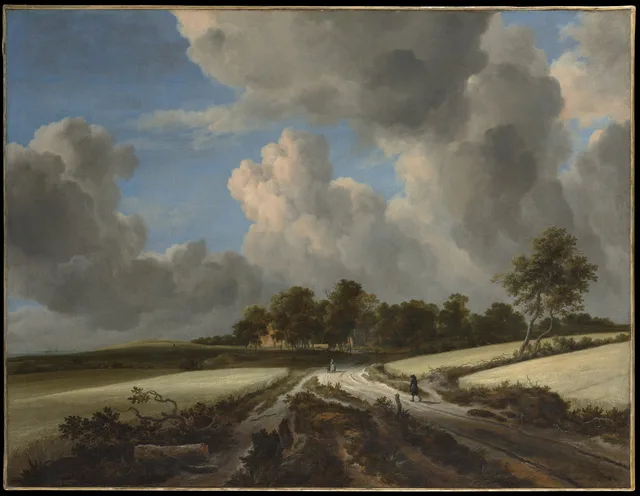 Wheat FieldsJacob van Ruisdaelca. 1670
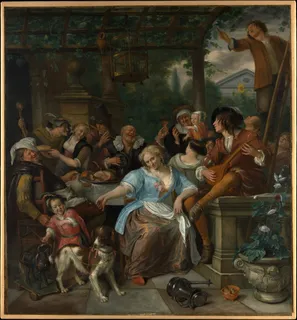 Merry Company on a TerraceJan Steenca. 1670
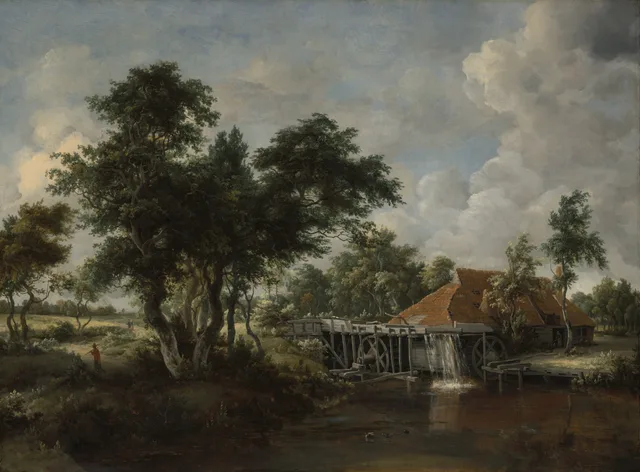 The Watermill with the Great Red RoofMeindert Hobbemac. 1665
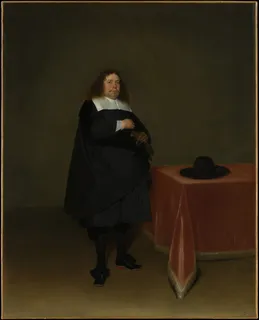 Burgomaster Jan van Duren (1613–1687)Gerard ter Borch the Youngerca. 1666–67
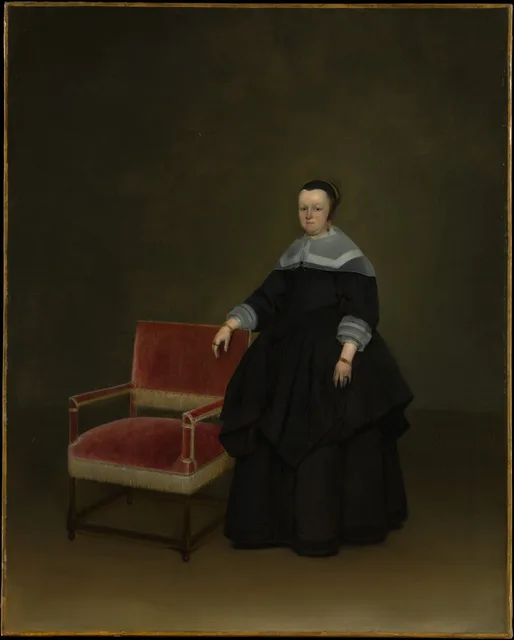 Margaretha van Haexbergen (1614–1676)Gerard ter Borch the Youngerca. 1666–67
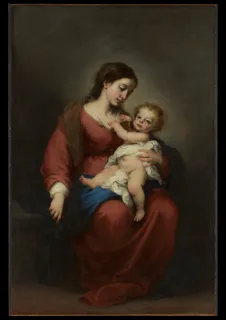 Virgin and ChildBartolomé Estebán Murillo1670s
Too good to keep to yourself
This painting,
for someone who comes to mind
They open it at full size
and see every brushstroke.
About this work
- Artist
- Claude Lorrain · 1604–1682
- Date
- ca. 1671
- Medium
- Black chalk, sepia and black ink, sepia and gray wash heightened with white
- Size
- 25.4 × 32.5 cm
- Collection
- The Metropolitan Museum of Art
- Image
- Original long edge 3901px · shown at 2560px
- Original
- View on the museum's website ↗