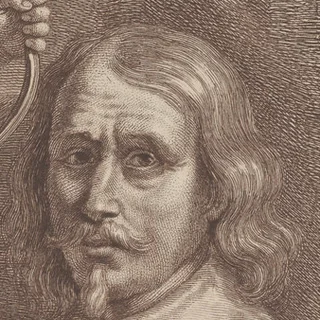
Pyeongye

Painters · 17th century
Guido Reni
1575–1642
A Baroque painter from Bologna who worked for Roman cardinals, a Spanish ambassador and his own city government, and gave holy figures soft light and clear, pale color.
Scenes from a life
The life of Guido Reni,
scene by scene
- 1580sBologna
A boy of about ten is sent off to learn a trade. Guido was the only child of Daniele Reni, a Bologna musician. His first master was Denys Calvaert, a painter from Flanders who ran a busy studio in the city.
Two other future painters, Francesco Albani and Domenichino, also trained there. In the mid-1590s Reni left Calvaert and joined the rival academy founded by the Carracci family of painters.
- 1604Rome
Cardinal Pietro Aldobrandini hands a big altarpiece to a young painter from Bologna. The picture was meant for the church of San Paolo alle Tre Fontane, south of Rome. Its subject was Saint Peter being crucified upside down.
Reni had arrived in Rome around 1601. Caravaggio had already painted the same subject for the church of Santa Maria del Popolo. The Vatican Museums describe Reni's picture as a response to Caravaggio's. It became Reni's first major success in Rome, and it now hangs in the Vatican's picture gallery.
- 1614Rome
Cardinal Scipione Borghese, nephew of Pope Paul V, had built a garden house on the Quirinal Hill. He asked Reni to paint the ceiling of its main hall. Reni painted Aurora, goddess of the dawn, scattering flowers as she flies ahead of Apollo's chariot.
Look up and you see the Hours, joined hand in hand, circling the chariot as it races across the sky. The fresco is still on that ceiling today.
- 1618–22Naples
A request arrives from Naples Cathedral. Would Reni paint the ceiling of the new chapel of Saint Januarius, the city's patron saint? He traveled south to begin.
The local painters did not welcome outsiders. Belisario Corenzio, Battistello Caracciolo and Jusepe de Ribera were accused of threatening and attacking artists from other cities. Reni left Naples in a hurry. The chapel went on to change painters several times.
- 1627Rome
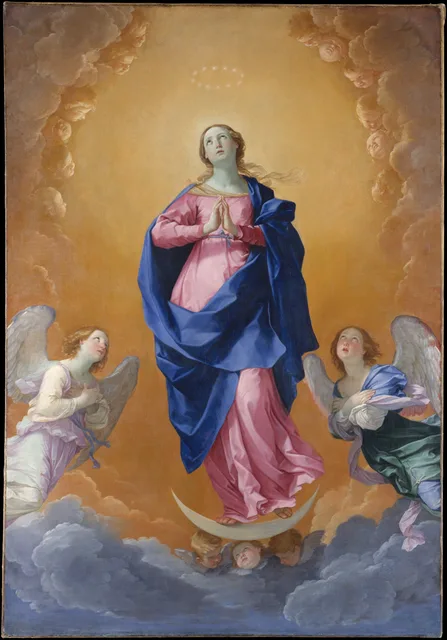
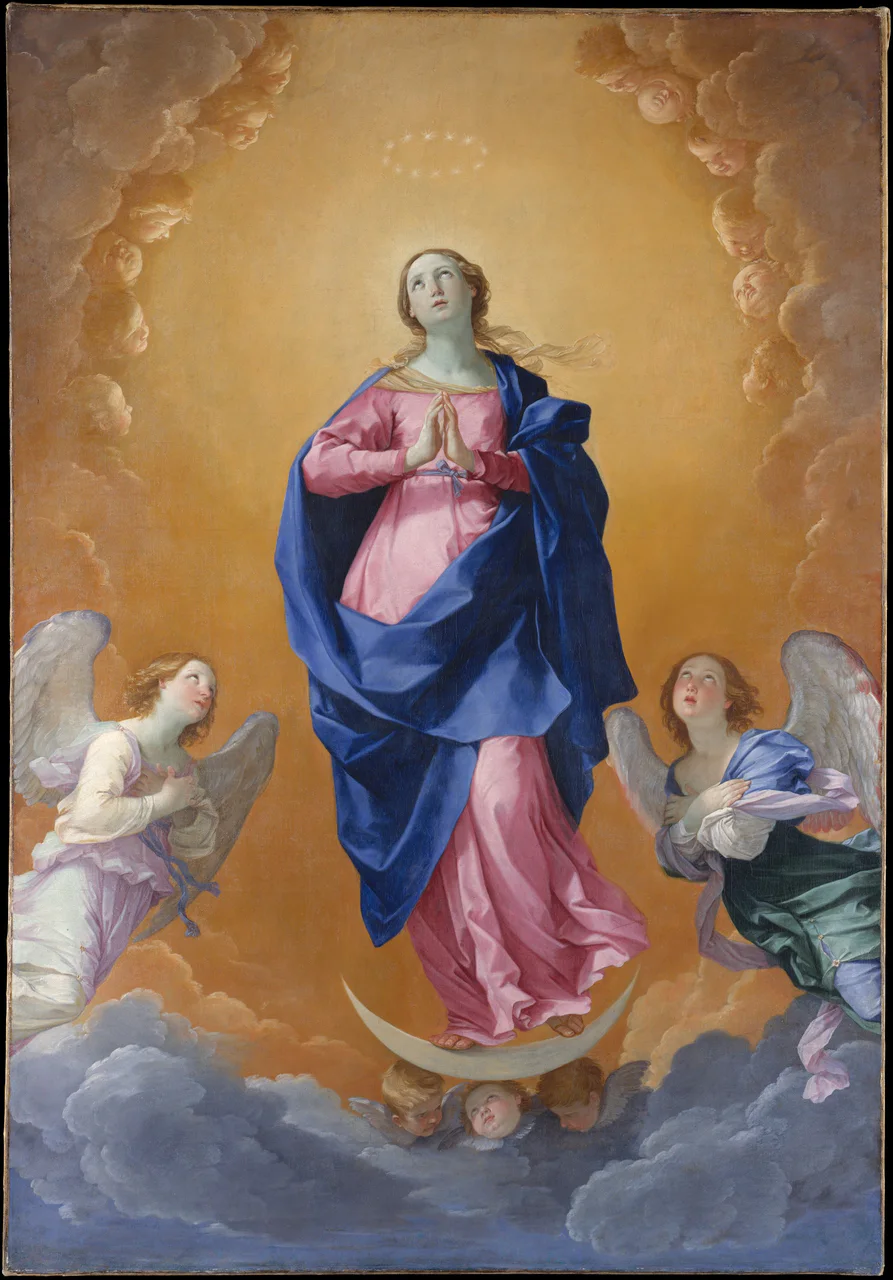
The Spanish ambassador in Rome orders a canvas almost nine feet tall from Reni. It was meant for a princess of the Spanish royal family. Scholars identify the ambassador as Iñigo Vélez de Guevara, Count of Oñate.
Reni set a young Virgin in a golden sky, in a pink dress and a deep blue cloak, her hands joined, her feet on a thin crescent moon.Artwork: reni-the-immaculate-conception
- 1630Bologna
Plague sweeps through Bologna. As thousands die, the city government asks Reni for a huge painted banner on silk. It shows the Virgin and Child in the sky above seven saints who protect the city.
The banner, more than twelve feet tall, was carried in procession from the city hall to the church of San Domenico. It held a whole city's grief and thanks in one picture. Today it hangs in the Pinacoteca Nazionale in Bologna.
- 1642Bologna
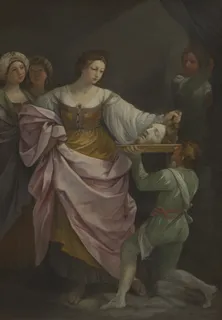
Reni earned a great deal of money, but he could not stop gambling. In his last years his debts grew, and unfinished canvases piled up in his studio. Salome with the Head of Saint John the Baptist is one of those late pictures.
Salome grips John's hair and looks down at the head on a platter. A servant in green kneels to hold the platter up. Her pink skirt falls in broad folds, and two women in turbans stand behind her on the left. The figure at the upper right is as faint as smoke. The Art Institute of Chicago describes the painting as unfinished.
Reni died in Bologna on 18 August 1642. He was given a grand funeral and buried in the church of San Domenico. Twenty-three years later the Bologna painter Elisabetta Sirani, who followed his style, was laid in the same tomb.
 Painted around this timeSalome with the Head of Saint John the Baptist
People around them
- Denys Calvaertthe Flemish painter in Bologna who gave the young Reni his first training.
- Ludovico Carraccithe painter who, with his cousins, founded the Bologna academy that Reni joined.
- Pietro Aldobrandinithe cardinal whose Crucifixion of Saint Peter gave Reni his first big success in Rome.
- Scipione Borghesethe pope's nephew and patron who asked Reni for the Aurora ceiling.
- Elisabetta Siranithe Bologna painter, daughter of Reni's pupil Giovanni Andrea Sirani, buried in Reni's tomb.
- Carlo Cesare Malvasiathe Bologna writer whose 1678 book Felsina pittrice told Reni's life in detail.
Works