Pyeongye
Painters · 17th century
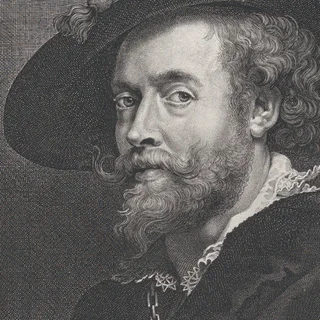
Peter Paul Rubens
1577–1640
A Flemish painter who ran a busy workshop in Antwerp, painted for courts across Europe, and also carried peace talks between kings.
Scenes from a life
The life of Peter Paul Rubens,
scene by scene
- 1577Siegen
Rubens was not born in Antwerp. He was born in Siegen, a small German town, because his family was living in exile. His father, Jan Rubens, an Antwerp lawyer, had left the city during the religious troubles. In Germany Jan had an affair with Anna of Saxony, the wife of William of Orange, and was arrested and locked up.
His wife, Maria Pypelinckx, pleaded again and again for his life. Jan was let out and lived under watch in Siegen with his family. After he died in Cologne in 1587, Maria took the children home to Antwerp. Around the age of thirteen, Peter Paul served as a page to a countess before he began training as a painter.
- 1603Valladolid
At twenty-five, Rubens set out for Spain with gifts from the Duke of Mantua for King Philip III and his powerful minister, the Duke of Lerma. On the road it rained for weeks. The paintings he was carrying swelled and flaked.
Rubens repaired what he could. In place of two pictures that were beyond saving, he offered one of his own, Democritus and Heraclitus. That same year he painted the Duke of Lerma on horseback, riding straight toward the viewer.
- 1611Antwerp
Rubens had been back from Italy for less than three years. In a letter of May 1611 he reported that more than a hundred young men wanted to train with him. Some had been waiting for years with other masters.
That summer his brother Philip, a scholar, died. Rubens painted The Four Philosophers, with Philip, Philip's teacher Justus Lipsius, and himself. Above them, in a niche, he placed a marble bust believed to be the Roman philosopher Seneca. It was a bust Rubens had acquired in Italy and brought home.
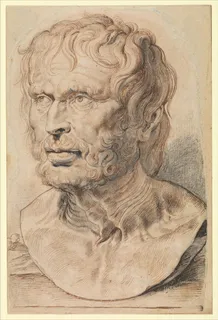 Painted around this timeBust of Pseudo-Seneca
- 1618Antwerp
Sir Dudley Carleton, the English ambassador at The Hague, owned a large collection of ancient marble sculpture. In April 1618 Rubens offered to trade paintings for it and sent a list. For each picture he gave the size and said whether he had painted it all himself or retouched a pupil's work.
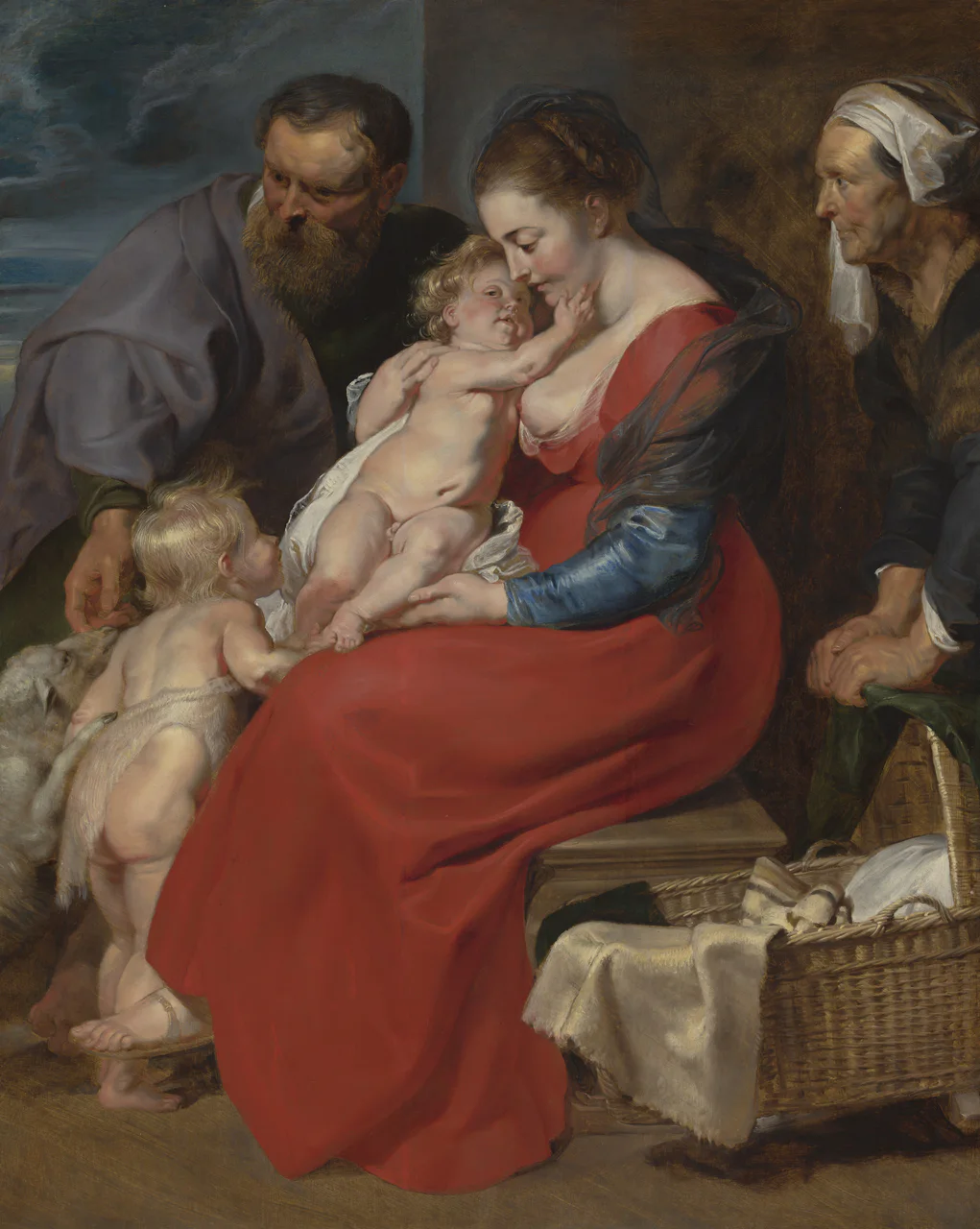
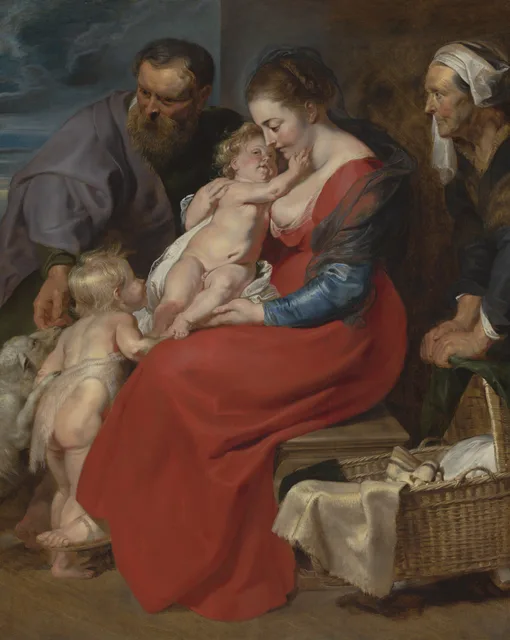
Carleton at first refused one picture because it was not entirely by Rubens's own hand. In a big workshop, many hands often shared one canvas. The Holy Family with Saints Elizabeth and John the Baptist comes from these years, and the same design was made in several versions.
 Painted around this timeThe Holy Family with Saints Elizabeth and John the Baptist
- 1625Paris
In 1622 Marie de' Medici, mother of the French king, signed a contract with Rubens. She wanted the long gallery of her Luxembourg Palace in Paris filled with paintings of her own life. Rubens painted twenty-four large canvases and sent them to Paris.
The pictures went up in the spring of 1625. It was the season of her daughter Henrietta Maria's proxy wedding to King Charles I of England. Years later, Rubens's former assistant Anthony van Dyck would paint that same queen.
- 1630London
Rubens came to London as a painter and a diplomat. His task, for the Spanish king, was to help make peace between England and Spain. In 1629 the University of Cambridge gave him an honorary degree.
Early in 1630 Charles I knighted him. The king also asked him to paint the ceiling of the Banqueting House at Whitehall, and those canvases were installed in 1636. Back home in December 1630, Rubens married sixteen-year-old Helena Fourment.
- 1635Antwerp
In April 1635 the new governor, the Cardinal-Infante Ferdinand, made his entry into Antwerp. The city greeted him with painted arches and stages along the streets, designed by Rubens. Later the city published a book of engravings recording the decorations.
That year Rubens also bought a country house, Het Steen. Around this time he painted himself walking in a garden with Helena and their small son Frans, almost life-size on a large wooden panel.
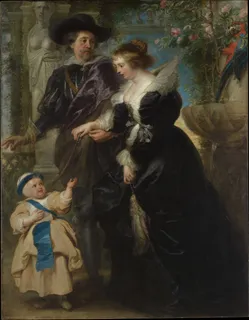 Painted around this timeRubens, Helena Fourment (1614–1673), and Their Son Frans (1633–1678)
- 1640Antwerp
In May 1640, after years of gout, Rubens died at sixty-two. In his will he set aside one painting for Helena alone. It showed her wrapped in nothing but a fur, and the will called it The Little Fur.
He was buried in a chapel of St. James's Church in Antwerp. Helena kept the painting for many years. Today it hangs in the Kunsthistorisches Museum in Vienna.
People around them
- Philip Rubenshis older brother, a scholar who shared a house with him in Rome.
- Isabella Branthis first wife, married in 1609, who died in 1626.
- Helena Fourmenthis second wife, married in 1630, who appears in many of his paintings.
- Anthony van Dycka young painter who worked in Rubens's workshop.
- Dudley Carletonthe English ambassador who traded ancient sculpture for Rubens's paintings.
Works
Paintings by
Peter Paul Rubens on Pyeongye
Contemporaries