Pyeongye
Painters · 17th century
Frans Hals
1582–1666
Born in Antwerp and settled for life in Haarlem, he caught laughing faces and noisy moments with quick, bold strokes of the brush.
Scenes from a life
The life of Frans Hals,
scene by scene
- 1616Antwerp
In 1616, Frans Hals, about thirty-four, spends several months in Antwerp, the city where he was born. His family had fled north to Haarlem three decades earlier, after Spanish troops retook Antwerp.
The year before, his first wife, Anneke, had died. Back from Antwerp, Hals married Lysbeth Reyniers on February 12, 1617. They would have a large family together.
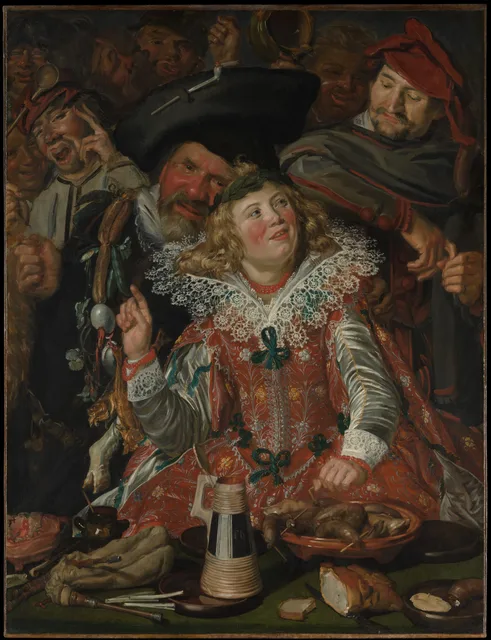
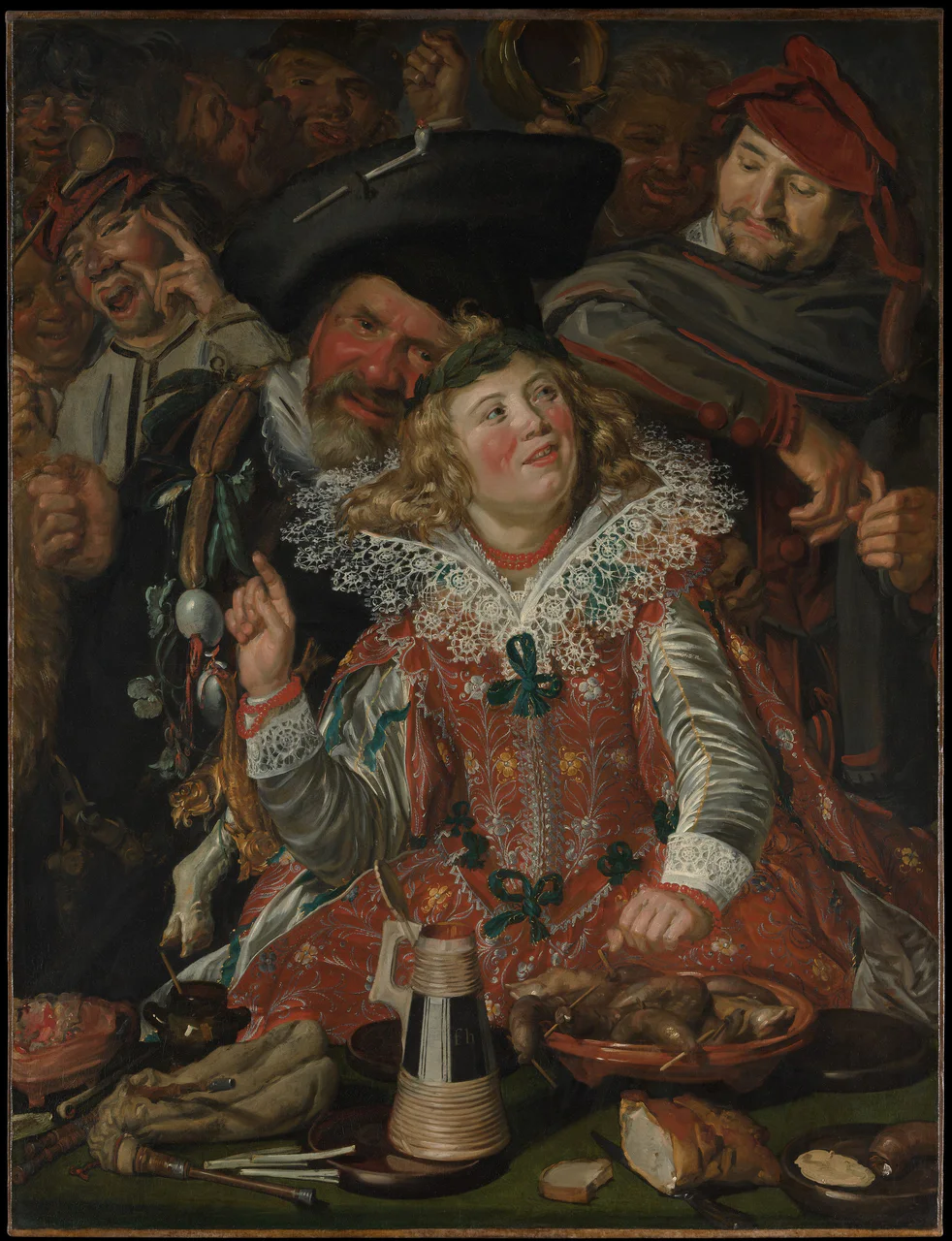
Merrymakers at Shrovetide comes from these years. It is carnival, the last feast before Lent, and laughing faces and raised cups crowd the canvas right up to its edges.
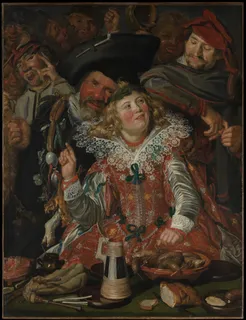 Painted around this timeMerrymakers at Shrovetide
- 1633Amsterdam
In 1633 an Amsterdam civic guard company hires Hals, who lives in Haarlem, to paint a group portrait. The men serve under Captain Reynier Reael.
Before the picture is done, a quarrel breaks out. Hals insists that they come to Haarlem to sit for him. They refuse. In 1637 the Amsterdam painter Pieter Codde is brought in to finish the picture.
- 1635Haarlem
In October 1635, the young painter Judith Leyster brings a complaint to the Haarlem painters' guild. An apprentice who had just started in her studio left after a few days and went to work for Hals. She wants the boy's mother to pay her.
The guild ordered the mother to pay Leyster part of what she asked. But Leyster was fined too, for never registering the apprentice with the guild. So a quarrel between two Haarlem painters over one pupil ended up in the records.
- 1639Haarlem
In 1639 the officers of Haarlem's St. George civic guard commission a group portrait from Hals. It would be his sixth and last civic guard painting. Unlike the others, the men stand in two rows.
The Frans Hals Museum in Haarlem identifies one face in the crowd as Hals himself. Scholars still debate whether that face is really his.
- 1654Haarlem
In 1654 a Haarlem baker named Jan Ykesz takes the contents of Hals's house and five of his paintings. Hals owes him 200 guilders, for a loan and for bread bought on credit. The painter is past seventy, and money is tight.
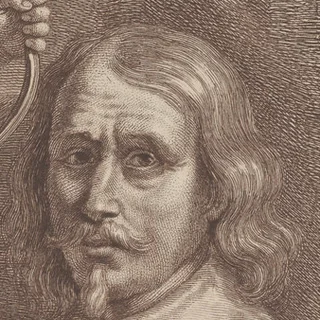
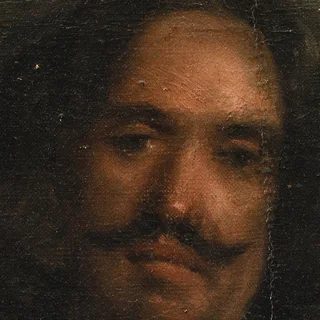
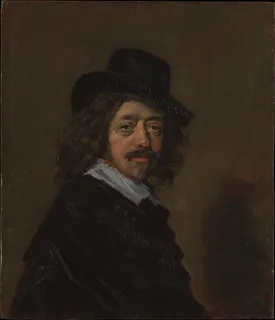
The small picture called Frans Hals on this site shows his face in the 1650s. Long hair spills from under a black hat, and above a white collar, a mustached face turns to look at us from the side.
Painted around this timeFrans Hals (1582/83–1666) - 1662Haarlem
In 1662 the town of Haarlem decides to support the aging painter. In 1664, at his request, he is given three wagonloads of peat for heating.
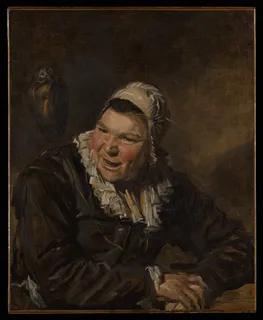
In 1663 Barbara Claes died, a Haarlem woman whom people called Malle Babbe, Mad Babbe. The painting of her on this site is in the style of Hals. A woman in a white cap laughs with her mouth open, and an owl perches on her shoulder.
Painted around this timeBarbara Claes (died 1663, called “Malle Babbe”) - 1666Haarlem
On September 1, 1666, Hals is buried in the choir of the Church of St. Bavo in Haarlem. He was over eighty. Two years earlier he had painted the men and the women who ran the Haarlem almshouse for old men, in two group portraits.
After his death, his widow Lysbeth asked the town's poor relief for help. His name faded for a long time. It came back in the 1800s, when painters rediscovered his fast, open brushwork.
People around them
- Lysbeth Reyniershis second wife, married in 1617, who outlived him in Haarlem.
- Dirck Halshis younger brother, a Haarlem painter of merry gatherings.
- Judith Leystera Haarlem painter who took her complaint about an apprentice to the guild.
- Pieter Coddethe Amsterdam painter who finished the civic guard portrait Hals left behind.
Works