 Pyeongye
Artwork · 18th century
LeoTurn on Magnifier at the lower right and move slowly across the painting.
Full screen opens it edge to edge.Tap the painting to fill the screen.
Spread two fingers to look closer.
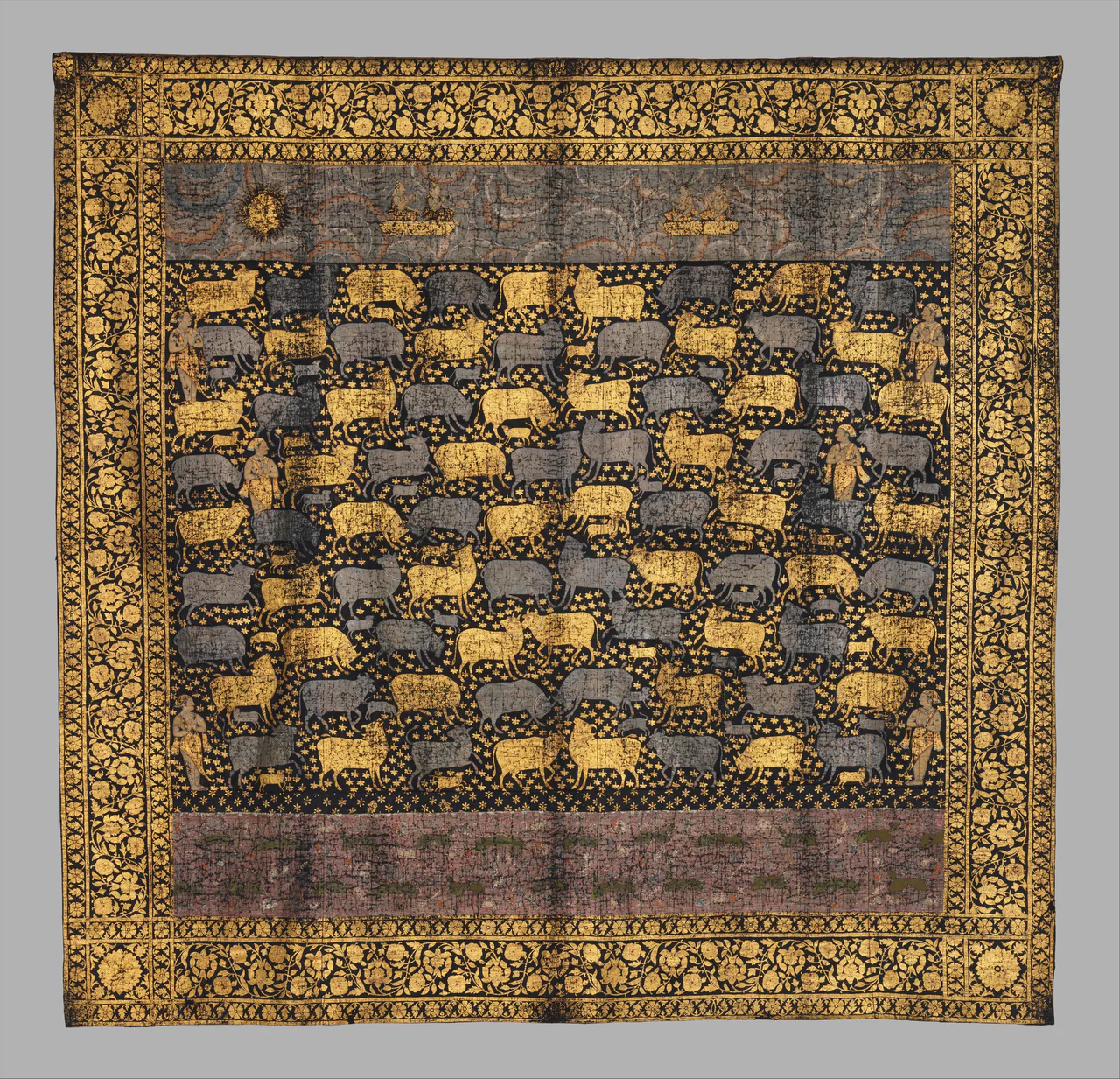
Pichhwai for the Festival of Cows
Unknown artist · India, Deccan, Aurangabad (?)late 18th centuryPainted and printed gold and silver leaf and opaque watercolor on indigo-dyed cotton248 × 262 cm
At a glance
- A herd of gold and silver cows fills a cotton cloth dyed deep indigo, with cowherds standing among them.
- Unnamed craftsmen in India made it in the late 1700s with gold leaf, silver leaf, and paint.
- About two and a half meters on each side, it is a pichhwai, a cloth hung behind the image of Krishna in a temple.
Reading the picture
5 places to look closer
Tap a number on the painting to jump to its note, or a close-up to see that spot in the whole picture.
Find the cowherd standing near the right edge. He wears a golden turban and holds his hands together in front of his chest. Cows press in close around him. Look around the cloth and you can find about six cowherds like him.
Zoom in on the herd in the middle. Gold cows and silver cows alternate, each with a beaded necklace. Small calves squeeze in between the big animals. Every empty gap is sprinkled with tiny gold flowers, like stars on a night sky.
Look at the band across the top. On the left, a golden sun sends out spiky rays, and clouds curl around it. Nearby, crowned figures sit side by side on a golden platform. Even the beings above the clouds seem to be taking part in the day of the cows.
Now the band at the very bottom. On a pinkish ground, green leaf-like shapes run in rows. Sky above, cows in the middle, a pink band below. One cloth is divided into three layers.
Zoom in on the top left corner. The border is packed with gold flowers and vines. The makers painted some of the gold and silver leaf by hand and stamped some of it on like a print. That is why the same flower shapes repeat in neat rows.
When it was painted
One late autumn day, the great cloth behind the shrine is changed. This one goes up behind the image: a deep indigo field crowded with gold and silver cows. The day is Gopashtami, the festival of cows.
The Metropolitan Museum explains that this cloth was made for Gopashtami. The festival falls in late autumn. It celebrates the moment young Krishna moved up from looking after calves to herding the full-grown cows. On this day people bathe and decorate cows and worship them, so the center of the cloth belongs to the herd and its frisky calves.
Cloths like this hung in temples of the Pushtimarg, a devotional tradition centered on Krishna. It was founded by Vallabhacharya around the turn of the sixteenth century, and its temples honor Shri Nathji, a stone image of Krishna. At pilgrimage temples, large painted cloths were hung behind the image and changed to follow the festival calendar. The word pichhwai itself means something that hangs behind.
So why the Deccan, far to the south? The image of Shri Nathji first stood in Braj, in northern India. In 1672 it was moved to Nathdwara, in the kingdom of Mewar in Rajasthan. The museum notes that a community of Shri Nathji devotees moved to the Deccan in this period, and that an indigo ground and lavish gold and silver are typical of the pichhwais made for them. That is why the museum suggests Aurangabad, with a question mark.
The names of the craftsmen who made the cloth are not recorded. The Met bought it in 2003 with gifts from its Friends of Asian Art.
Now look at the cloth again. Here and there among the cows stand the cowherds. The boy who once minded calves has become a cowherd, and the herd itself tells that story.
Questions to think about
- Look for itHow many calves can you find hiding among the big cows?
- Why?Why do you think the makers left out grass and ground, filling the space around the cows only with gold flowers?
- What about you?This festival treated cows as precious, almost holy; how well do you think we treat the animals we live alongside today?
Same period
Painted around the same time,
somewhere else
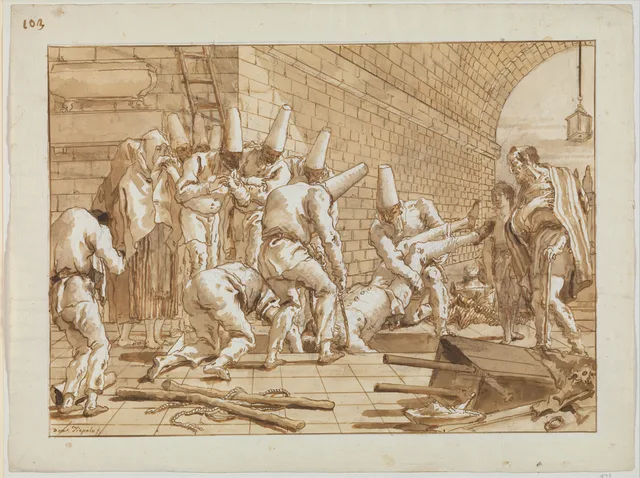 The Burial of PunchinelloGiovanni Domenico Tiepoloca. 1800
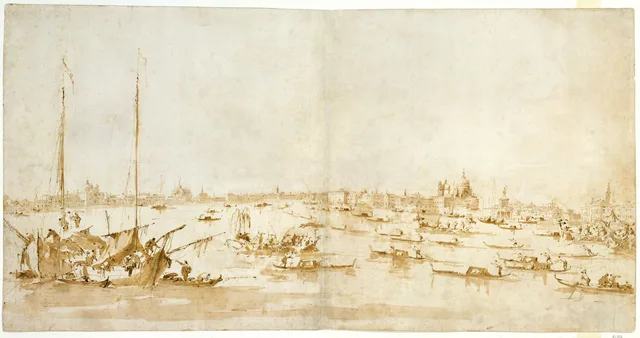 Panaromic View of the Bacino di San Marco, Looking up the Giudecca CanalFrancesco Guardi1780–93
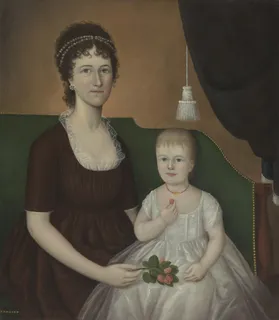 Elizabeth Grant Bankson Beatty (Mrs. James Beatty) and Her Daughter SusanJoshua Johnsonc. 1805
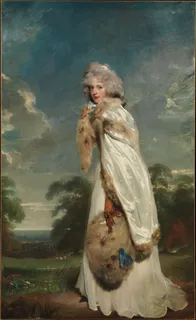 Elizabeth Farren (born about 1759, died 1829), Later Countess of DerbySir Thomas Lawrence1790
 “Hour of the Rat: Mistress,” from the series Women’s Daily Customs (Fuzoku bijin tokei)Kitagawa Utamaro1790
 Comtesse de la Châtre (Marie Charlotte Louise Perrette Aglaé Bontemps, 1762–1848)Elisabeth Louise Vigée Le Brun1789
Too good to keep to yourself
This painting,
for someone who comes to mind
They open it at full size
and see every brushstroke.
About this work
- Artist
- Unknown artist · India, Deccan, Aurangabad (?)
- Date
- late 18th century
- Medium
- Painted and printed gold and silver leaf and opaque watercolor on indigo-dyed cotton
- Size
- 248 × 262 cm
- Culture
- India, Deccan, Aurangabad (?)
- Collection
- The Metropolitan Museum of Art
- Image
- Original long edge 3893px · shown at 2560px
- Original
- View on the museum's website ↗