 Pyeongye
Artwork · 19th century · Giovanni Domenico Tiepolo
LeoTurn on Magnifier at the lower right and move slowly across the painting.
Full screen opens it edge to edge.Tap the painting to fill the screen.
Spread two fingers to look closer.
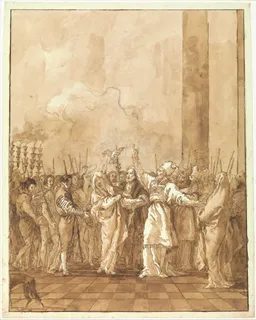
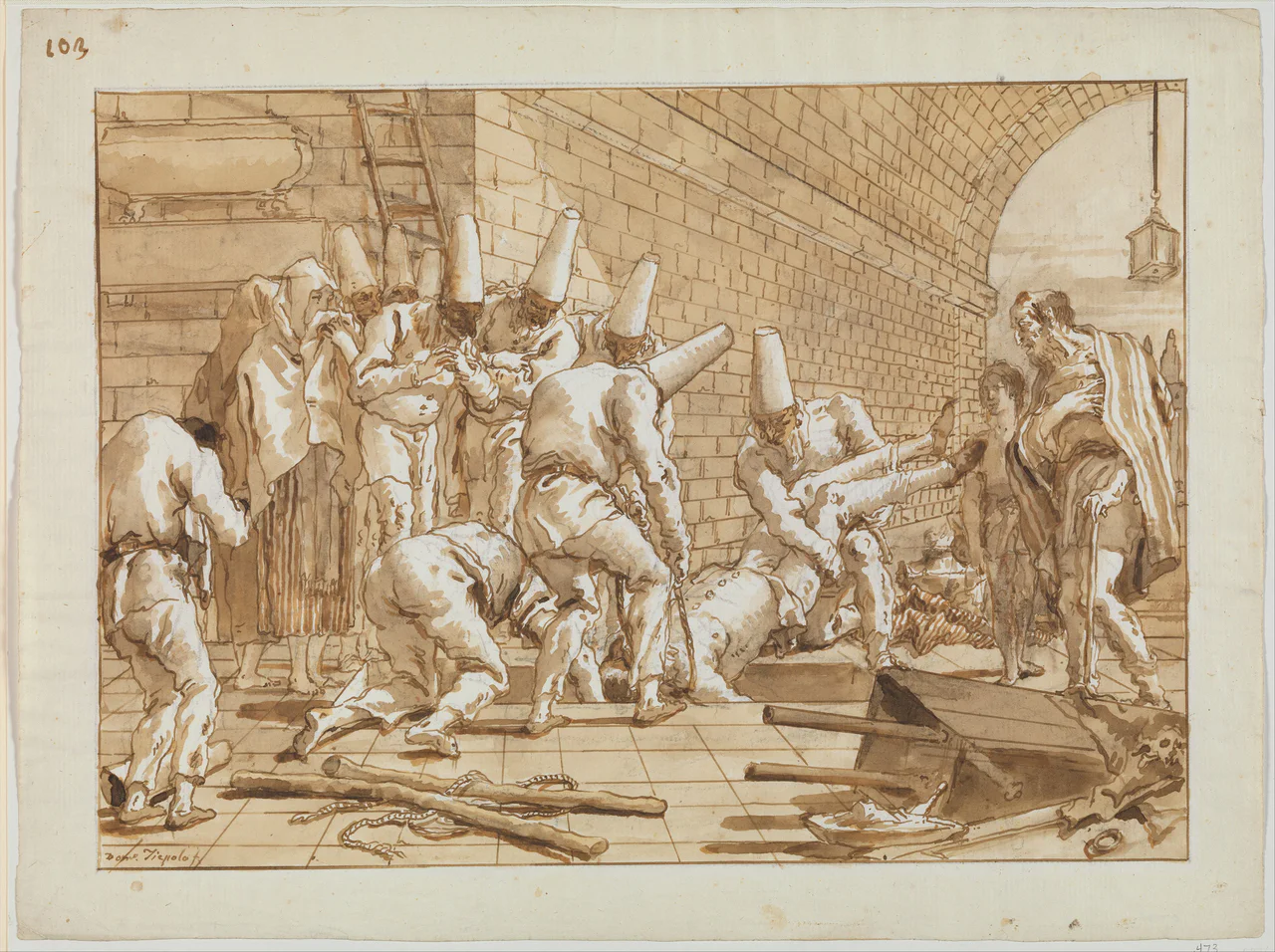
The Burial of Punchinello
Giovanni Domenico Tiepoloca. 1800Pen and brown ink, brown and yellow wash, over black chalk.35.3 × 47.3 cm
At a glance
- Clowns called Punchinellos, in baggy white clothes and tall cone hats, lower one of their own into a grave beneath a brick arch.
- The Venetian artist Giovanni Domenico Tiepolo drew it around 1800, when he was past seventy, in pen with brown and yellow wash.
- It is a funeral, yet the mourners and the men on the ropes all wear the same clown costume. You keep looking, unsure whether to feel sad or to laugh.
Reading the picture
5 places to look closer
Tap a number on the painting to jump to its note, or a close-up to see that spot in the whole picture.
Zoom in on the Punchinellos crowded together at the upper left. They all wear tall, flat-topped cone hats and dark, hook-nosed masks. Some press their hands to their eyes. Others bury their faces in cloths and weep. There is something strange and touching about a masked clown crying.
Look at the body being lowered into the pit at the bottom center. It is a round, puffy white costume dotted with buttons. The Punchinellos around it grip ropes and bend at the waist to take the weight. Dark brown wash fills the shadowy inside of the grave.
Zoom in on the two figures standing apart at the right. A bearded old man in a striped cloak and a young man watch the burial. They seem to be onlookers, watching the scene just as we are.
Look at the floor beside the raised gravestone at the lower right. A skull lies there. A few strokes mark the eye sockets and teeth, yet you recognize it at once. In the middle of a comic clown funeral, Tiepolo slips in a quiet reminder of death.
Zoom in on the lower left corner. In brown ink it reads Dom.o Tiepolo f, which means Domenico Tiepolo made it. Just above, poles and ropes lie scattered across the floor.
When it was painted
Around 1800, Domenico Tiepolo was an old man in his seventies. As a young painter he had worked beside his father, the celebrated Giovanni Battista Tiepolo. In the early 1750s the two painted ceilings in the Prince-Bishop's Residence in Würzburg, Germany, and from 1762 in the Royal Palace in Madrid. When his father died in Madrid in 1770, Domenico went home to Venice.
In 1797 the Republic of Venice, which had lasted more than a thousand years, fell to Napoleon. Domenico spent much of his last years at the family villa at Zianigo, not far from Venice. He covered the walls of its rooms with frescoes, and in one room Punchinellos take over completely. Those frescoes were taken off the walls in the early twentieth century and are now in Ca' Rezzonico, a museum in Venice.
On paper, too, he followed Punchinello. He drew the clown's whole life, from birth to work, marriage, illness, and death, in a series of 104 sheets. On the title page he wrote an Italian title meaning an entertainment for children. Punchinello himself is a clown from the improvised masked theater of Naples.
Domenico died in Venice in 1804. The series stayed together until a London auction in 1920 scattered it among many owners. In 1980 about fifty of the sheets hung together again in an exhibition at the Frick Collection in New York. This one passed to the banker Robert Lehman and came to the Met in 1975.
Look again at the white body sinking into the grave on its ropes. After his republic vanished, an old painter followed this clown through more than a hundred pages, and here, at last, he lays him to rest.
More by the same painter
Questions to think about
- Look for itHow many Punchinellos in cone hats can you count in this drawing?
- Why?Why do you think Domenico put both a skull and weeping clowns into this funeral scene?
- What about you?After his country fell, Domenico drew the comic life and death of a clown. When we tell sad stories with humor, does it make the sadness lighter, or help us bear it?
Same period
Painted around the same time,
somewhere else
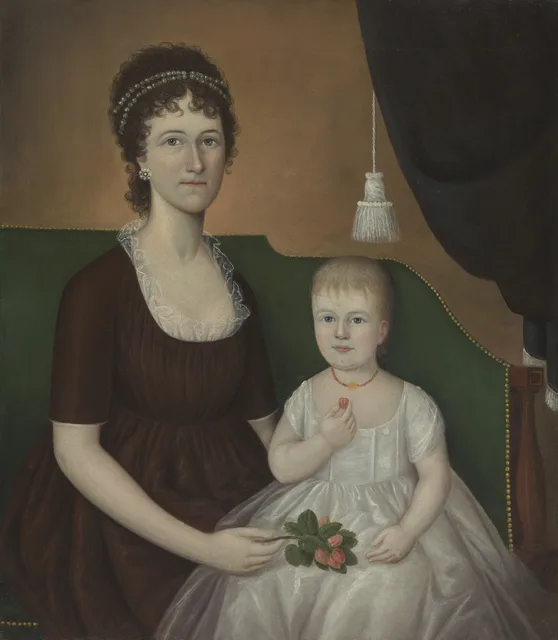 Elizabeth Grant Bankson Beatty (Mrs. James Beatty) and Her Daughter SusanJoshua Johnsonc. 1805
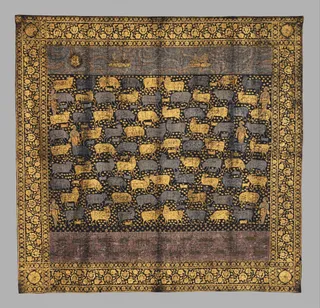 Pichhwai for the Festival of CowsUnknown artist · India, Deccan, Aurangabad (?)late 18th century
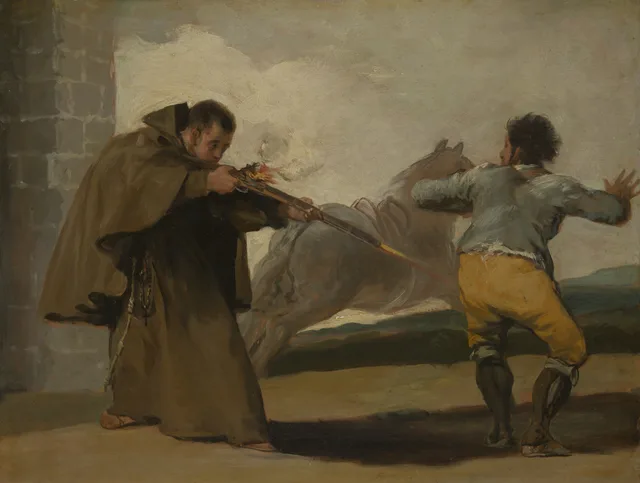 Friar Pedro Shoots El Maragato as His Horse Runs OffGoyac. 1806
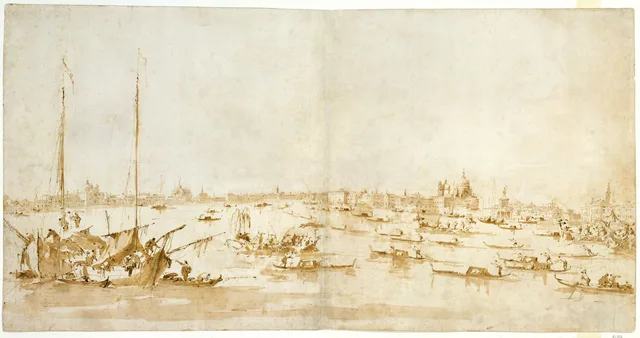 Panaromic View of the Bacino di San Marco, Looking up the Giudecca CanalFrancesco Guardi1780–93
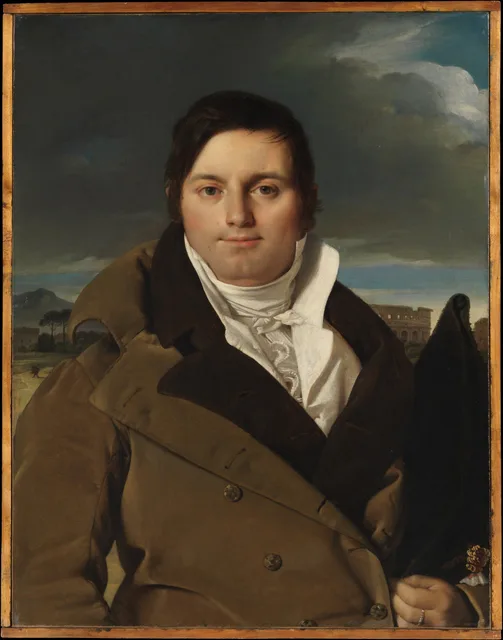 Joseph-Antoine Moltedo (born 1775)Jean Auguste Dominique Ingresca. 1810
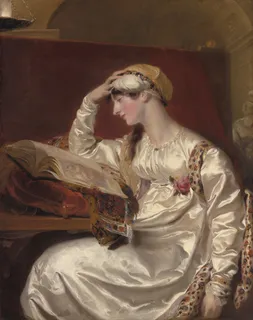 Isabella WolffSir Thomas Lawrence1803–15
Too good to keep to yourself
This painting,
for someone who comes to mind
They open it at full size
and see every brushstroke.
About this work
- Artist
- Giovanni Domenico Tiepolo · 1727–1804
- Date
- ca. 1800
- Medium
- Pen and brown ink, brown and yellow wash, over black chalk.
- Size
- 35.3 × 47.3 cm
- Collection
- The Metropolitan Museum of Art
- Image
- Original long edge 3911px · shown at 2560px
- Original
- View on the museum's website ↗