 Pyeongye
Artwork · 19th century · Joshua Johnson
LeoTurn on Magnifier at the lower right and move slowly across the painting.
Full screen opens it edge to edge.Tap the painting to fill the screen.
Spread two fingers to look closer.
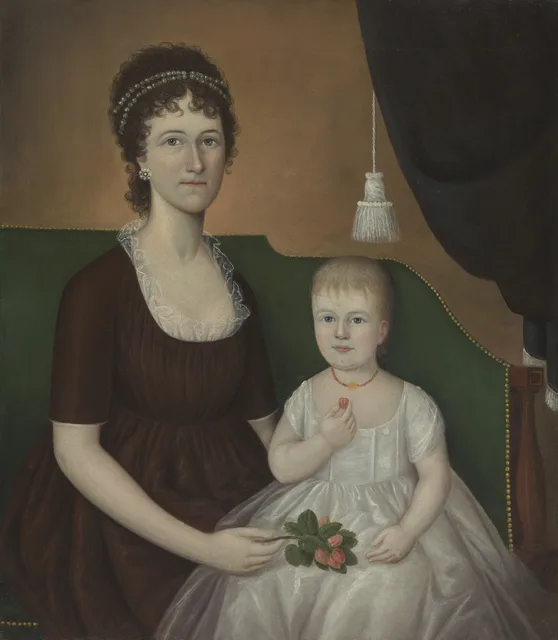
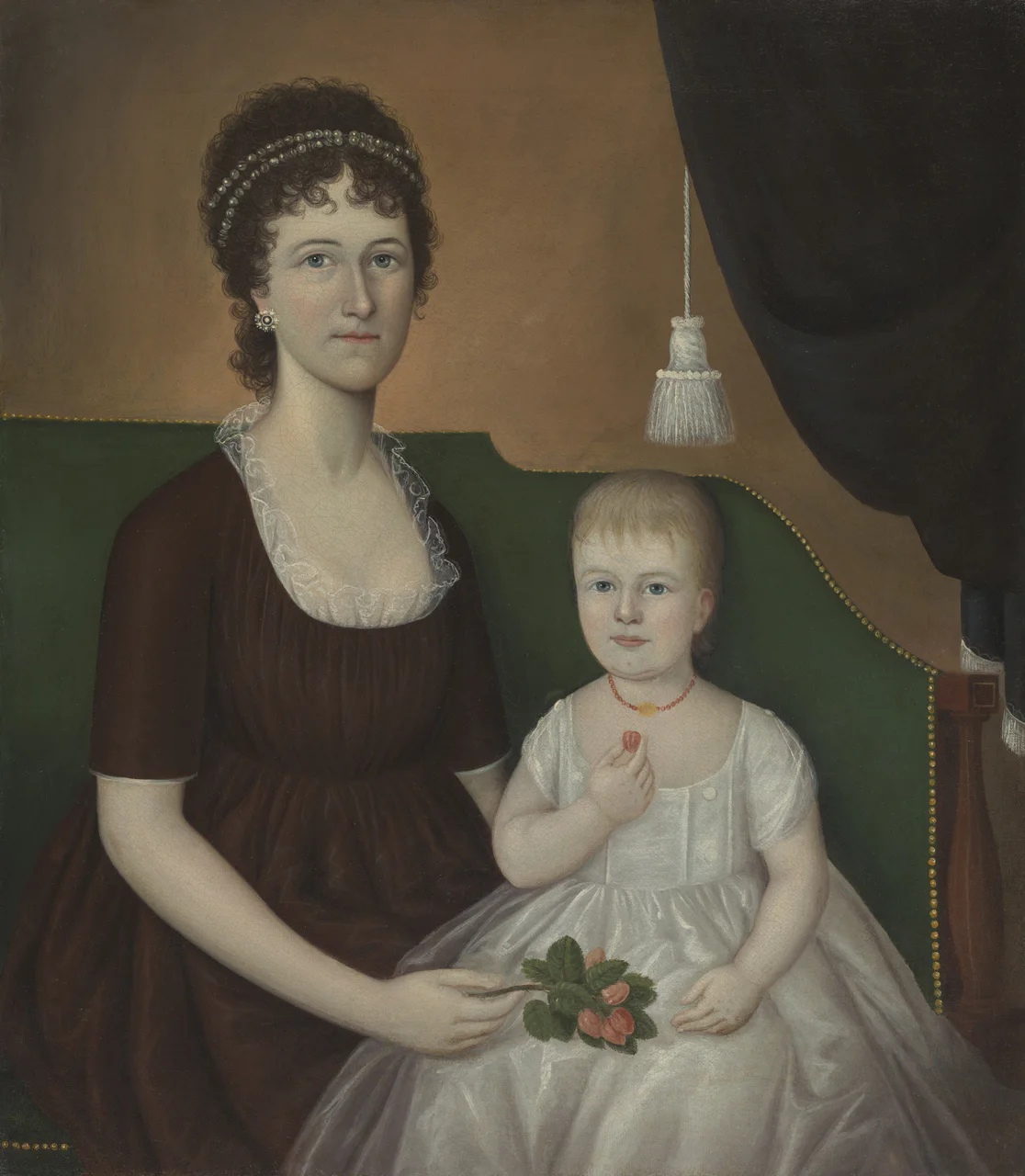
Elizabeth Grant Bankson Beatty (Mrs. James Beatty) and Her Daughter Susan
Joshua Johnsonc. 1805Oil on canvas82.9 × 72.8 cm
At a glance
- Elizabeth Beatty sits on a green sofa beside her small daughter Susan, who wears a white dress.
- Joshua Johnson, a portrait painter working in Baltimore, painted them around 1805.
- Johnson is the first known Black painter to win recognition as a professional artist in the United States.
Reading the picture
5 places to look closer
Tap a number on the painting to jump to its note, or a close-up to see that spot in the whole picture.
Zoom in on the mother's hair. A circlet of glass beads wraps twice around her curly brown hair. Each bead has a small white dot that makes it sparkle. Below it, her gray eyes look straight at us.
Look at the child's chest. She pinches a single red strawberry between her fingers. Around her neck hangs a necklace of coral-colored beads with a yellow ornament in the middle. Look closely and you will see fine cracks spreading like a web across the paint. They are marks left by two hundred years.
Zoom in near the mother's right hand. She holds a sprig of strawberries out over the child's lap. Several berries hang among jagged green leaves. The Art Institute of Chicago notes that strawberries were a treat that often appears in Johnson's portraits.
Look at the back of the sofa on the right. A row of round brass tacks runs along the edge of the green fabric. Johnson gave each tack a bright dot so it seems to catch the light. Sofas studded with brass tacks turn up again and again in his portraits.
Zoom in on the space above the child's head. A white tassel hangs from a twisted cord. A ring of little puffs like tiny flowers circles its top, and fine threads hang below. Together with the dark curtain pulled back at the right, it shows a comfortable, well-off household.
When it was painted
Around 1805, Johnson was in his early forties. He lived in Baltimore, a busy port city on the East Coast, and earned his living painting portraits. His clients were mostly the city's craftsmen and middle-class families. Several of his surviving portraits, like this one, show a mother together with her children.
Johnson was born enslaved. His father was a white man, and his mother was an enslaved woman. After he finished an apprenticeship as a blacksmith, his father, who had held him in slavery, freed him around 1782.
Once he became a painter, Johnson described himself in a newspaper advertisement as self-taught. The Baltimore city directory of 1816 lists him as a free householder of color. After his death his name was forgotten for a long time. In the middle of the twentieth century, the Baltimore researcher J. Hall Pleasants dug up the records that brought him back to light.
The names of the two sitters have a story too. In 1999 and 2001, articles in the Art Institute's own journal published this painting as a portrait of Mrs. Andrew Bedford Bankson and her son, Gunning. Today it is titled as Elizabeth Beatty and her daughter, Susan. The same child went from being a son to being a daughter.
The painting entered the Art Institute of Chicago's collection in 1998. Look again at the child's fingertips. A man who had won his own freedom and made himself a painter took the time to paint a single strawberry for this Baltimore family.
Questions to think about
- Look for itWhat kind of jewelry do the mother and daughter both wear?
- Why?Why do you think Johnson put a strawberry in the child's hand?
- What about you?A man born into slavery became a painter and advertised under his own name. Are there people today whose circumstances at birth make it hard to start the work they dream of, and how open is our society to them?
Same period
Painted around the same time,
somewhere else
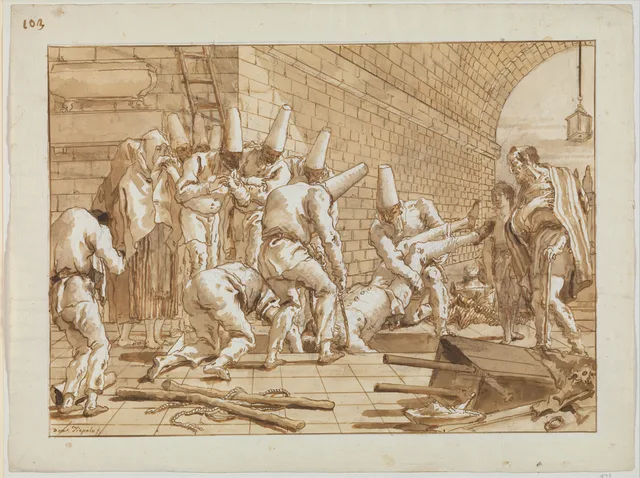 The Burial of PunchinelloGiovanni Domenico Tiepoloca. 1800
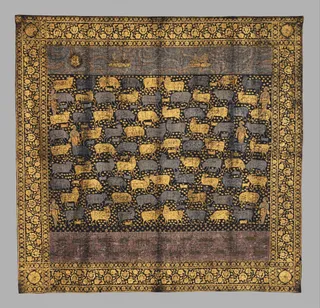 Pichhwai for the Festival of CowsUnknown artist · India, Deccan, Aurangabad (?)late 18th century
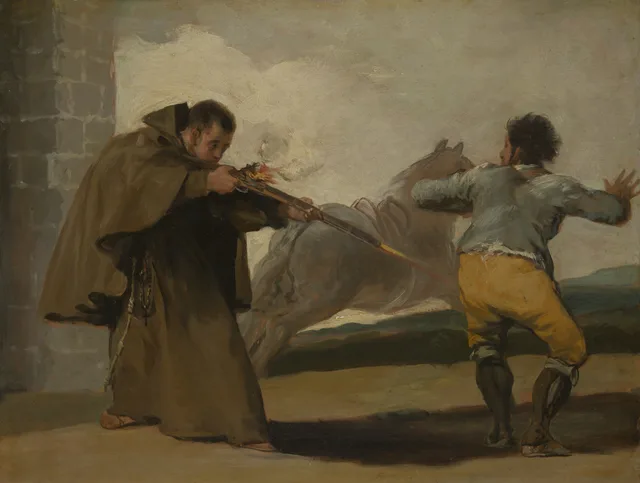 Friar Pedro Shoots El Maragato as His Horse Runs OffGoyac. 1806
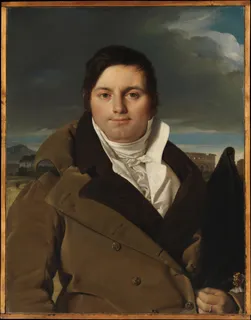 Joseph-Antoine Moltedo (born 1775)Jean Auguste Dominique Ingresca. 1810
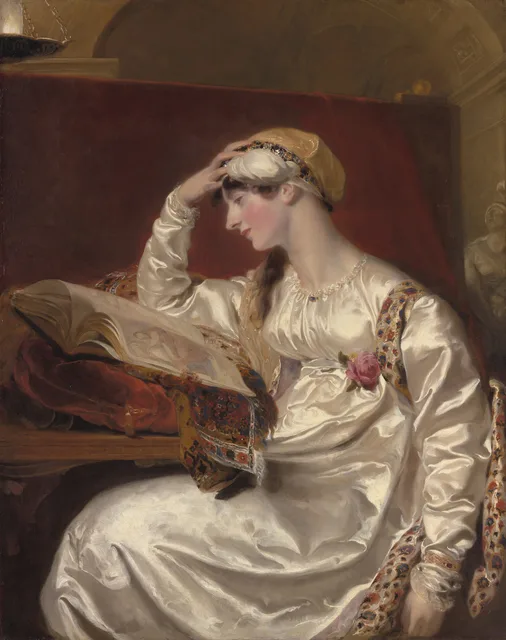 Isabella WolffSir Thomas Lawrence1803–15
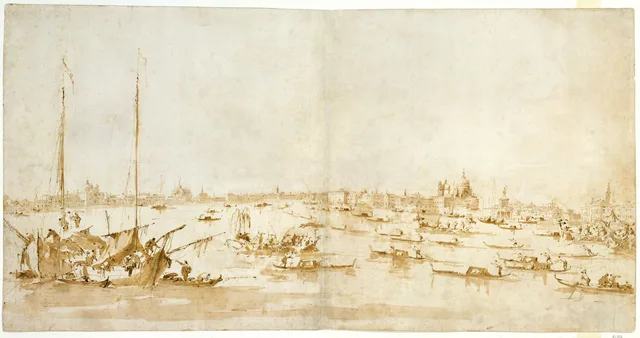 Panaromic View of the Bacino di San Marco, Looking up the Giudecca CanalFrancesco Guardi1780–93
Too good to keep to yourself
This painting,
for someone who comes to mind
They open it at full size
and see every brushstroke.
About this work
- Artist
- Joshua Johnson · 1763–1825
- Date
- c. 1805
- Medium
- Oil on canvas
- Size
- 82.9 × 72.8 cm
- Culture
- Baltimore
- Collection
- The Art Institute of Chicago
- Image
- Original long edge 9879px · shown at 2560px
- Original
- View on the museum's website ↗