 Pyeongye
Artwork · 14th century
LeoTurn on Magnifier at the lower right and move slowly across the painting.
Full screen opens it edge to edge.Tap the painting to fill the screen.
Spread two fingers to look closer.
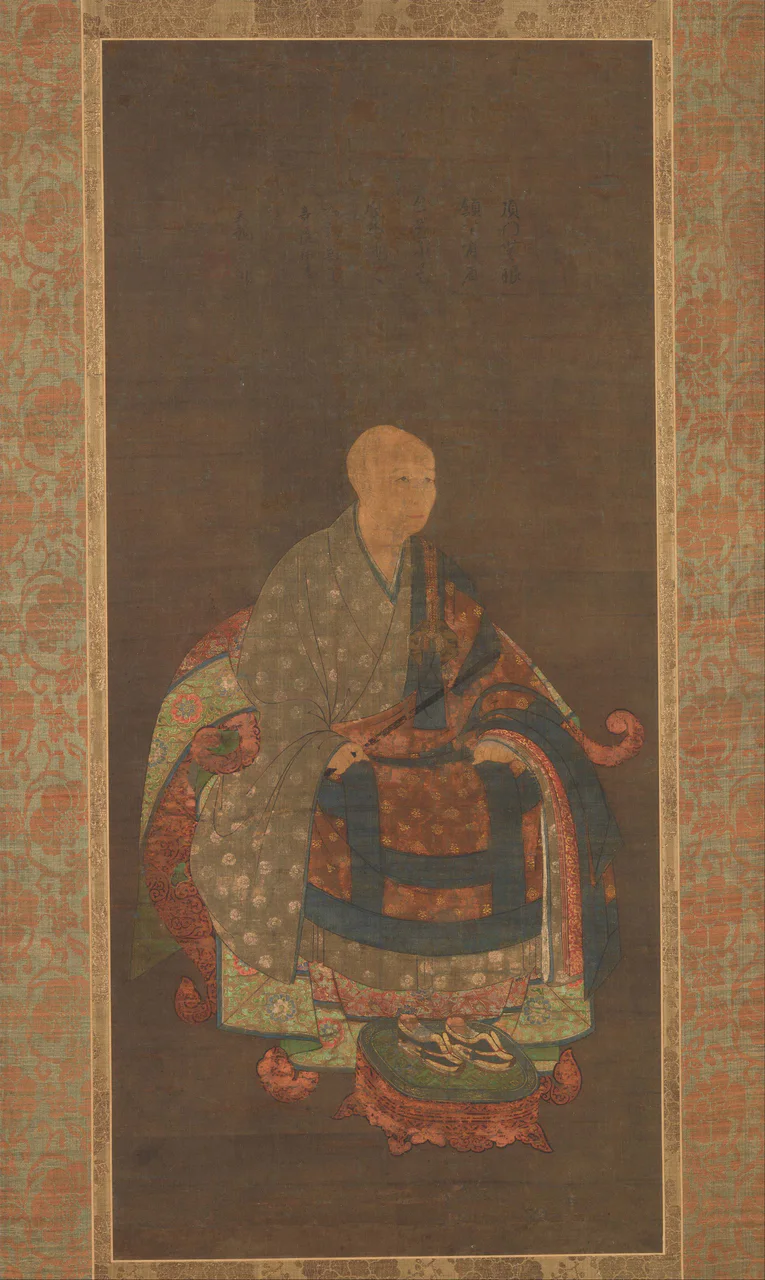
Portrait of Shun'oku Myōha
Unknown artist · Japanca. 1383Hanging scroll; ink, color, and gold on silk115.9 × 52.1 cm
At a glance
- A portrait on silk of the Japanese Zen monk Shun'oku Myōha, seated in a chair and wrapped in a richly patterned robe.
- An unknown painter made it around 1383, using ink, color, and gold.
- It was painted while the monk was still alive, so we are looking at the real face of a man past seventy.
Reading the picture
5 places to look closer
Tap a number on the painting to jump to its note, or a close-up to see that spot in the whole picture.
Begin with the face. The old monk, head shaved, turns slightly and looks off toward the right. Fine lines mark the wrinkles around his eyes and cheeks. The only touch of color is a faint red on his lips. Nothing is prettied up, and that is exactly why he feels like a real person.
Look at his hands in front of his chest. One hand grips a thin black stick that runs up at a slant. Below them, his outer robe is orange with tiny gold flowers, crossed by bands of deep blue. Zen teachers in portraits like this often hold an object in their hands.
Zoom in on the cloth draped over the chair on the left. It is red, packed with curling vine-like swirls. Right beside it, his gray robe is dotted with small white flower roundels. Each fabric has its own pattern, all painted by hand.
Now look down at his feet. On a red footstool with a green mat sits a neat pair of shoes. He has taken them off and sits in the chair without them. This detail appears again and again in portraits of Zen masters.
Look closely at the dark background near the top. Inside a ruled box, a few lines of faded writing remain. Portraits like this often carried an inscription at the top praising the sitter. Today the ink has faded so much that it is hard to read.
When it was painted
Around 1383, the Rinzai Zen monk Shun'oku Myōha was past seventy and living in Kyoto. That was when the young shogun Ashikaga Yoshimitsu began building a new monastery in the city, Shōkokuji. The man who actually got it started was Shun'oku.
Yet he did not take the title of founder for himself. He had the honor given to his teacher, Musō Soseki, who had died years before, and he became the second abbot. Musō was also his uncle, and the one who had trained him.
The road to that moment had not been smooth. Shun'oku clashed with Hosokawa Yoriyuki, a powerful official in the shogun's government. In 1379, after Yoriyuki lost his post, Shun'oku became the first official put in charge of all Zen temples and monks. He also served as abbot of great Kyoto monasteries such as Tenryūji and Nanzenji.
Zen teachers often had their portraits painted with care and gave them to students. The writing at the top of this one is a poem Shun'oku added himself.
Shun'oku died in 1388. Centuries later the portrait belonged to Sylvan Barnet and William Burto, two American collectors of Japanese calligraphy and painting. They gave it to the Metropolitan Museum in 2007.
Now look at the face again. The painter set the eyes down calmly, with fine wrinkle lines around them.
Questions to think about
- Look for itWhere are the monk's shoes, and how have they been placed?
- Why?Why do you think the painter made the robe so rich and colorful but kept the face plain, wrinkles and all?
- What about you?If you could keep one image of someone who taught you something important, would you choose a photo or a painting, and what moment would you want it to show?
Same period
Painted around the same time,
somewhere else
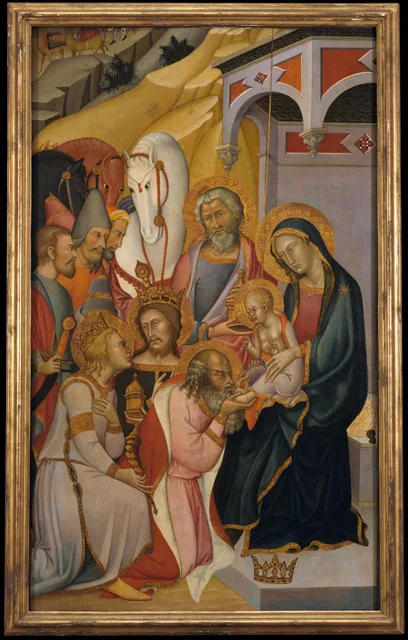 The Adoration of the MagiBartolo di Fredica. 1390
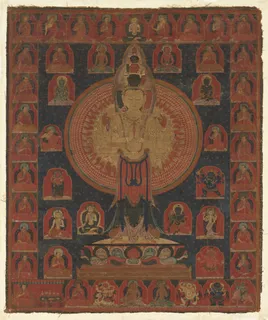 Thousand-Armed Chenresi, a Cosmic Form of the Bodhisattva AvalokiteshvaraUnknown artist · Tibet14th century
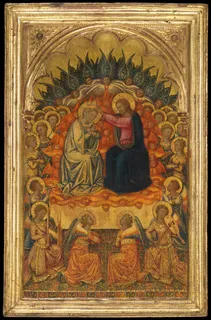 The Coronation of the VirginNiccolò di Buonaccorsoca. 1380
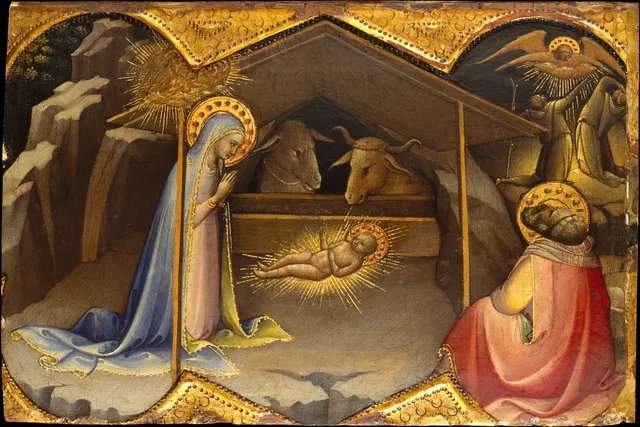 The NativityLorenzo Monacoca. 1406–10
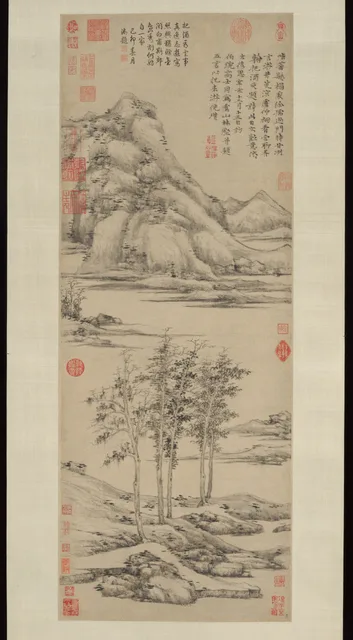 Woods and Valleys of Mount YuNi Zandated 1372
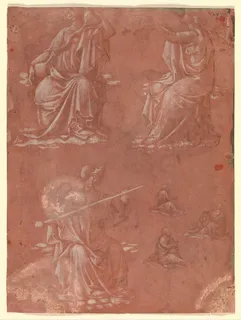 Three Virtues (Temperance, Hope, and Fortitude or Justice) and Studies of a Seated ManLorenzo Monacoca. 1420
Too good to keep to yourself
This painting,
for someone who comes to mind
They open it at full size
and see every brushstroke.
About this work
- Artist
- Unknown artist · Japan
- Date
- ca. 1383
- Medium
- Hanging scroll; ink, color, and gold on silk
- Size
- 115.9 × 52.1 cm
- Culture
- Japan
- Collection
- The Metropolitan Museum of Art
- Image
- Original long edge 3879px · shown at 2560px
- Original
- View on the museum's website ↗