 Pyeongye
At a glance
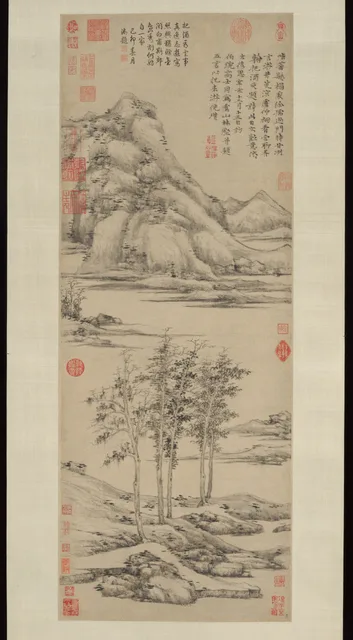
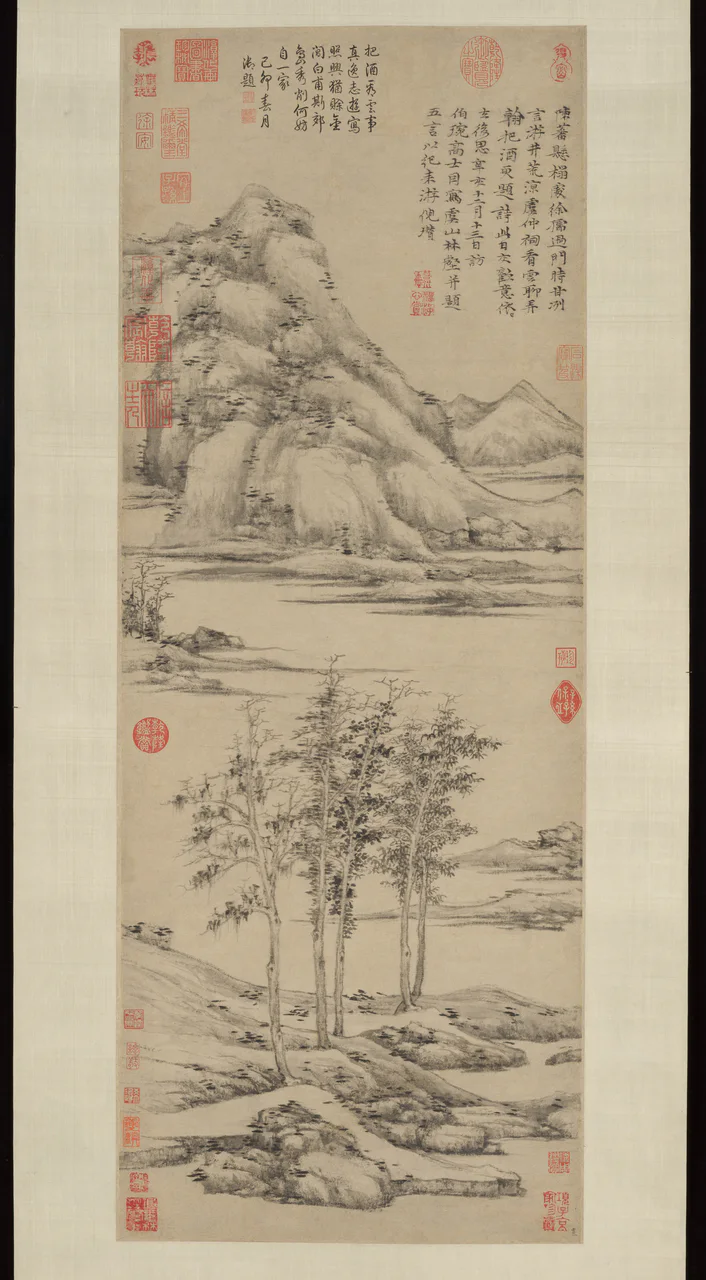
- A cluster of thin trees on a rocky bank, an empty stretch of river, and a big mountain, all in black ink.
- Ni Zan, a painter of the late Yuan dynasty, made it in 1372, two years before he died.
- His own poem and date in the upper right tell us the day, the visit, and the place behind the picture.
Reading the picture
4 places to look closer
Tap a number on the painting to jump to its note, or a close-up to see that spot in the whole picture.
Start with the trees in the middle. Their trunks are slim and straight, and they stand close together like old friends. Now look under them, and along the shore. There is nobody here. Ni Zan became known for landscapes like this, with no people at all.
Zoom in on the big mountain. Short black dabs are scattered over it like little dashes. They stand for moss and small plants. The body of the mountain itself is built from very pale ink, rubbed on in soft gray layers.
Now the rocks at the very bottom. Ni Zan used a brush with very little ink and dragged it across the paper. You can see the paper showing through the strokes. On these rocks the only really dark marks are the dots, so they feel quiet and light.
Look at the writing in the upper right. Ni Zan says he visited a gentleman living in retirement on the thirteenth day of the twelfth month of the xinhai year, then painted the woods and valleys of Mount Yu and added a poem. That date falls early in 1372. The poem opens with an old Han dynasty story about an official who kept a couch hung up just for one favorite guest. It is a polite way of thanking his host for the warm welcome.
When it was painted
In January 1372, Ni Zan, then about sixty-six, went to visit a friend. The Met converts the date written on the painting to January 19, 1372. The hill he painted that day, Mount Yu, stands in Changshu, in today's Jiangsu province.
Ni Zan was born into a wealthy family in nearby Wuxi. As a young man he built a library called the Qingbi Pavilion and filled it with books, old paintings and antiques. He was also famous for being extremely fussy about cleanliness.
In the last decades of the Yuan dynasty, rebellions spread and taxes grew heavy. Ni Zan gave his property away to relatives and friends. Then he took to a small boat and drifted among the rivers and lakes around Lake Tai for nearly twenty years. Along the way, in 1368, the Yuan fell and the Ming dynasty took its place. This painting was made under the new dynasty, near the end of that wandering life.
The Met describes the picture as an expression of the painter's contentment with the life of a recluse. Ni Zan died in 1374. Later critics counted him among the Four Masters of the late Yuan, and painters copied his empty rivers and dry brushwork for centuries.
The scroll passed through many collections after that. In the twentieth century it belonged to the family of C. C. Wang, a painter and collector working in New York, and in 1973 it came to the Met as a gift of the Dillon Fund.
Now look again at the red seals around the picture. Most were stamped by collectors who owned it over some 650 years, one mark at a time. And in the middle of them all, a few trees still stand quietly on an empty shore.
Questions to think about
- Look for itHow many trees can you count if you follow each trunk from root to top?
- Why?Ni Zan painted this during a visit to a friend, so why do you think he left both his friend and himself out of the picture?
- What about you?Ni Zan gave away his property and lived on a boat; what would you be willing to let go of to feel lighter?
Same period
Painted around the same time,
somewhere else
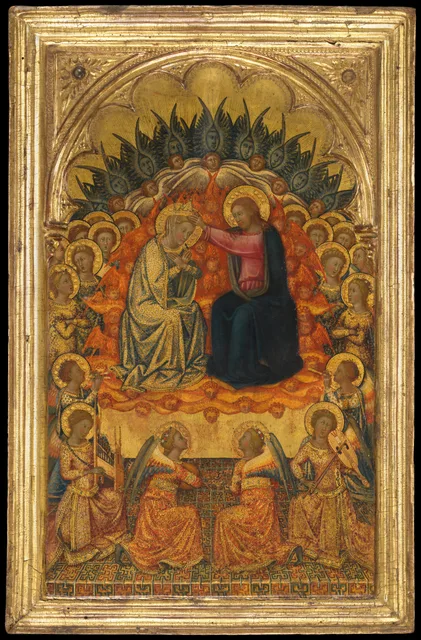 The Coronation of the VirginNiccolò di Buonaccorsoca. 1380
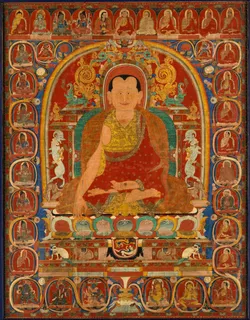 Lineage Portrait of an AbbotUnknown artist · Central Tibetca. 1350
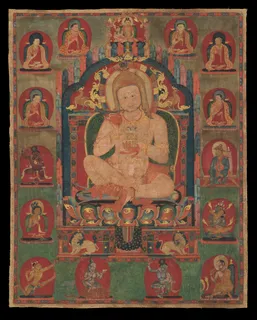 Mahasiddha JnanatapaUnknown artist · Eastern Tibet, Kham, Riwoche monasteryca. 1350
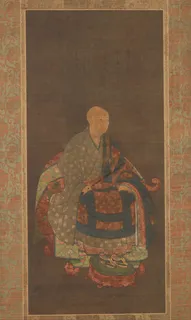 Portrait of Shun'oku MyōhaUnknown artist · Japanca. 1383
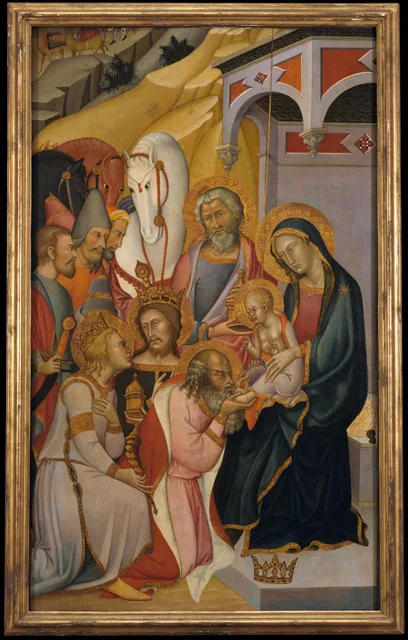 The Adoration of the MagiBartolo di Fredica. 1390
 Water-moon AvalokiteshvaraUnknown artist · Koreafirst half of the 14th century
Too good to keep to yourself
This painting,
for someone who comes to mind
They open it at full size
and see every brushstroke.
About this work
- Artist
- Ni Zan · 1306–1374
- Date
- dated 1372
- Medium
- Hanging scroll; ink on paper
- Size
- 94.6 × 35.9 cm
- Culture
- China
- Collection
- The Metropolitan Museum of Art
- Image
- Original long edge 4000px · shown at 2560px
- Original
- View on the museum's website ↗