 Pyeongye
Artwork · 14th century
LeoTurn on Magnifier at the lower right and move slowly across the painting.
Full screen opens it edge to edge.Tap the painting to fill the screen.
Spread two fingers to look closer.
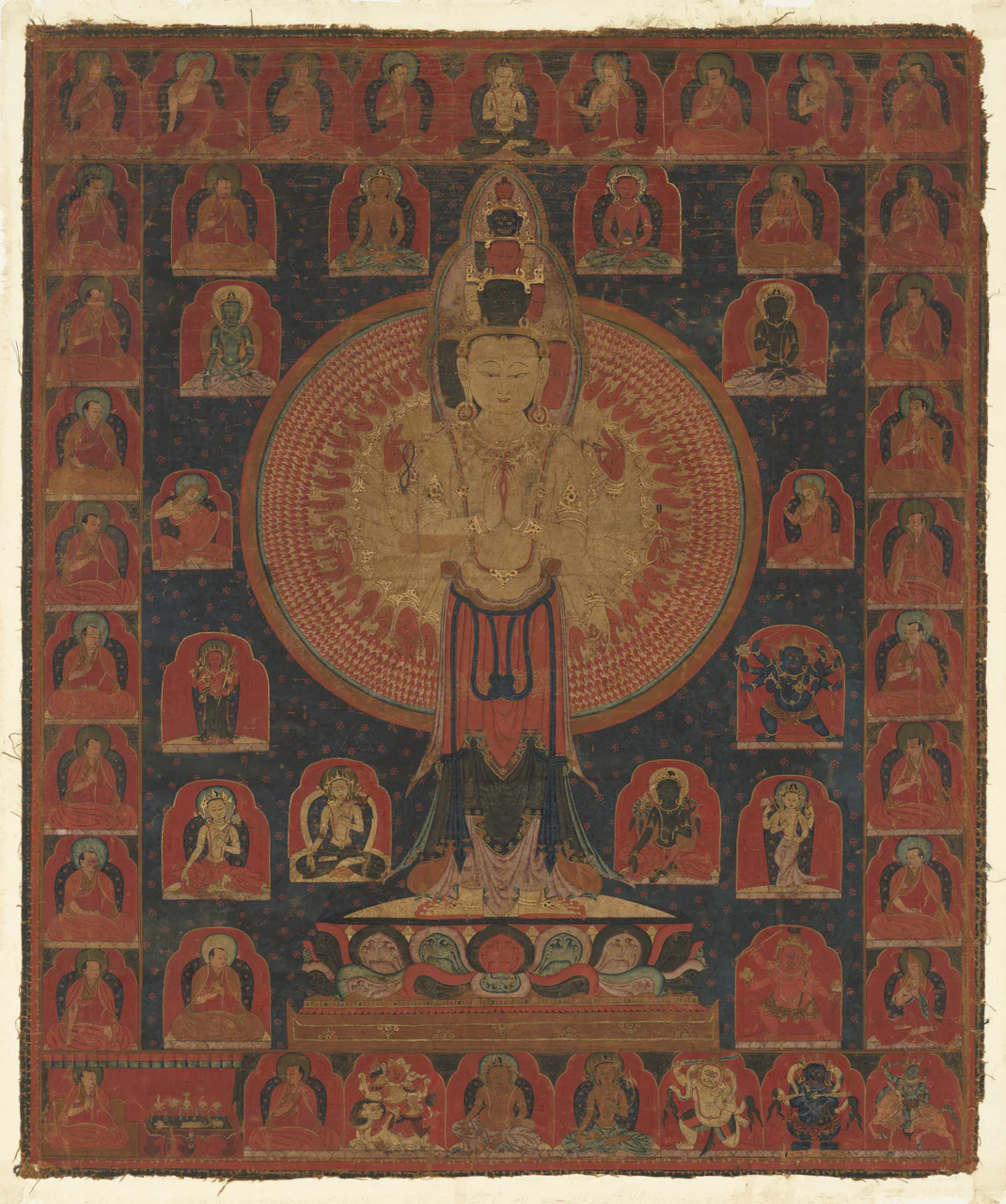
Thousand-Armed Chenresi, a Cosmic Form of the Bodhisattva Avalokiteshvara
Unknown artist · Tibet14th centuryDistemper and gold on cloth
At a glance
- A bodhisattva stands with his heads stacked like a tower and countless hands fanned out in a great circle behind him. In Tibet this figure is called Chenresi.
- An unnamed Tibetan painter made it in the 14th century, using glue-based paint and gold on cloth.
- One central figure is surrounded by dozens of monks and deities, each in a little arched niche, on a cloth more than six hundred years old.
Reading the picture
5 places to look closer
Tap a number on the painting to jump to its note, or a close-up to see that spot in the whole picture.
Zoom in above the main face. Over the white face rises a tier of dark faces, then a tier of red ones, each tier with a face in front and faces to the sides. Above them is a fierce black face with three eyes. At the very top sits a small red Buddha. Eleven heads in all is the fixed form of this bodhisattva.
Look at the two hands at the chest. The palms are pressed together in a gesture of prayer and respect. Jeweled gold bands circle the wrists and arms, and layers of gold necklaces hang at the throat. The gold has dulled, but the fine drawing still holds.
Now the huge red circle behind the body. On the inside, large hands with open red palms ring the figure like the spokes of a wheel. Farther out, hundreds of tiny red flame-like shapes crowd together. The idea is a thousand arms, enough to reach every being in trouble.
Find the niche at the middle of the right side. A blue figure with six arms bares his teeth and plants his legs wide. He has a third eye on his forehead and a striped cloth at his waist. Next to the gentle bodhisattva, the painter set fierce protectors who guard the teachings.
Finally, the bottom left corner. A monk in red robes sits with his hands raised together beside a low table lined with vessels.
When it was painted
In fourteenth-century Tibet, Avalokiteshvara was no faraway figure. Tibetans called him Chenresi and called on him with a six-syllable mantra, om mani padme hum.
A story widely told in Tibet ties him to the Tibetan people themselves. A monkey who had taken vows from Chenresi paired with a rock ogress in the mountains, and their children became the first Tibetans. King Songtsen Gampo, who united Tibet in the seventh century, was also regarded as an emanation of Chenresi.
The story runs right up to today. The Potala Palace in Lhasa takes its name from Potalaka, the mountain where this bodhisattva was said to live. And the Dalai Lama is still regarded as an emanation of Chenresi.
The painter's name is lost. Thangkas like this were usually commissioned by monks or lay believers as a way of earning merit, and painters followed set rules for proportions and features. Mineral pigments were mixed with glue and brushed onto cloth, with gold added for light.
The museum presents this as a rare early painting of the thousand-armed Chenresi. It entered the collection in 1989.
Before you go, look at the edges. The cloth is frayed, its threads coming loose. Yet inside the red circle, the hands are still open and reaching outward, more than six hundred years on.
Questions to think about
- Look for itCounting from the bottom, how many heads can you find?
- Why?Why show compassion as a figure with eleven heads and a thousand arms instead of an ordinary human shape?
- What about you?Have you ever felt heavy-hearted because you could not help everyone who needed it? If you had a thousand hands, what would you help with first?
Same period
Painted around the same time,
somewhere else
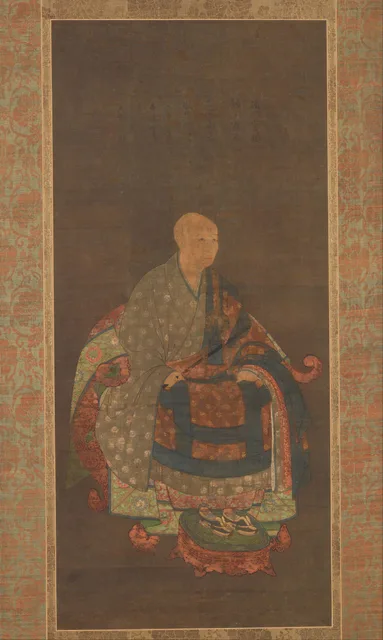 Portrait of Shun'oku MyōhaUnknown artist · Japanca. 1383
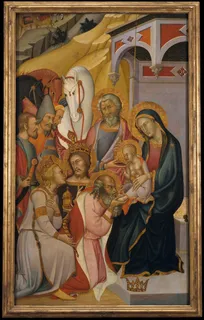 The Adoration of the MagiBartolo di Fredica. 1390
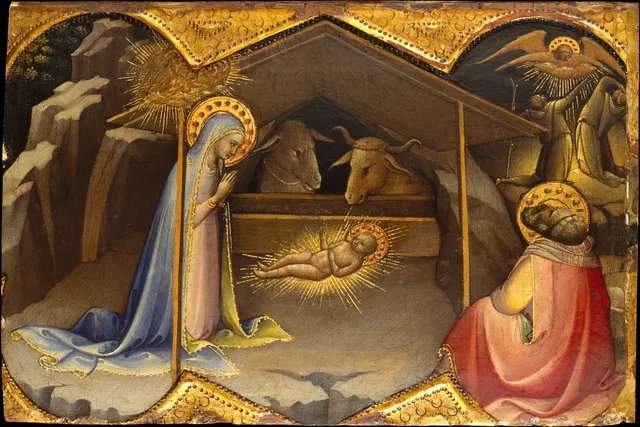 The NativityLorenzo Monacoca. 1406–10
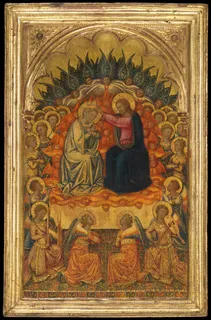 The Coronation of the VirginNiccolò di Buonaccorsoca. 1380
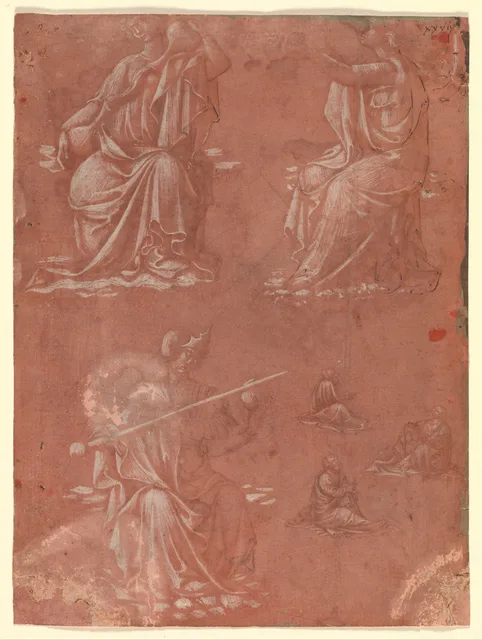 Three Virtues (Temperance, Hope, and Fortitude or Justice) and Studies of a Seated ManLorenzo Monacoca. 1420
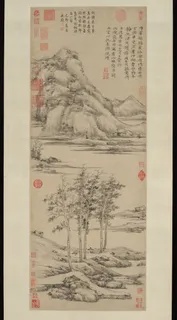 Woods and Valleys of Mount YuNi Zandated 1372
Too good to keep to yourself
This painting,
for someone who comes to mind
They open it at full size
and see every brushstroke.
About this work
- Artist
- Unknown artist · Tibet
- Date
- 14th century
- Medium
- Distemper and gold on cloth
- Culture
- Tibet
- Collection
- The Metropolitan Museum of Art
- Image
- Original long edge 4000px · shown at 2560px
- Original
- View on the museum's website ↗