 Pyeongye
Artwork · 14th century · Niccolò di Buonaccorso
LeoTurn on Magnifier at the lower right and move slowly across the painting.
Full screen opens it edge to edge.Tap the painting to fill the screen.
Spread two fingers to look closer.
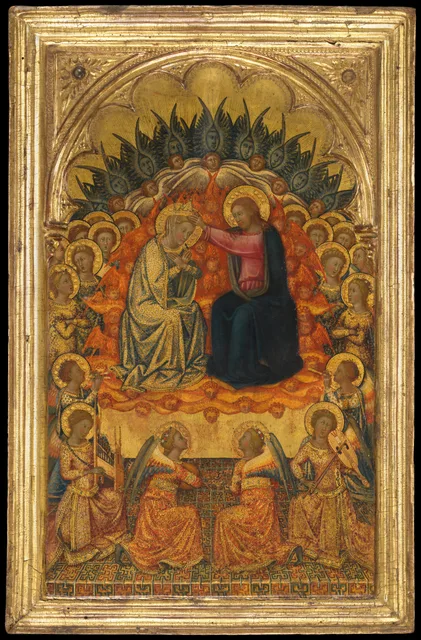
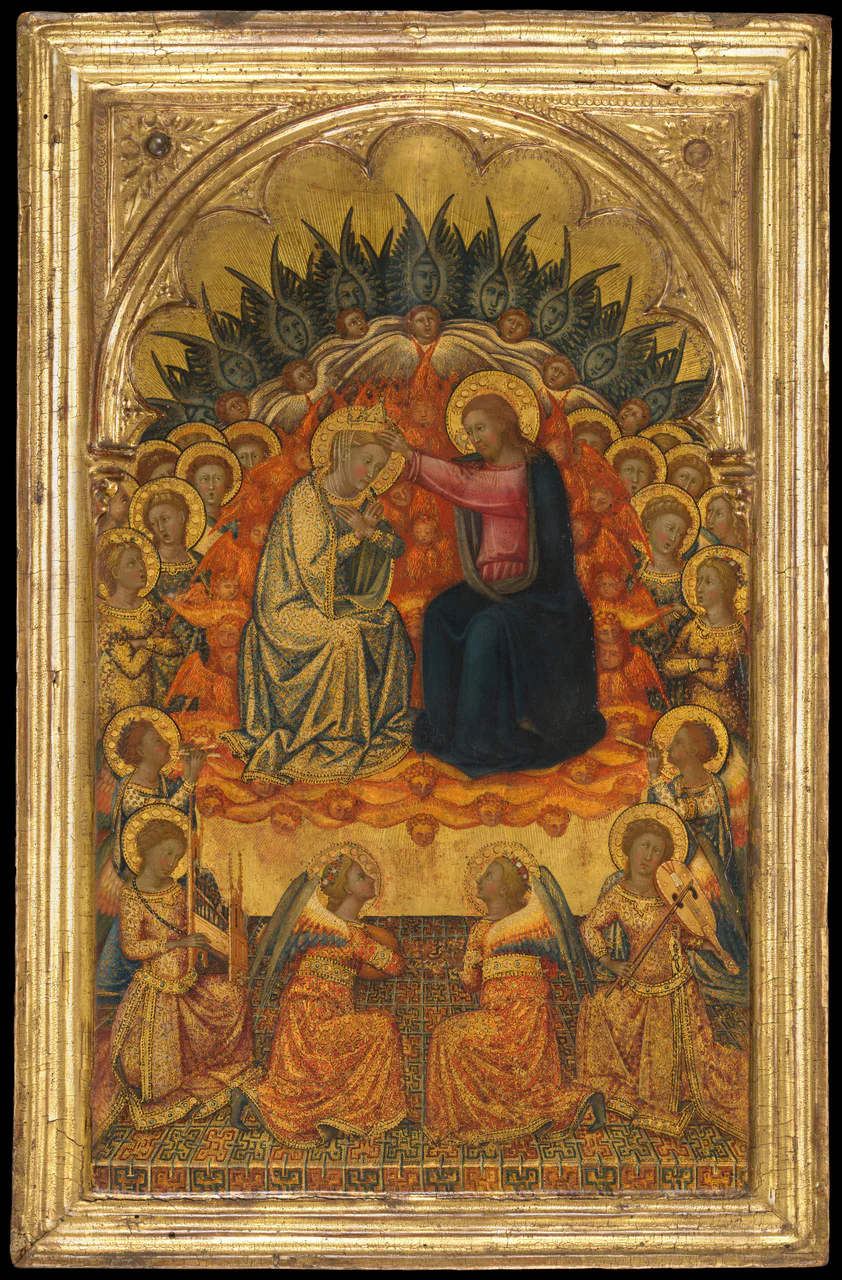
The Coronation of the Virgin
Niccolò di Buonaccorsoca. 1380Tempera on wood, gold ground50.8 × 32.7 cm
At a glance
- High in heaven, Christ sets a crown on the Virgin Mary's head while angels crowd around and make music.
- Niccolò di Buonaccorso, a painter from Siena in Italy, made it around 1380 in tempera and gold on a wooden panel.
- The painted surface is only about 45 centimeters tall, yet you can count the strings on an angel's fiddle.
Reading the picture
5 places to look closer
Tap a number on the painting to jump to its note, or a close-up to see that spot in the whole picture.
Start in the middle. Christ, in a rose-red sleeve, reaches out and settles the crown on Mary's head. She folds her hands at her chest and bows slightly. Look at their halos: rows of round bumps set into the gold, made to catch the light.
Now climb to the very top. Faces with dark blue-gray wings fan out like a crown of feathers. Just below them, small round faces peek out of white wings, mouths open as if singing. Around Mary and Christ, more winged faces burn a fiery red.
Zoom into the angel at the lower left. It holds a small pipe organ against one arm and presses the keys with its right hand. You can see the row of pipes and even a tiny pointed tower on the case. The angel's dress is covered in dots of gold.
At the lower right, another angel draws a bow across a stringed instrument. Two sound holes and the strings above them are clearly painted. A belt studded with colored stones wraps the angel's waist. Higher up on both sides, two more angels lift wind instruments to their lips. This is a heavenly feast full of sound.
Finally, look at the very bottom. Under the kneeling angels lies a carpet with green and red interlocking patterns. Just below, the gilded frame is covered in fine cracks from more than six centuries of age. This frame was made together with the painted panel.
When it was painted
This little panel has two siblings, and they live in two other cities. One is The Marriage of the Virgin at the National Gallery in London. The other is The Presentation of the Virgin in the Temple at the Uffizi in Florence. The Met points out that all three match in style, in size, and in the shape of their frames.
Put them side by side and you get the story of Mary's life. First the young girl is brought to the Temple. Then she marries Joseph. Last comes this scene, where she is crowned in heaven. The museums think the three panels probably once belonged together as one set.
The painter, Niccolò di Buonaccorso, was a man of Siena. The Met counts him among the finest Sienese painters of the later fourteenth century, yet notes that he is little known today. He died in 1388.
Why do we know his name at all? Because of the London panel. The Marriage of the Virgin carries a Latin signature saying that Niccolò di Buonaccorso of Siena painted it. Only two signed works by him are known.
Where the set first hung is still an open question. The Uffizi panel first turns up in a catalogue of the collection of the hospital of Santa Maria Nuova in Florence. This panel later belonged to the New York banker Robert Lehman, and it came to the museum with his collection in 1975.
Now look at the center again. Of the three scenes, this is the final chapter of Mary's story. Picture the other two panels in London and Florence, and the angels' music starts to sound like the closing notes of a long tale.
Questions to think about
- Look for itHow many angels are playing instruments, and what is each one playing?
- Why?Why might the painter have filled the background with gold instead of a blue sky?
- What about you?This little picture is more than 600 years old and full of cracks. Should we repair marks like these so it looks new, or leave them as they are?
Same period
Painted around the same time,
somewhere else
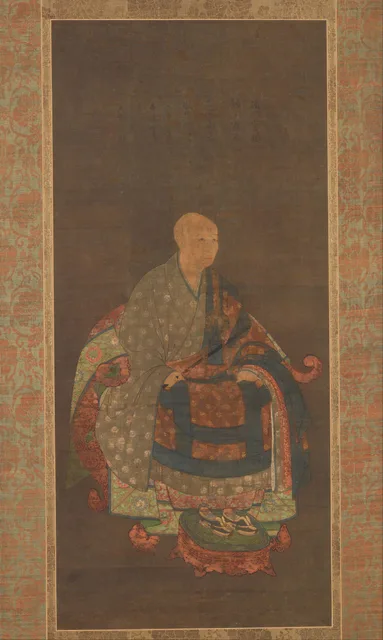 Portrait of Shun'oku MyōhaUnknown artist · Japanca. 1383
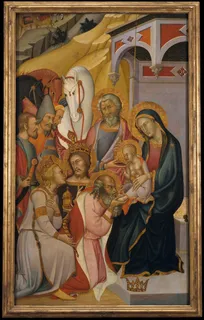 The Adoration of the MagiBartolo di Fredica. 1390
 Woods and Valleys of Mount YuNi Zandated 1372
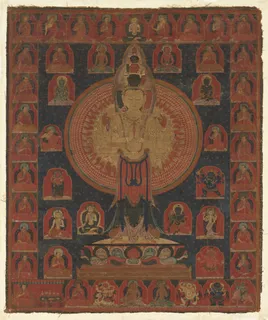 Thousand-Armed Chenresi, a Cosmic Form of the Bodhisattva AvalokiteshvaraUnknown artist · Tibet14th century
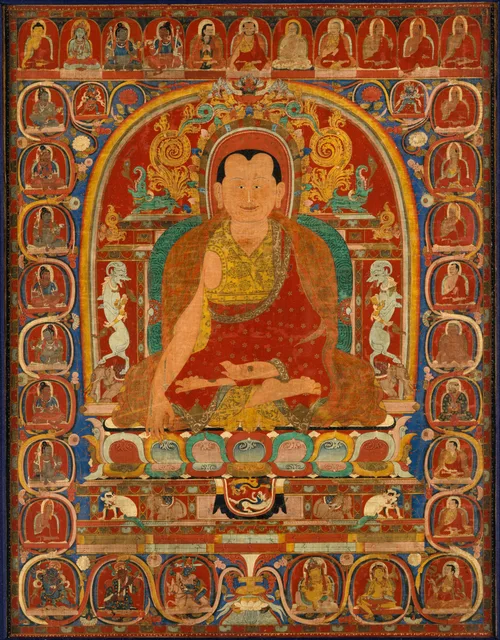 Lineage Portrait of an AbbotUnknown artist · Central Tibetca. 1350
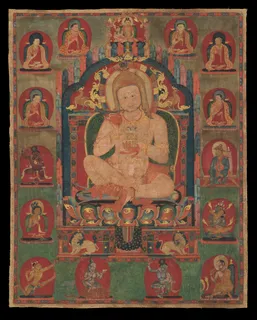 Mahasiddha JnanatapaUnknown artist · Eastern Tibet, Kham, Riwoche monasteryca. 1350
Too good to keep to yourself
This painting,
for someone who comes to mind
They open it at full size
and see every brushstroke.
About this work
- Artist
- Niccolò di Buonaccorso · 1372–1388
- Date
- ca. 1380
- Medium
- Tempera on wood, gold ground
- Size
- 50.8 × 32.7 cm
- Collection
- The Metropolitan Museum of Art
- Image
- Original long edge 4000px · shown at 2560px
- Original
- View on the museum's website ↗