 Pyeongye
Artwork · 16th century · Fra Bartolomeo
LeoTurn on Magnifier at the lower right and move slowly across the painting.
Full screen opens it edge to edge.Tap the painting to fill the screen.
Spread two fingers to look closer.
At a glance
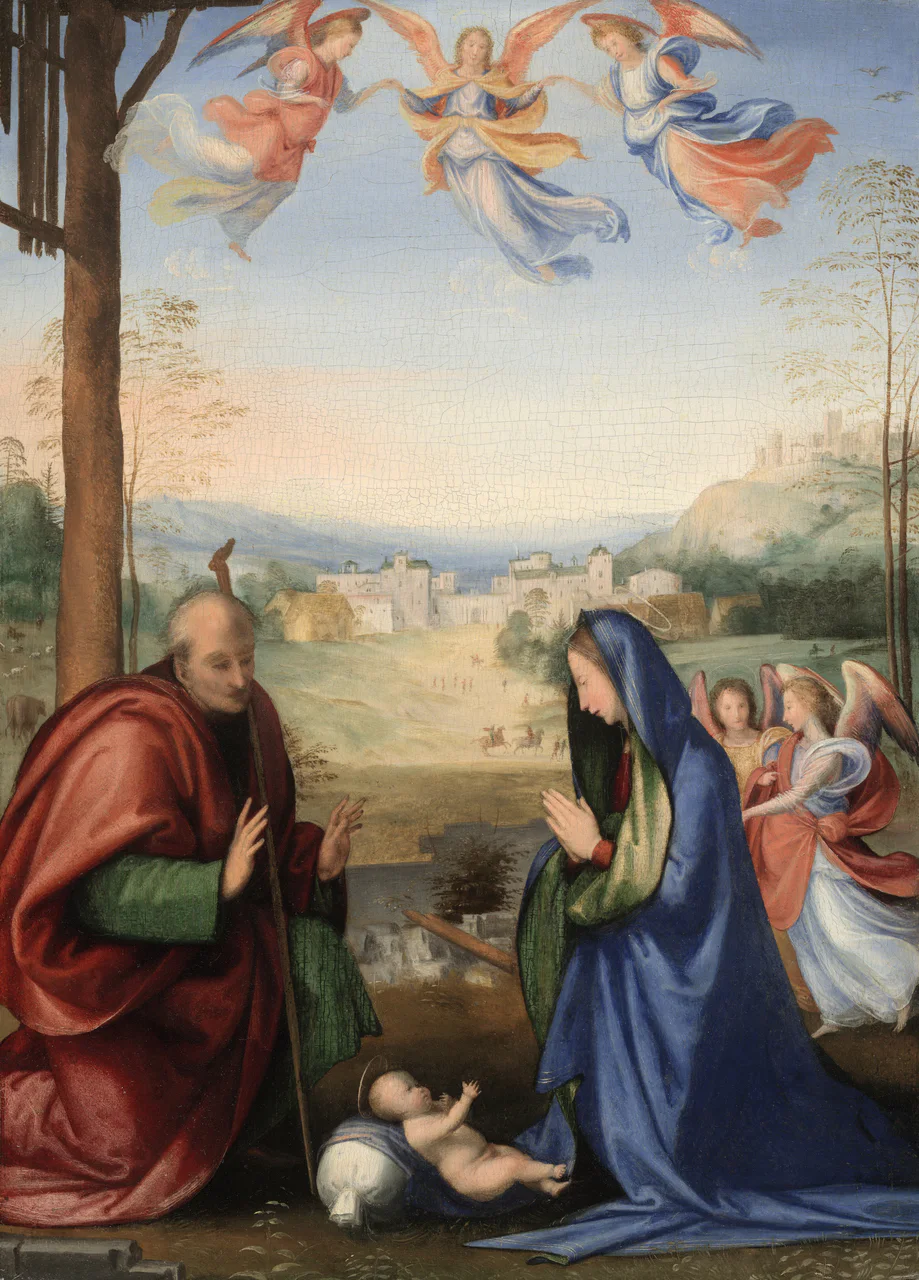
- Mary and Joseph kneel on either side of the newborn Jesus, while three angels fly hand in hand across the sky above.
- Fra Bartolommeo, a painter and Dominican friar in Florence, painted it in oil on wood panel around 1504 to 1507.
- Even with its frame it stands only about 20 inches tall. He made it soon after returning to painting from years in a friary.
Reading the picture
5 places to look closer
Tap a number on the painting to jump to its note, or a close-up to see that spot in the whole picture.
Zoom in on the baby at the bottom. He lies on a blue cloth spread over a white bundle, one arm reaching up. A thin gold halo floats behind his head like a single thread. The tip of his right foot just touches the hem of his mother's blue cloak.
Now look at Mary on the right. Her deep blue mantle covers her head, and she bows with her hands pressed together. A green lining shows inside the folds. Her gaze drops straight down to the child.
Zoom in on Joseph at the left. Green cloth shows under his red cloak. A long staff stands upright in front of him, and he lifts an open hand on either side of it. He looks amazed, yet he barely moves. It is wonder held in check.
Climb up to the sky. Three angels in pink, gold, and blue hold hands and swing through the air as if in a ring dance. Their robes stream out behind them. The middle angel faces us, while the other two turn toward each other.
Look at the far field just left of Mary's head. Two riders on horseback and a few people on foot appear there, very small. Each is made with only a few quick touches of the brush. Behind the hushed scene in front, the world goes about its business.
When it was painted
In 1500, a painter named Baccio della Porta put down his brushes and joined the Dominican order. He was about twenty-eight. He had fallen deeply under the influence of Girolamo Savonarola, the fiery friar who had shaken Florence with his sermons. Savonarola was executed in Florence in 1498. The painter chose the friary, and from then on he was Fra, or Brother, Bartolommeo.
For several years he did not paint. In 1504 he took up the brush again at the friary of San Marco in Florence. This Nativity comes from the years after that return.
Florence in those years held an extraordinary crowd of artists. Leonardo da Vinci, Michelangelo, and the young Raphael were all at work in the city. Fra Bartolommeo studied their gentle light and balanced groupings to shape his own quiet style. He and Raphael are known to have learned from each other.
The Art Institute of Chicago describes this as a traditional Nativity made unusually intimate, painted with a new spirituality. Mary kneels in humility. Joseph holds back his astonishment.
The panel entered the Art Institute's collection in 2005. In 2016 it appeared as number 5 in the catalogue of an exhibition devoted to the painter at the Museum Boijmans Van Beuningen in Rotterdam. Look again at Mary's folded hands and lowered eyes. A friar who had set painting aside came back to it and chose a moment with no noise at all.
More by the same painter
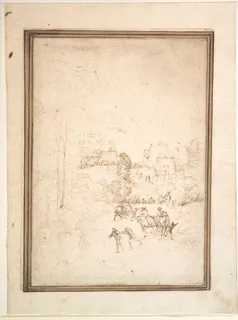
Questions to think about
- Look for itCan you find the wooden posts of a rough shelter tucked against the tree at the upper left?
- Why?Why might the painter have laid the baby on a bundle on the bare ground instead of in a cradle or manger?
- What about you?Fra Bartolommeo gave up his work for years because of one preacher's words. People still change their lives after falling under someone's spell. When is that courage, and when is it a risk?
Same period
Painted around the same time,
somewhere else
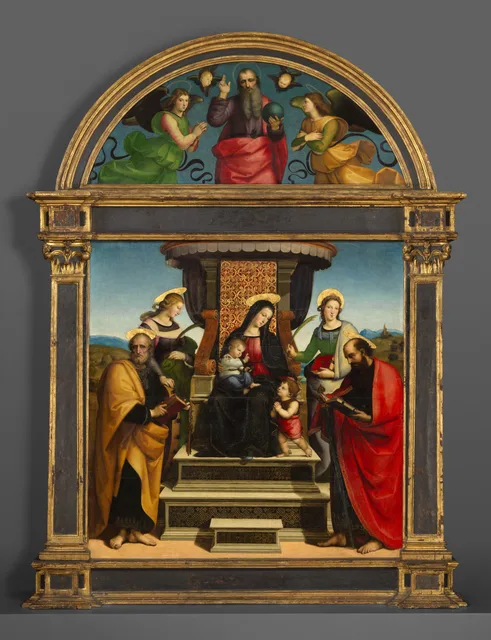 Madonna and Child Enthroned with SaintsRaphaelca. 1504
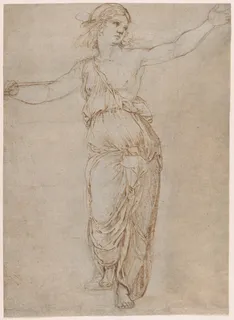 LucretiaRaphael1508–10
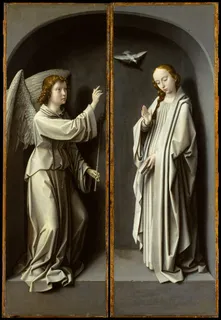 Archangel Gabriel; The Virgin AnnunciateGerard Davidca. 1510
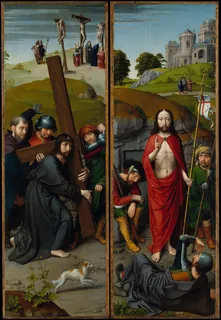 Christ Carrying the Cross, with the Crucifixion; The Resurrection, with the Pilgrims of EmmausGerard Davidca. 1510
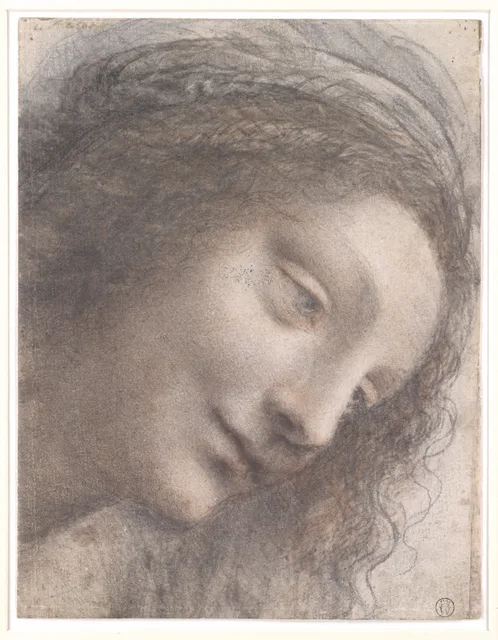 The Head of the Virgin in Three-Quarter View Facing RightLeonardo da Vinci1510–13
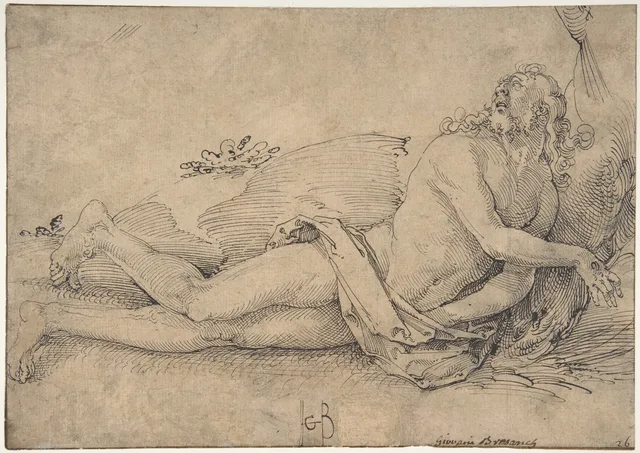 Ecstatic ChristHans Baldungca. 1510–11
Too good to keep to yourself
This painting,
for someone who comes to mind
They open it at full size
and see every brushstroke.
About this work
- Artist
- Fra Bartolomeo · 1473–1517
- Date
- 1504–7
- Medium
- Oil on panel
- Size
- 35.6 × 7.7 cm
- Culture
- Italy
- Collection
- The Art Institute of Chicago
- Image
- Original long edge 5112px · shown at 2560px
- Original
- View on the museum's website ↗