 Pyeongye
Artwork · 19th century · Rosa Bonheur
LeoTurn on Magnifier at the lower right and move slowly across the painting.
Full screen opens it edge to edge.Tap the painting to fill the screen.
Spread two fingers to look closer.
At a glance
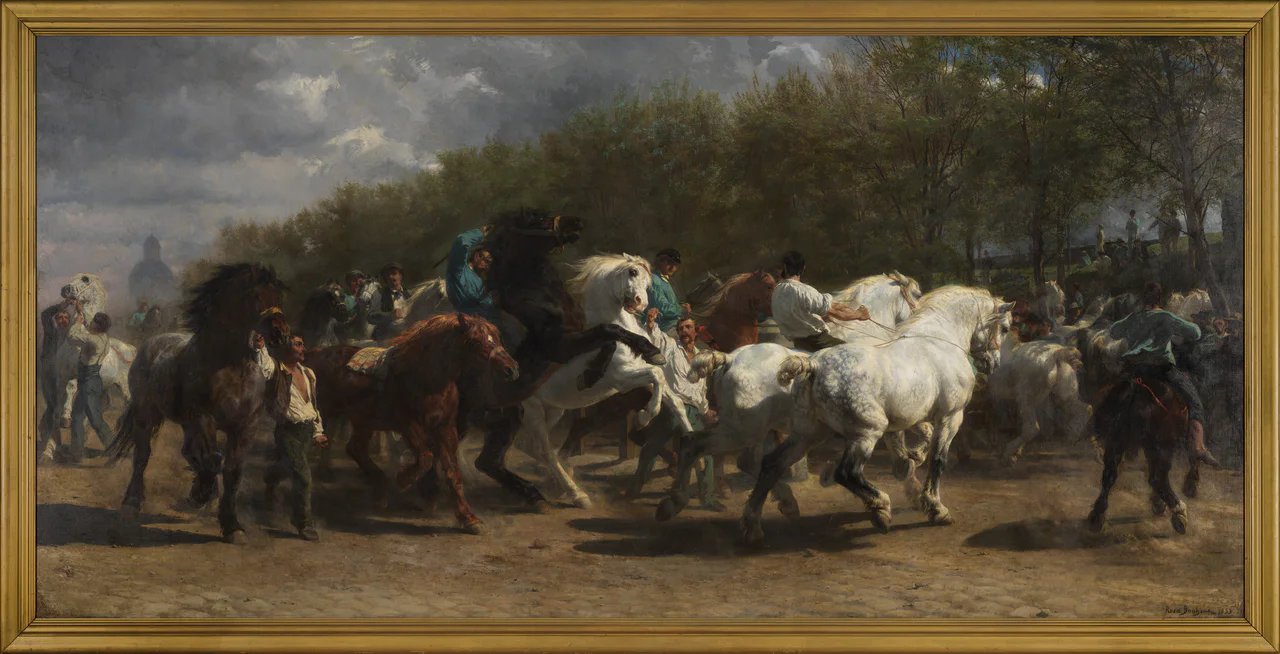
- At a horse market in Paris, handlers drive powerful horses past in a cloud of dust.
- Rosa Bonheur painted it in 1852–55.
- On a canvas about 2.4 meters high and 5 meters wide, black, chestnut, white, and dappled gray horses surge across in a tangle.
Reading the picture
4 places to look closer
Tap a number on the painting to jump to its note, or a close-up to see that spot in the whole picture.
Zoom in on the center. A black horse rears up with its front legs high, and a man in a blue shirt hangs on to keep it under control. Right beside it, a white horse in a red halter rises on its hind legs too. A man in a white shirt grabs the rope from below. You can follow the white mane strand by strand as it flies in the wind.
Drop down to the legs of the gray horse on the right. Dark spots sit in round patches on its pale coat, and the color deepens to black toward the lower legs. Shadows fall under the big hooves, and the tail is tied up in a loop. This is the solid body of a working horse built to pull heavy loads.
Look far to the left, past the trees. Through the haze of dust, a building with a domed roof rises faintly. It is the chapel dome of the Salpetriere hospital, close to the Boulevard de l'Hopital in Paris, where this market was held.
Zoom in on the lower right corner. The signature Rosa Bonheur is written on the dirt ground. A woman painter's name stands clearly at the foot of this enormous picture.
When it was painted
In the early 1850s Rosa Bonheur was about thirty, and she had a new habit. Sketchbook in hand, she kept going back to the horse market on the Boulevard de l'Hopital in Paris. For many months she drew the horses there, studying how their muscles moved and how they walked and pulled.
A skirt was no help in a crowd of horse dealers. At the time, a woman in Paris needed permission from the police to wear trousers. Bonheur got that permission and moved through the market dressed like a man.
Her first teacher was her father, Raymond Bonheur, who taught drawing. By 1849 she was already a well-known animal painter, thanks to Ploughing in the Nivernais, a picture of oxen turning a field that the French state had commissioned. After the oxen came this: a herd of horses on a canvas about five meters wide.
When it went on view at the Paris Salon of 1853, it caused a stir. Bonheur called it her own Parthenon frieze, thinking of the parade of horsemen carved along the walls of the ancient Greek temple. Even after the Salon closed, she kept working on it.
Then the picture went traveling. The dealer Ernest Gambart bought it and showed it in Britain, and later it crossed the Atlantic and passed through the hands of American collectors. At an auction in 1887, Cornelius Vanderbilt paid 53,000 dollars for it and gave it straight to the Metropolitan Museum.
Zoom in on the signature at lower right and look at the number beside it. It says 1853. The date stopped at the year of the Salon, but these horses kept running under her brush for a while after that.
Hidden stories in this painting
Questions to think about
- Look for itCan you find the horses rearing on their hind legs, and the people straining to hold them?
- Why?Why do you think Bonheur chose a wild, rearing moment instead of horses standing calmly?
- What about you?Bonheur needed official permission to change her clothes so she could do her work. Are there people today who still have to ask for more permission than others, just because of their gender?
Same period
Painted around the same time,
somewhere else
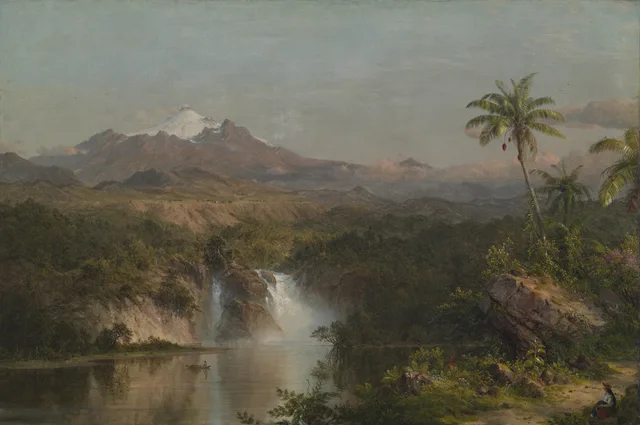 View of CotopaxiFrederic Edwin Church1857
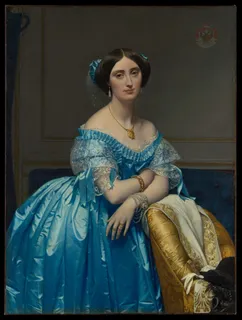 Joséphine-Éléonore-Marie-Pauline de Galard de Brassac de Béarn (1825–1860), Princesse de BroglieJean Auguste Dominique Ingres1851–53
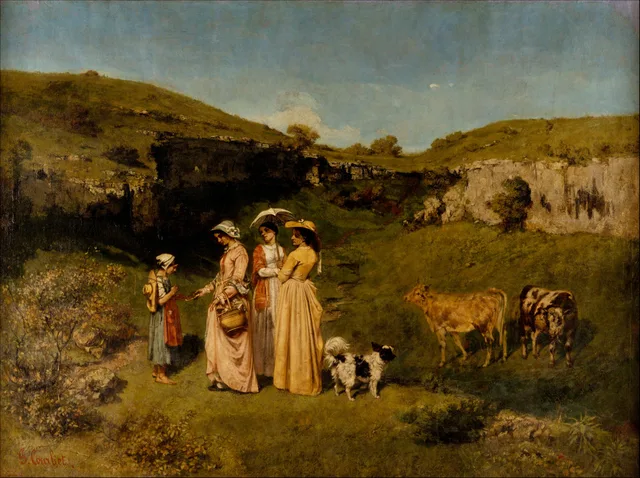 Young Ladies of the VillageGustave Courbet1851–52
 Madame Félix GalloisJean Auguste Dominique Ingres1852
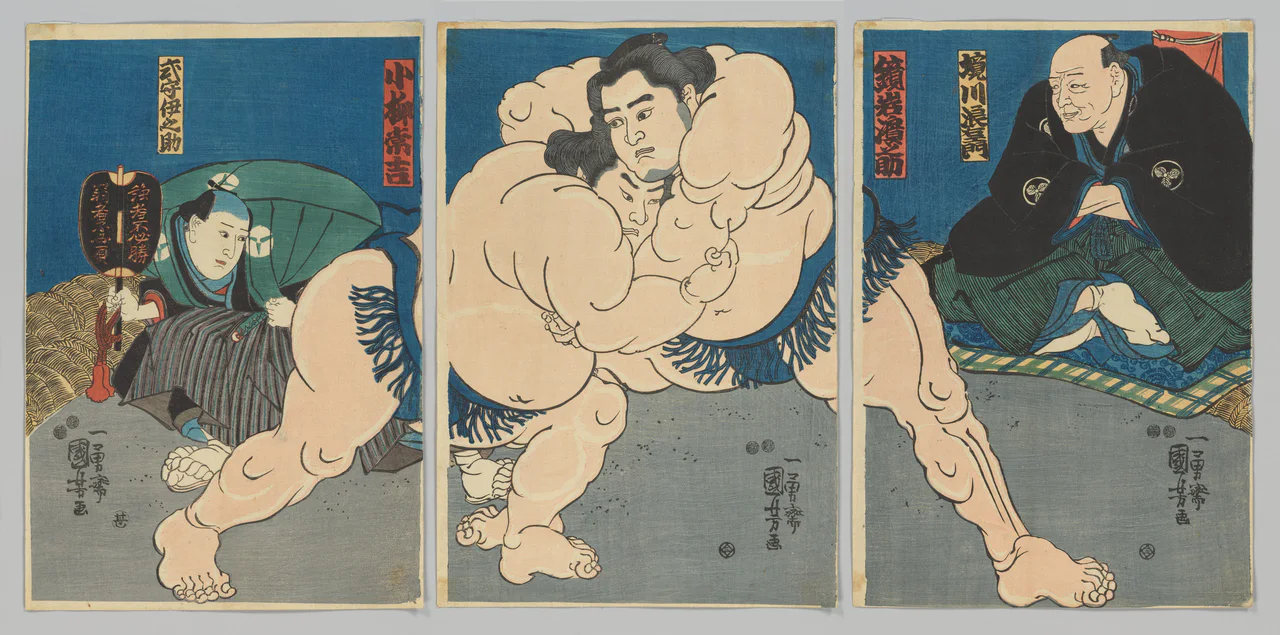 Sumo Wrestlers Kagamiiwa Hamanosuke and Koyanagi Tsunekichi, with Judge Sakaigawa Namiemon and Referee Shikimori KiichirōUtagawa Kuniyoshi1847–52 (Kōka 4–Kaei 5)
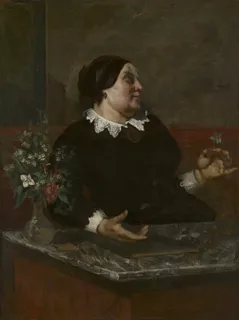 Mère GrégoireGustave Courbet1855, reworked 1857–59
Too good to keep to yourself
This painting,
for someone who comes to mind
They open it at full size
and see every brushstroke.
About this work
- Artist
- Rosa Bonheur · 1822–1899
- Date
- 1852–55
- Medium
- Oil on canvas
- Size
- 244.5 × 506.7 cm
- Collection
- The Metropolitan Museum of Art
- Image
- Original long edge 4000px · shown at 2560px
- Original
- View on the museum's website ↗