 Pyeongye
Artwork · 19th century · William Merritt Chase
LeoTurn on Magnifier at the lower right and move slowly across the painting.
Full screen opens it edge to edge.Tap the painting to fill the screen.
Spread two fingers to look closer.
At a glance
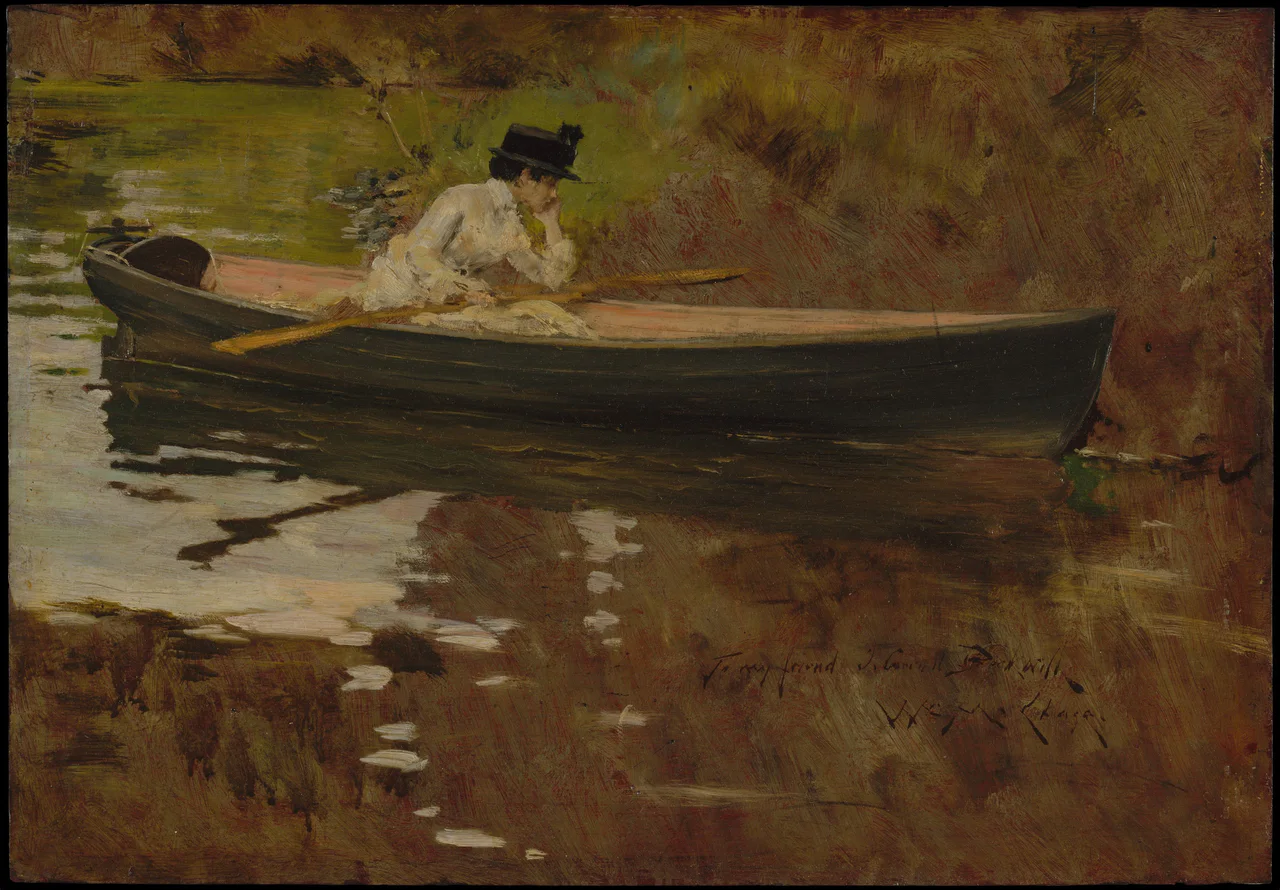
- A young woman in white sits in a small rowboat on a park pond, chin in hand, gazing past the edge of the picture.
- The American painter William Merritt Chase painted it in oil on a wooden panel in 1886.
- It is a small panel, about 20 inches wide, where a quiet afternoon is caught with fast, open brushwork.
Reading the picture
4 places to look closer
Tap a number on the painting to jump to its note, or a close-up to see that spot in the whole picture.
Start with her face. She wears a black hat with a dark feathered trim, and her right hand props up her chin. Her eyes point off to the right, toward something we never get to see. Chase leaves us guessing.
Now look inside the boat. A single oar lies across it at a slant, so the rowing has stopped for a while. The folds of her white skirt are built up with thick paint, and you can still follow each stroke of the brush.
Drop down to the lower left. The bright sky reflected in the water is laid in with long, pale, sideways strokes. Below them, broken white flecks trail off like ripples. Up close it is just paint. Step back and it turns into water.
In the lower right, written in thin dark paint over the brown water, is an inscription in English. It dedicates the picture "to my friend," and the name reads as J. Carroll Beckwith, followed by Chase's signature. This little panel was a gift from one painter to another.
When it was painted
In 1886 Chase was thirty-six. Years earlier he had come home to New York from his training in Munich, and his lavish studio in the Tenth Street Studio Building had made him famous around town. Now he was stepping outside that studio and taking his easel to the parks.
The young woman in the boat, Alice Gerson, was about twenty. Her father ran a successful lithography firm in New York. Chase had first met her in 1879 or 1880, and over the years she became one of his favorite models.
The two married in February 1887, the year after this picture was painted. They settled in Brooklyn. Around this time Chase painted nearby Prospect Park and Tompkins Park for the first time, and from 1886 to about 1890 he kept returning to New York's parks in a whole series of pictures.
The writing in the lower right tells us where the panel went first. Chase inscribed it and gave it to his friend Carroll Beckwith, a fellow painter who taught alongside him at the Art Students League in New York. Much later it belonged to the collector Chester Dale, who gave it to the Metropolitan Museum of Art in 1963.
Look back at the boat. The woman resting her chin on her hand, oar laid down, would become the painter's wife the following year. A quiet afternoon from before their wedding survives on a small panel he handed to a friend.
The painter
William Merritt Chase
1849–1916
When painting this, the artist was about 37 years old
All paintings by William Merritt Chase →More by the same painter
Questions to think about
- Look for itCompare her white dress with the white patches on the water. How did Chase paint the same color in two different ways?
- Why?Why do you think he made the boat so long and placed the woman up in the left corner?
- What about you?When was the last time you set down the oars, so to speak, and simply sat still in a park, and does modern life leave enough room for that?
Same period
Painted around the same time,
somewhere else
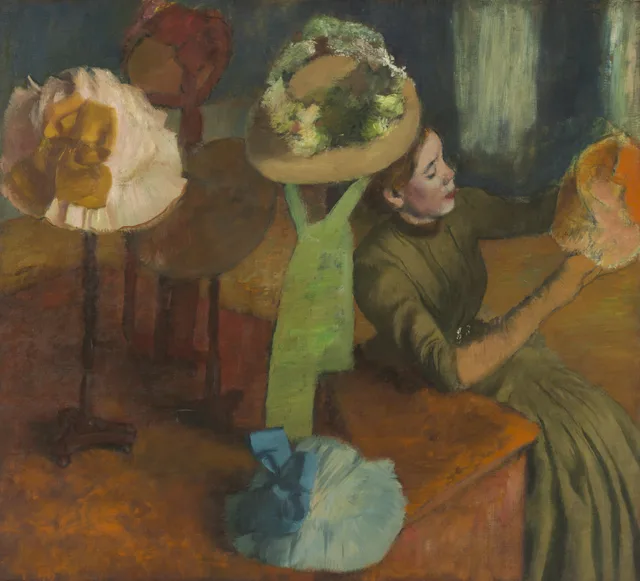 The Millinery ShopEdgar Degas1879-86
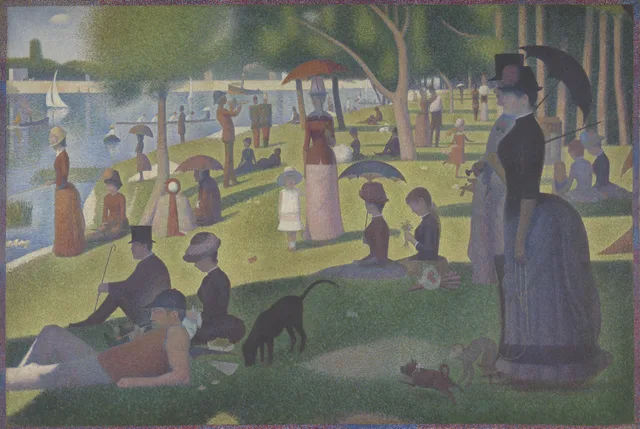 A Sunday on La Grande Jatte — 1884Georges Seurat1884–86, border added 1888–89
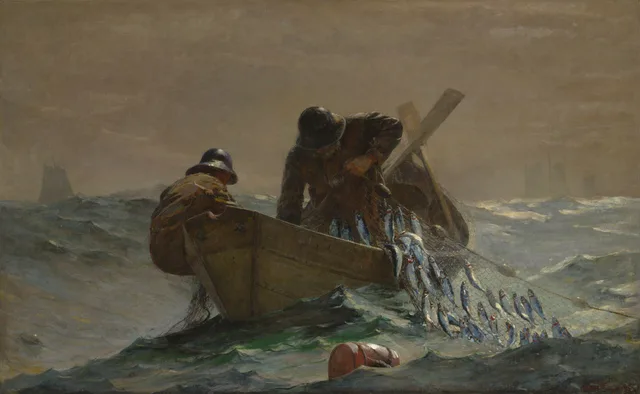 The Herring NetWinslow Homer1885
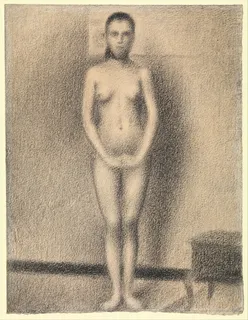 Study for "Poseuses"Georges Seurat1886–87
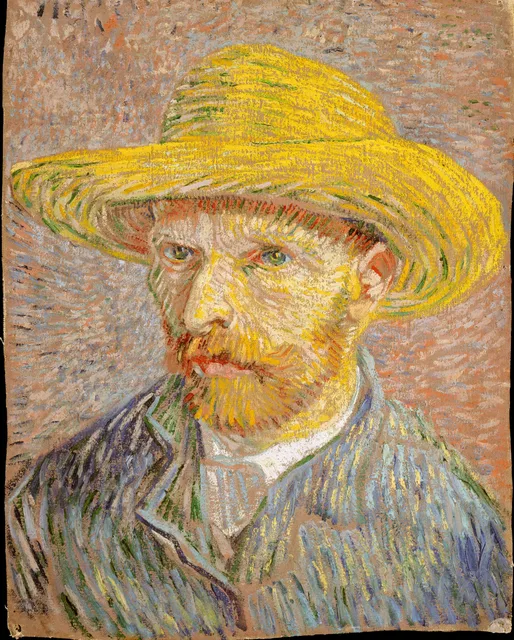 Self-Portrait with a Straw Hat (obverse: The Potato Peeler)Vincent van Gogh1887
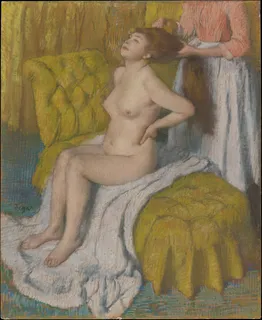 Woman Having Her Hair CombedEdgar Degasca. 1886–88
Too good to keep to yourself
This painting,
for someone who comes to mind
They open it at full size
and see every brushstroke.
About this work
- Artist
- William Merritt Chase · 1849–1916
- Date
- 1886
- Medium
- Oil on panel
- Size
- 34.9 × 49.9 cm
- Culture
- American
- Collection
- The Metropolitan Museum of Art
- Image
- Original long edge 3811px · shown at 2560px
- Original
- View on the museum's website ↗