 Pyeongye
Artwork · 19th century · William Merritt Chase
LeoTurn on Magnifier at the lower right and move slowly across the painting.
Full screen opens it edge to edge.Tap the painting to fill the screen.
Spread two fingers to look closer.
At a glance
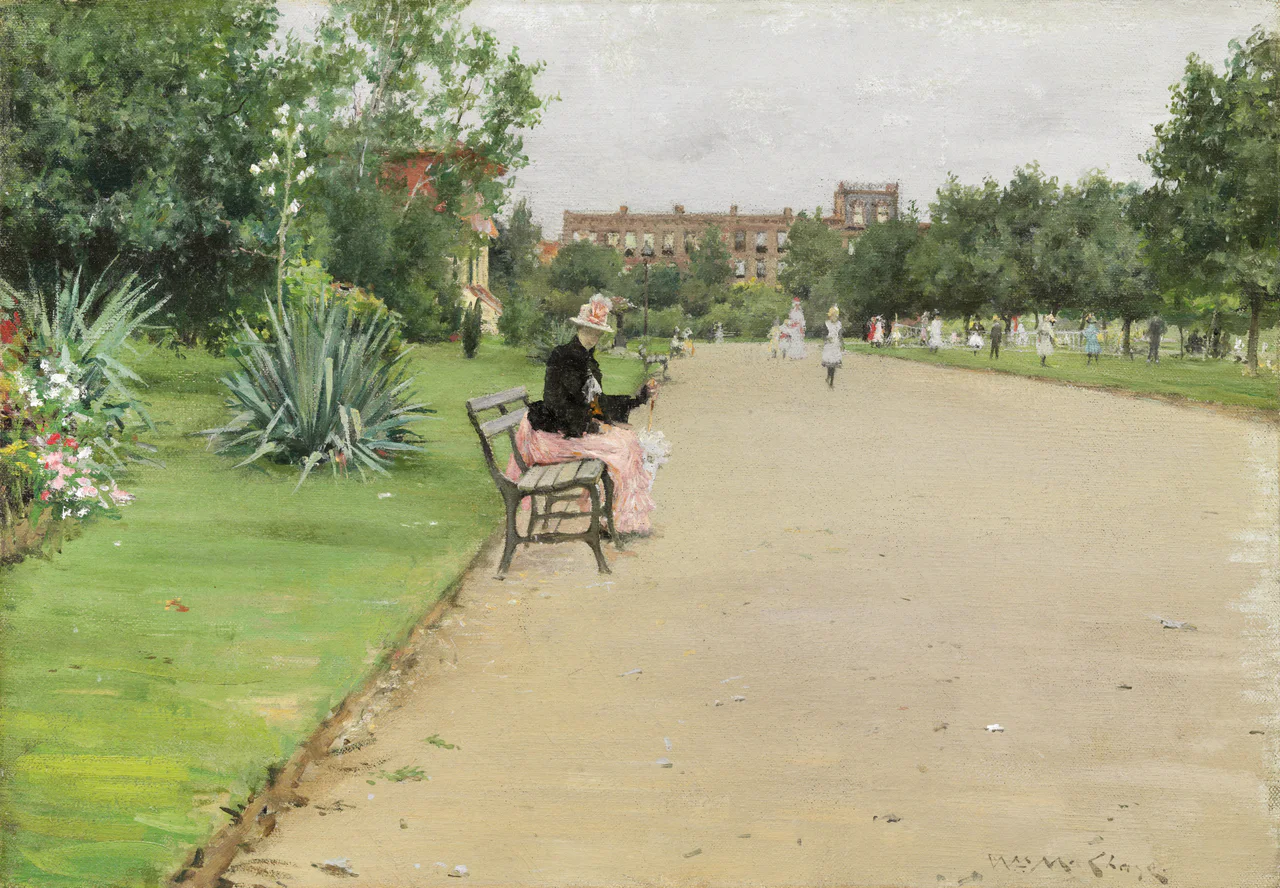
- A woman sits on a bench beside a wide, empty path, while children in white play far off in a city park.
- The American painter William Merritt Chase painted it in oil on canvas around 1887.
- The canvas is only about 20 inches wide. Half of it is given over to a bare walkway, a bold choice you notice right away.
Reading the picture
5 places to look closer
Tap a number on the painting to jump to its note, or a close-up to see that spot in the whole picture.
Zoom in on the woman on the bench. She wears a white hat trimmed with pink flowers, a black jacket, and a pink skirt. She holds a parasol with an orange handle, and something white lies beside her lap. Her face is just a few pale strokes, with no features drawn in.
Look to the far end of the path. Children in white and figures in red gather there, very small. Up close they are less people than dabs of white and red paint. Step back, and the dabs turn into a summer crowd strolling through the park.
Zoom in on the spiky plant in the lawn at the left. Blade-like leaves shoot out in every direction. Each leaf is a single, quick pull of the brush. Pink and white flowers bloom just to its left.
Look at the red brick building behind the trees. Chase sketched in only a few windows and the chimneys on the roof. This is the detail that tells you the park sits in the middle of a city, not in the countryside.
Check the path at the lower right. The artist's signature is dashed across the sandy ground. He left his name in a corner of the empty walk.
When it was painted
In 1887 Chase was about thirty-seven. Born in Indiana, he had spent years studying at the art academy in Munich, Germany. After returning to New York in 1878, he set up a lavishly decorated studio in the well-known Tenth Street Studio Building.
In 1887 he married Alice Gerson. In these years Chase began a series of paintings of the public parks of Brooklyn and Manhattan. The Art Institute of Chicago believes this one probably shows Tompkins Park in Brooklyn.
New York was growing fast. In the crowded city, parks offered a break and a new kind of place to meet and mingle. Inspired by French Impressionism, Chase painted them with bright colors and open, loose brushwork.
This is a small picture. The Art Institute suggests its size means Chase painted it outdoors, bringing portable supplies so he could work on the spot in the city. The museum calls it an informal piece that captures the sparkle of a summer day.
Chase went on to teach for decades at several art schools, and Georgia O'Keeffe and Edward Hopper were among his students. He died in 1916, and the painting entered the Art Institute in 1968. Look again at the woman and the empty path in front of her. Chase filled even that blank stretch of ground with summer light.
More by the same painter
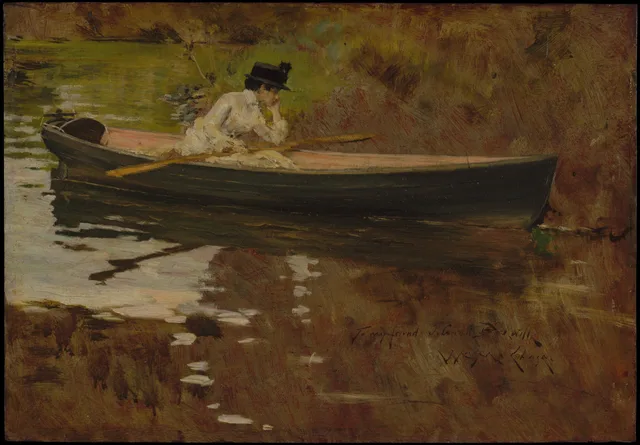
Questions to think about
- Look for itHow many people dressed in red can you count in the crowd at the end of the path?
- Why?Why do you think Chase left half of the canvas as an empty walkway with no one on it?
- What about you?More than a century ago, parks gave crowded New Yorkers room to breathe. Are the parks in your neighborhood equally open and welcoming to everyone today?
Same period
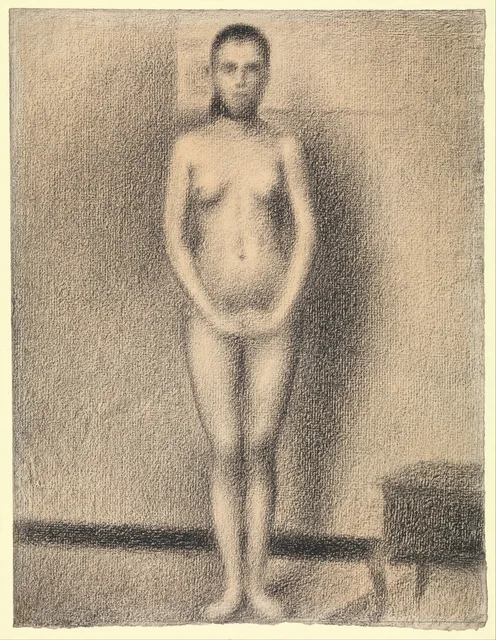
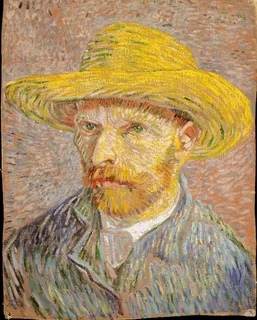
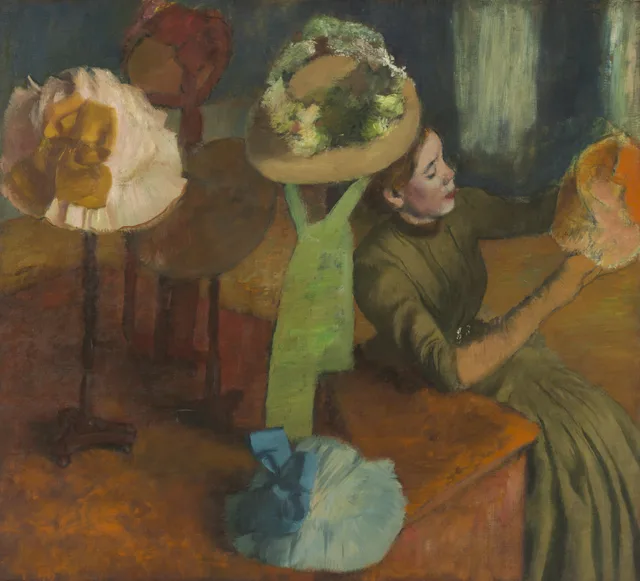
Painted around the same time,
somewhere else
Too good to keep to yourself
This painting,
for someone who comes to mind
They open it at full size
and see every brushstroke.
About this work
- Artist
- William Merritt Chase · 1849–1916
- Date
- c. 1887
- Medium
- Oil on canvas
- Size
- 34.6 × 49.9 cm
- Culture
- New York City
- Collection
- The Art Institute of Chicago
- Image
- Original long edge 8555px · shown at 2560px
- Original
- View on the museum's website ↗