 Pyeongye
Artwork · 17th century · El Greco
LeoTurn on Magnifier at the lower right and move slowly across the painting.
Full screen opens it edge to edge.Tap the painting to fill the screen.
Spread two fingers to look closer.
At a glance
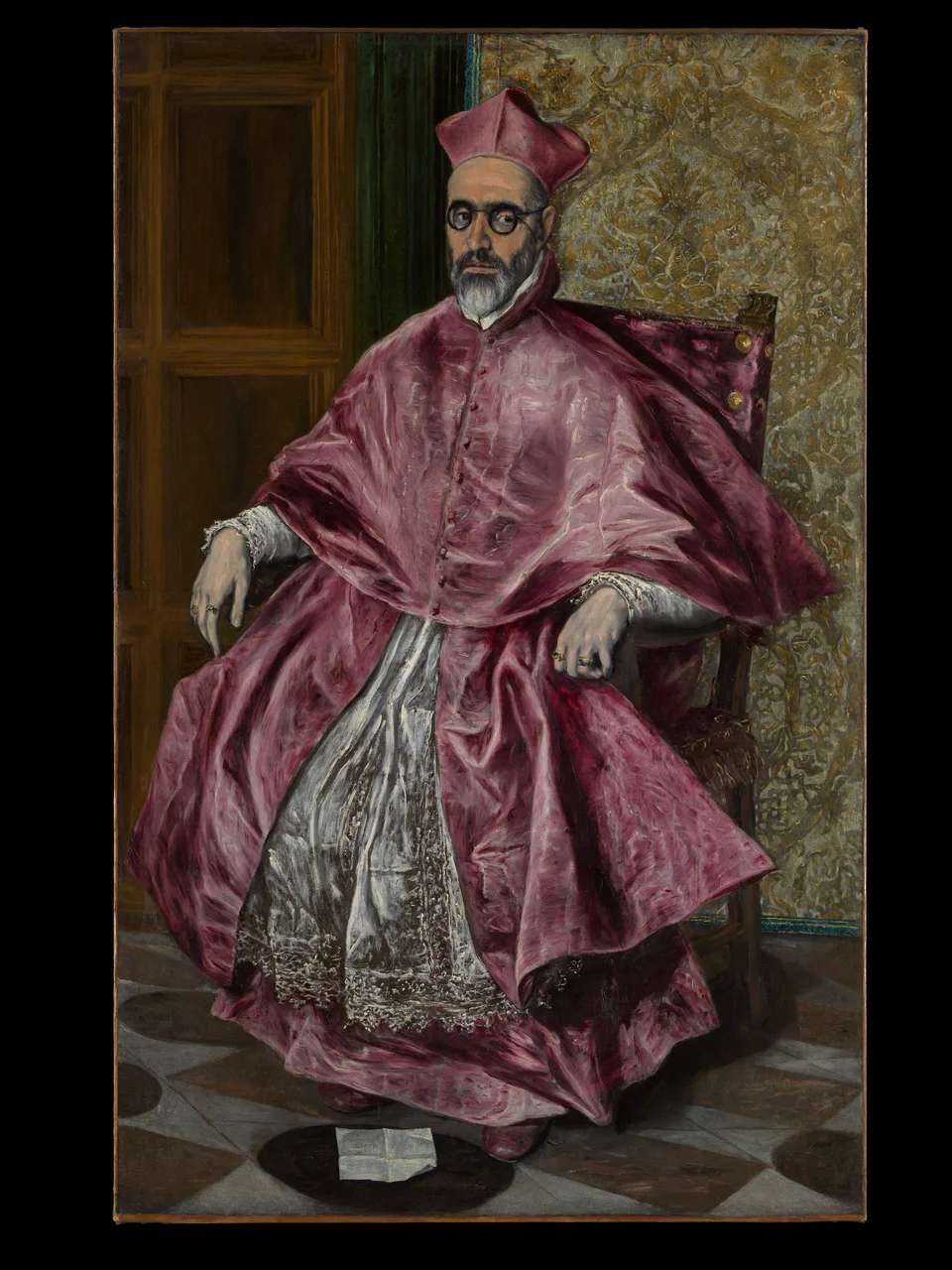
- A cardinal in shimmering red silk and round black spectacles sits in a chair and glances at us out of the corner of his eye.
- El Greco, who worked in Toledo, Spain, painted this full-length portrait in oil on canvas around 1600.
- The sitter, Fernando Niño de Guevara, became the head of the Spanish Inquisition, and here you can study a powerful man's face and hands up close.
Reading the picture
5 places to look closer
Tap a number on the painting to jump to its note, or a close-up to see that spot in the whole picture.
Zoom in on the face. Behind round, black-rimmed glasses, his eyes are turned to the side. He is not looking straight at us so much as sizing us up sideways. A graying beard and a red square cap frame his pale face.
Look at the hand on the chair arm at the right. The fingers curl tight around the end of the armrest. He wears rings with green and blue stones. His pose looks relaxed, but this hand is gripping hard.
Now look at his other hand, on the left. This one hangs loose over the arm of the chair. Two more rings glint here. One hand clenched, one hand let go: glance from one to the other and you feel the tension in the man.
Zoom in on the white lace falling below his knees. El Greco did not paint the lace stitch by stitch. He flicked and scratched on white paint in quick strokes. Up close it is just brushwork, but step back and it becomes glittering lace. The red silk around it gets its shine from bold white strokes too.
Zoom in on the sheet of paper on the floor. You can see where it was folded in four, and there is writing on it. El Greco often wrote his name in Greek letters on a little paper like this inside his pictures.
When it was painted
In the spring of 1600, King Philip III and members of the court in Madrid came to Toledo. Among them was Cardinal Niño de Guevara, the new head of the Spanish Inquisition. The Met believes El Greco probably painted this portrait during that visit.
El Greco was about sixty. Born on the Greek island of Crete, he had worked in Venice and Rome before settling in Toledo around 1577, more than twenty years earlier. El Greco simply means the Greek in Spanish. His son, Jorge Manuel, born in 1578, grew up to help in his father's workshop.
The sitter was one of the most powerful churchmen in Spain. He was made a cardinal in 1596 and became Inquisitor General in 1599. The Inquisition investigated and tried people suspected of straying from Catholic teaching. In 1601 he became Archbishop of Seville, and he died in 1609.
Yet the painting's official title carries a careful word. The Met calls it a portrait of a cardinal, probably Fernando Niño de Guevara. Scholars still weigh the sitter's identity with care.
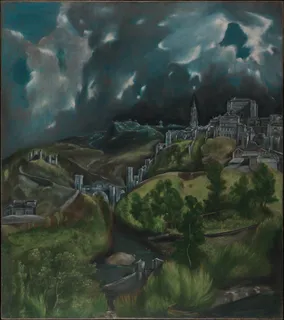
About three centuries later, the picture belonged to the New York collectors Henry and Louisine Havemeyer. The couple built their collection with advice from their friend, the painter Mary Cassatt. When Louisine died, her bequest of 1929 brought this portrait to the Met, together with El Greco's View of Toledo.
Look once more at the eyes behind those glasses. A powerful man arrived in town with the king, and a painter of sixty met his gaze at close range.
Questions to think about
- Look for itThe wall behind him is different on the left and on the right. Can you describe how?
- Why?Why do you think El Greco kept the spectacles in a portrait of such an important man?
- What about you?This man held the power to judge other people's beliefs. Today, who should have the power to judge and punish what someone thinks, and how far should it go?
Same period
Painted around the same time,
somewhere else
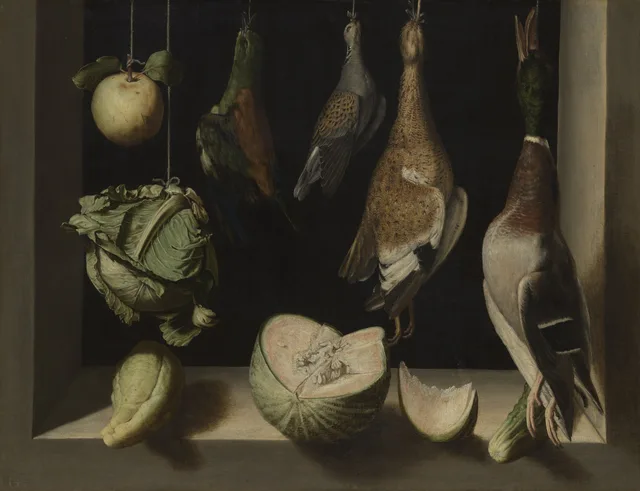 Still Life with Game FowlJuan Sánchez Cotánc. 1600–3
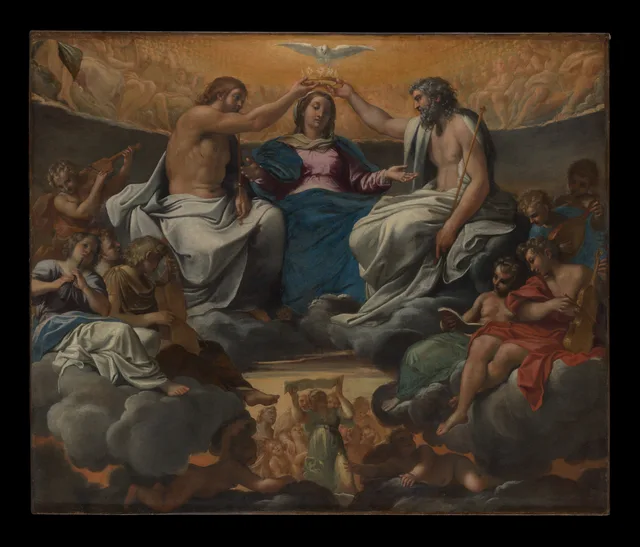 The Coronation of the VirginAnnibale Carracciafter 1595
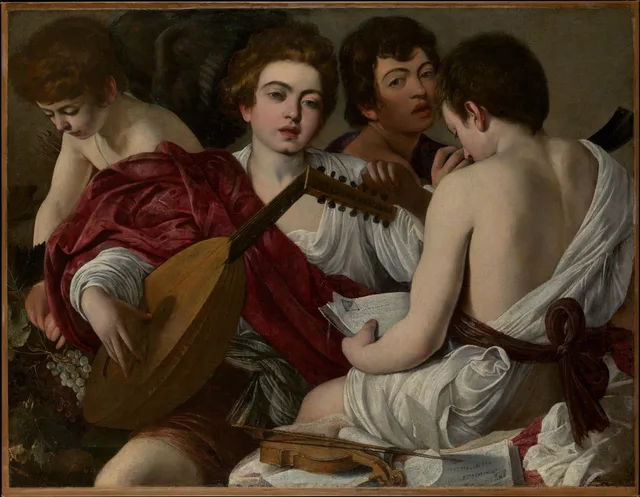 The MusiciansCaravaggio1597
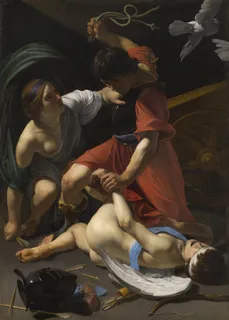 Cupid ChastisedBartolomeo Manfredi1613
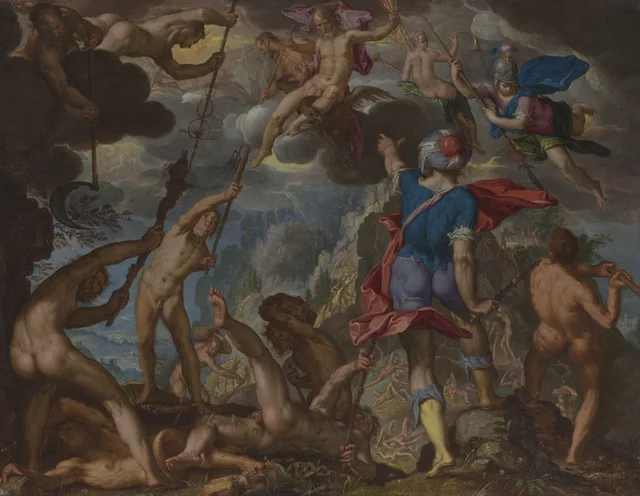 The Battle between the Gods and the GiantsJoachim Antonisz. Wtewaelc. 1608
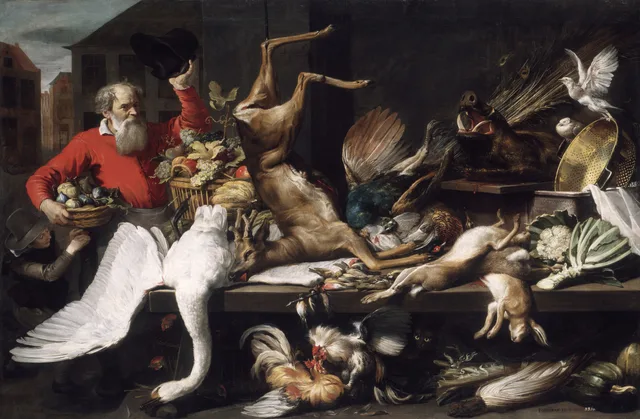 Still Life with Dead Game, Fruits, and Vegetables in a MarketFrans Snyders1614
Too good to keep to yourself
This painting,
for someone who comes to mind
They open it at full size
and see every brushstroke.
About this work
- Artist
- El Greco · 1540–1614
- Date
- ca. 1600
- Medium
- Oil on canvas
- Size
- 170.8 × 108 cm
- Collection
- The Metropolitan Museum of Art
- Image
- Original long edge 4000px · shown at 2560px
- Original
- View on the museum's website ↗