 Pyeongye
At a glance
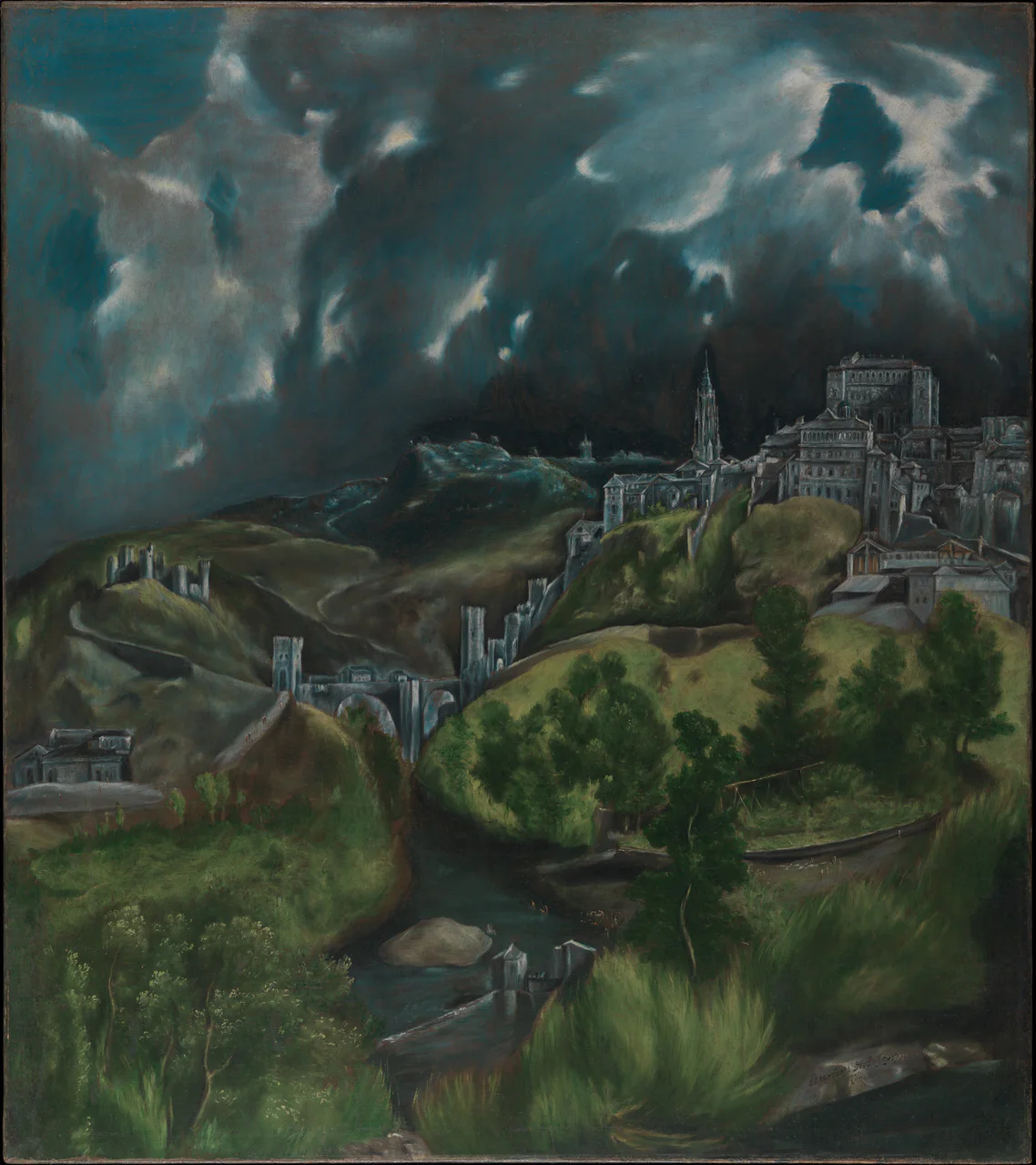
- The Spanish city of Toledo on its hill, under a sky about to break into a storm.
- Painted by El Greco around 1599 to 1600, after more than twenty years of living in Toledo.
- A painter of saints and Bible scenes made a whole city his subject here. Only two landscapes by him survive, and this is one of them.
Reading the picture
5 places to look closer
Tap a number on the painting to jump to its note, or a close-up to see that spot in the whole picture.
Begin with the sky. Gray clouds churn across patches of blue, and streaks of white paint flash where the brush dragged. The sky is dark, yet the grass below glows a strange, bright green. That clash makes the whole scene feel as if it is holding its breath.
Zoom in on the buildings on the hilltop. The tall, pointed tower belongs to Toledo Cathedral, and the big square block to the right is the Alcázar, a fortress palace. They catch a pale, ghostly light against the dark.
Lower down, just left of center, an arched bridge spans the valley. This is the Alcántara Bridge over the Tagus River. Long strokes of white inside the arches make light seem to slide across the stone. Towers and walls climb up beside it.
Now go down to the river. On the dark bank stand a few people no bigger than a fingertip. Near them, two small buildings with pointed roofs sit at the water's edge. Under that enormous sky, people look very small indeed.
Zoom into the bottom right corner. On a pale patch like a rock, fine handwriting runs across the paint. It is the painter's signature in Greek letters. Born on Crete, El Greco usually signed his real name, Domenikos Theotokopoulos, in Greek.
When it was painted
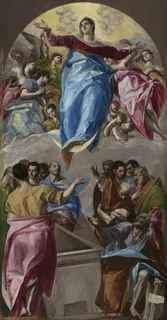
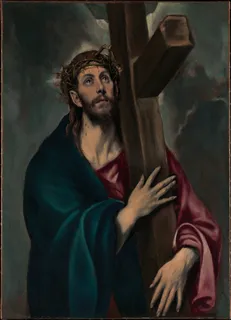
Around 1600, El Greco was close to sixty. He had been born on the Greek island of Crete and trained in Venice and Rome. In about 1577 he came to Toledo to paint big altarpieces for its churches and convents, and he never left.
His early years there were not smooth. The Disrobing of Christ, painted for Toledo Cathedral, ended in a dispute with the cathedral over his fee. The Martyrdom of Saint Maurice, made for King Philip II's monastery at El Escorial, did not please the king and was not hung where it was meant to go. His hopes of becoming a court painter faded.
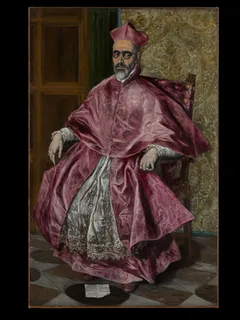
Toledo, though, held on to him. The royal court had left for Madrid in 1561, but the city was still the seat of Spain's leading archbishop and the heart of the Spanish church. Clergy, scholars and nobles sought out his work, and in 1586 he was hired to paint The Burial of the Count of Orgaz for the church of Santo Tomé. His son, Jorge Manuel, born in 1578, grew up to work beside him in the studio.
El Greco died in Toledo in 1614. For a long time afterward his paintings were dismissed as strange and were largely forgotten. In the late nineteenth and early twentieth centuries, artists and critics looking for something new rediscovered him.
Around then, the American collector Louisine Havemeyer bought this painting. When she died in 1929, it came to the Met with the collection she left. Look again at the city on the hill. The place he never left still glows white under the storm.
Questions to think about
- Look for itWhere is the brightest spot in the sky, and where is the darkest?
- Why?Why might El Greco have chosen the moment before a storm instead of a clear day?
- What about you?El Greco made the people by the river no bigger than a fingertip and let the sky and buildings stand for the city. When we show off where we live today, do we picture the people who live there as well as the fine buildings?
Same period
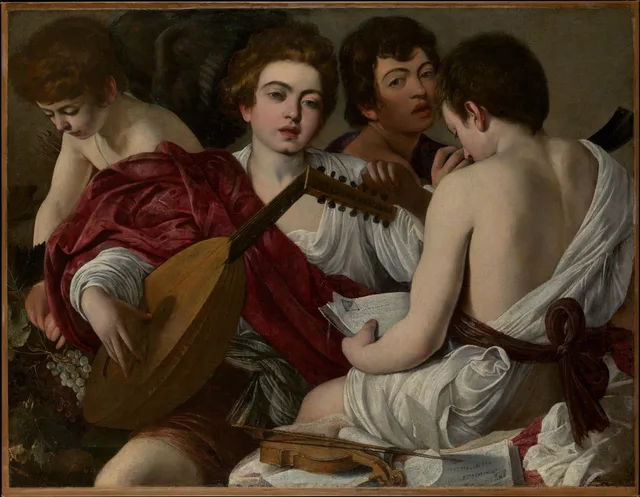
Painted around the same time,
somewhere else
Too good to keep to yourself
This painting,
for someone who comes to mind
They open it at full size
and see every brushstroke.
About this work
- Artist
- El Greco · 1540–1614
- Date
- ca. 1599–1600
- Medium
- Oil on canvas
- Size
- 121.3 × 108.6 cm
- Collection
- The Metropolitan Museum of Art
- Image
- Original long edge 3934px · shown at 2560px
- Original
- View on the museum's website ↗