 Pyeongye
Artwork · 19th century · Jean Auguste Dominique Ingres
LeoTurn on Magnifier at the lower right and move slowly across the painting.
Full screen opens it edge to edge.Tap the painting to fill the screen.
Spread two fingers to look closer.
At a glance
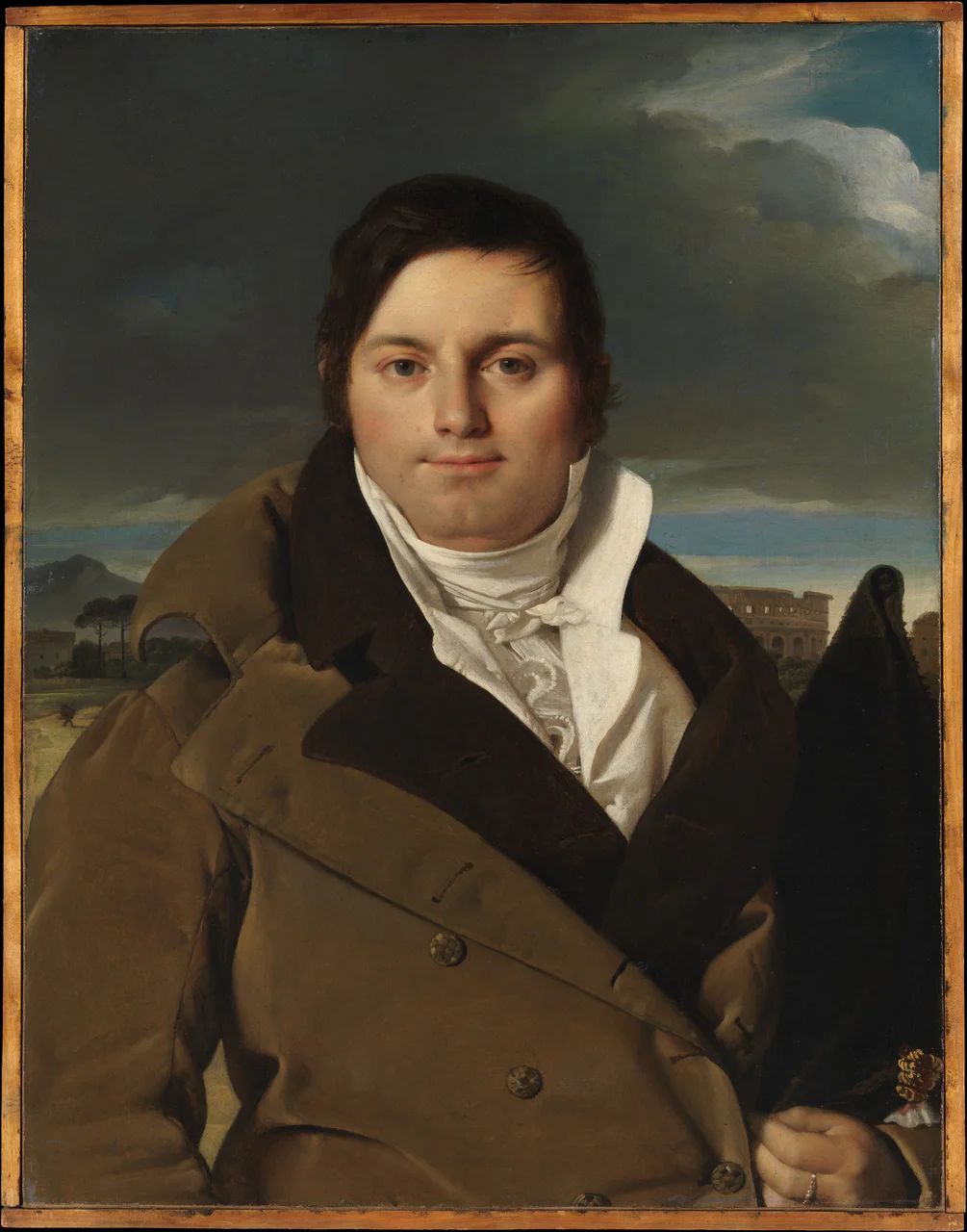
- A man in a heavy brown overcoat and a white neckcloth looks straight at us, with a Roman sky and the Colosseum behind him.
- Jean Auguste Dominique Ingres painted it in Rome around 1810. The sitter is Joseph-Antoine Moltedo, born in 1775.
- The face and fabrics are smooth and exact, while the background works like a small travel scene, so one picture holds both a person and a city.
Reading the picture
5 places to look closer
Tap a number on the painting to jump to its note, or a close-up to see that spot in the whole picture.
Zoom into the face. The skin is so smooth that you can barely find a brushstroke. Both eyes look straight out, and the corners of the mouth lift just a little. Wherever you stand, his gaze seems to stay on you.
Look at the white cloth under his chin. The neckcloth wraps high around his throat and is knotted in front, and a frilled shirt ruffle tumbles below it. Framed by the brown coat and dark collar, this patch of white holds up the face.
Look past his left shoulder, on our right. That round building with stacked rows of arches is the Colosseum. Its upper wall is broken and ragged, and the sky shows through the openings. One building tells us exactly where this man is standing.
Move to the far left edge. Two pines spread their branches only at the top, like umbrellas. These stone pines are a familiar sight around Rome. On the path below, a tiny figure trudges along, apparently carrying a load.
Zoom into the hand at lower right. A sparkling ring sits on one finger. Just above, near the edge, hangs a small gold ornament. Little details of dress quietly tell us about this man's means.
When it was painted
Around 1810, Ingres was about thirty and still living in Rome. He had won the Prix de Rome in 1801 and arrived at the French Academy in Rome in 1806. When his scholarship years ended, he stayed on. Back in Paris, the pictures he sent to the Salon were being called strange and awkward by critics.
Rome itself had changed hands. Napoleon's France had annexed the city, and French officials poured in to run it. Ingres made his living painting and drawing them. The Met presents this picture as one of a series of portraits of French officials in Napoleonic Rome, painted between 1810 and 1814.
So who is this calm, round-faced man? According to the museum, Moltedo was a Corsican, from the same island as Napoleon, and he directed the Roman post office from 1803 to 1814. He also designed a fire pump and a machine for weaving hemp, and he ran a lead foundry at Tivoli.
Scholars have not always agreed on which Moltedo this is. The 1954 catalogue of Ingres's works suggested the sitter might be an older relative, a deputy for Corsica in the revolutionary Convention. The 1999 catalogue of a major Ingres portrait exhibition argued instead for the deputy's nephew, Joseph-Antoine, born in 1775, whose age and standing in Rome fit the face. The Met uses that name.
When Napoleon fell in 1814, the French officials left Rome. Later, the Paris critic Théodore Duret sold it to the New York collector Louisine Havemeyer, and it came to the Met with her bequest in 1929.
Look at him again with that in mind. The Colosseum behind him is not a tourist backdrop. He is a man who kept the mail moving through an occupied city.
Questions to think about
- Look for itCan you find the small figure walking along the path on the left?
- Why?Why do you think Ingres put the Colosseum behind this man?
- What about you?Today we take photos in front of famous landmarks and post them. What does a picture like that say about us, and what does it leave out?
Same period
Painted around the same time,
somewhere else
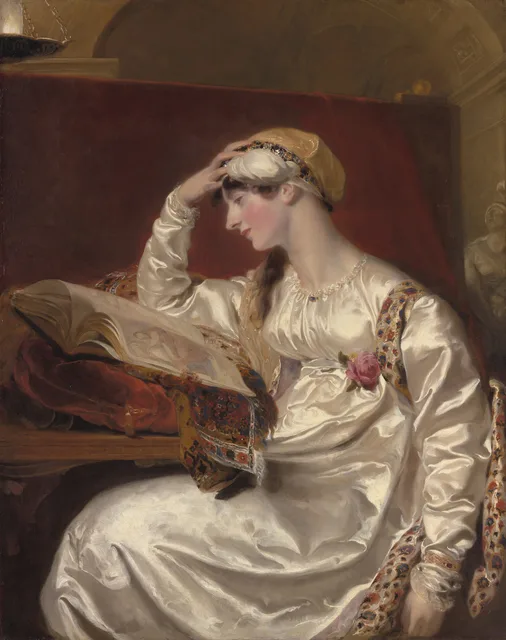 Isabella WolffSir Thomas Lawrence1803–15
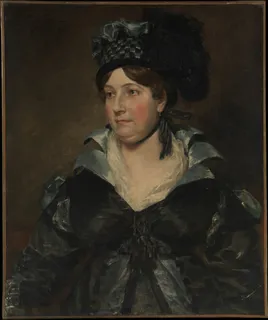 Mrs. James Pulham Sr. (Frances Amys, ca. 1766–1856)John Constable1818
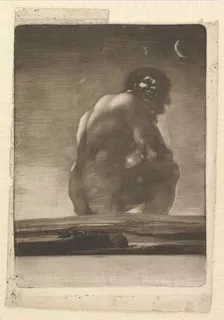 Seated GiantGoyaby 1818 (possibly 1814–18)
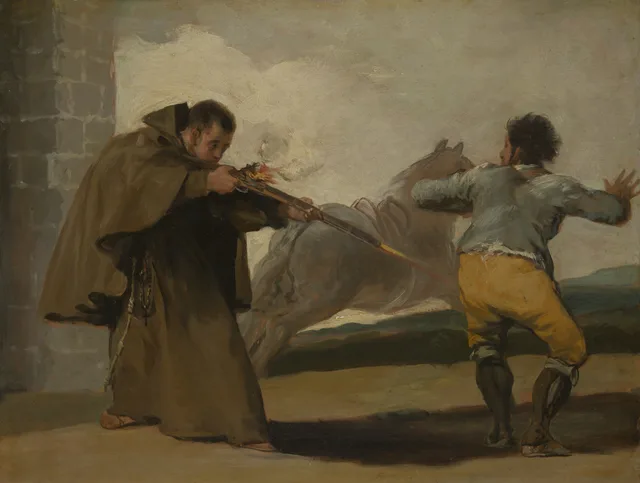 Friar Pedro Shoots El Maragato as His Horse Runs OffGoyac. 1806
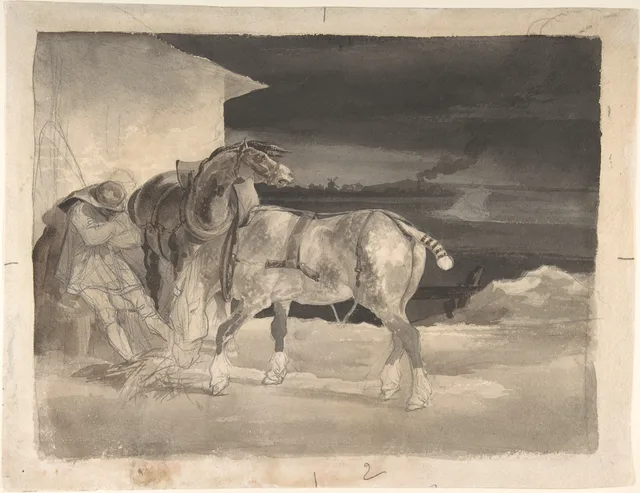 Two Draft Horses with a Sleeping DriverThéodore Géricault1820–22
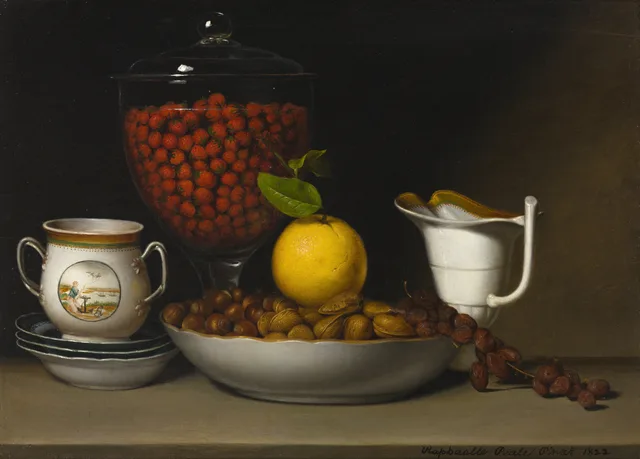 Still Life—Strawberries, Nuts, &c.Raphaelle Peale1822
Too good to keep to yourself
This painting,
for someone who comes to mind
They open it at full size
and see every brushstroke.
About this work
- Artist
- Jean Auguste Dominique Ingres · 1780–1867
- Date
- ca. 1810
- Medium
- Oil on canvas
- Size
- 75.2 × 58.1 cm
- Collection
- The Metropolitan Museum of Art
- Image
- Original long edge 3844px · shown at 2560px
- Original
- View on the museum's website ↗