 Pyeongye
Artwork · 15th century · Jacometto
LeoTurn on Magnifier at the lower right and move slowly across the painting.
Full screen opens it edge to edge.Tap the painting to fill the screen.
Spread two fingers to look closer.
Portrait of a Woman, Possibly a Nun of San Secondo; (verso) Scene in Grisaille
Jacomettoca. 1485–95Oil on wood; (verso: oil and gold on wood)10.2 × 7.3 cm
At a glance
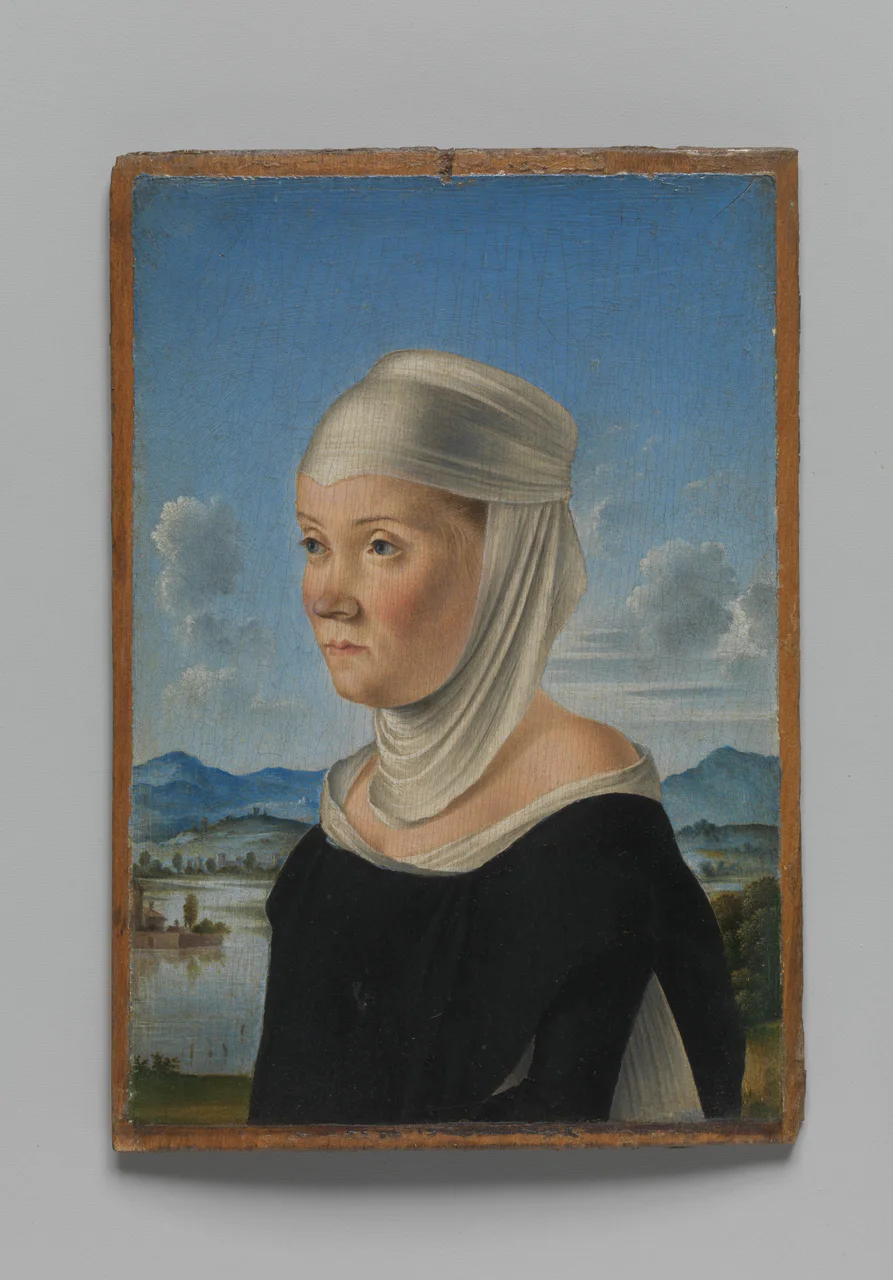
- A middle-aged woman in a white veil and a black dress turns slightly to one side, with a lake and hills stretching out behind her.
- The Venetian painter Jacometto made it in oil on wood, around 1485 to 1495.
- The whole panel is about 10 cm tall and 7 cm wide. It fits in your palm, and still it holds every crease of her veil and a tiny house on a faraway island.
Reading the picture
4 places to look closer
Tap a number on the painting to jump to its note, or a close-up to see that spot in the whole picture.
Zoom in on her face. Fine lines gather under her clear blue eyes, and a faint pink warms her cheeks. Her lips are pressed together, and the tip of her nose is round and plain. Nothing is flattered. Over the centuries, the paint surface has broken into a web of hairline cracks.
Look at the white veil falling under her chin. It wraps her neck and folds over itself again and again, each fold carrying a soft gray shadow. The edge of the veil sweeps across her shoulders and curves around like a collar on the black dress.
Go down to the water on the left. A small island sits on a still lake, with a red-roofed house and a tree, and their reflections lie in the water below. Further back, little towers peek through the trees on the hillside. That house is no bigger than a grain of rice, yet you can tell its roof from its walls.
Now look at the far right edge. The nearby trees are deep green. The hills behind them turn bluer and paler the farther away they are. The painter noticed how distant things melt into the color of the sky.
When it was painted
In 1543 a Venetian art lover named Marcantonio Michiel walked through the collection of a patrician family and wrote down what he saw. Among the entries were two small portraits by Jacometto. One showed Alvise Contarini. The other showed a nun of San Secondo. Today this panel and its companion, Portrait of Alvise Contarini(?), are thought to be that very pair.
Jacometto worked in Venice from the 1470s into the 1490s, as a painter and also as an illuminator of books. Yet only a handful of pictures can be firmly tied to him. Much of what we know about him survives only because Michiel took notes.
Venice was changing fast in those years. After Antonello da Messina, a painter from Sicily, spent time in the city in the mid-1470s, small, finely detailed oil portraits became more common. This one, with its wrinkles up close and its lake far away, belongs to that new wave.
There is also a puzzle here. On the back of the companion portrait, a roebuck is chained up beneath a Greek word meaning forever. A sign of faithfulness like that, on a pair of portraits, would usually point to a husband and wife. So scholars still disagree about whether this woman was really a nun of the convent of San Secondo.
The back of this panel is painted too, with a scene done only in shades of gray. Just as in Michiel's day, the two portraits are still together. They came to the Metropolitan Museum side by side with the Robert Lehman Collection in 1975.
Now look again at her white veil, wrapped fold after fold around her neck. Is it a nun's habit, or the headdress of a Venetian lady? Look closely and decide for yourself.
More by the same painter
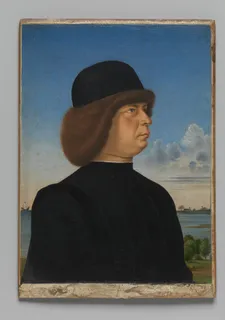
Questions to think about
- Look for itCan you find the reflection of the island house in the lake?
- Why?Why do you think the painter turned her face a little to the side instead of showing her straight on?
- What about you?Five hundred years ago, people kept a loved face in a picture small enough to hold. How is that like, and unlike, the photos we carry on our phones today?
Same period
Painted around the same time,
somewhere else
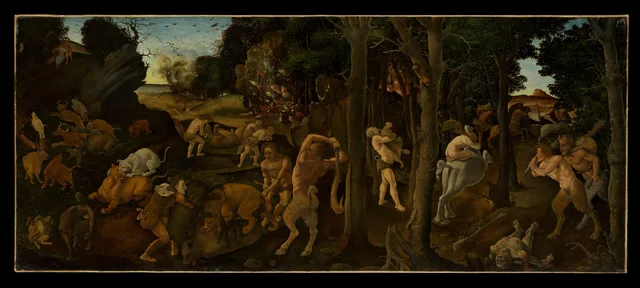 A Hunting ScenePiero di Cosimoca. 1494–1500
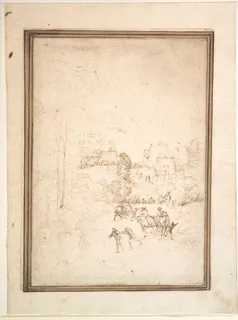 Approach to a Mountain Village with Horsemen on the RoadFra Bartolomeoca. 1501
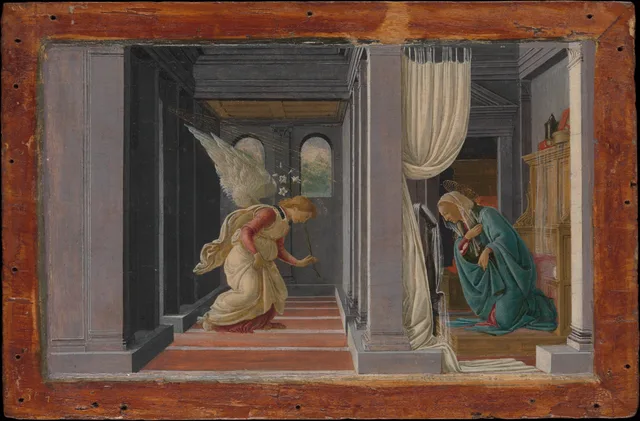 The AnnunciationBotticellica. 1490
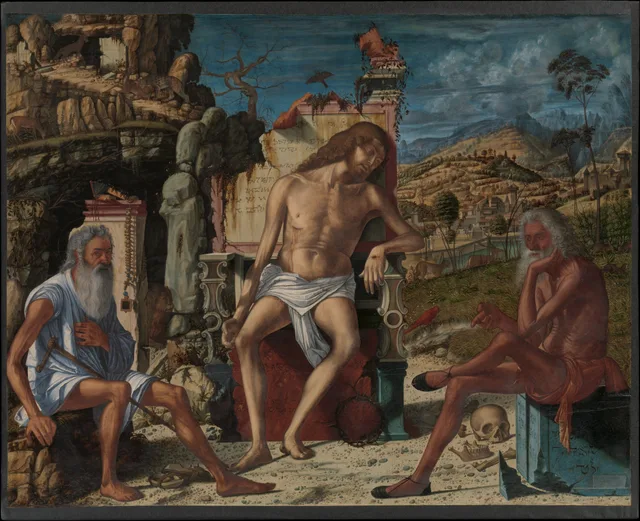 The Meditation on the PassionVittore Carpaccioca. 1490
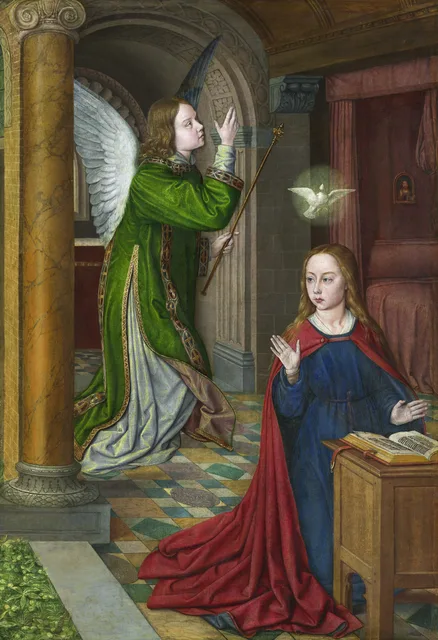 The AnnunciationJean Hey1490–95
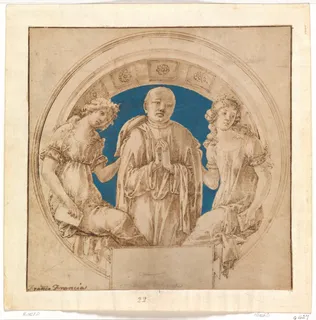 Design for a Wall MonumentFrancesco di Giorgio Martinica. 1490
Too good to keep to yourself
This painting,
for someone who comes to mind
They open it at full size
and see every brushstroke.
About this work
- Artist
- Jacometto · 1472–1498
- Date
- ca. 1485–95
- Medium
- Oil on wood; (verso: oil and gold on wood)
- Size
- 10.2 × 7.3 cm
- Collection
- The Metropolitan Museum of Art
- Image
- Original long edge 4000px · shown at 2560px
- Original
- View on the museum's website ↗