 Pyeongye
Artwork · 16th century · Lorenzo Lotto
LeoTurn on Magnifier at the lower right and move slowly across the painting.
Full screen opens it edge to edge.Tap the painting to fill the screen.
Spread two fingers to look closer.
At a glance
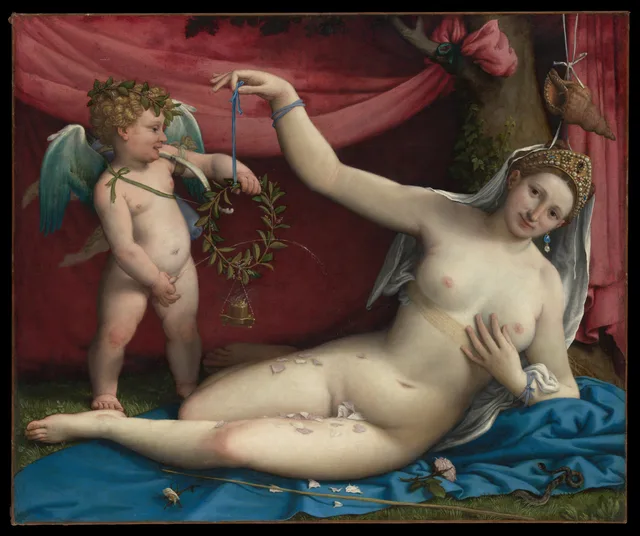
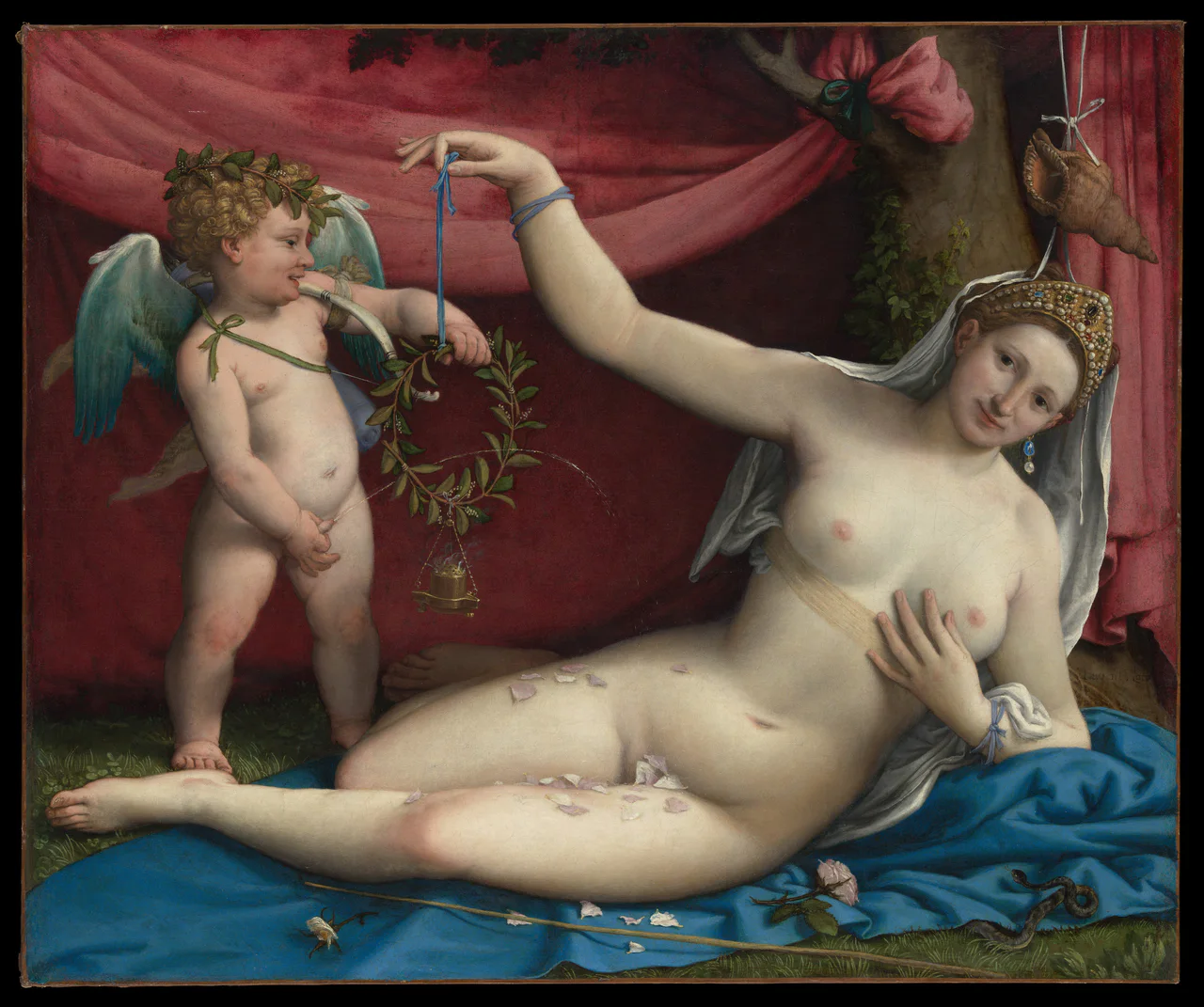
- Venus, the goddess of love, lies on a blue cloth beneath a red curtain, while the baby Cupid stands beside her with a wreath.
- Lorenzo Lotto, a painter born in Venice, made it in oil on canvas in the 1520s.
- It is a myth picture, but small things like the headdress, a seashell, and a snake each carry a meaning. Working them out is half the fun.
Reading the picture
5 places to look closer
Tap a number on the painting to jump to its note, or a close-up to see that spot in the whole picture.
Zoom in on Cupid's face. His golden curls are crowned with a wreath of leaves dotted with tiny white flowers. He wears a mischievous grin, and a white bow rests on his shoulder.
Zoom in on the wreath. Venus holds it up by a blue ribbon, and an incense burner hangs below, sending up smoke. Look closely and you will see a thin stream arcing through the wreath. Cupid is peeing through it. The museum reads this cheeky detail as an old symbol of wishing a couple many children.
Zoom in on Venus's face. She wears a headdress studded with pearls and red and blue jewels, with a thin white veil flowing behind it. An earring with a blue stone and a hanging pearl glints at her ear. The goddess is dressed like a bride.
Look at the upper right. A large conch shell hangs there, tied with ribbons. In myth, Venus was born from the foam of the sea, so shells often appear with her.
Zoom in on the grass at the lower right. A dark snake slides out from under the blue cloth with its head raised. Up and to its left lies a single rose, and rose petals are scattered all around.
When it was painted
Around 1525, Lorenzo Lotto came home to Venice. He had spent more than ten years in Bergamo, a city at the foot of the Alps. There he painted altarpieces and portraits, and he drew designs for the inlaid wood panels of the choir in the church of Santa Maria Maggiore. Before that he had worked in Treviso, Rome, and the Marches. He was a painter on the move.
Venice was a hard place to make a living. In those years the city's biggest commissions tended to go to Titian. Lotto kept traveling in the decades that followed, taking work in the Marches and other places.
This picture seems to have been made to celebrate a wedding. The Met points out that Venus wears a crown, a veil, and a pearl earring like those of Venetian brides in the 1500s. That is why the museum suggests her face may be a portrait of a real bride. Who the couple were, though, is not known.
Late in life Lotto kept an account book, writing down what he spent and what he earned. In 1550 he offered a group of his paintings in a lottery in Ancona, but few of them found buyers. In 1554 he gave himself to the shrine of the Holy House at Loreto as a lay oblate, and he died there.
The Met acquired this painting in 1986. Look at it again. Cupid is still up to his prank through the wreath, and Venus tilts her head to meet your eyes. That gaze may belong to a real bride from five hundred years ago.
Questions to think about
- Look for itCan you find the green ivy climbing the tree trunk behind Venus?
- Why?Why do you think Lotto tucked a snake into the corner of a happy, celebratory picture?
- What about you?Five hundred years ago, people ordered paintings full of good-luck symbols as wedding gifts. What objects or words do we use today to wish a newly married couple happiness?
Same period
Painted around the same time,
somewhere else
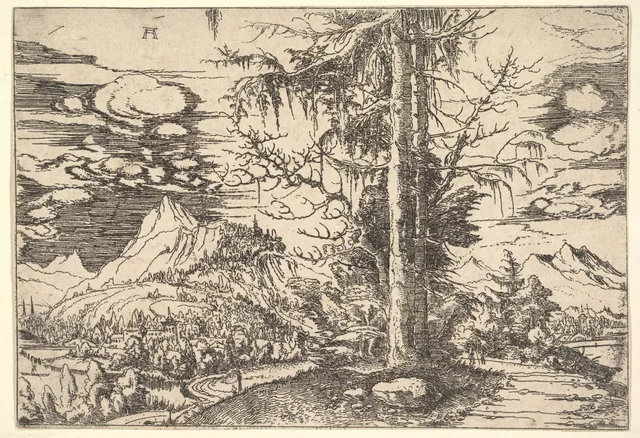 Landscape with a Double SpruceAlbrecht Altdorferca. 1521–22
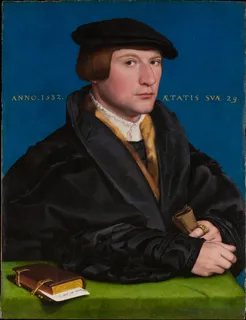 Hermann von Wedigh III (died 1560)Hans Holbein the Younger1532
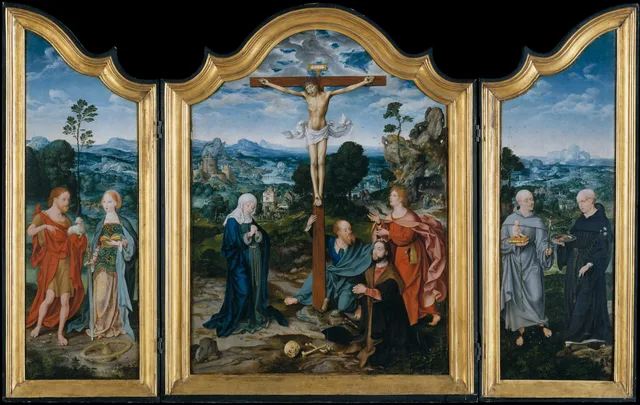 The Crucifixion with Saints and a DonorJoos van Cleveca. 1520
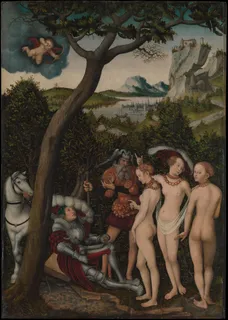 The Judgment of ParisLucas Cranach the Elderca. 1528
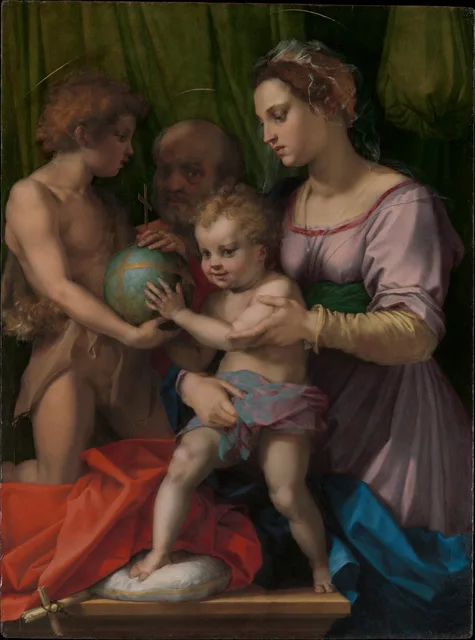 The Holy Family with the Young Saint John the BaptistAndrea del Sartoca. 1528
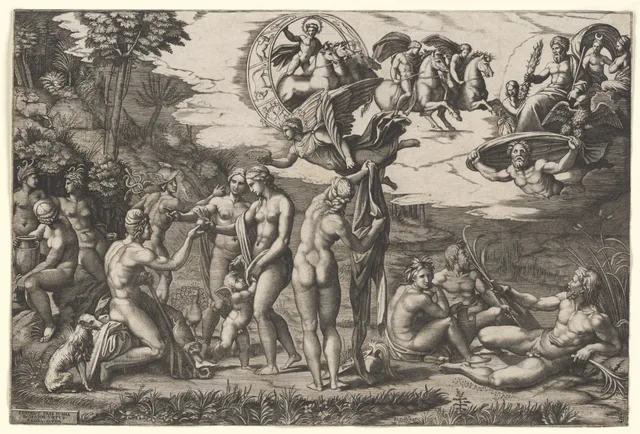 The Judgment of Paris: he is sitting at left with Venus, Juno and Pallas Athena, a winged victory above. In the upper section the Sun in his chariot preceeded by Castor and Pollux on horseback, at lower right two river gods and a naiad above whom Jupiter, an eagle, Ganymede, Diana and another goddessMarcantonio Raimondica. 1510–20
Too good to keep to yourself
This painting,
for someone who comes to mind
They open it at full size
and see every brushstroke.
About this work
- Artist
- Lorenzo Lotto · 1475–1556
- Date
- 1520s
- Medium
- Oil on canvas
- Size
- 92.4 × 111.4 cm
- Collection
- The Metropolitan Museum of Art
- Image
- Original long edge 4000px · shown at 2560px
- Original
- View on the museum's website ↗