 Pyeongye
At a glance
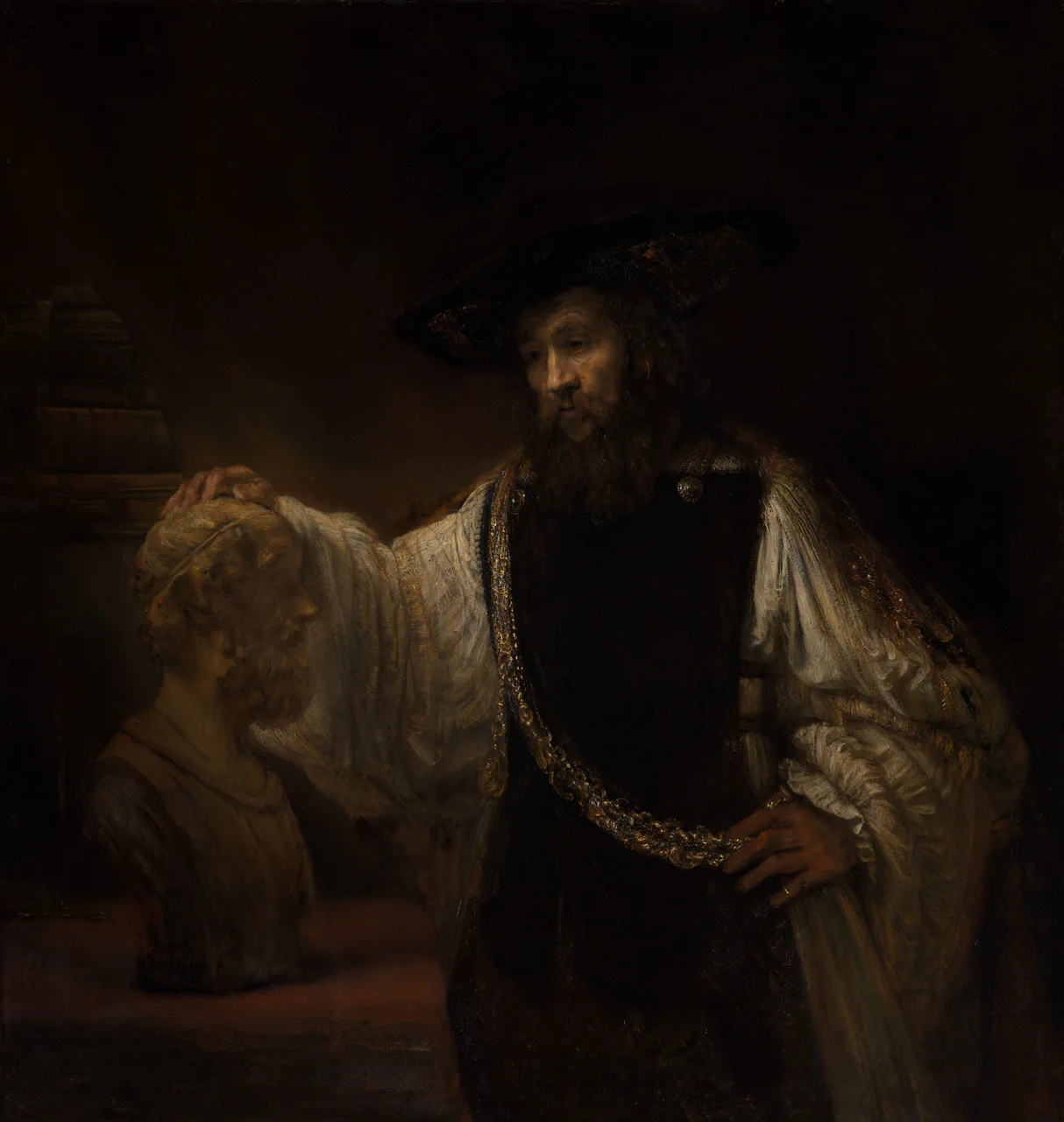
- The ancient Greek philosopher Aristotle rests his hand on a marble bust of the poet Homer, lost in thought.
- Painted by Rembrandt van Rijn in Amsterdam in 1653, for the Sicilian nobleman Don Antonio Ruffo.
- Out of a dark background, light picks out only a face, a hand, a white sleeve and a gold chain. Follow that light and you find the question the painting is asking.
Reading the picture
5 places to look closer
Tap a number on the painting to jump to its note, or a close-up to see that spot in the whole picture.
Start with the face under the wide black hat. His eyes point toward the bust, but they seem to be looking somewhere far beyond it. The lines on his forehead and the shadows under his eyes are left as visible brushstrokes. Is this a man weighing an idea, or a man feeling regret?
Zoom in on the bust at the left. It is an old man with a headband and a thick beard: Homer. The eyes are sunken and blurred. Tradition says Homer was blind. Aristotle's fingers rest on top of the head, gently, almost like a touch of respect.
Look at the heavy gold chain falling from his shoulder to his waist. The paint is piled on thickly, so every link catches the light. His other hand holds the chain, and a ring sits on one finger. The medallion on the chain is usually read as showing Alexander the Great, who had been Aristotle's pupil.
Get close to the white sleeve on the right and the brushwork takes over. Rembrandt smeared, scraped and layered the paint, so the folds seem to shift as you look. From across the room it reads as soft fabric. Up close, it is all rough strokes.
Low on the base of the bust, in the shadows, there is writing: Rembrandt f. 1653. It is his signature and the date. The f stands for fecit, Latin for made it.
When it was painted
In 1653 Rembrandt was forty-seven. He was a famous painter in Amsterdam, yet his money troubles were piling up. He had never finished paying for the big house he bought in 1639. His wife, Saskia, had died in 1642, and he now lived with his young son Titus and his companion, Hendrickje Stoffels.
Then an order came from Messina, in Sicily, from the nobleman and collector Don Antonio Ruffo. When Ruffo's possessions were listed in 1654, this canvas was described as a philosopher by Rembrandt, perhaps Aristotle or perhaps Albertus Magnus. Even its first owner, in other words, was not entirely sure who the man was.
Ruffo kept coming back. In 1661 he received an Alexander the Great from Rembrandt, and in 1663 a Homer. The Homer survives only in part, in the Mauritshuis in The Hague.
Meanwhile Rembrandt's own life came apart. In 1656 he went through bankruptcy proceedings, and his house and his collection of art and curiosities were sold off. He moved to a smaller home and kept painting in Amsterdam until his death in 1669.
The painting left the Ruffo family and passed through several collections. In November 1961 the Met bought it at auction in New York for 2.3 million dollars, at that time the highest price ever paid for a painting.
Look again at Aristotle's two hands. Painted in a year of mounting debt, one rests on the poet's head and the other holds the gold chain.
The painter
Rembrandt
1606–1669
When painting this, the artist was about 47 years old
All paintings by Rembrandt →More by the same painter
Questions to think about
- Look for itCan you find the three brightest spots in the painting?
- Why?Why do you think Rembrandt put one of Aristotle's hands on the poet's head and the other on the gold chain?
- What about you?Between the chain that stands for honor and money and the bust that stands for wisdom, which one do you find yourself holding onto more in daily life?
Same period
Painted around the same time,
somewhere else
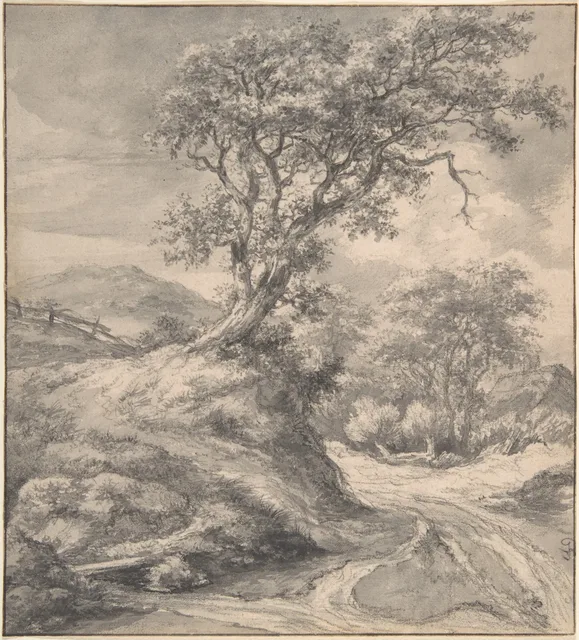 Dune Landscape with Oak TreeJacob van Ruisdael1650–55
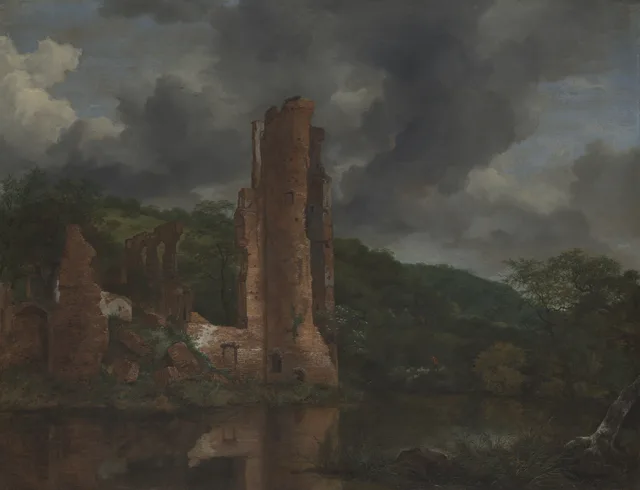 Landscape with the Ruins of the Castle of EgmondJacob van Ruisdael1650–55
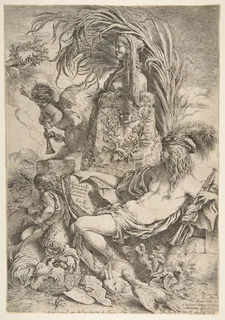 The Genius of CastiglioneGiovanni Benedetto Castiglioneca. 1645–47 (published 1648)
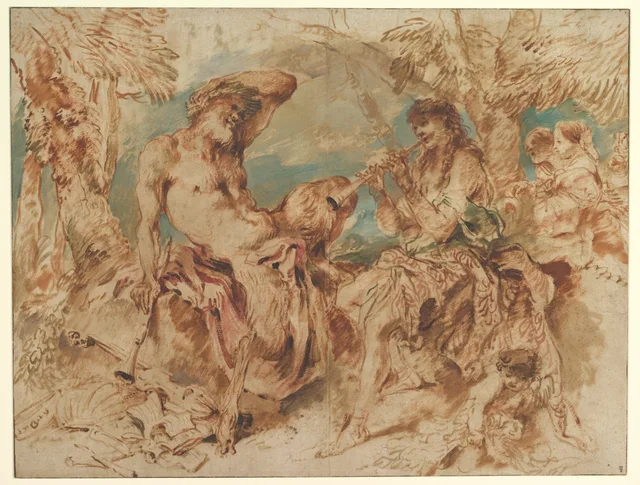 Youth Playing a Pipe for a SatyrGiovanni Benedetto Castiglione1645–50
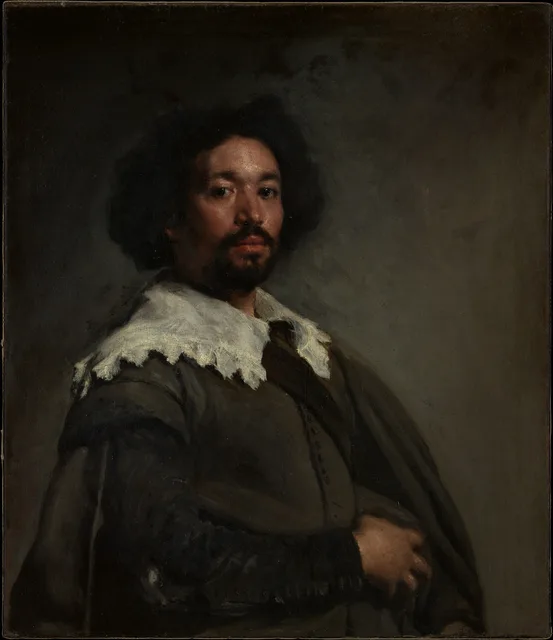 Juan de Pareja (ca. 1608–1670)Velázquez1650
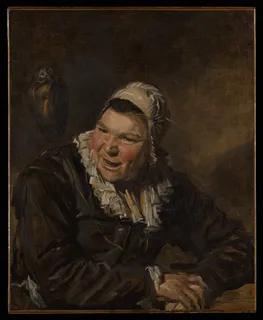 Barbara Claes (died 1663, called “Malle Babbe”)Frans Hals1649
Too good to keep to yourself
This painting,
for someone who comes to mind
They open it at full size
and see every brushstroke.
About this work
- Artist
- Rembrandt · 1606–1669
- Date
- 1653
- Medium
- Oil on canvas
- Size
- 143.5 × 136.5 cm
- Collection
- The Metropolitan Museum of Art
- Image
- Original long edge 4000px · shown at 2560px
- Original
- View on the museum's website ↗