 Pyeongye
Artwork · 17th century · Rembrandt
LeoTurn on Magnifier at the lower right and move slowly across the painting.
Full screen opens it edge to edge.Tap the painting to fill the screen.
Spread two fingers to look closer.
At a glance
- A painter in a black beret and a brown coat looks straight out at us from the dark.
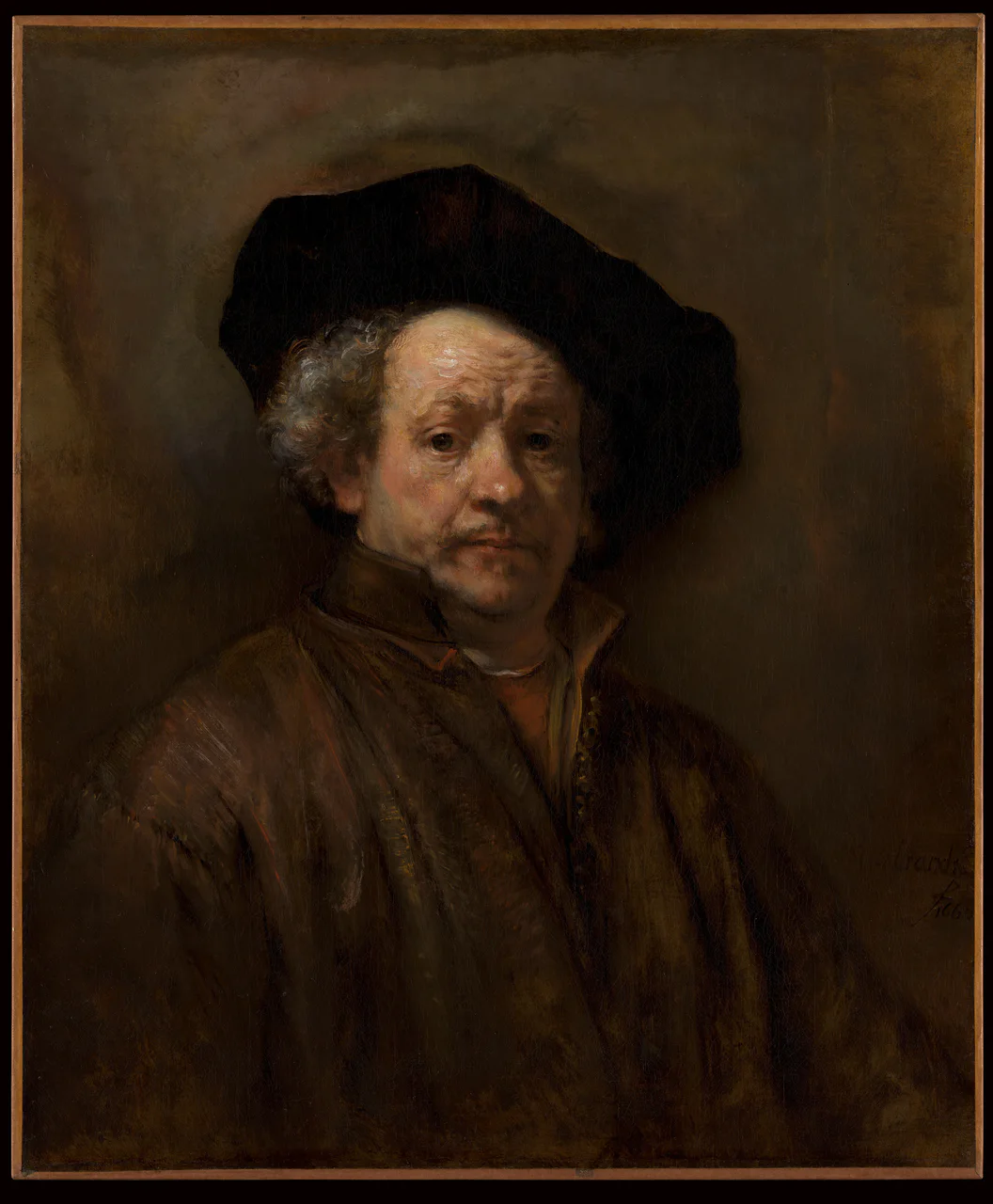
- Rembrandt van Rijn painted this self-portrait in Amsterdam in 1660, the year he turned fifty-four.
- He did not hide the lines on his forehead or the bags under his eyes. He painted them with thick, bold strokes.
Reading the picture
5 places to look closer
Tap a number on the painting to jump to its note, or a close-up to see that spot in the whole picture.
Zoom in on the face. On the forehead the paint is laid on so thickly that it stands up in little ridges wherever the light hits. There are deep vertical lines between the eyebrows, and the skin under the eyes sags. The eyes look a little tired, but they do not look away from us.
Now look at the hair on the left side of his head. The gray and brown curls are made of round, looping brushstrokes. You can see how the brush was turned in small circles to build each curl. His hair is already streaked with gray.
Zoom in below his chin. Between the edges of his coat, a strip of white shirt collar peeks out. To the right, a column of small buttons runs down the front. Each button is just a dab of paint, and each one catches a spot of light in the darkness.
Look at the sleeve at the lower left. Unlike the face, it is painted with fast, slanting sweeps of the brush, and the marks are left in plain view. Up close they look like brown streaks. Step back, and they turn into heavy cloth. Rembrandt spent his care on the face and let the rest stay loose.
Zoom in on the dark background near the right edge. You can just make out the last letters of his name, and below them the date 1660. From the 1630s on, Rembrandt signed his works with his first name alone.
When it was painted
In 1660 Rembrandt was living in Amsterdam, and the past few years had been hard. In 1656, unable to pay his debts, he had applied for bankruptcy. The grand house on the Breestraat that he had bought in 1639 was sold, and so was his collection, which included busts of Roman emperors, armor, and rare seashells.
He moved to a rented house on the Rozengracht, in a humbler part of town. With him were his son Titus, his companion Hendrickje Stoffels, and their daughter Cornelia, born in 1654. His wife, Saskia, had died back in 1642, the same year he finished The Night Watch.
In December 1660 Hendrickje and Titus set up a business dealing in art, and Rembrandt became its employee. That way, the pictures he painted belonged to the company and could not be seized straight away by his creditors. It was a family plan to keep him working.
And he did keep working. In 1662 he finished a large group portrait of the officials of the Amsterdam drapers' guild. But Hendrickje died in 1663 and Titus in 1668, and Rembrandt himself died the following year.
This self-portrait passed through several collections before the New York department store owner Benjamin Altman bought it. When Altman died in 1913, he left it to the Metropolitan Museum. Look again at the thick paint on the forehead. He had lost his house and his treasures, but he never spared the paint on his own face.
The painter
Rembrandt
1606–1669
When painting this, the artist was about 54 years old
All paintings by Rembrandt →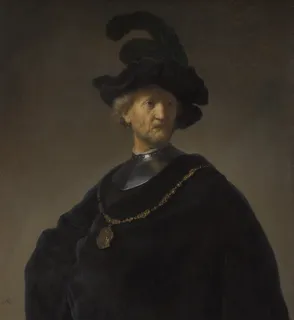
Questions to think about
- Look for itWhere on his face does the brightest light fall?
- Why?Why do you think Rembrandt painted his wrinkles and gray hair so clearly instead of softening them?
- What about you?Today many of us filter a photo before anyone sees it. How would it feel to leave a picture of your own face exactly as it is, with nothing smoothed over?
Same period
Painted around the same time,
somewhere else
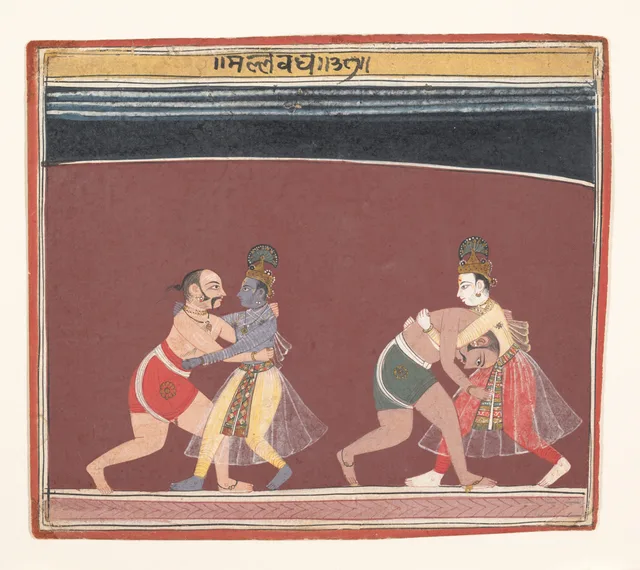 Krishna and Balarama Fight the Evil King Kamsa’s Wrestlers: Page from a Dispersed Bhagavata PuranaUnknown artist · India (Madhya Pradesh, Malwa)ca. 1650
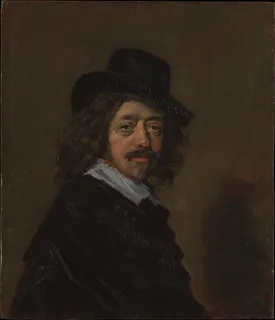 Frans Hals (1582/83–1666)Frans Halsprobably 1650s
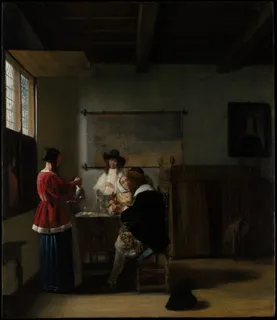 The VisitPieter de Hoochca. 1657
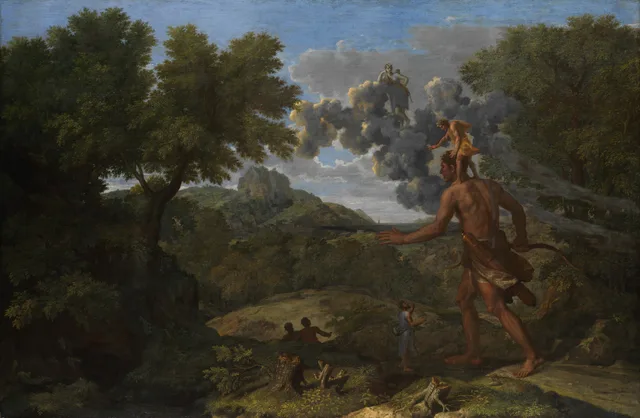 Blind Orion Searching for the Rising SunNicolas Poussin1658
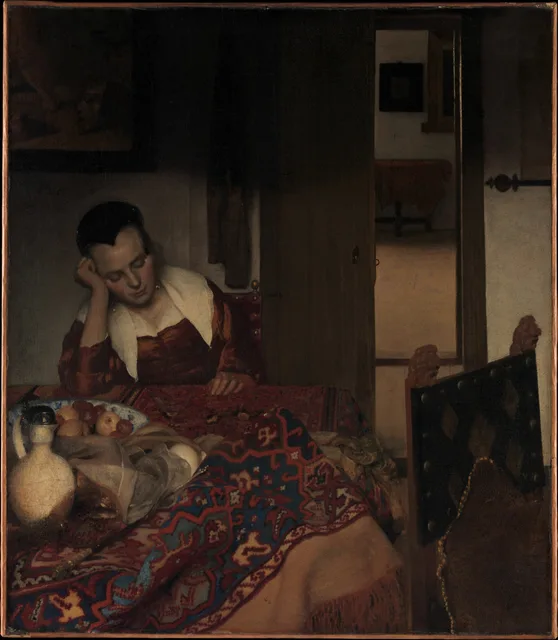 A Maid AsleepJohannes Vermeerca. 1656–57
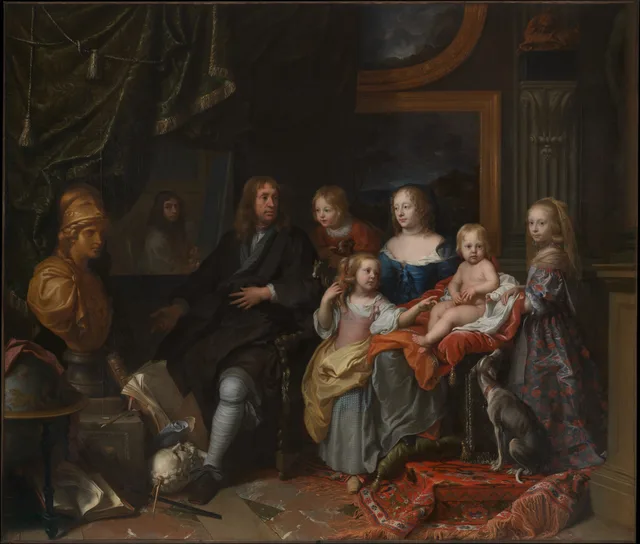 The Jabach FamilyCharles Le Brunca. 1660
Too good to keep to yourself
This painting,
for someone who comes to mind
They open it at full size
and see every brushstroke.
About this work
- Artist
- Rembrandt · 1606–1669
- Date
- 1660
- Medium
- Oil on canvas
- Size
- 80.3 × 67.3 cm
- Collection
- The Metropolitan Museum of Art
- Image
- Original long edge 4000px · shown at 2560px
- Original
- View on the museum's website ↗