 Pyeongye
At a glance
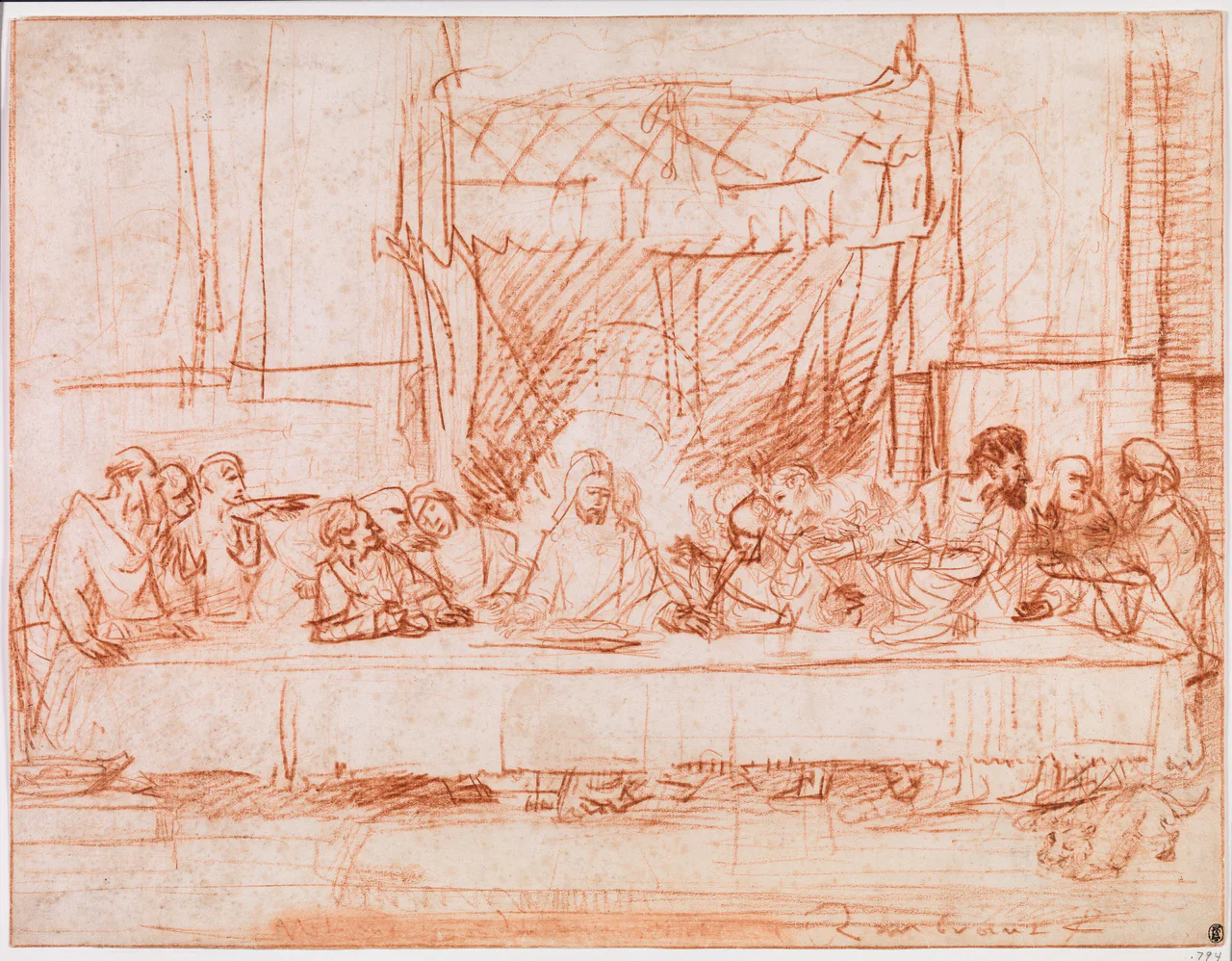
- Jesus and the twelve apostles sit in a row along a long table at the Last Supper, drawn in red chalk.
- Rembrandt van Rijn made this drawing in 1634–35, copying Leonardo da Vinci's famous mural.
- It is a copy, but you can spot, one by one, the places where Rembrandt changed things.
Reading the picture
4 places to look closer
Tap a number on the painting to jump to its note, or a close-up to see that spot in the whole picture.
Zoom in on Jesus in the middle. He tilts his head and lowers his eyes. His face and beard are drawn with firm, dark lines, while his body is just a few faint strokes. Right beside him, a long-haired apostle leans in.
Look above Jesus's head. In Leonardo's mural, an open window sits behind him. Rembrandt replaced it with a huge canopy trimmed with tassels. He laid diagonal hatching over and over to throw the space underneath into shadow.
Go to the apostles at the far left. Three of them crowd together, all looking toward the center. One holds up an open palm, and someone's arm shoots out in front of him. A handful of quick, thick lines catch their surprise.
Now look under the table at the lower right. An animal lies curled up there. Leonardo's mural has no animals at all. Rembrandt slipped a piece of everyday life into the sacred scene.
When it was painted
In 1634 Rembrandt was twenty-eight. A few years after leaving his hometown of Leiden for Amsterdam, he had become one of the most sought-after portrait painters in the city. His 1632 group portrait, The Anatomy Lesson of Dr. Nicolaes Tulp, had made his name.
That June he married Saskia van Uylenburgh, a cousin of the art dealer Hendrick van Uylenburgh, whose business Rembrandt worked with. The wedding took place in Saskia's home province of Friesland, in the north.
Rembrandt never went to Italy. The statesman Constantijn Huygens, who spotted his talent early, wrote that Rembrandt and his friend Jan Lievens said they were too busy for the trip, and that plenty of fine Italian painting could be seen in the Netherlands anyway. Instead, Rembrandt collected prints and paintings by Italian masters and studied how they built their scenes.
That is how he knew Leonardo's Last Supper, painted in the 1490s on the wall of the dining hall of Santa Maria delle Grazie in Milan. He never saw the mural itself, only prints made after it. Rembrandt made three drawings based on it, and this large red chalk sheet is one of them. Darker lines run over fainter ones, which shows that he went over it a second time and changed things as he went.
Hard years came later. Saskia died in 1642, and in 1656 Rembrandt, deep in debt, went bankrupt. This drawing traveled a long way before it came to The Met in 1975 with the Robert Lehman Collection.
Now look along the bottom edge, toward the right. There is Rembrandt's signature, scrawled in red chalk. On a copy of another painter's mural, he still put his own name.
More by the same painter
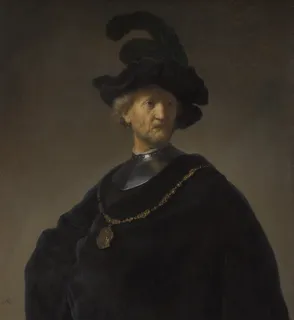
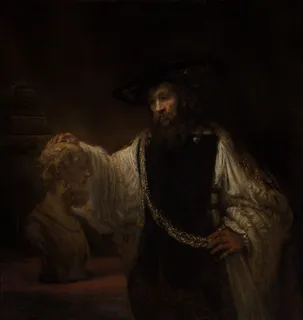
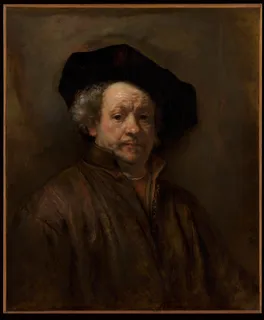
Hidden stories in this painting
Questions to think about
- Look for itCan you find places where faint lines and dark lines overlap? Does a dark line ever go a different way from the faint one under it?
- Why?Why do you think Rembrandt swapped the bright window behind Jesus for a dark canopy?
- What about you?Rembrandt copied another artist's work and added his own ideas. When we copy or remix someone else's work today, where is the line between learning and copying?
Same period
Painted around the same time,
somewhere else
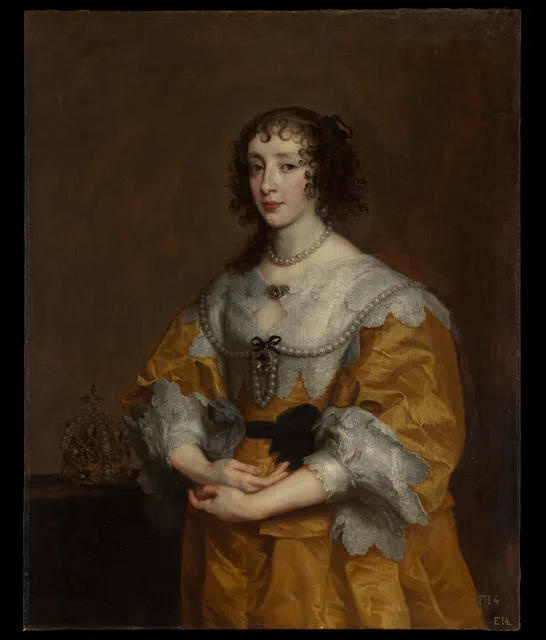 Queen Henrietta MariaAnthony van Dyck1636
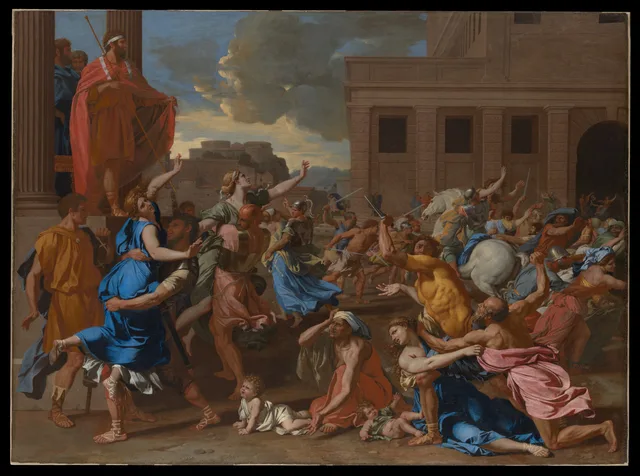 The Abduction of the Sabine WomenNicolas Poussinprobably 1633–34
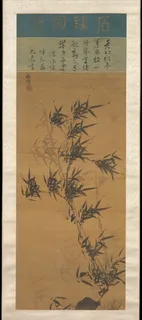 Bamboo in the WindYi Jeongearly 17th century
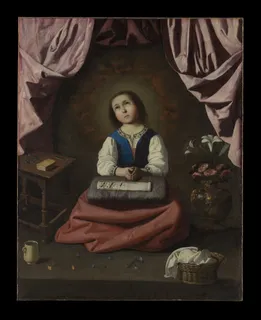 The Young VirginFrancisco de Zurbaránca. 1632–33
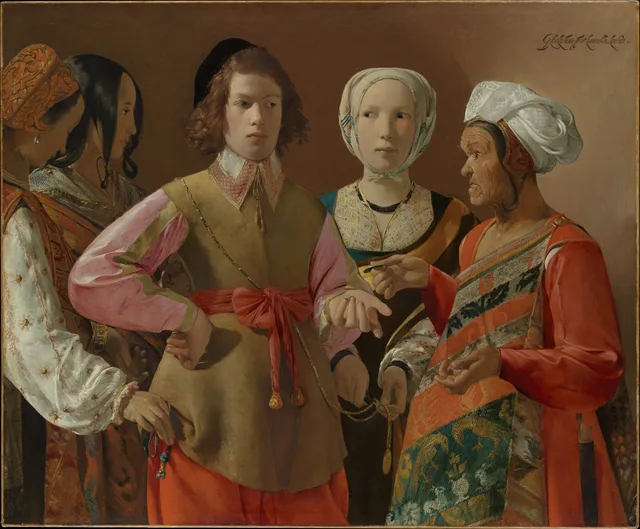 The Fortune-TellerGeorges de La Tourprobably 1630s
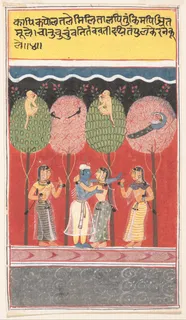 Krishna Revels with the Gopis: Page from a Dispersed Gita Govinda (Song of the Cowherds)Unknown artist · India (Madhya Pradesh, Malwa)ca. 1630–40
Too good to keep to yourself
This painting,
for someone who comes to mind
They open it at full size
and see every brushstroke.
About this work
- Artist
- Rembrandt · 1606–1669
- Date
- 1634–35
- Medium
- Red chalk
- Size
- 36.2 × 47.5 cm
- Collection
- The Metropolitan Museum of Art
- Image
- Original long edge 3846px · shown at 2560px
- Original
- View on the museum's website ↗