 Pyeongye
At a glance
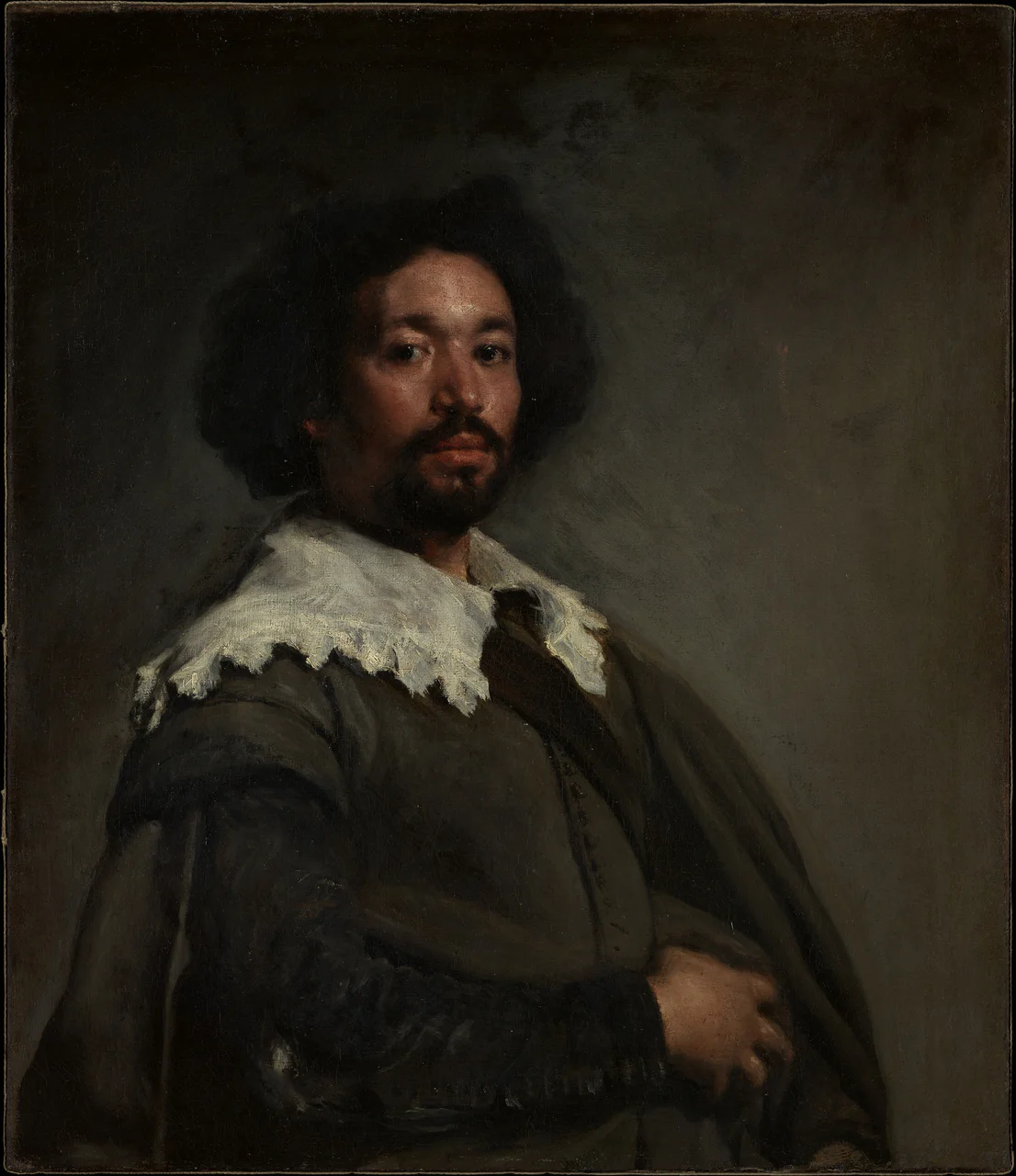
- A man with thick dark curls and a white collar turns his body away but looks straight back at us.
- Diego Velázquez painted him, Juan de Pareja, who worked in his studio, in oil on canvas in Rome in 1650.
- At the time, Pareja was enslaved by Velázquez. In the same year this portrait was made, he was promised his freedom.
Reading the picture
4 places to look closer
Tap a number on the painting to jump to its note, or a close-up to see that spot in the whole picture.
Start with the eyes. Each one has a tiny white dot of light, so they look wet and alive. A thicker touch of bright paint sits in the middle of the forehead. His head is lifted slightly, and his gaze is steady and proud.
Zoom in on the white collar. Up close there is no lace pattern at all, only gray and white paint scrubbed on roughly. The edge is made of short, broken dabs, so it looks ragged. Step back, and those same strokes turn into thin, crisp fabric.
Look at the hand at the lower right. The fingers curl and slip halfway into the folds of the dark cloak. Light catches only the back of the hand. The fingertips vanish into shadow, and a few small bright dabs sit on the knuckles.
Drop down to the sleeve at the lower left. On the near-black cloth, a single streak of white has been swept across. The stroke is so quick you can't quite say what it shows. With a few marks like this, Velázquez makes light flicker inside dark clothing.
When it was painted
Rome, 1650. Velázquez was fifty, court painter to King Philip IV of Spain, and far from home. He had left Spain in 1649 on his second trip to Italy, sent to buy paintings and ancient sculpture for the royal palace. Beside him was his studio assistant, Juan de Pareja. Born in Antequera in southern Spain, Pareja was at that moment enslaved by the painter he worked for.
A much bigger job was waiting in Rome: a portrait of Pope Innocent X. According to the early biographer Antonio Palomino, Velázquez painted Pareja first, to get his hand in before facing the pope. Palomino credits the story to Andreas Schmidt, a Flemish painter who had been in Rome that year.
Palomino tells one more story. When the portrait was done, Velázquez had Pareja himself carry it to some friends. They looked from the canvas to the man and back again, not sure which one to talk to. And when the picture was shown outside the Pantheon, Palomino says, painters from many countries praised it.
That November, in Rome, Velázquez signed a paper freeing Pareja, to take effect four years later. Pareja went on to work as a painter. In his Calling of Saint Matthew, painted in 1661 and now in the Prado in Madrid, he put himself at the far left, holding a slip of paper.
The portrait later went to England and stayed with the family of the Earls of Radnor for more than 150 years. At Christie's in London in 1970 it sold for £2,310,000, the first painting to pass a million pounds at auction. The Met acquired it the following year, and in 2023 the museum staged an exhibition devoted to Pareja's own work.
Look again at his eyes. This was supposedly a warm-up, yet those two tiny white points of light hold us in place. A man months away from a promise of freedom is still looking straight back at us.
The painter
Velázquez
1599–1660
When painting this, the artist was about 51 years old
All paintings by Velázquez →More by the same painter
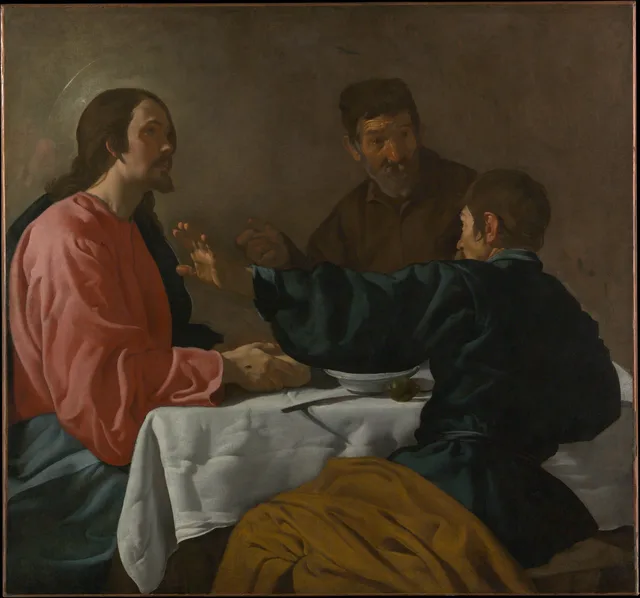
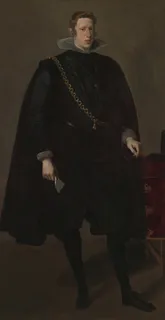
Hidden stories in this painting
Questions to think about
- Look for itWhat are the three brightest spots in this painting?
- Why?Why do you think Velázquez painted an enslaved man from his own workshop looking so dignified and self-assured?
- What about you?What would it take, in our workplaces today, to make sure the people who help us are seen and credited by name?
Same period
Painted around the same time,
somewhere else
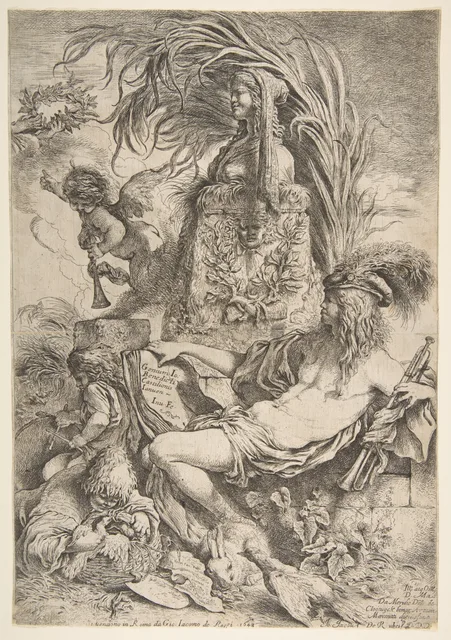 The Genius of CastiglioneGiovanni Benedetto Castiglioneca. 1645–47 (published 1648)
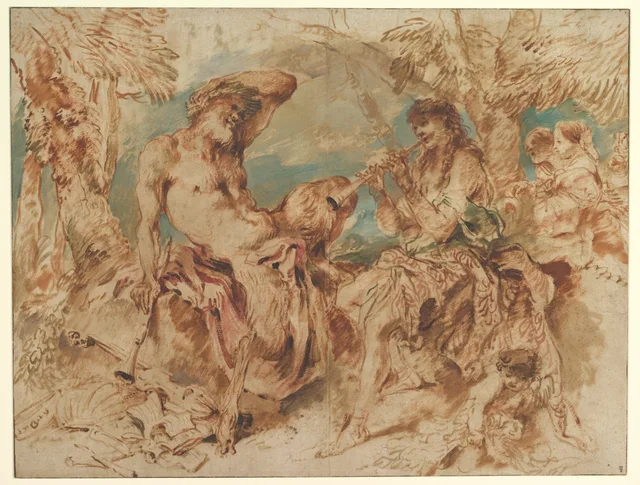 Youth Playing a Pipe for a SatyrGiovanni Benedetto Castiglione1645–50
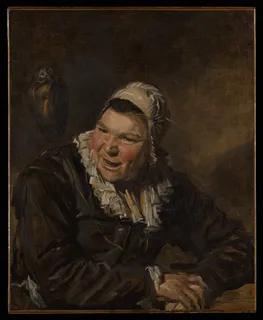 Barbara Claes (died 1663, called “Malle Babbe”)Frans Hals1649
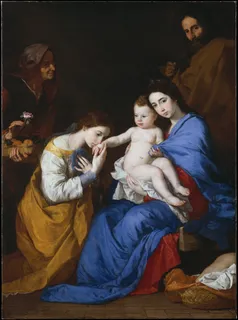 The Holy Family with Saints Anne and Catherine of AlexandriaJusepe de Ribera1648
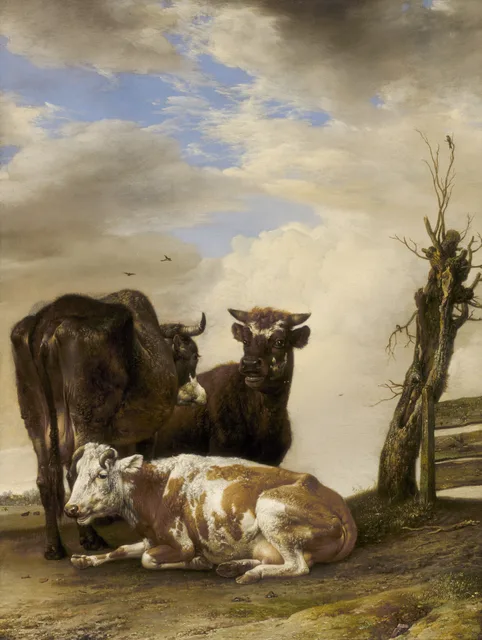 Two Cows and a Young Bull beside a Fence in a MeadowPaulus Potter1647
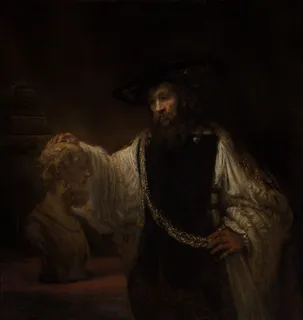 Aristotle with a Bust of HomerRembrandt1653
Too good to keep to yourself
This painting,
for someone who comes to mind
They open it at full size
and see every brushstroke.
About this work
- Artist
- Velázquez · 1599–1660
- Date
- 1650
- Medium
- Oil on canvas
- Size
- 81.3 × 69.9 cm
- Collection
- The Metropolitan Museum of Art
- Image
- Original long edge 3968px · shown at 2560px
- Original
- View on the museum's website ↗