 Pyeongye
At a glance
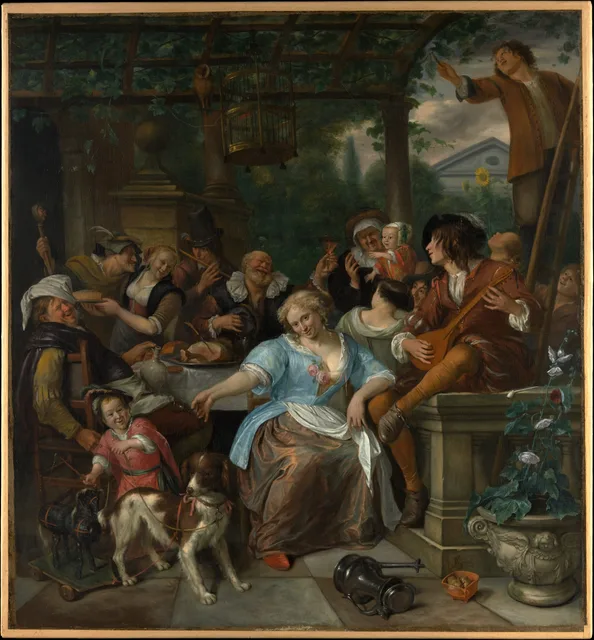
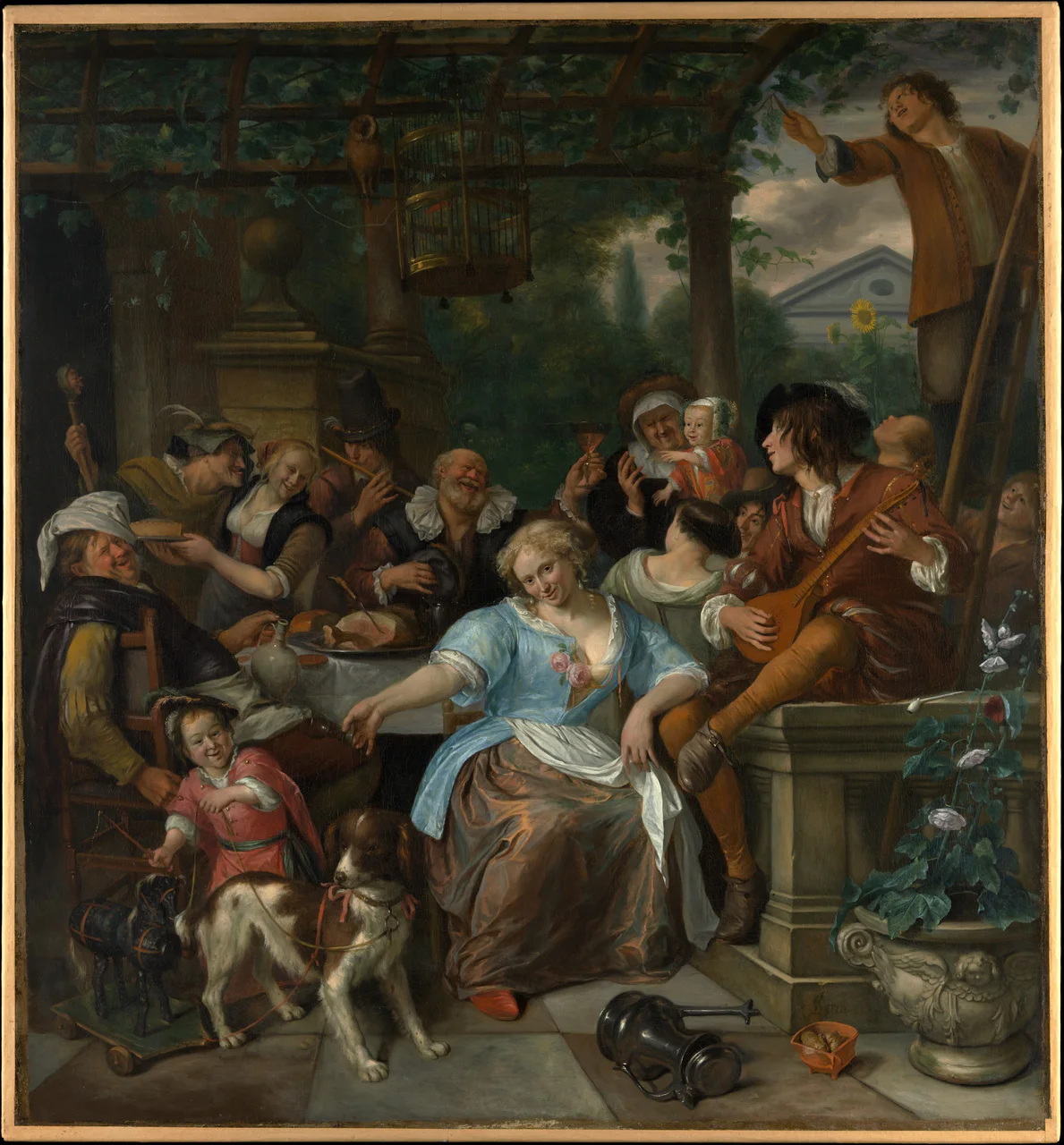
- Under a canopy of grapevines, more than ten people and a dog eat, drink, sing, and make a racket on a terrace.
- The Dutch painter Jan Steen, from Leiden, painted it in oil on canvas around 1670.
- Nobody here is behaving. The fun is in hunting down the little bits of mischief in every corner.
Reading the picture
5 places to look closer
Tap a number on the painting to jump to its note, or a close-up to see that spot in the whole picture.
Zoom in on the woman in blue at the center. In the middle of the crowd, she tilts her head and smiles straight at us. A pearl earring hangs from her ear, and two pink roses are tucked into her bodice. With one arm flung out, she seems to be presenting the whole commotion to us.
Look at the man on the left with a white cloth wrapped around his head. His eyes squeeze shut and his mouth gapes in a big laugh. Right beside him, someone holds out a pie on a plate. You can almost hear him from outside the frame.
Zoom in on the lower left. A child in red is dragging a black toy horse on wheels and a real dog at the same time, both on strings. The dog wears a pink ribbon at its neck. The child is thrilled. The dog does not look so sure.
Look at the floor in the middle. A dark metal jug with a lid lies tipped over on its side. Light glints off its polished body. Next to it sits an orange bowl holding something round to eat, left right on the floor.
Look up at the trellis. An owl perches on a post, and next to it hangs a round birdcage. Something red flickers inside the cage. While the party roars below, the owl quietly looks down.
When it was painted
Around 1670, Jan Steen was in his mid-forties, and his life was changing fast. His wife of about twenty years, Margriet, died around this time, and in 1670 his father died too. Steen left Haarlem and moved back to his hometown of Leiden, into the house his father left him.
Margriet was the daughter of the landscape painter Jan van Goyen. Steen himself came from a family of brewers, and as a young man he had leased a brewery in Delft. In 1672 he got a license to run a tavern in Leiden. That same year the Dutch Republic was attacked by France and England, and the market for paintings collapsed.
In 1673 Steen married again, to a widow named Maria van Egmont. He served as head of the Leiden painters' guild, and he died in Leiden in February 1679. This canvas reached the Metropolitan Museum much later, in 1958, by way of a New York gallery.
Look closely and you will find the painter himself at the party. The Met identifies the man at the far left, his face flushed with drink and a silly hat on his head, as Steen's self-portrait. Beside him is Hans Worst, a clown from the Dutch stage, and the museum sees the woman in blue at the center as Steen's wife. The Dutch still call a chaotic home a Jan Steen household, and here he put his own family right in the middle of the mess.
So go back to that man at the far left. The painter who pokes fun at this unruly feast is sitting inside it, laughing louder than anyone.
Questions to think about
- Look for itDid you find the young man at the upper right climbing a ladder and reaching for grapes?
- Why?Why do you think Steen placed the tipped-over jug and the bowl on the floor right at the front of the picture?
- What about you?Where is the line between a great party and one that goes too far, and who decides where that line is at our gatherings today?
Same period
Painted around the same time,
somewhere else
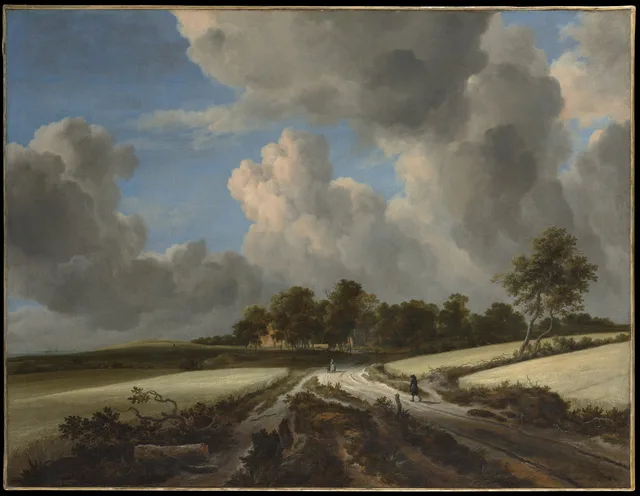 Wheat FieldsJacob van Ruisdaelca. 1670
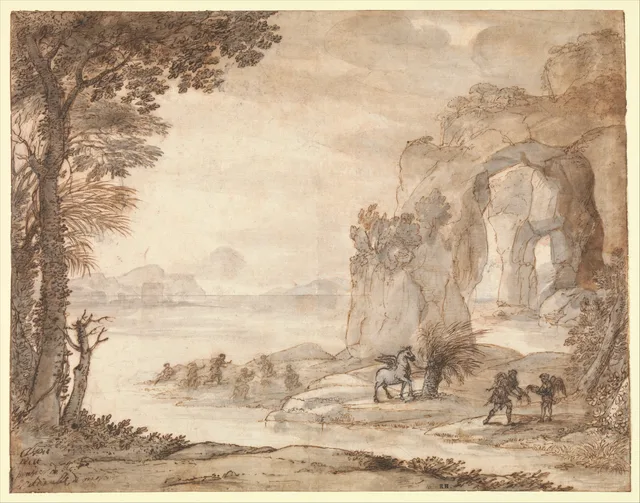 Perseus and the Origin of CoralClaude Lorrainca. 1671
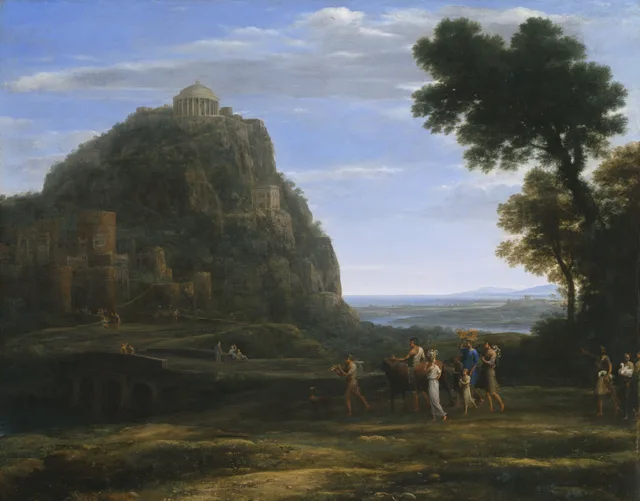 View of Delphi with a ProcessionClaude Lorrain1673
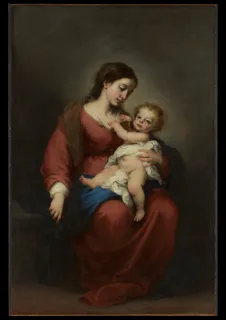 Virgin and ChildBartolomé Estebán Murillo1670s
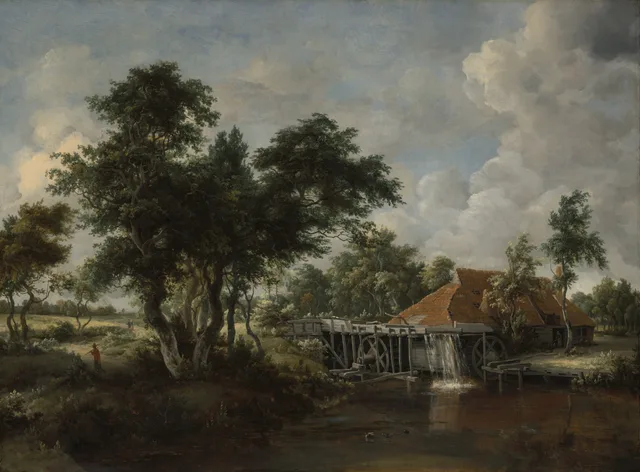 The Watermill with the Great Red RoofMeindert Hobbemac. 1665
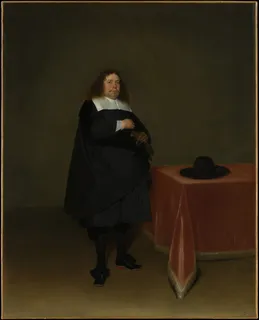 Burgomaster Jan van Duren (1613–1687)Gerard ter Borch the Youngerca. 1666–67
Too good to keep to yourself
This painting,
for someone who comes to mind
They open it at full size
and see every brushstroke.
About this work
- Artist
- Jan Steen · 1626–1679
- Date
- ca. 1670
- Medium
- Oil on canvas
- Size
- 141 × 131.4 cm
- Collection
- The Metropolitan Museum of Art
- Image
- Original long edge 3829px · shown at 2560px
- Original
- View on the museum's website ↗