Pyeongye
Painters · 15th century
Lorenzo Monaco
1370–1425
A Florentine monk who also worked as a city painter, filling church altars and small devotional panels with gold grounds and long, curling folds of drapery.
Scenes from a life
The life of Lorenzo Monaco,
scene by scene
- 1391Florence
In December 1391, a young man named Piero di Giovanni makes his profession at the monastery of Santa Maria degli Angeli in Florence. He had just finished a year as a novice, and the monastery's register records the day.
From then on he was Brother Lorenzo. People called him Lorenzo Monaco, which simply means Lorenzo the Monk. A few years later he was ordained a deacon. Where he was born is still not certain.
- 1402Florence
In 1402 a familiar face turns up in the register of the guild Florentine painters joined. But the name written there is not Lorenzo. It is his lay name, Piero di Giovanni. By this time he was living outside the monastery walls and taking commissions.
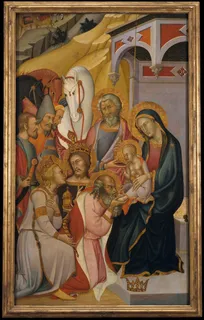
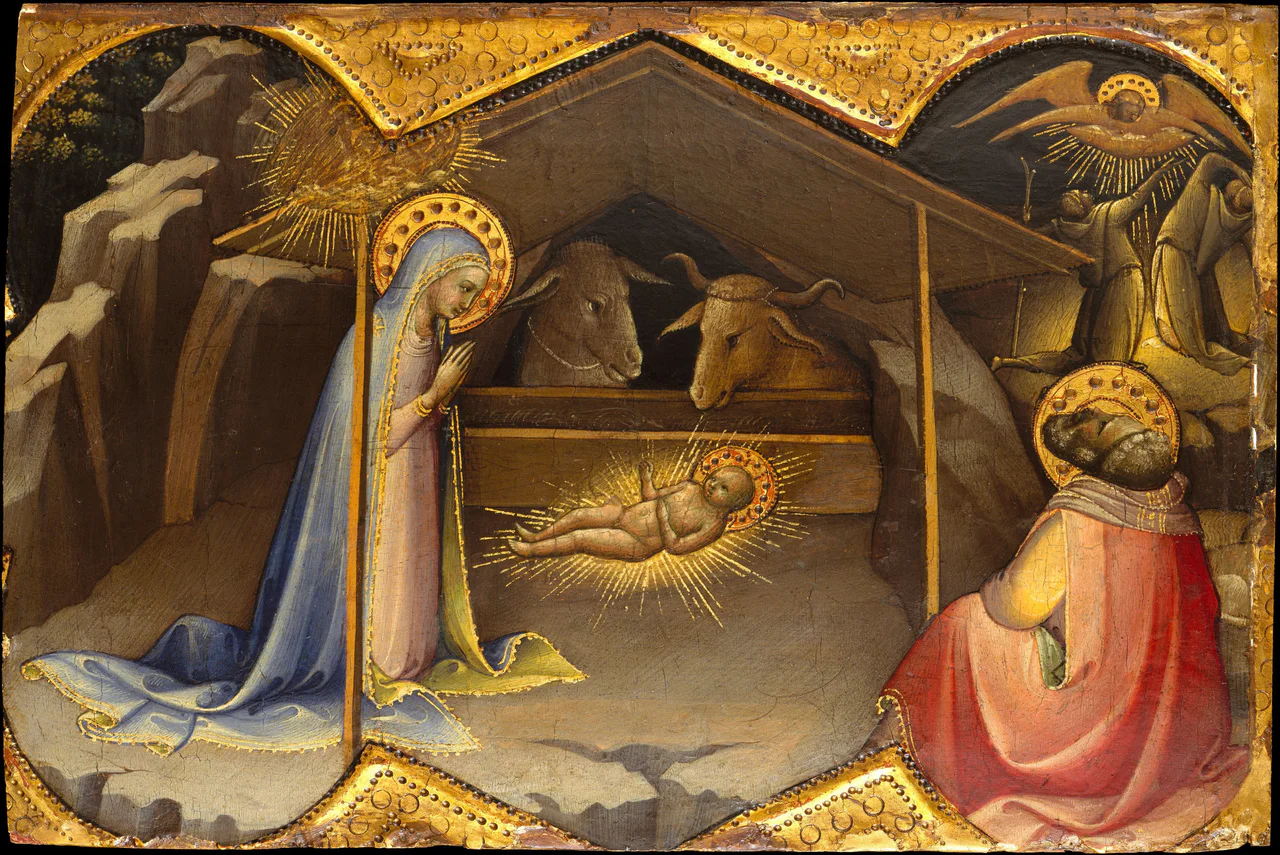
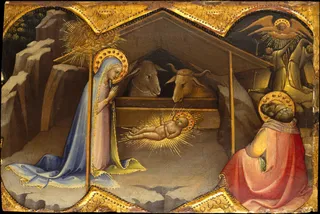
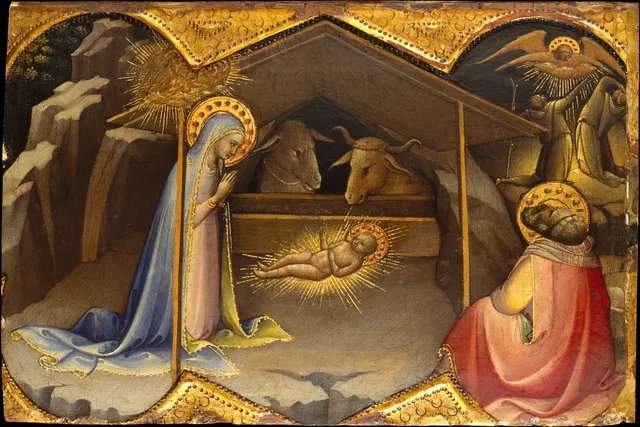
So he was a monk and a working city painter at the same time. A few years later, around 1406 to 1410, he painted The Nativity on a small panel only about 12 inches wide. Golden rays shoot out from the baby lying on the bare ground.
 Painted around this timeThe Nativity
- 1414Santa Maria degli Angeli
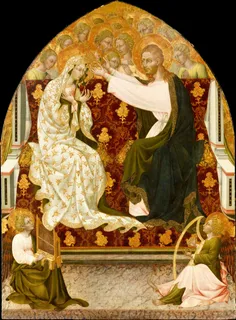
A huge Coronation of the Virgin goes up on the high altar of his own monastery church. The inscription along the bottom gives the date as February 1413.
The Uffizi explains that this is 1414 by our calendar, because Florence started its new year on March 25. The inscription also names a Florentine, Zanobi del Frasca. The altarpiece now hangs in the Uffizi in Florence.
- 1415Florence
In 1415, a note in the monastery's register mentions him again. It calls him Don Lorenzo, painter of our order, and says he came from Siena. The National Gallery of Art in Washington cites this note in its biography of him.
That one line is why some scholars think he was Sienese. Others read it differently, and the question is still argued. A scribbled note in an old account book keeps the mystery of his hometown alive.
- 1420sSanta Trinita
In the 1420s Lorenzo takes on the Bartolini Salimbeni family chapel in the church of Santa Trinita. He painted the life of the Virgin on the walls and an Annunciation for the altar. But those walls had been painted before.
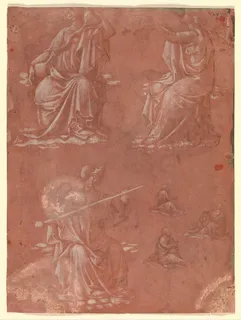
During restoration work in the 1960s, traces of an earlier fresco cycle by Spinello Aretino, from around 1390, turned up underneath. Lorenzo had painted right over it. In the metalpoint drawing Three Virtues and Studies of a Seated Man, from about the same years, you can see the same long folds that curl at the hem. The Met now catalogues the sheet as the work of an artist in his circle.
 Painted around this timeThree Virtues (Temperance, Hope, and Fortitude or Justice) and Studies of a Seated Man
- 1425 or soFlorence
The wealthy Florentine Palla Strozzi orders a new altarpiece from Lorenzo for the Strozzi family's sacristy chapel in Santa Trinita. Lorenzo painted the three pointed panels at the top and the small scenes below.
He died before he could finish the big central panel. At the time he was living in a house he rented from his old monastery, across the street from its church. The Dominican friar Fra Angelico took over the job. Today the altarpiece, with Lorenzo's pinnacles above Fra Angelico's Deposition, is in the Museo di San Marco in Florence.
People around them
- Palla Strozzithe rich Florentine who commissioned the altarpiece for his family's chapel in Santa Trinita.
- Fra Angelicothe painter who finished the Strozzi altarpiece after Lorenzo's death.
- Spinello Aretinothe painter whose earlier frescoes Lorenzo covered in the Bartolini Salimbeni chapel.
Works
Paintings by
Lorenzo Monaco on Pyeongye
Contemporaries