Pyeongye
Painters · 18th century
Sir Thomas Lawrence
1769–1830
An innkeeper's son who sketched the guests as a boy, and grew up to paint kings, a pope, and the rulers of Europe as president of the Royal Academy.
Scenes from a life
The life of Sir Thomas Lawrence,
scene by scene
- 1780Devizes
In April 1780 a coach on the road from London to Bath pulls up at the Black Bear inn in Devizes. Among the travelers are the writer Fanny Burney and her friend Hester Thrale. The innkeeper's young son, Thomas, was used to reciting poetry and drawing likenesses for guests like these.
Burney wrote in her diary about meeting a most lovely boy of ten. That same year the family moved to Bath, where the boy made pastel portraits to help pay the bills.
- 1787London
On September 13, 1787, eighteen-year-old Lawrence enters the Royal Academy Schools in London. The Academy's own records keep the date. The boy who made his name in pastels in Bath was ready to try his luck in oils in the capital.
The Academy's president was the portrait painter Joshua Reynolds, then sixty-four. Within five years, one of the old painter's posts would pass to Lawrence.
- 1789Windsor
In September 1789, twenty-year-old Lawrence is summoned to Windsor Castle to paint Queen Charlotte. The queen did not like the result. Neither she nor the king bought it, so the picture stayed with the painter.
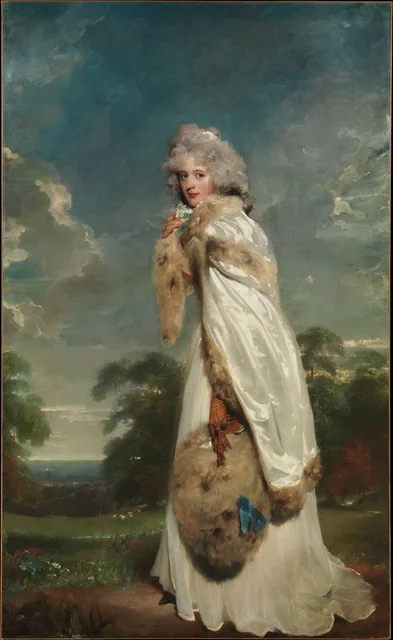
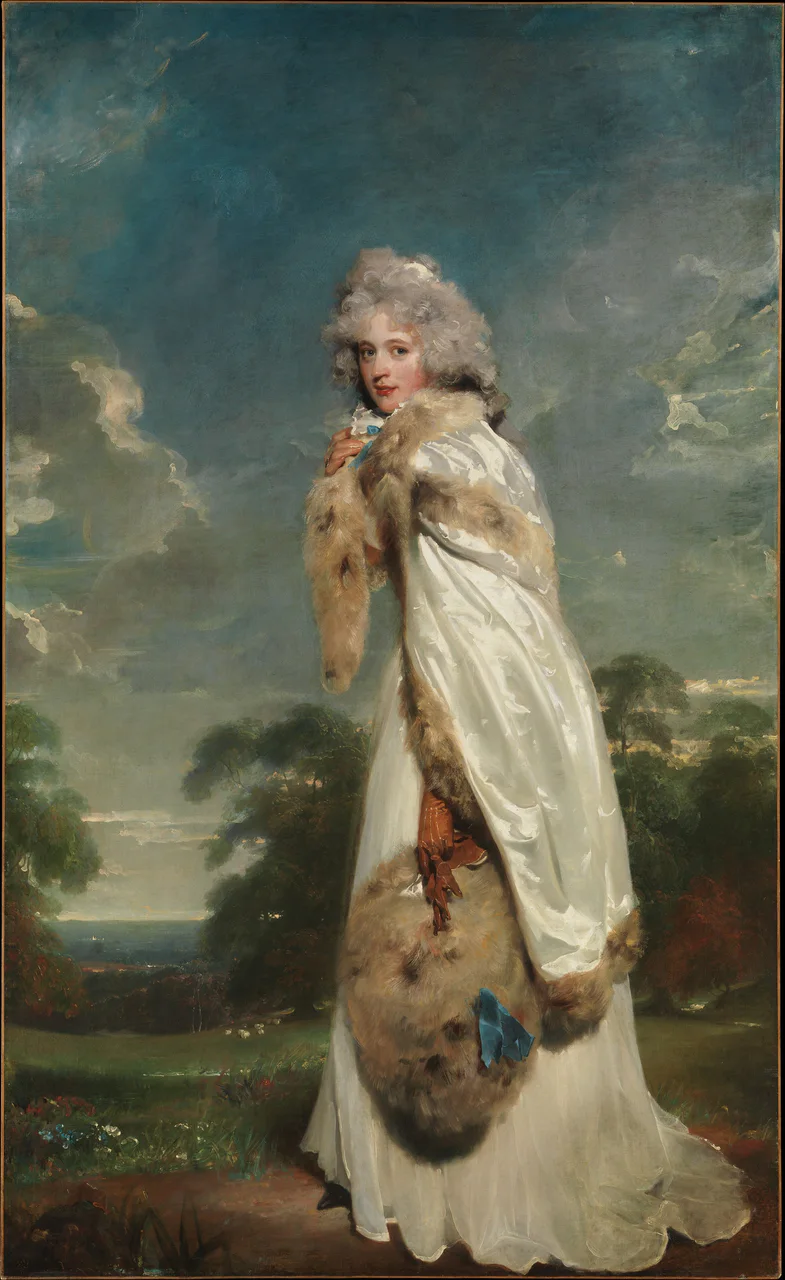
London's National Gallery finally bought it in 1927. At the 1790 exhibition, Lawrence showed the queen's portrait alongside a full-length of the actress Elizabeth Farren. Wrapped in a white satin cloak, she pauses on a country path and glances back over her shoulder.
 Painted around this timeElizabeth Farren (born about 1759, died 1829), Later Countess of Derby
- 1792London
In February 1792 Joshua Reynolds dies. King George III gives Reynolds's post as the king's Painter-in-Ordinary to Lawrence, just twenty-two. Only months before, in November 1791, he had been elected an associate of the Royal Academy.
In 1794 he became a full Academician. The boy from the coaching inn was now at the center of the English art world.
- 1806Blackheath
In 1806 the Prince of Wales has his estranged wife, Princess Caroline, investigated for her conduct. People called it the Delicate Investigation, and Lawrence's name came up in it.
A few years earlier he had stayed at Montague House, her home in Blackheath, while painting the princess and her young daughter. Lawrence swore an affidavit to clear his name. The inquiry ended by finding too little evidence to go further.
- 1810London
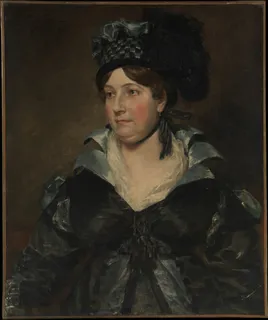
In 1810 Isabella Wolff, one of Lawrence's closest friends, separates from her husband, Jens Wolff, the Danish consul in London. The painter John Constable described her in a letter as an intimate of Lawrence, who had often drawn her.
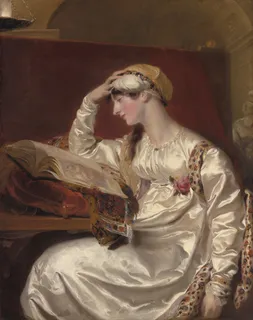
Lawrence started her portrait in 1803 and did not finish it until 1815. In a turban, she rests her hand on her brow and gazes at a big open book on a cushion. The Art Institute of Chicago explains that the book shows a print of Michelangelo's Delphic Sibyl from the Sistine ceiling.
Painted around this timeIsabella Wolff - 1819Rome
In May 1819 Lawrence arrives in Rome. The Prince Regent has sent him to paint Pope Pius VII. Knighted in 1815, he had already spent the autumn of 1818 at the Congress of Aix-la-Chapelle painting Europe's rulers and statesmen, and then gone on to Vienna.
The pope sat for him nine times. These portraits now hang in the Waterloo Chamber at Windsor Castle. The next year, 1820, Lawrence was elected president of the Royal Academy.
- 1830London
On January 7, 1830, Lawrence dies suddenly in London, still president of the Academy. He was sixty. On January 21, after a grand funeral procession, he was buried in St. Paul's Cathedral.
Among the pallbearers was the statesman Robert Peel. The painter J. M. W. Turner was there too, and later made a sketch of the scene from memory. The satin gown the innkeeper's boy painted for Isabella Wolff still shimmers today in Chicago.
People around them
- Joshua Reynoldsthe Royal Academy's first president, whose post as the king's painter passed to Lawrence.
- Queen Charlottesat for Lawrence at Windsor in 1789 but did not buy the portrait.
- Elizabeth Farrenthe comic actress whose full-length portrait hung at the 1790 exhibition.
- Isabella Wolffone of his closest friends, whose portrait took him twelve years.
- Pius VIIthe pope who sat for him nine times in Rome in 1819.
- J. M. W. Turnera fellow painter who attended his funeral and sketched it.
Works