Pyeongye
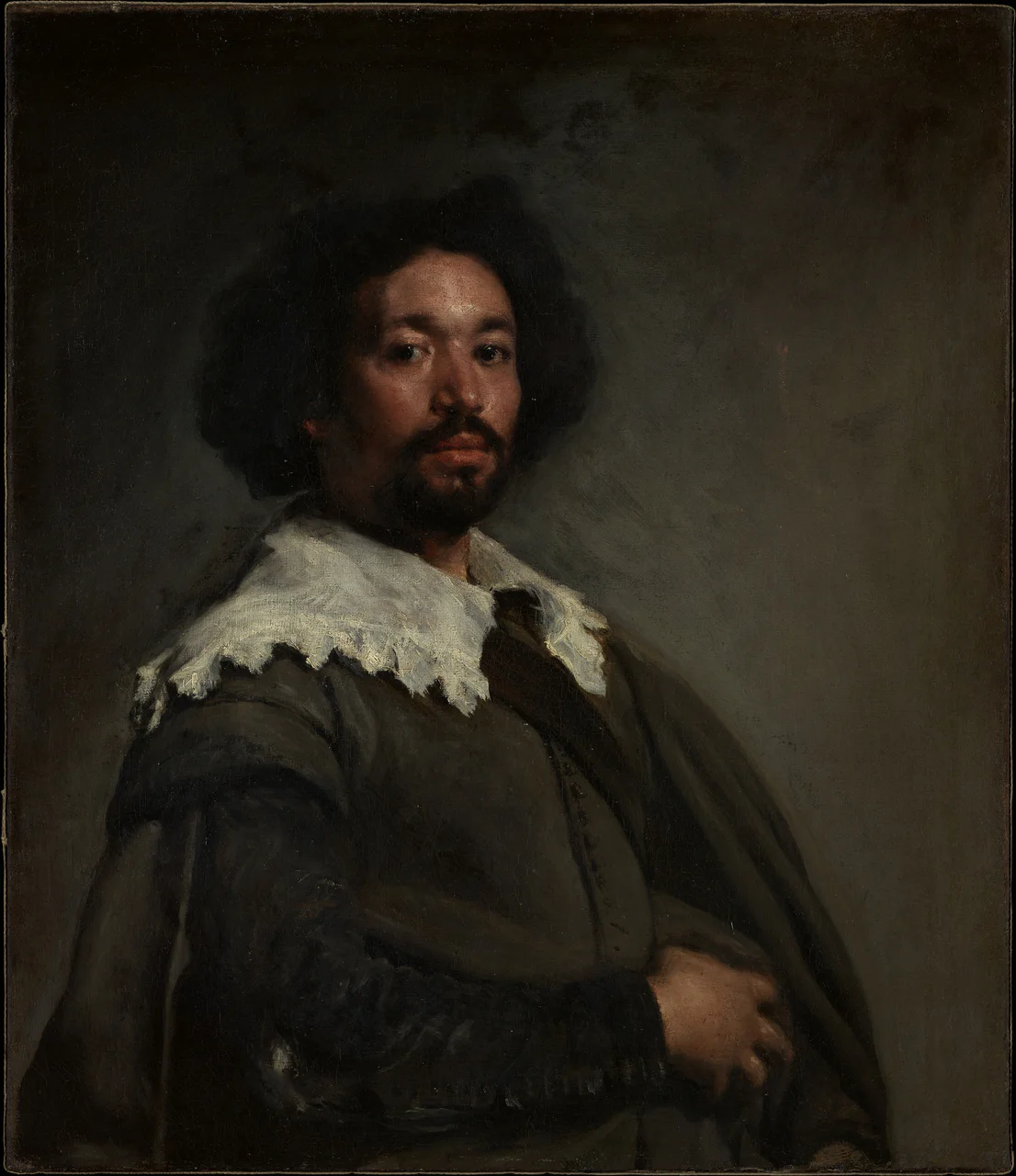
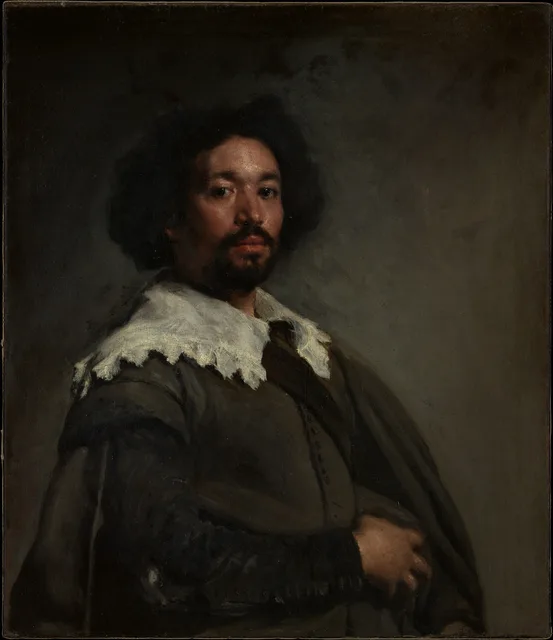
A cloud of black hair. A streak of light across the forehead. The man turns his shoulders away from us, then turns his eyes right back. He does not smile, and he does not look down.
Who is he? Not a king, not a duke. His name was Juan de Pareja. He worked in the studio of the painter Diego Velázquez, and under the law Velázquez owned him. Pareja was enslaved.
In 1650 the two men were in Rome. Velázquez was court painter to King Philip IV of Spain, and he had come to Italy to acquire art for the royal collection. A bigger task was waiting for him there: a portrait of Pope Innocent X.
Antonio Palomino, a Spanish painter who wrote a life of Velázquez in the early 1700s, says Velázquez painted Pareja first, to loosen up his hand before facing the pope. If this was practice, look at how much he put into it.
Come close to the face. There is shadow under the eyes, a gleam on the bridge of the nose, a mustache over full lips. The brushwork is sparse, yet the skin feels warm. A tiny dot of light sits in each eye, and he seems to meet your gaze.
Now the white collar. From across a room it reads as fine lace. Up close it is a rough smear of white and gray. The edge is made of quick, dragged flicks of the brush that break up like fraying cloth, and you can see the weave of the canvas through the paint.
Palomino tells one more story. Velázquez sent Pareja to carry the finished portrait to some friends. They kept looking from the painted man to the real one, unsure which of the two they ought to speak to. In March 1650, the portrait hung in an exhibition at the Pantheon in Rome.
Down at the lower right, find his hand resting on a fold of his cloak. The knuckles are only a few strokes of paint. It looks less finished than the face. Step back, though, and the hand has weight. It presses into the folds.
Something else happened in Rome that year, outside the picture. In November 1650, Velázquez signed a document granting Pareja his freedom. It came with a condition. Pareja would have to keep working for four more years before he was free.
Pareja went on to work as a painter in his own right. In The Calling of Saint Matthew, painted in 1661 and now in the Prado in Madrid, he put himself at the far left edge of the scene. He holds a slip of paper bearing his signature. The man who once sat for a portrait now signed one of his own.
The Metropolitan Museum of Art acquired this painting in 1971. The museum's title for it includes Pareja's own dates, about 1608 to 1670. It is a small reminder that the sitter had a long life beyond this one canvas.