 Pyeongye
Artwork · 14th century · Giotto di Bondone
LeoTurn on Magnifier at the lower right and move slowly across the painting.
Full screen opens it edge to edge.Tap the painting to fill the screen.
Spread two fingers to look closer.
The Adoration of the Magi
Giotto di Bondonepossibly ca. 1320Tempera on wood, gold ground45.1 × 43.8 cm
At a glance
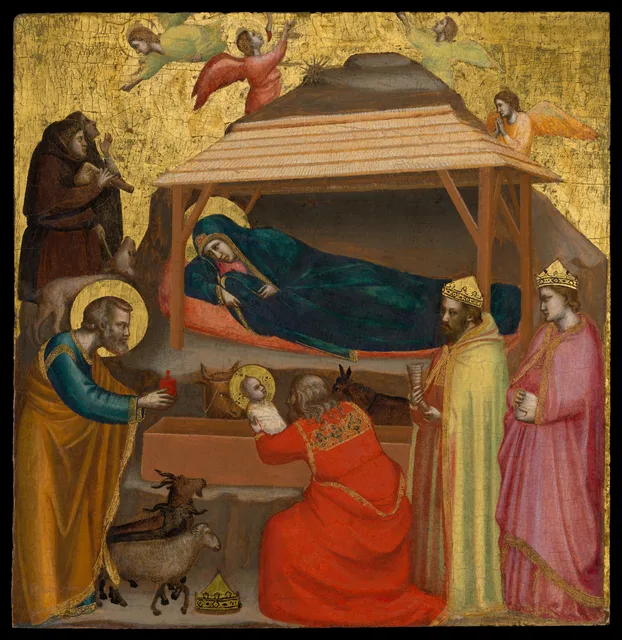
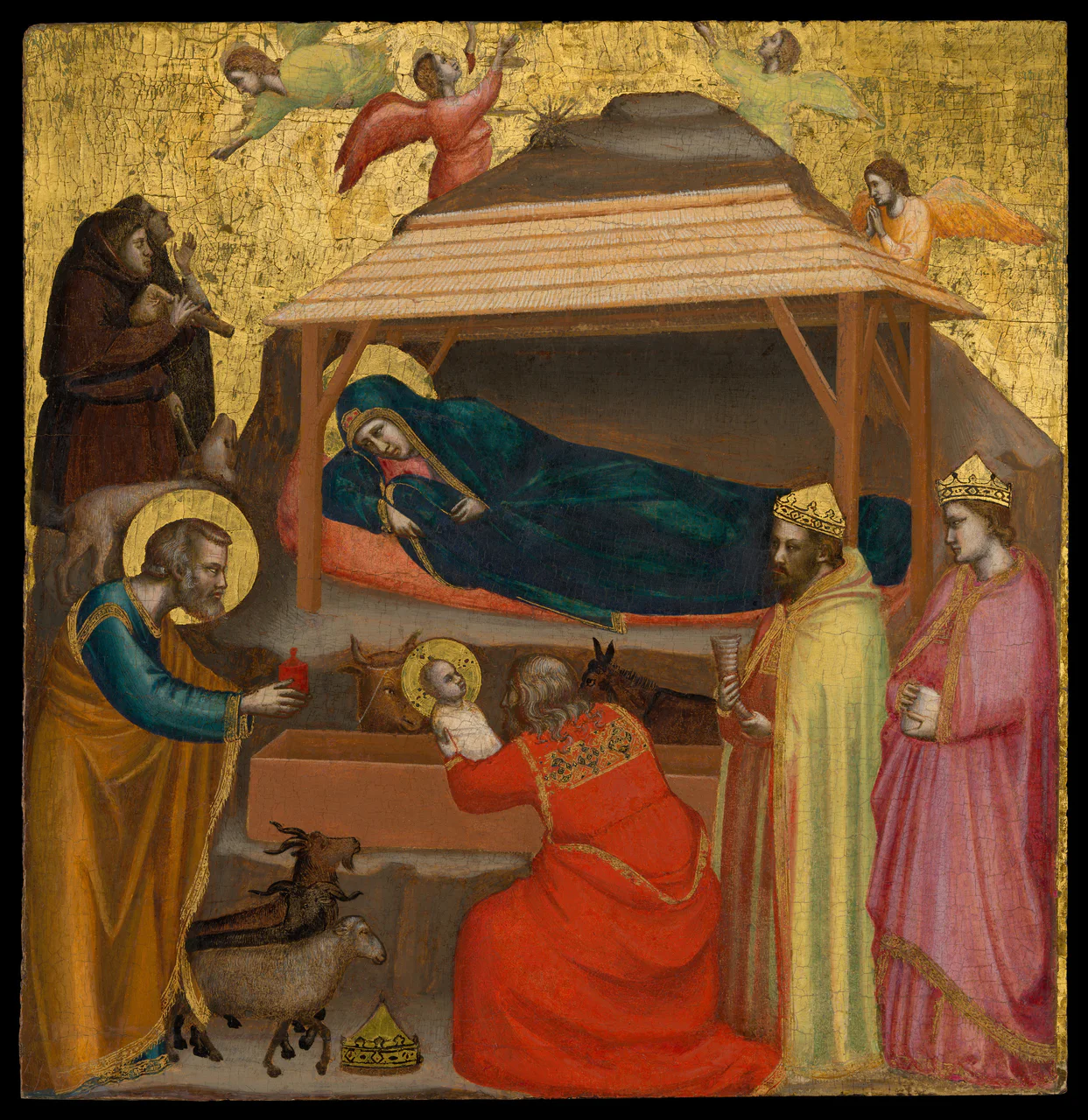
- Under a gold sky, beside a thatched shelter, an old king kneels and lifts the Christ Child out of the manger with both hands.
- It is thought to be by the Florentine painter Giotto di Bondone, painted in tempera on a gold-covered wooden panel around 1320.
- The panel is only about 18 inches square, yet it holds three kings, four angels, shepherds, Joseph, Mary, and a crowd of animals.
Reading the picture
5 places to look closer
Tap a number on the painting to jump to its note, or a close-up to see that spot in the whole picture.
Zoom in at the bottom center. A white-haired king in red kneels and lifts the baby from the manger. The baby tips his head back and looks straight up into the old man's face. Behind them, an ox and a donkey poke their heads in to watch.
At the very bottom, by the goats' feet, find the gold crown on the ground. The old king has taken it off and set it down before the child. The two kings standing at the right still wear their crowns and hold their gifts, waiting their turn. The three kings are three different ages: a white-haired old man, a bearded grown man, and a beardless youth.
Zoom in on the top of the roof. A star with sharp rays shooting in every direction has come to rest there. This is the star that led the wise men to this place. All around it, the gold background has cracked into a pattern like a turtle's shell.
Look at the shepherds in the upper left. One in a brown hood grips a tube-shaped instrument, and the one behind him raises a hand. Dressed plainly, unlike the kings, they watch from behind the hill.
Zoom in on Joseph at the lower left. Wearing a gold halo, he holds out a red lidded vessel in one hand. He has a graying beard, blue sleeves, and a golden cloak. He leans forward, his face in profile, looking toward the manger.
When it was painted
Around 1320, Giotto was a famous Florentine painter. Years before, he had covered the walls of the Scrovegni Chapel in Padua with the stories of Mary and Christ. That chapel has its own Adoration of the Magi, and there he painted the star as a comet with a long, blazing tail.
His fame reached into poetry. In the Purgatory section of the Divine Comedy, Dante wrote that Cimabue once thought he ruled the field of painting, but now Giotto had the acclaim and Cimabue's fame was dimmed. Dante's point was how quickly earthly glory passes, and Giotto was one of his examples.
Giotto did not work alone. He ran a large workshop with many assistants. That is why scholars still debate whether panels like this one came from Giotto's own hand or from his workshop working beside him. The museum itself dates it carefully, possibly around 1320.
This panel was never meant to stand by itself. It is one of seven scenes from the life of Christ, and scholars think the seven once formed a single long altarpiece. Studies of the wood suggest they were all cut from the same plank. Today the seven are scattered among museums in New York, Boston, London, Munich, and Florence.
In 1334 Giotto was put in charge of the building works at Florence Cathedral and designed its bell tower. He died in 1337. This panel came to the Metropolitan Museum in 1911. Look again at the cracked gold sky. Under nearly seven hundred years of fine cracks, the old king is still lifting the child in both hands.
Questions to think about
- Look for itHow many angels can you count in the sky and on the roof?
- Why?Why do you think Giotto had the most powerful person in the scene, a king, take off his crown and kneel?
- What about you?The old king puts down the crown that marked his rank in front of a newborn baby. When should we set aside our titles and status to meet someone simply as a person?
Same period
Painted around the same time,
somewhere else
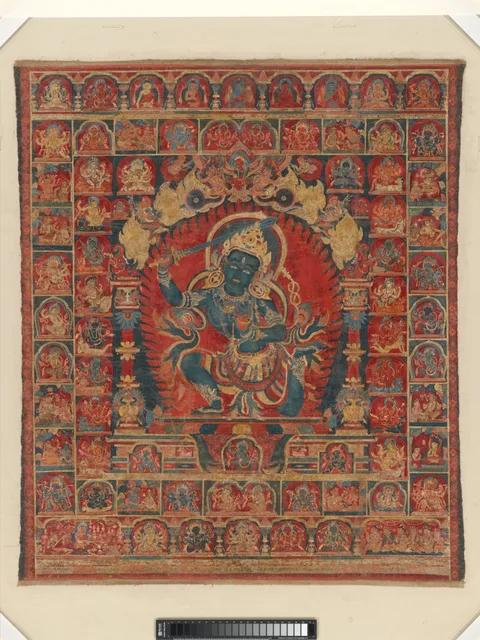 Acala, The Buddhist ProtectorUnknown artist · Nepal, Kathmandu Valleyequivalent to February / March 1322
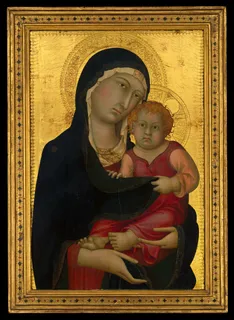 Madonna and ChildSimone Martinica. 1326
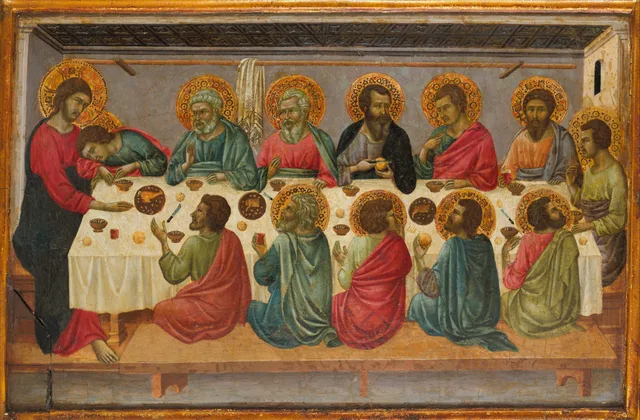 The Last SupperUgolino da Sienaca. 1325
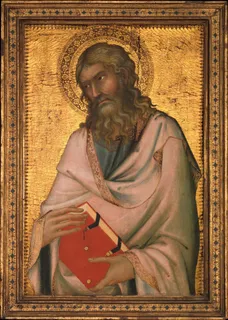 Saint AndrewSimone Martinica. 1326
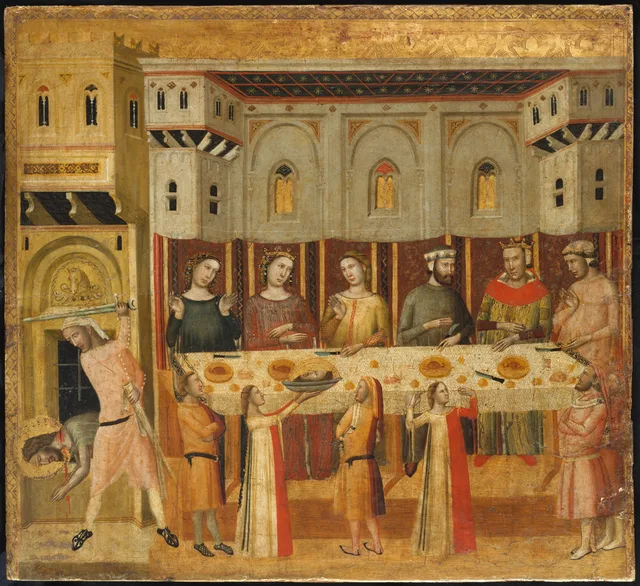 The Feast of Herod and the Beheading of the BaptistGiovanni Baronzioca. 1330–35
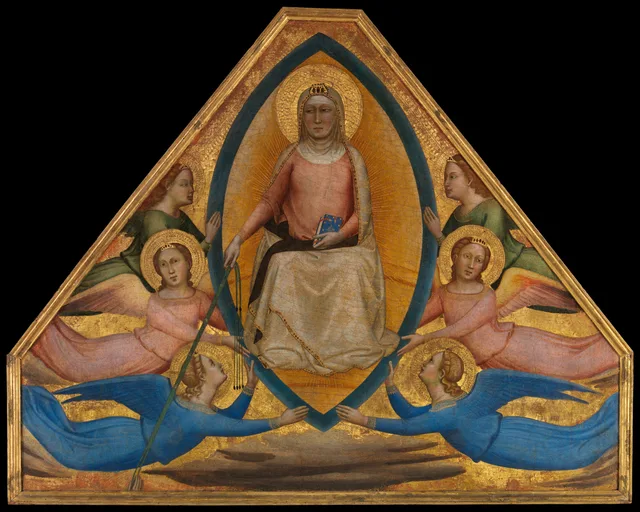 The Assumption of the VirginBernardo Daddi1337–38
Too good to keep to yourself
This painting,
for someone who comes to mind
They open it at full size
and see every brushstroke.
About this work
- Artist
- Giotto di Bondone · 1266–1337
- Date
- possibly ca. 1320
- Medium
- Tempera on wood, gold ground
- Size
- 45.1 × 43.8 cm
- Collection
- The Metropolitan Museum of Art
- Image
- Original long edge 4000px · shown at 2560px
- Original
- View on the museum's website ↗