 Pyeongye
Artwork · 14th century · Ugolino da Siena
LeoTurn on Magnifier at the lower right and move slowly across the painting.
Full screen opens it edge to edge.Tap the painting to fill the screen.
Spread two fingers to look closer.
At a glance
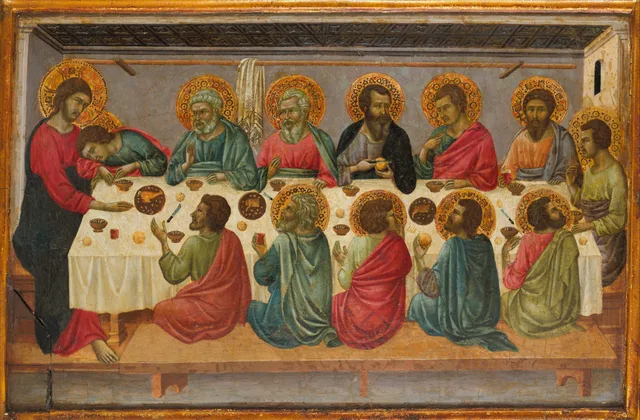
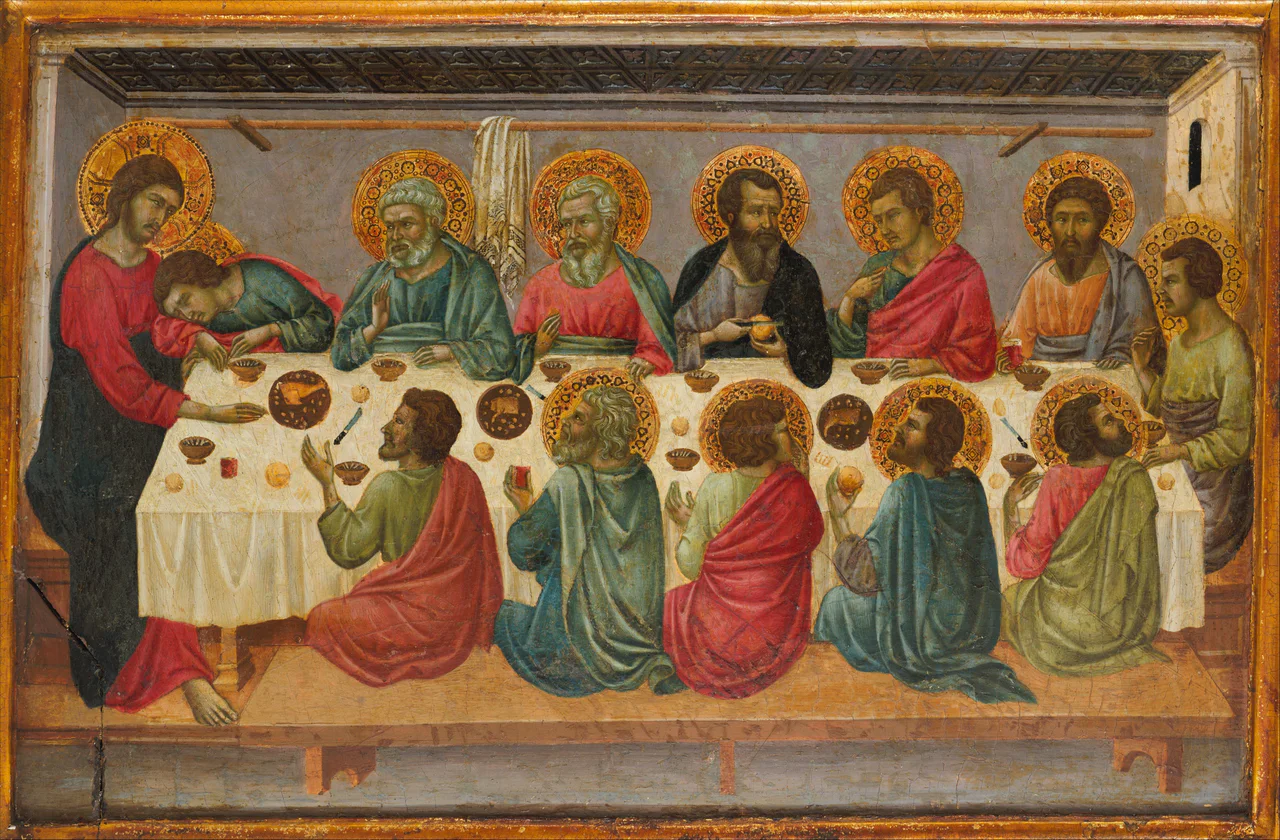
- Jesus and his twelve apostles sit around a long table covered with a white cloth for their last meal together.
- Ugolino da Siena, a painter from Siena, made it around 1325 in tempera and gold on a wooden panel.
- The panel is only about twenty inches wide, yet every plate, knife, loaf, and towel on and around the table is painted one by one.
Reading the picture
5 places to look closer
Tap a number on the painting to jump to its note, or a close-up to see that spot in the whole picture.
Start at the far left. Jesus, in red, reaches toward the table. A young apostle rests his head against Jesus with his eyes closed. This is John, the disciple the Gospel describes as the one Jesus loved. Their two gold halos overlap.
Now zoom in on the first man at the left of the front row, the ones seated with their backs to us. Every other apostle has a gold halo behind his head. This man has none. He is Judas, who will betray Jesus. He raises his hand and tips his head back toward Jesus.
Look at the white cloth hanging from a rod on the back wall. At its lower end is a fringe with black stripes and woven patterns. It looks like a towel for wiping hands at a meal. An everyday object like this, tucked into a sacred scene, makes the room feel real.
Zoom in on the hands of the apostle in the dark cloak, in the middle of the back row. He holds something round, like a loaf, in one hand and slices it with a knife in the other. Even at this solemn moment, someone is quietly eating.
Look at one of the dark brown plates on the table. A small animal lies on it whole, with little pieces scattered around. The Gospels place this supper at the time of Passover.
When it was painted
In 1311 the people of Siena carried a huge altarpiece in procession from the painter's workshop to their cathedral. It was the Maestà by Duccio. Chroniclers recorded bells ringing as the city escorted it through the streets. Ugolino was a Sienese painter who worked in Duccio's style.
Yet Ugolino's biggest known job was not at home. It was in Florence, Siena's longtime rival. He painted the high altarpiece for Santa Croce, the great Franciscan church there. So a Sienese artist's work stood at the heart of one of Florence's major churches.
Around the same time, the Florentine painter Giotto was covering chapel walls in that very church with frescoes. Two cities' ways of painting stood side by side under one roof. Few records of Ugolino's life survive. In the sixteenth century, the biographer Giorgio Vasari recorded the Santa Croce altarpiece as his work.
This Last Supper was one of the small story scenes in the predella, the strip along the altarpiece's base. Later the altarpiece was taken down from the altar and split apart. Its saints and scenes were sold off separately and are now scattered among museums in London, Berlin, New York, and elsewhere. This panel came to the Metropolitan Museum in 1975 with the Robert Lehman Collection.
Duccio's Maestà has a Last Supper on its back as well. Many scholars see Ugolino's altarpiece as closely modeled on Duccio's great work. Look again at the table. These plates, knives, and loaves sat at the eye level of Florentine worshipers some seven hundred years ago.
Questions to think about
- Look for itHow many knives can you count on the table?
- Why?Why do you think the painter gave every apostle a halo except Judas, yet still seated him among the others?
- What about you?At this table sits a man who is about to betray his friend. When someone we trusted lets us down, can we ever sit at the same table with them again?
Same period
Painted around the same time,
somewhere else
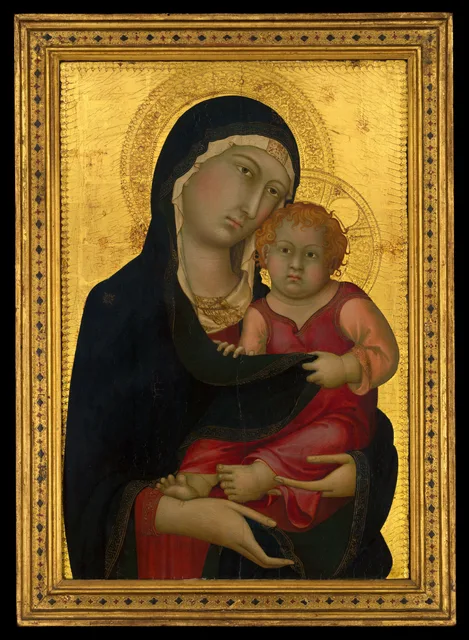 Madonna and ChildSimone Martinica. 1326
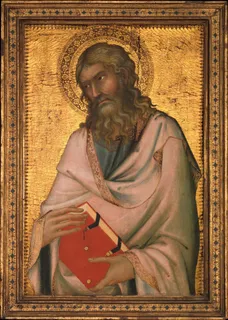 Saint AndrewSimone Martinica. 1326
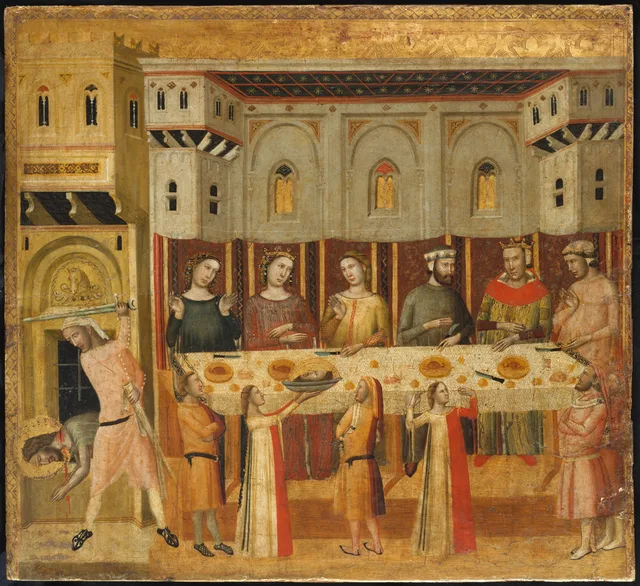 The Feast of Herod and the Beheading of the BaptistGiovanni Baronzioca. 1330–35
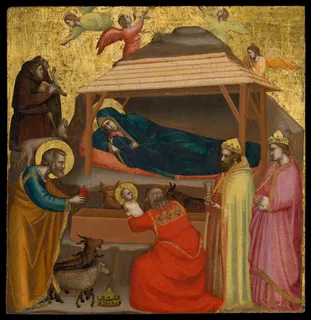 The Adoration of the MagiGiotto di Bondonepossibly ca. 1320
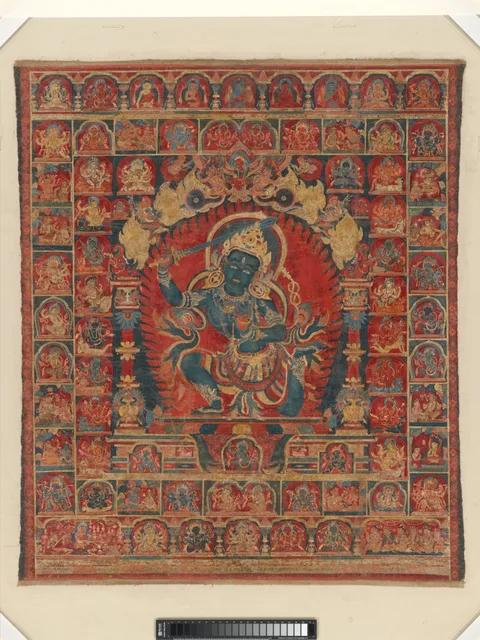 Acala, The Buddhist ProtectorUnknown artist · Nepal, Kathmandu Valleyequivalent to February / March 1322
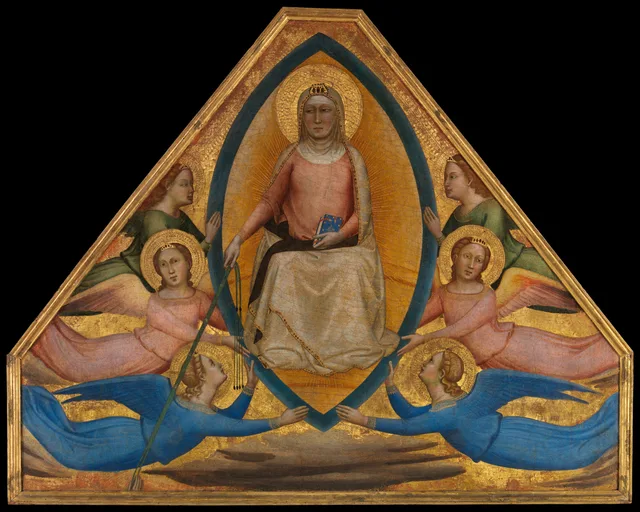 The Assumption of the VirginBernardo Daddi1337–38
Too good to keep to yourself
This painting,
for someone who comes to mind
They open it at full size
and see every brushstroke.
About this work
- Artist
- Ugolino da Siena · 1317–1327
- Date
- ca. 1325
- Medium
- Tempera and gold on wood
- Size
- 38.1 × 56.5 cm
- Collection
- The Metropolitan Museum of Art
- Image
- Original long edge 3811px · shown at 2560px
- Original
- View on the museum's website ↗