 Pyeongye
Artwork · 19th century · Camille Corot
LeoTurn on Magnifier at the lower right and move slowly across the painting.
Full screen opens it edge to edge.Tap the painting to fill the screen.
Spread two fingers to look closer.
At a glance
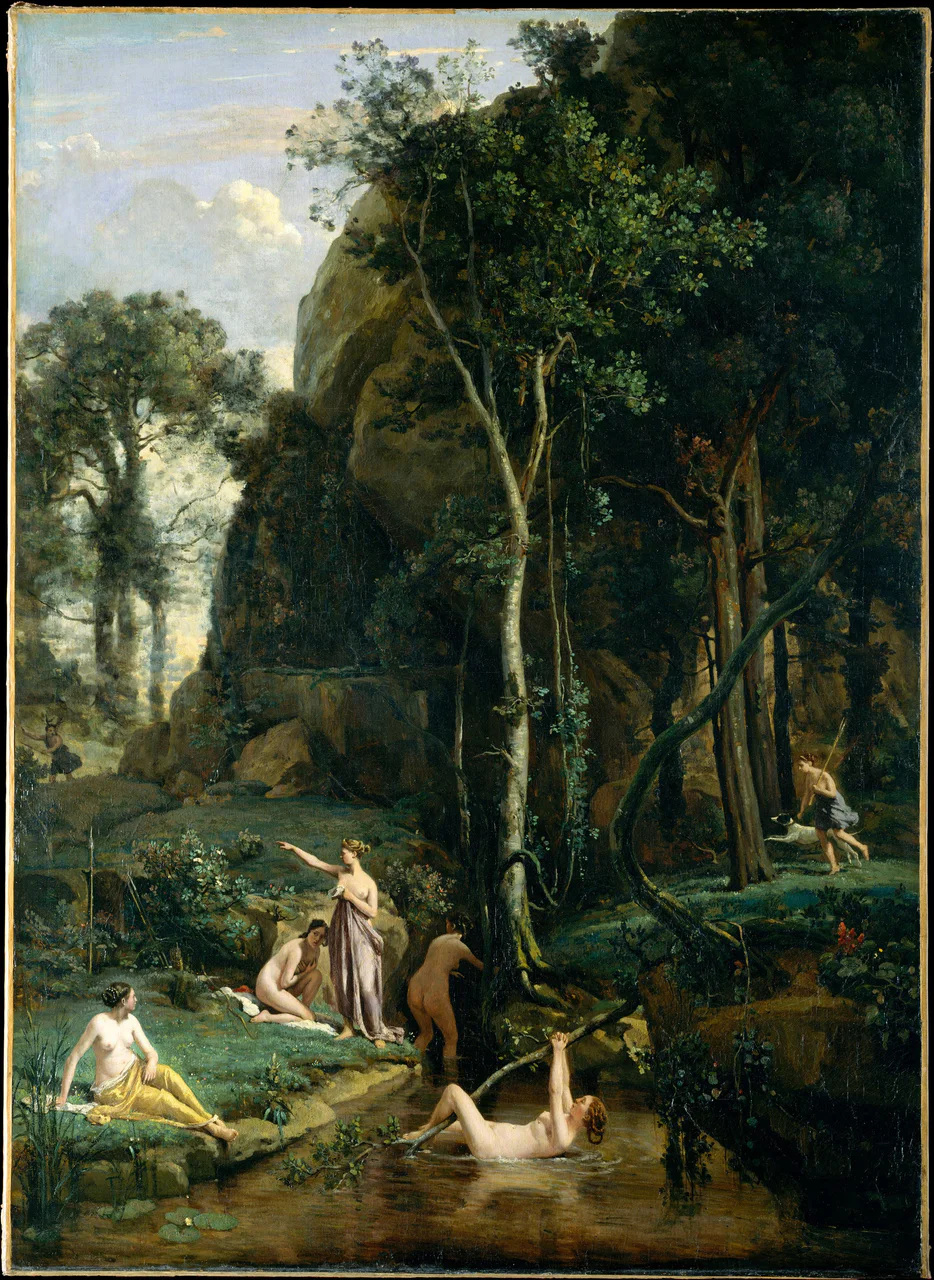
- Beneath a towering rock and a thick forest, Diana, goddess of the hunt, and her nymphs are bathing when they realize someone is coming.
- The French painter Camille Corot made it in oil on canvas in 1836.
- The canvas is more than five feet tall, yet the figures gather small near the bottom. Rocks, trees, and sky fill the rest, so the myth sits inside the landscape.
Reading the picture
5 places to look closer
Tap a number on the painting to jump to its note, or a close-up to see that spot in the whole picture.
Zoom in on the woman standing at the water's edge. She holds a striped cloth against her body and stretches one arm out toward the far left. Below her, a crouching woman lays a hand on her chest and turns with startled eyes. The quiet bath has just been broken.
Look into the woods on the right. A barefoot figure in a short tunic runs forward carrying a long shaft, and a white hunting dog with black patches leaps ahead. In the dark forest, only these two catch the light.
Now zoom in on the meadow far to the left. A tiny figure raises one arm, and antlers rise from his head. In the myth told by the Roman poet Ovid, the hunter Actaeon happens to see Diana bathing, and the angry goddess turns him into a stag. This little antlered figure calls that story to mind.
Look at the great rock and trees in the upper part of the picture. Where sunlight hits the rock it glows a dusty yellow, and the shadowed parts are deep brown. A slim, pale tree trunk climbs across it, and the leaves pile up in small dabs of paint.
Zoom in on the water below. A nymph lies back in the pool, holding a drooping branch with both hands. Little white ripples circle her body, and the brown shadows of rock and trees are mirrored on the surface.
When it was painted
In 1836 Corot was forty. He came from a family of Paris shopkeepers and did not take up painting until he was twenty-six. He lived on an allowance from his father and was still far from famous.
About a decade earlier he had spent some three years in Italy, painting fields, rocks, and trees outdoors around Rome. In 1834 he went back to Italy for another trip. Home in Paris, he turned what he had seen into large paintings finished in the studio.
In Paris, the stage that mattered was the Salon, the big official exhibition. There, stories from myth and the Bible ranked above plain landscapes. So Corot set stories inside his large landscapes. At the Salon of 1835 he showed Hagar in the Wilderness, which is also on this site, and in 1836 he sent this Diana and Actaeon.
Fame came slowly for Corot. From around the 1850s his soft, silvery, misty landscapes became so popular that fakes of his work spread widely. Long after, this canvas was bought by the American banker Robert Lehman. It came to the Metropolitan Museum in 1975 with the rest of his collection.
Look again at the far left and find the tiny figure with antlers. The end of the myth hides there, no bigger than a fingernail, while forest, rock, and light fill nearly everything else. That was the balance in the picture Corot sent to the Salon at forty.
The painter
Camille Corot
1796–1875
When painting this, the artist was about 40 years old
All paintings by Camille Corot →More by the same painter
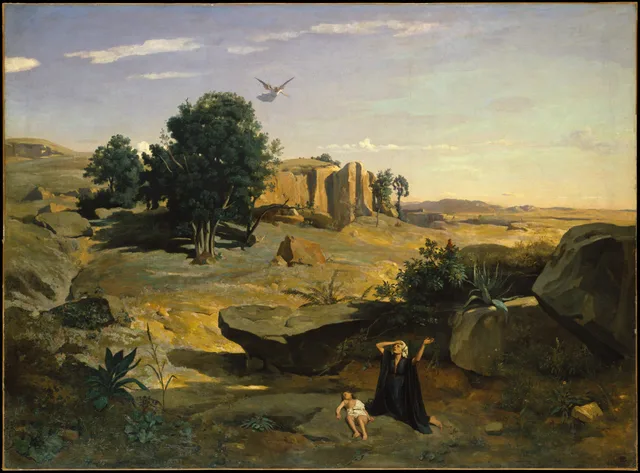
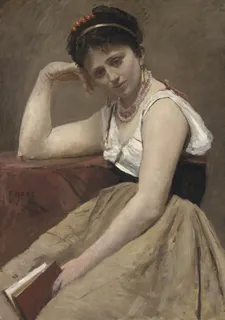
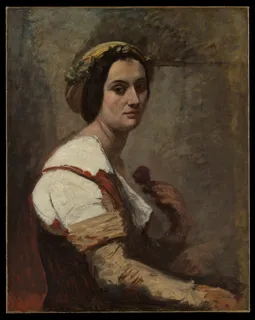
Questions to think about
- Look for itAt the lower left, can you find the woman reclining on a yellow cloth and glancing to the right?
- Why?Why do you think Corot painted the most dramatic moment of the myth so small, tucked into a corner of the woods?
- What about you?Actaeon is punished for seeing what he should not have seen. When we stumble onto someone else's private life by accident, how should we handle it?
Same period
Painted around the same time,
somewhere else
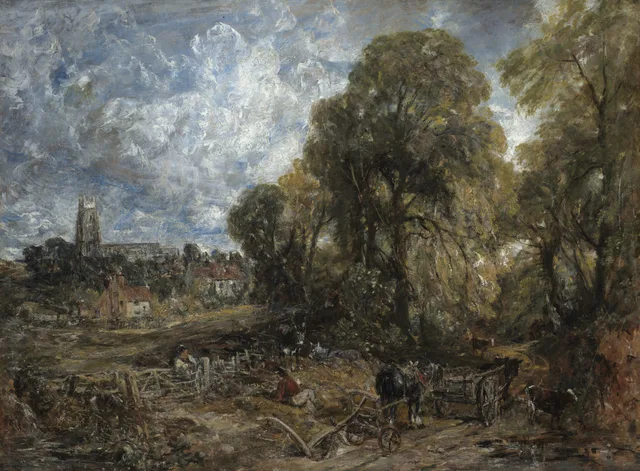 Stoke-by-NaylandJohn Constable1836
 Spring Rain at Tsuchiyama, from the series Fifty-three Stations of the TōkaidōUtagawa Hiroshige1834–35
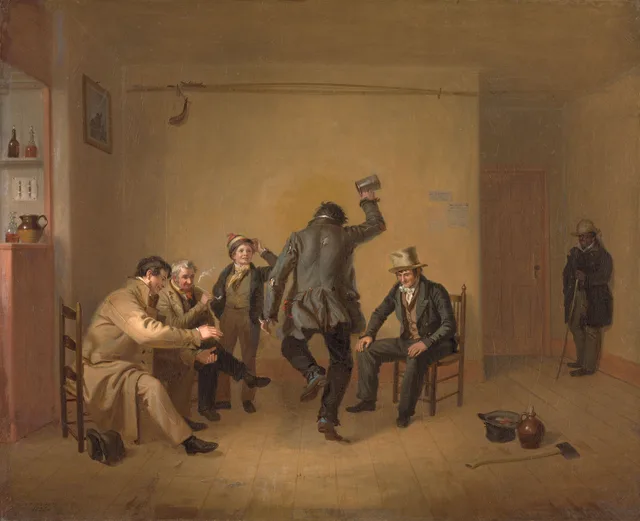 Bar-room SceneWilliam Sidney Mount1835
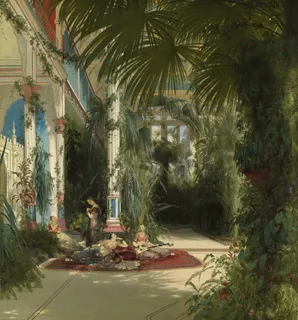 The Interior of the Palm House on the Pfaueninsel Near PotsdamCarl Blechen1834
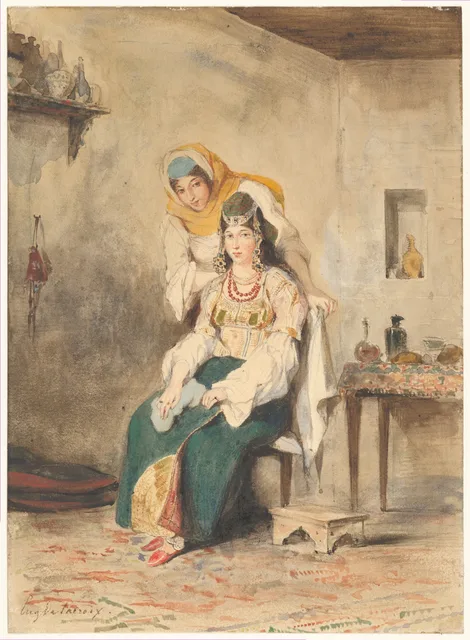 Saada, the Wife of Abraham Ben-Chimol, and Préciada, One of Their DaughtersEugène Delacroix1832
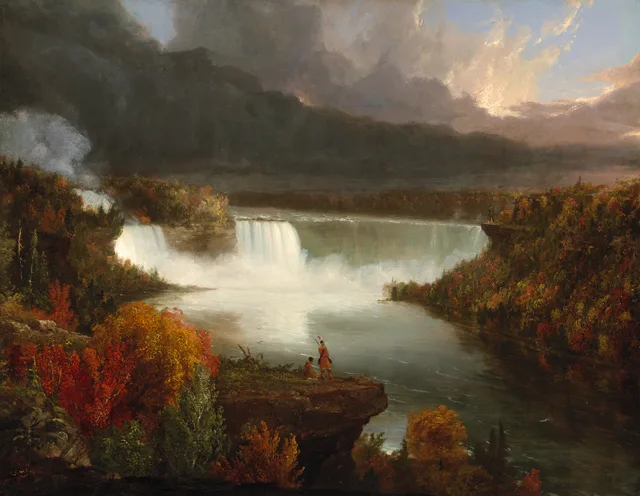 Distant View of Niagara FallsThomas Cole1830
Too good to keep to yourself
This painting,
for someone who comes to mind
They open it at full size
and see every brushstroke.
About this work
- Artist
- Camille Corot · 1796–1875
- Date
- 1836
- Medium
- Oil on canvas
- Size
- 156.5 × 112.7 cm
- Collection
- The Metropolitan Museum of Art
- Image
- Original long edge 3722px · shown at 2560px
- Original
- View on the museum's website ↗