 Pyeongye
Artwork · 19th century · Thomas Eakins
LeoTurn on Magnifier at the lower right and move slowly across the painting.
Full screen opens it edge to edge.Tap the painting to fill the screen.
Spread two fingers to look closer.
At a glance
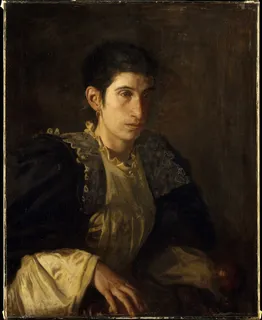
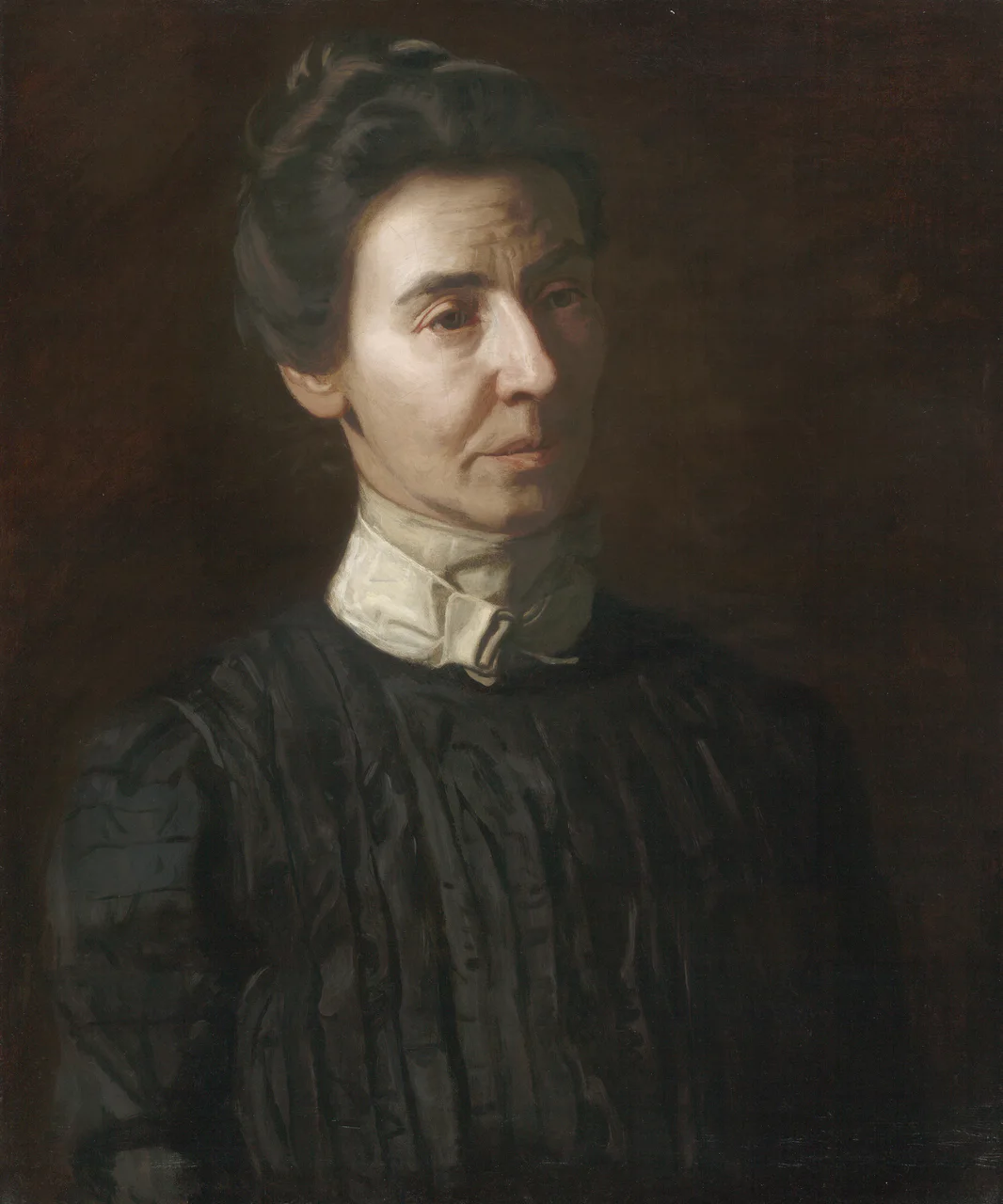
- A middle-aged woman in a black dress and a stiff white collar turns her head slightly against a dark, empty background.
- Thomas Eakins of Philadelphia painted his longtime family friend Mary Adeline Williams in 1899.
- He left every line and shadow of her face in place, so the longer you look, the more it feels like watching someone think.
Reading the picture
4 places to look closer
Tap a number on the painting to jump to its note, or a close-up to see that spot in the whole picture.
Zoom in on the eyes. Light comes from the left, catching her forehead and the bridge of her nose, while the right half of her face sinks into shadow. A deep crease sits between her brows, and her eyelids hang heavy. Does the lit eye seem to wear a different mood from the shaded one?
Move down to the mouth. Her lips are pressed together, with no hint of a smile. Around the corner of the mouth, strokes of reddish and cream paint overlap roughly. Up close, the brushwork is left unpolished.
Look at the white collar. The crisp fabric is folded over and fastened at the throat. This bright patch, set between the dark dress and the dark background, pulls your eye straight up to her face.
Now check the puffed sleeve on the left. It is built from a few broad sweeps of dark gray and black, laid down quickly. Compare that with the face, which is worked over with care. Your eye goes where the effort went.
When it was painted
In 1899 Eakins was fifty-five. He had once been a well-known teacher at the Pennsylvania Academy of the Fine Arts, but in 1886 a dispute over his teaching methods forced him out. In the years that followed, he often painted people from his own circle rather than paying clients, asking friends and acquaintances to sit for him.
Mary Adeline Williams, known as Addie, was one of them. She had been a childhood playmate of Eakins's sister, and she never married. In 1899 she sat for this portrait.
Eakins's wife, the painter Susan Macdowell Eakins, kept a diary, and Addie appears in it as anything but stiff. Between sittings, Susan wrote, Addie rode bicycles, went to art exhibitions, and spent time with friends. That lively woman is hard to find in the guarded face on the canvas.
In December 1899 Eakins's father died. Soon after, Thomas and Susan invited Addie to come and live with them in their Philadelphia home. Eakins painted her a second time around 1900, and that portrait now belongs to the Philadelphia Museum of Art.
This first portrait came to the Art Institute of Chicago in 1939. When the National Gallery of Art in Washington held an Eakins retrospective in 1961, it was shown as Addie, Woman in Black. Look at her eyes once more. Eakins knew a cheerful friend who rode a bicycle, and he chose to paint the quiet person behind her.
The painter
Thomas Eakins
1844–1916
When painting this, the artist was about 55 years old
All paintings by Thomas Eakins →More by the same painter
Questions to think about
- Look for itCan you trace with your finger the line where light ends and shadow begins on her face?
- Why?Addie was busy and outgoing, so why do you think Eakins painted her looking so serious and still?
- What about you?Today many of us smooth out wrinkles in photos before posting them. If someone gave you a portrait that kept every line and shadow, would you feel honored or a little hurt?
Same period
Painted around the same time,
somewhere else
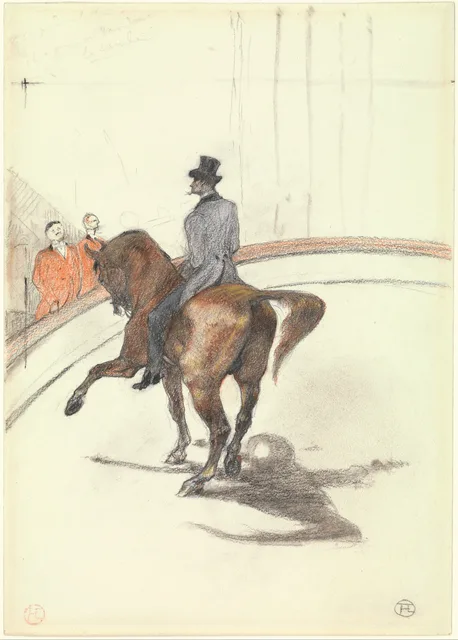 At the Circus: The Spanish Walk (Au Cirque: Le Pas espagnol)Henri de Toulouse-Lautrec1899
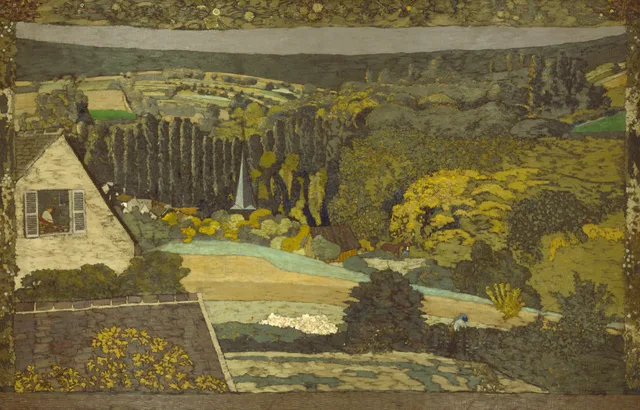 Landscape: Window Overlooking the WoodsÉdouard Jean Vuillard1899
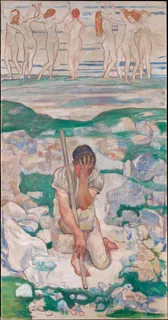 The Dream of the Shepherd (Der Traum des Hirten)Ferdinand Hodler1896
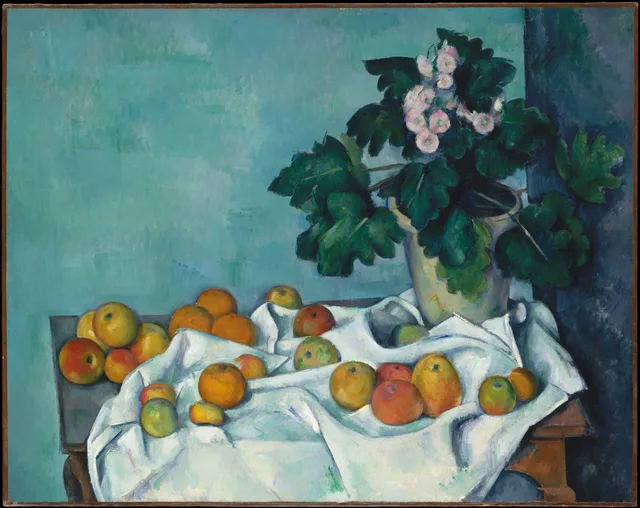 Still Life with Apples and a Pot of PrimrosesPaul Cézanneca. 1890
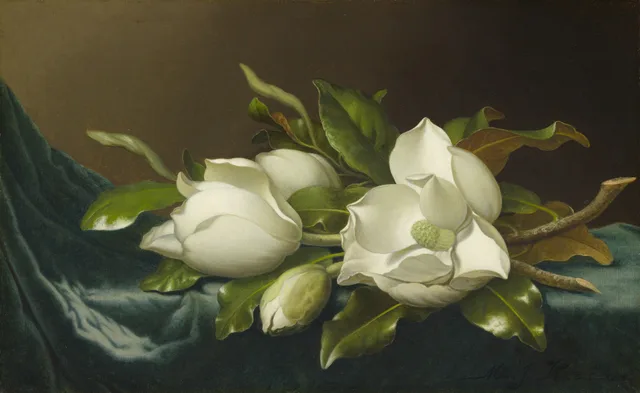 Magnolias on Light Blue Velvet ClothMartin Johnson Heade1885–95
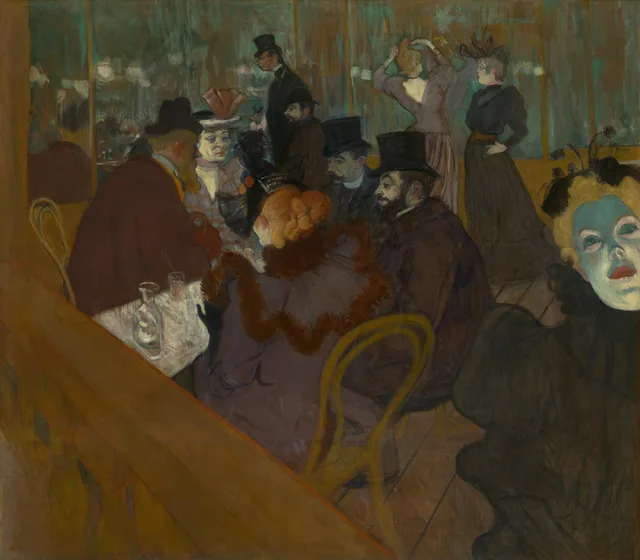 At the Moulin RougeHenri de Toulouse-Lautrec1892–95
Too good to keep to yourself
This painting,
for someone who comes to mind
They open it at full size
and see every brushstroke.
About this work
- Artist
- Thomas Eakins · 1844–1916
- Date
- 1899
- Medium
- Oil on canvas
- Size
- 61 × 50.8 cm
- Culture
- Philadelphia
- Collection
- The Art Institute of Chicago
- Image
- Original long edge 4845px · shown at 2560px
- Original
- View on the museum's website ↗