 Pyeongye
Artwork · 19th century · Paul Cézanne
LeoTurn on Magnifier at the lower right and move slowly across the painting.
Full screen opens it edge to edge.Tap the painting to fill the screen.
Spread two fingers to look closer.
At a glance
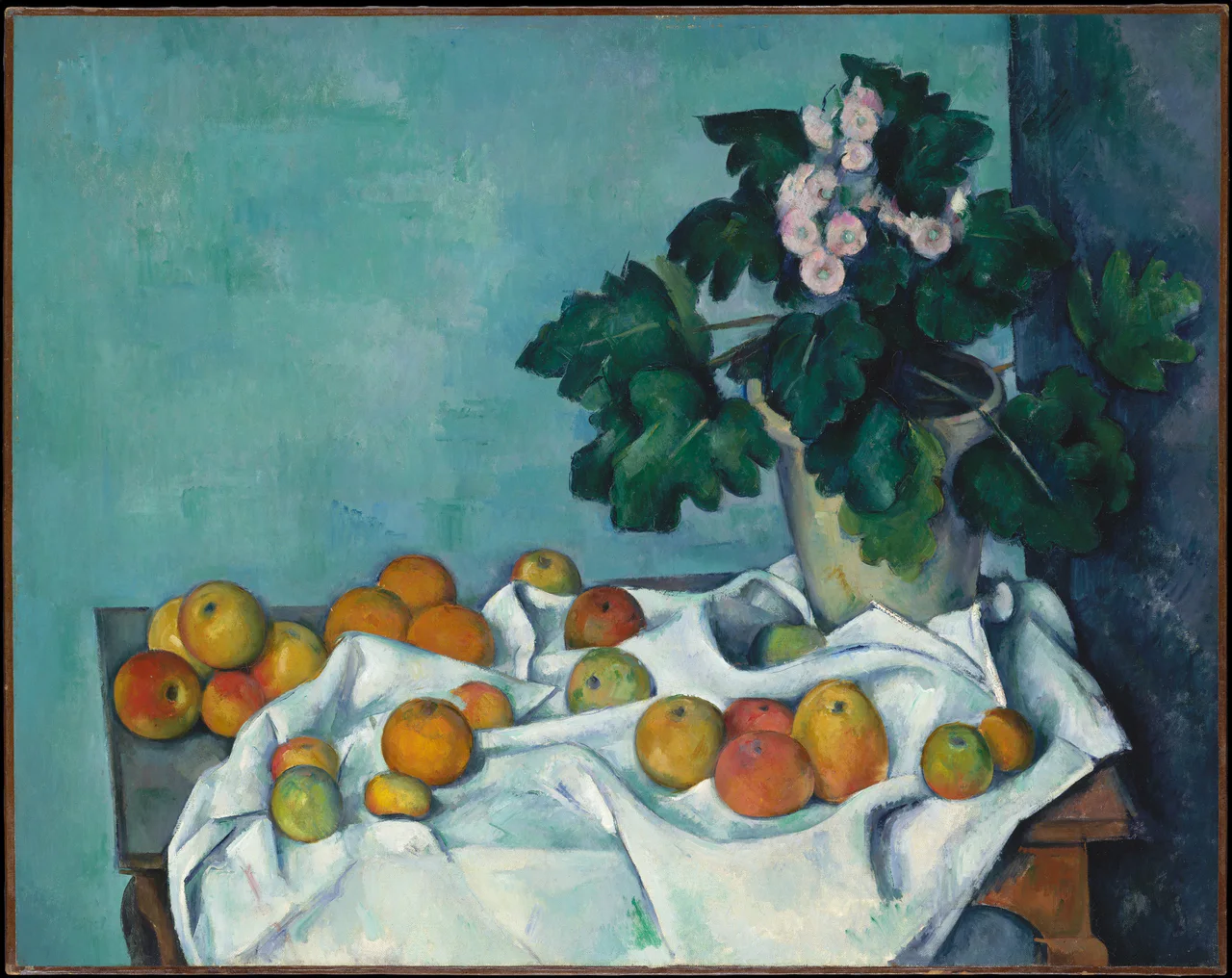
- Apples lie scattered over a table draped with a rumpled white cloth, and behind them stands a pot of pink primroses.
- The French painter Paul Cézanne made this oil on canvas around 1890.
- Dark outlines around the apples and table edges that do not quite meet show, up close, how Cézanne built his objects stroke by stroke.
Reading the picture
5 places to look closer
Tap a number on the painting to jump to its note, or a close-up to see that spot in the whole picture.
Zoom in on the primroses at the upper right. Cézanne did not paint them petal by petal. He dabbed round blobs of pink and white, then dropped a light green dot into the middle of each. The dark green leaves around them are laid in with broad, flat strokes, like solid slabs.
Look at the pot half hidden behind the leaves. A wavy leaf droops down in front of its pale cream body. The pot is not simply white. Touches of yellow, green, and violet are mixed into it.
Zoom in on the apples gathered on the grey corner of the table at the far left. Each apple has a dark line running around its edge. The reds and yellows are not blended smoothly. Small strokes sit side by side, building up each round shape.
Now look at the cluster of apples on the cloth, right of center. One yellow apple is long, almost like an egg. In the folds of the white cloth beneath them, streaks of blue and pale green make the fabric look cool and bright.
Zoom in on the lower right corner. On the left side, the tabletop was grey. Here, the table showing through is brown wood. The white cloth spills over the spot where the two surfaces would meet. In Cézanne's still lifes, table edges often refuse to line up like this.
When it was painted
Around 1890, Cézanne had just turned fifty. He spent most of his time in and around Aix-en-Provence, his hometown in the south of France, setting up apples, cloths, and jugs again and again and painting them slowly. As a young man he had shown his work in Paris alongside the Impressionists. Now Parisians rarely got a chance to see his pictures at all.
A few years earlier, in 1886, his life had shifted all at once. His childhood friend, the novelist Émile Zola, published The Masterpiece, a novel about a painter who fails. Around then the long run of letters between the two men came to an end. That same year Cézanne married Hortense, his longtime partner, and in the autumn his father died.
This canvas holds something Cézanne seldom painted: flowers. The Met points out that he rarely took on flowering plants or cut bouquets. Over the long hours he spent looking, they would simply wilt.
In 1894, the painter Paul Helleu gave this picture to Claude Monet. That autumn Cézanne went to visit Monet at his home in Giverny. The next year, in 1895, the dealer Ambroise Vollard opened Cézanne's first solo show in his Paris shop, and the art world began to pay attention again.
Later the painting belonged to the Lewisohn family in New York, and it came to the Met in 1951 as a bequest from Sam A. Lewisohn. Look again at the primroses at the upper right. Those round pink dabs are flowers that once went home with Monet, a man who loved his garden.
More by the same painter
Questions to think about
- Look for itBehind the pot on the right, can you find the dark blue area where it meets the blue-green wall?
- Why?Why do you think Cézanne drew a dark outline around each apple? How would they look without it?
- What about you?Cézanne painted the same apples over and over. Have you ever looked really closely at an ordinary cup or desk you use every day? What might you notice that you never saw before?
Same period
Painted around the same time,
somewhere else
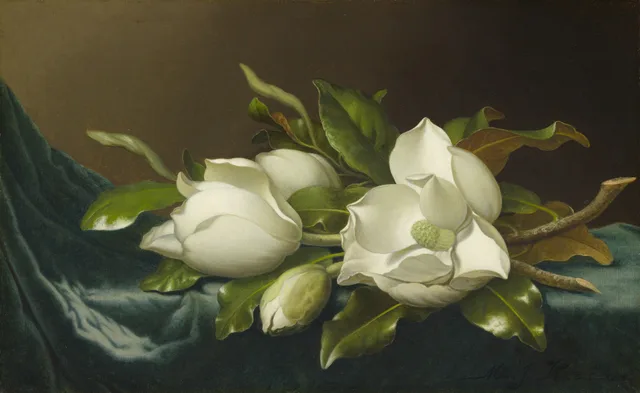 Magnolias on Light Blue Velvet ClothMartin Johnson Heade1885–95
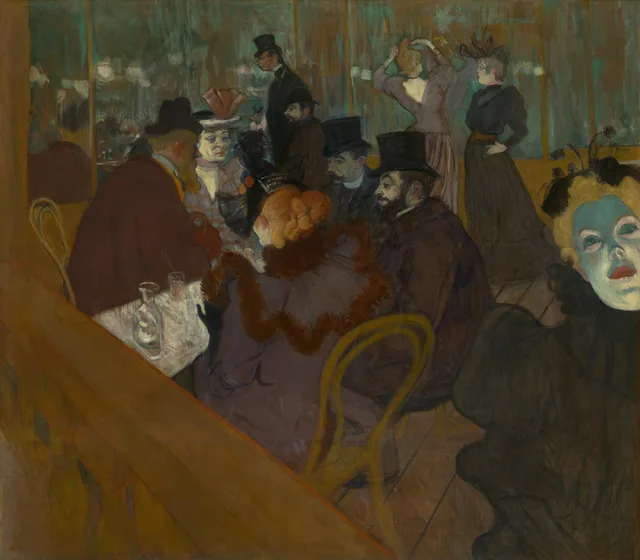 At the Moulin RougeHenri de Toulouse-Lautrec1892–95
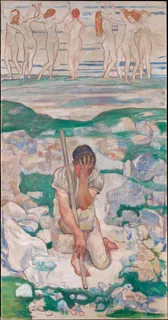 The Dream of the Shepherd (Der Traum des Hirten)Ferdinand Hodler1896
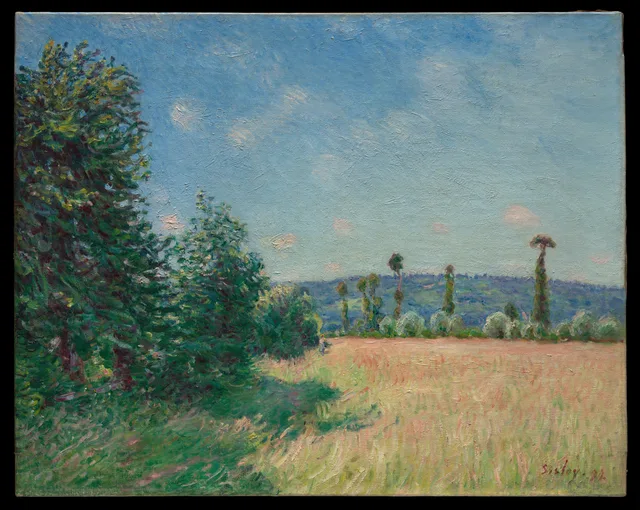 Sahurs Meadows in Morning SunAlfred Sisley1894
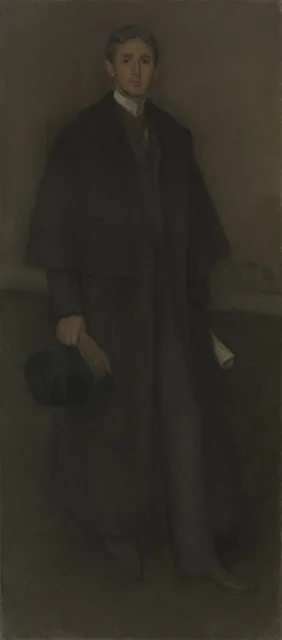 Arrangement in Flesh Color and Brown: Portrait of Arthur Jerome EddyJames McNeill Whistler1894
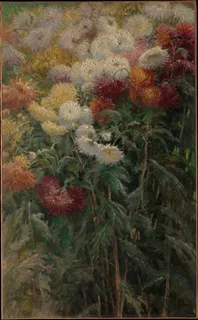 Chrysanthemums in the Garden at Petit-GennevilliersGustave Caillebotte1893
Too good to keep to yourself
This painting,
for someone who comes to mind
They open it at full size
and see every brushstroke.
About this work
- Artist
- Paul Cézanne · 1839–1906
- Date
- ca. 1890
- Medium
- Oil on canvas
- Size
- 73 × 92.4 cm
- Collection
- The Metropolitan Museum of Art
- Image
- Original long edge 3807px · shown at 2560px
- Original
- View on the museum's website ↗