 Pyeongye
Artwork · 17th century · Yi Jeong
LeoTurn on Magnifier at the lower right and move slowly across the painting.
Full screen opens it edge to edge.Tap the painting to fill the screen.
Spread two fingers to look closer.
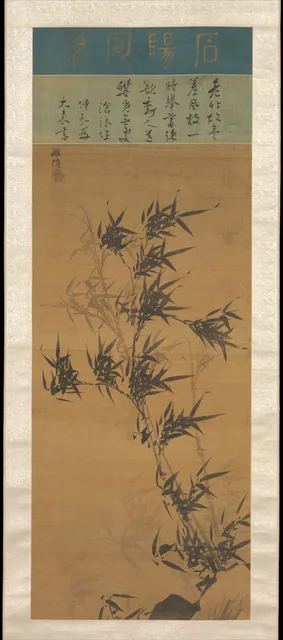
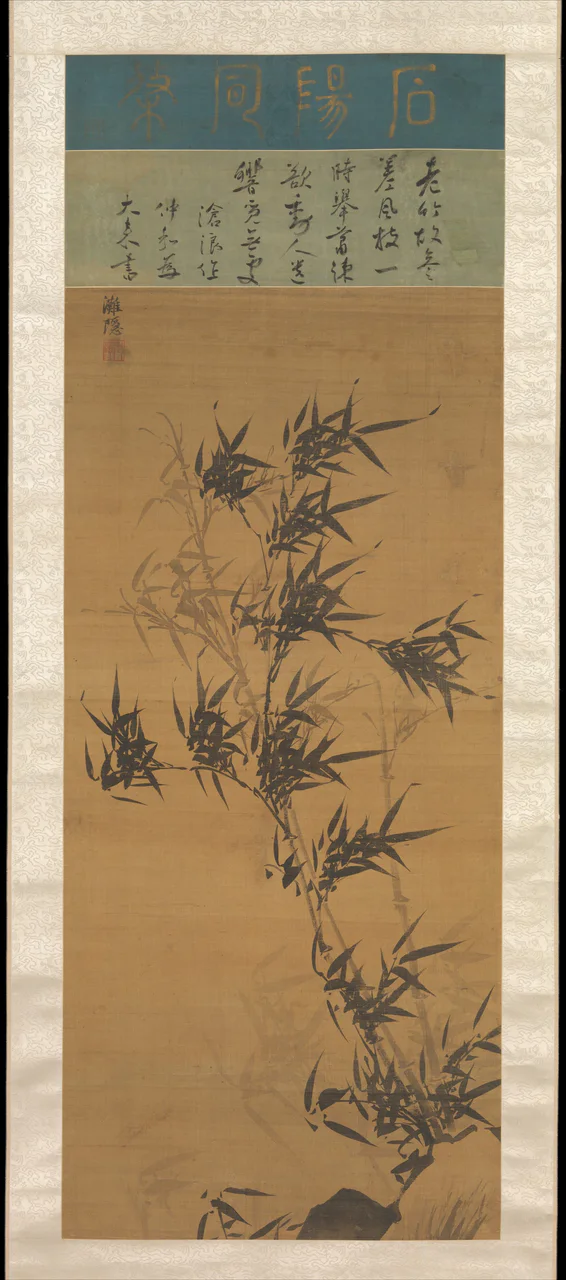
Bamboo in the Wind
Yi Jeongearly 17th centuryHanging scroll; ink on silk with gold on colophon115.6 × 53.3 cm
At a glance
- Stalks of bamboo beside a rock, their leaves tossing in the wind, painted in ink alone on silk.
- Yi Jeong, a member of the Korean royal family who signed himself Taneun, made it in the early 1600s.
- With only dark ink and pale ink, he separates the near bamboo from the far bamboo and lets you feel the wind.
Reading the picture
5 places to look closer
Tap a number on the painting to jump to its note, or a close-up to see that spot in the whole picture.
Look behind the black bamboo. There is a second, ghostly layer of gray stalks and leaves. Yi Jeong mixed a lot of water into his ink for these. Dark leaves seem close to us and pale leaves seem farther back, so the grove suddenly has depth.
Zoom in on the branch reaching out to the right. Its leaves are sharp as knife tips, and they all swing to one side. Each leaf is a single stroke: the brush presses down, then lifts away. That is why every leaf is thick at its base and fine at its point.
Now the rock at the bottom. It is one solid mass of ink, laid on with a broad brush. Next to the thin, bending bamboo, Yi Jeong put something heavy that cannot move. The two together keep the picture in balance.
Check the upper left corner of the painting. Two characters, 灘隱, sit above a red seal. They read Taneun, the artist's pen name. It is his name tag, left inside the picture.
Above the painting, two strips of silk were added later. The top one is blue, with large gold characters, and the first two on the right read Seokyang. As a royal, Yi Jeong held the title Prince Seokyang. Below it, another writer added lines in brush and ink.
When it was painted
In 1592, Japanese armies invaded Korea. Yi Jeong, a great-great-grandson of King Sejong and already known for painting bamboo, could not stay clear of the war. A Japanese sword struck his right arm and badly wounded it.
He did not put down his brush. Two years later, in the winter of 1594, in the town of Gongju, he finished an album called Samcheongcheop. Its bamboo, plum blossoms, and orchids are painted in gold on black silk. Today the album belongs to the Kansong Art Museum in Seoul, and Korea has designated it a national Treasure.
The album had a rough life of its own. It was partly burned during the Manchu invasion of 1636. In 1935 the collector Jeon Hyeong-pil, founder of the Kansong collection, bought it. Both the painter and his album came through war.
This Bamboo in the Wind dates to the early 1600s, after the fighting had ended. Yi Jeong painted wind-tossed bamboo more than once. Another of his wind-blown bamboo paintings, now in the Kansong collection, is printed on the back of Korea's 50,000-won bill, first issued in 2009, alongside a plum blossom painting by Eo Mong-ryong.
This scroll made a longer journey. The American collector Mary Griggs Burke spent her life gathering East Asian art, mostly Japanese, and Korean paintings were part of it. In 2015 the Mary and Jackson Burke Foundation gave her collection to The Metropolitan Museum of Art, and this scroll came to New York with it.
Look again at the leaves all swinging one way. They were painted by a man who picked up his brush again after a sword wound. Bamboo that bends in the wind but does not snap starts to look a little like him.
Questions to think about
- Look for itWhere do the pale gray leaves in the back cross behind the dark leaves in front?
- Why?Why do you think Yi Jeong chose bamboo bending in the wind instead of bamboo standing straight and still?
- What about you?Like bamboo that sways but does not break, what is something in your life right now that shakes you but that you are still holding on to?
Same period
Painted around the same time,
somewhere else
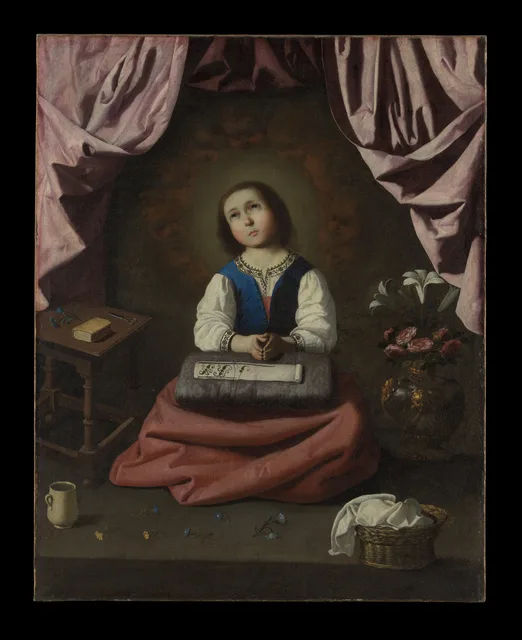 The Young VirginFrancisco de Zurbaránca. 1632–33
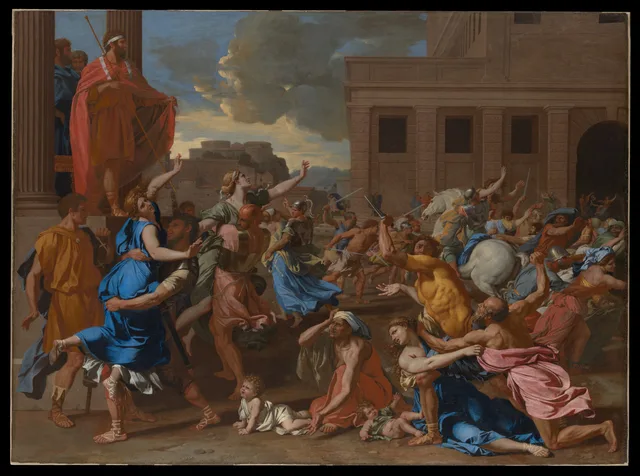 The Abduction of the Sabine WomenNicolas Poussinprobably 1633–34
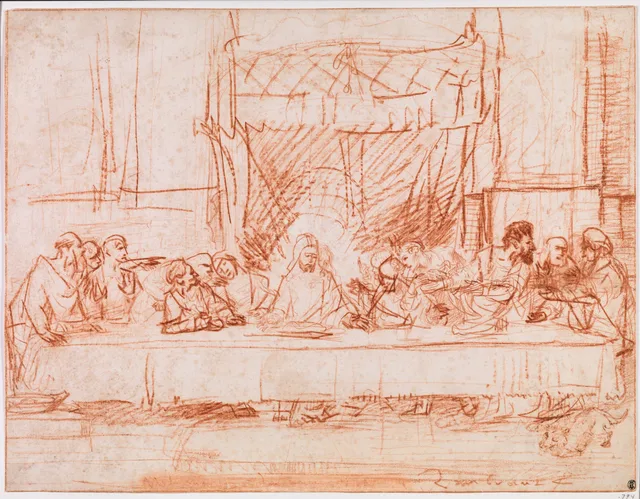 The Last Supper, after Leonardo da VinciRembrandt1634–35
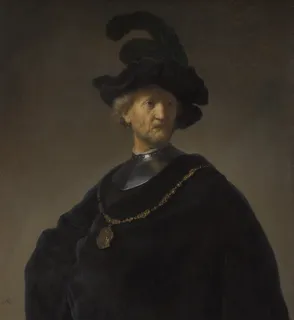 Old Man with a Gold ChainRembrandt1631
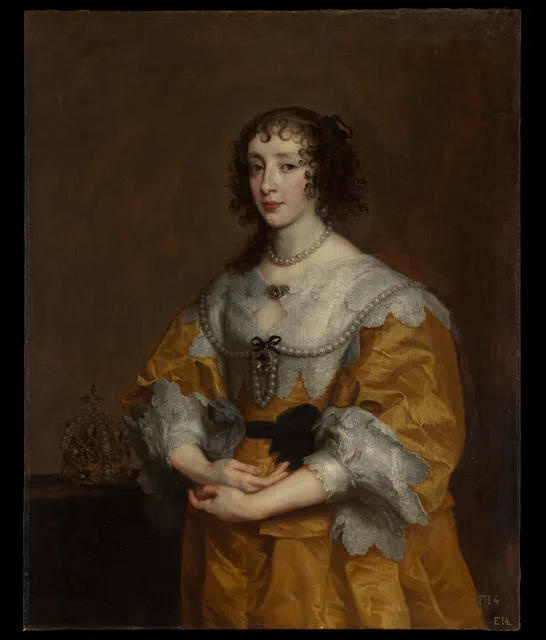 Queen Henrietta MariaAnthony van Dyck1636
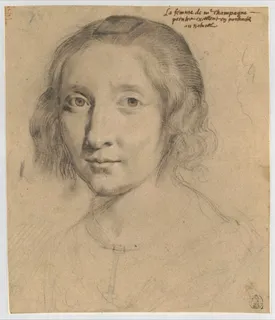 Portrait of Charlotte DuchesnePhilippe de Champaigneca. 1628
Too good to keep to yourself
This painting,
for someone who comes to mind
They open it at full size
and see every brushstroke.
About this work
- Artist
- Yi Jeong · 1541–1626
- Date
- early 17th century
- Medium
- Hanging scroll; ink on silk with gold on colophon
- Size
- 115.6 × 53.3 cm
- Culture
- Korea
- Collection
- The Metropolitan Museum of Art
- Image
- Original long edge 3880px · shown at 2560px
- Original
- View on the museum's website ↗