 Pyeongye
Artwork · 17th century · Nicolas Poussin
LeoTurn on Magnifier at the lower right and move slowly across the painting.
Full screen opens it edge to edge.Tap the painting to fill the screen.
Spread two fingers to look closer.
At a glance
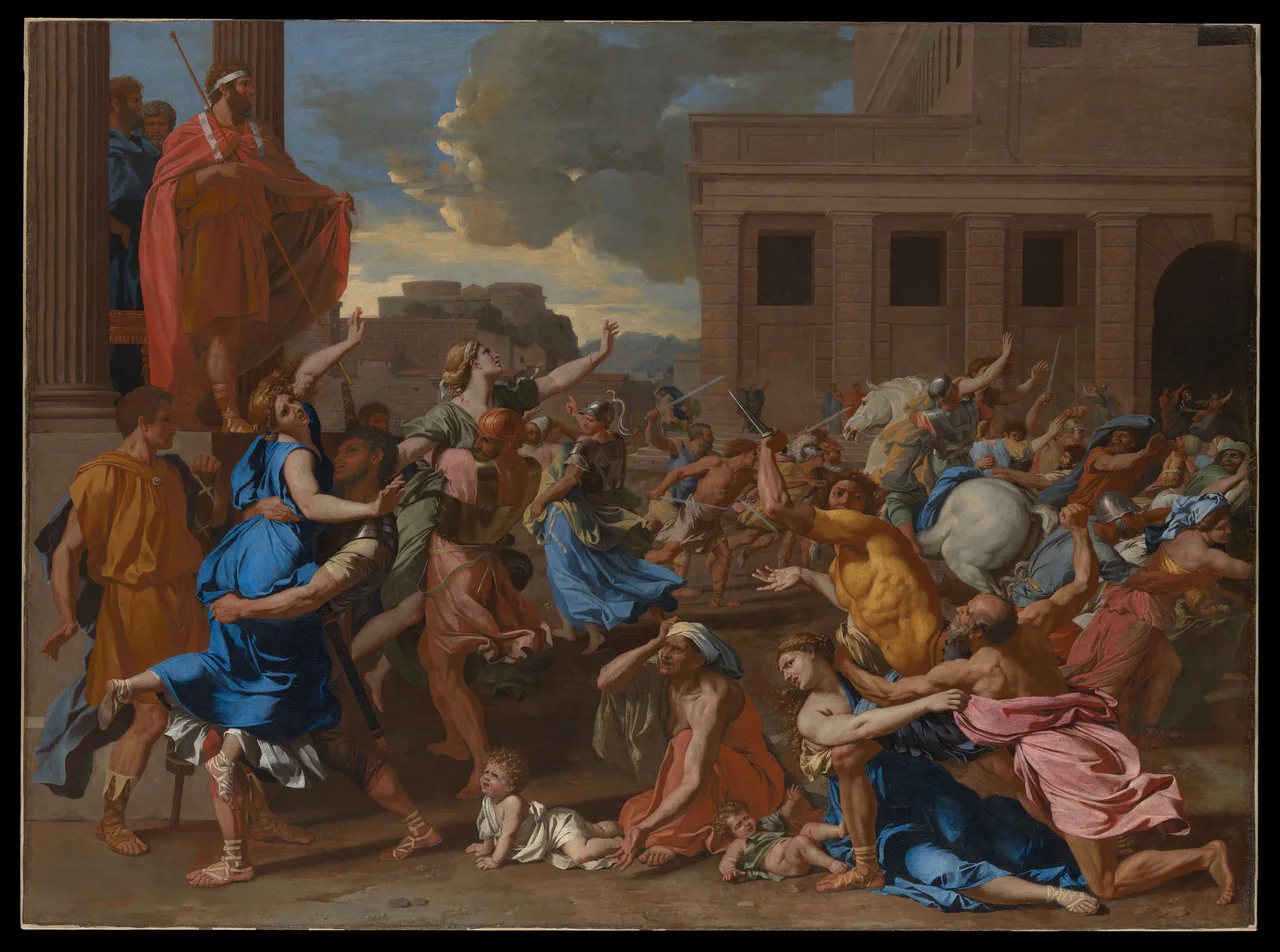
- At a signal from Romulus, the men of the new city of Rome seize the daughters of their Sabine neighbors.
- Nicolas Poussin, a French painter living in Rome, made it probably in 1633–34.
- Dozens of people crowd into one violent moment, yet every gesture and face can be read on its own.
Reading the picture
4 places to look closer
Tap a number on the painting to jump to its note, or a close-up to see that spot in the whole picture.
Start at the top left. A man in a red cloak stands on the steps of a temple, holding a long staff and watching the crowd. This is Romulus, the first king of Rome. He holds up the edge of his cloak with one hand. That small movement was the signal for the attack.
Now look just below him. A Roman soldier in armor has wrapped both arms around a woman in blue and lifted her off the ground. She throws her body backward and turns her face to the sky. Her blue dress billows out, so you can almost feel the speed of the moment.
Drop down to the ground in the middle. A curly-haired baby lies on its stomach, crying. An old woman crouches beside it with her hand stretched out, and another baby has tumbled over a little further to the right. In the middle of all this grabbing, the children have been left on the dirt.
Move to the lower right. An old man with a white beard and a young woman reach out and hold on to each other.
When it was painted
In 1633 Poussin had lived in Rome for nine years. A few years earlier he had fallen seriously ill, and the family of a French cook in Rome named Dughet nursed him back to health. In 1630 he married their daughter, Anne-Marie Dughet. Her young brother Gaspard trained with Poussin and later became a well-known landscape painter himself.
In these years one of Poussin's great supporters was Cassiano dal Pozzo, a scholar devoted to ancient Rome. Poussin painted history and myth for learned collectors like him. The story here comes from the founding legends of Rome, as told by the Roman historian Livy and the Greek writer Plutarch.
Who ordered this canvas is not certain. The Met suggests it may have been painted for the maréchal de Créquy, the French ambassador who stayed in Rome from June 1633 to July 1634.
How did Poussin organize dozens of struggling bodies? His early biographers wrote that he modeled small wax figures, set them on a tiny stage inside a box, and moved them and the light around until the composition worked. The people in this picture do stand out one by one, as clear as little statues.
A few years later Poussin painted the same subject again, and that version now hangs in the Louvre in Paris. This earlier one entered The Metropolitan Museum of Art in 1946. Look again, from Romulus on the steps down to the babies in the dirt. Each figure seems placed by hand, like a doll on a stage, so even in the chaos every body can be read on its own.
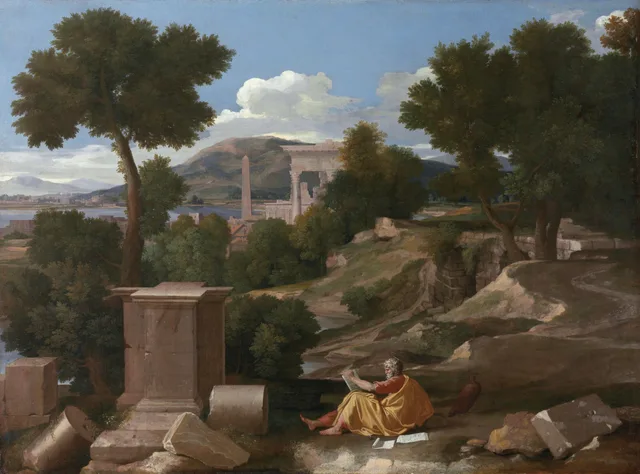
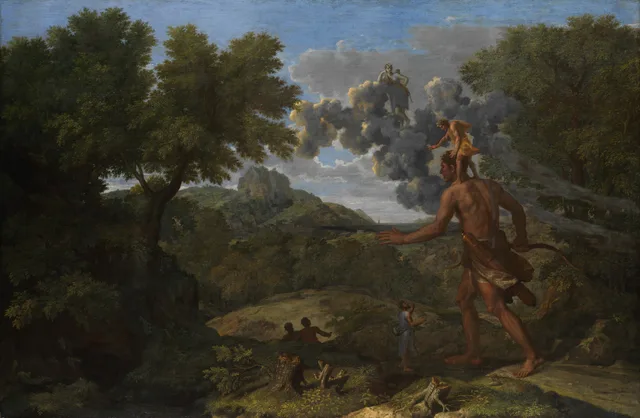
More by the same painter
Questions to think about
- Look for itCan you find the other men standing behind Romulus, quietly watching what happens below?
- Why?Why do you think Poussin put crying babies right in the middle of such a violent scene?
- What about you?A city's proud founding story includes taking people by force. When you look at the heroic stories of your own country with today's eyes, which parts look different to you?
Same period
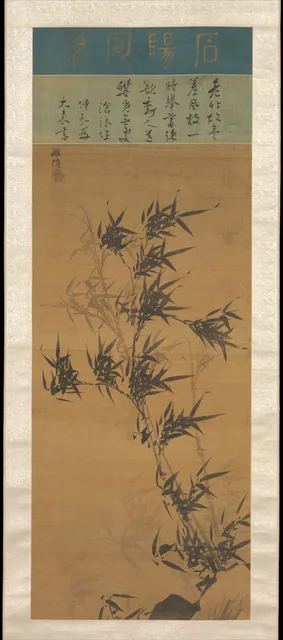
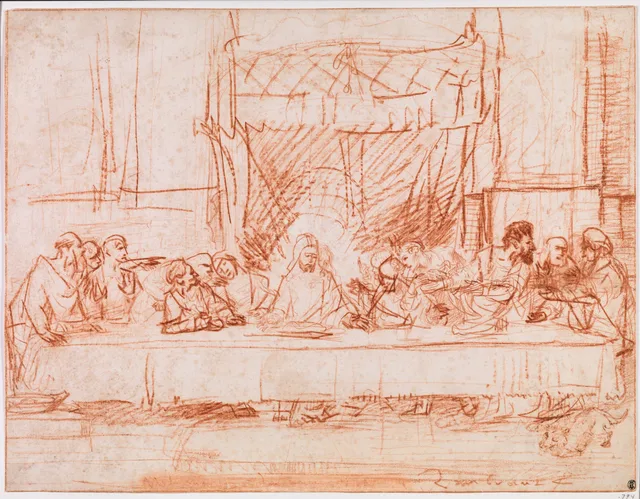
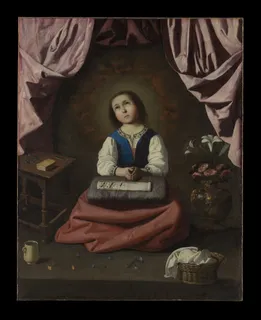
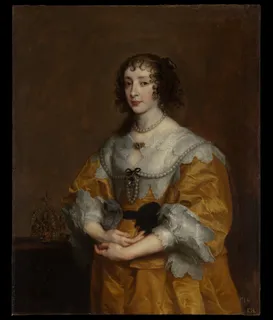
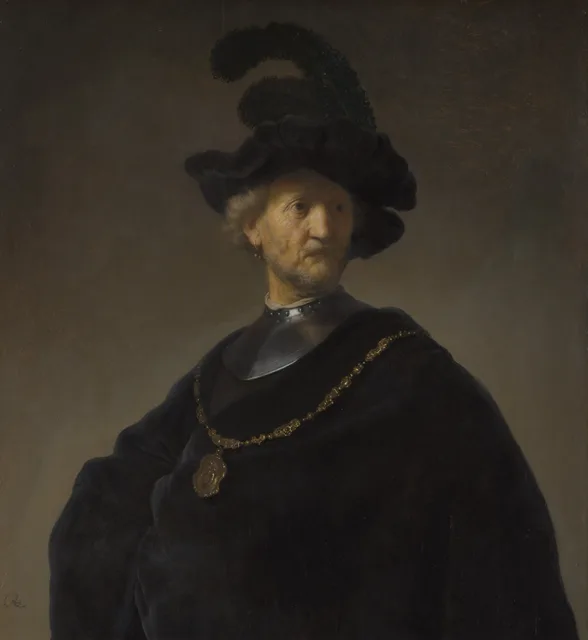
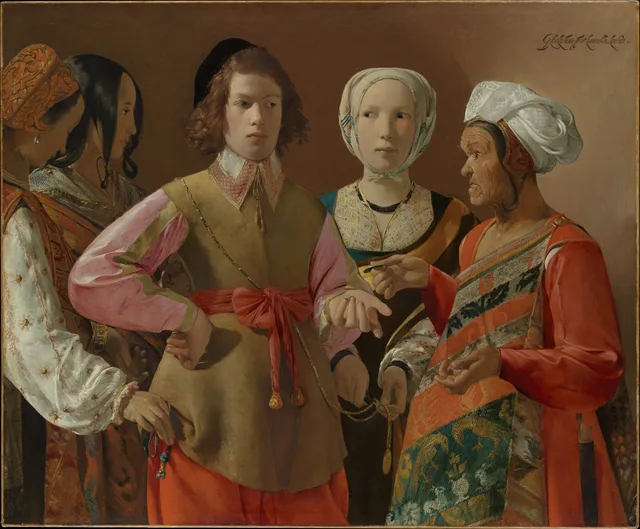
Painted around the same time,
somewhere else
Too good to keep to yourself
This painting,
for someone who comes to mind
They open it at full size
and see every brushstroke.
About this work
- Artist
- Nicolas Poussin · 1594–1665
- Date
- probably 1633–34
- Medium
- Oil on canvas
- Size
- 154.6 × 209.9 cm
- Collection
- The Metropolitan Museum of Art
- Image
- Original long edge 4000px · shown at 2560px
- Original
- View on the museum's website ↗