 Pyeongye
Artwork · 17th century · Francisco de Zurbarán
LeoTurn on Magnifier at the lower right and move slowly across the painting.
Full screen opens it edge to edge.Tap the painting to fill the screen.
Spread two fingers to look closer.
At a glance
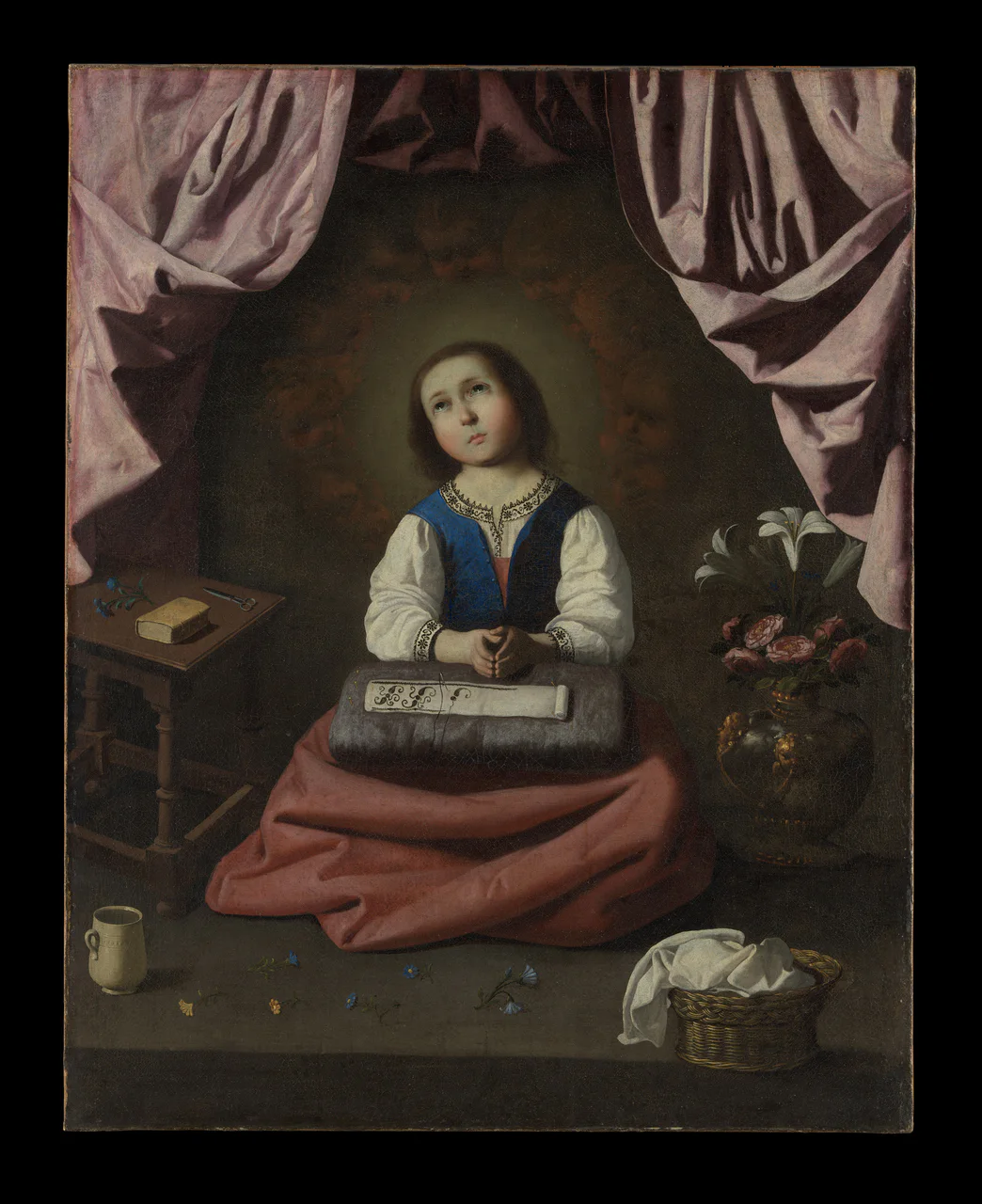
- The child Mary has stopped sewing, folded her hands, and turned her eyes upward. Pink curtains pulled back on both sides open the scene like a stage.
- Francisco de Zurbarán painted it around 1632–33, while he was working in Seville, Spain.
- Every object in the room, from the book and scissors to the vase and basket, is as crisp as a still life, so the longer you look the more you find.
Reading the picture
5 places to look closer
Tap a number on the painting to jump to its note, or a close-up to see that spot in the whole picture.
Zoom in on her face and the darkness around it. A round-cheeked child gazes up with shining eyes. Now look into the shadows around her head. Faint faces are hiding there. They are the heads of little angels, and they only appear one by one as your eyes adjust to the dark.
Look at the sewing cushion on her lap. A strip of white cloth carries a half-finished black embroidery of curling flowers. The needle is still stuck in the cloth, with the thread hanging down. She has put down her work in the middle of a stitch to pray.
Zoom in on the vase at the right. White lilies rise at the top, and pink roses gather in a round bunch below. Lilies stand for Mary's purity, and roses are also one of her flowers. The vase is trimmed with gold ornaments.
Look at the small table on the left. A book with a pale yellow cover, a pair of scissors, and a single blue flower lie on it. Zurbarán painted even the little ties on the book and the shine on the blades. Together these objects tell you how this child spends her day: reading and sewing.
Now go to the wicker basket at the lower right. A white cloth spills over its rim. Light and shadow are so sharp in every fold that you feel you could reach in and pick it up.
When it was painted
When he painted this picture, Zurbarán was about thirty-five. He was born in Fuente de Cantos, a small town in Extremadura in western Spain, and came to Seville as a teenager to train as a painter. In 1629 the Seville city council invited him to make the city his home.
Seville then was a rich port, the gateway for ships sailing to and from the Americas. Its monasteries ordered long series of paintings about saints and monks. Zurbarán became known for painting white monastic robes with folds as heavy and solid as carved stone.
He was also a painter who could stare at a single object for a long time. In 1633 he signed and dated a still life of lemons, oranges, and a single rose laid out in a row on a table. It now hangs in the Norton Simon Museum in Pasadena, California. The same patient eye is at work on the vase and the basket in this picture.
The Bible says almost nothing about Mary's childhood. A medieval legend told that she grew up in the Temple in Jerusalem. He returned to the young Virgin several more times over his career.
In 1634 he was summoned to Madrid to paint scenes of the labors of Hercules for the new Buen Retiro palace. Years later, Seville came to prefer the softer style of the young Murillo, and Zurbarán died in Madrid in 1664. This painting entered the Met in 1927.
Look once more at the girl's collar. A band of dense black embroidery, all little flowers and curls, circles her neck. It looks just like the unfinished black work lying on the cushion in her lap.
More by the same painter
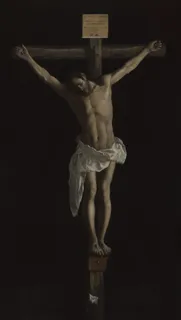
Questions to think about
- Look for itCan you find the white jug on the floor at the lower left, and the small flowers scattered across the floor?
- Why?Why do you think Zurbarán painted Mary not as a crowned queen but as a little girl with her sewing?
- What about you?This child pauses her work and looks up for a moment. In days filled with phones and tasks, how often do we stop what we are doing just to sit quietly and think?
Same period
Painted around the same time,
somewhere else
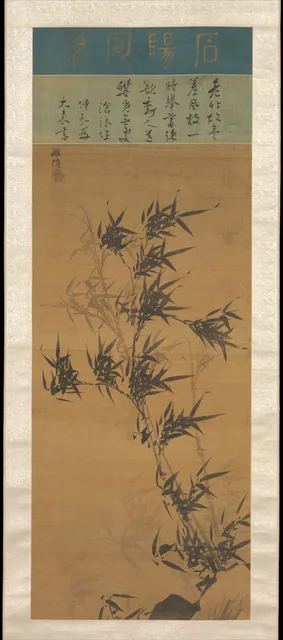 Bamboo in the WindYi Jeongearly 17th century
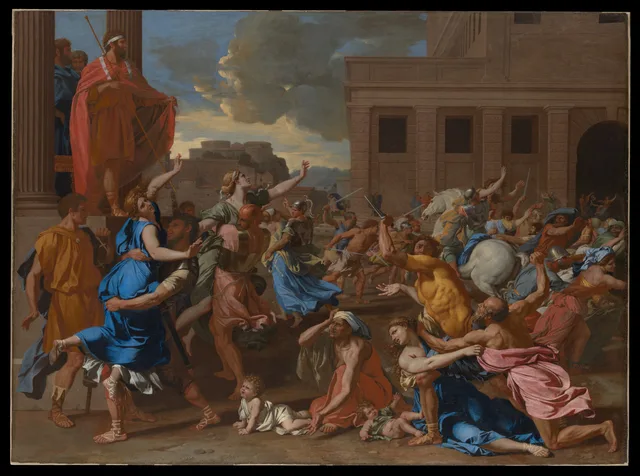 The Abduction of the Sabine WomenNicolas Poussinprobably 1633–34
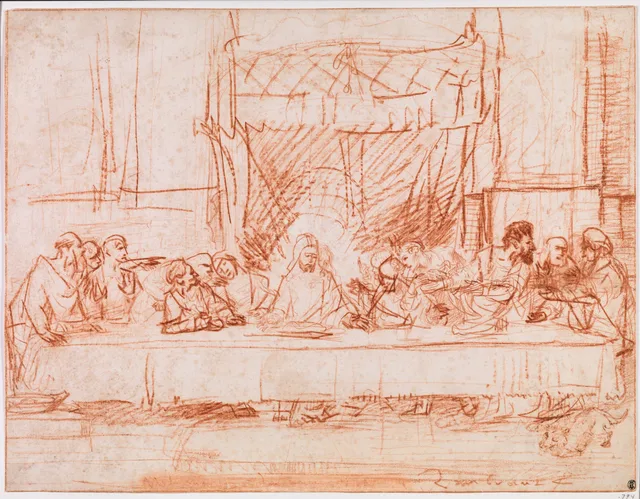 The Last Supper, after Leonardo da VinciRembrandt1634–35
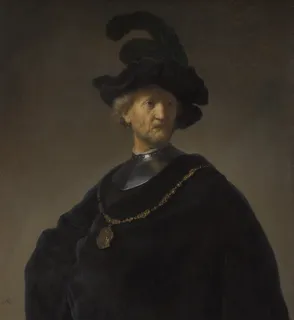 Old Man with a Gold ChainRembrandt1631
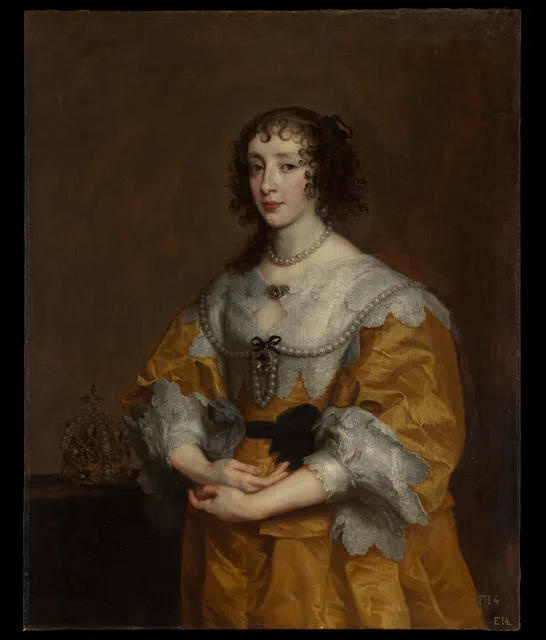 Queen Henrietta MariaAnthony van Dyck1636
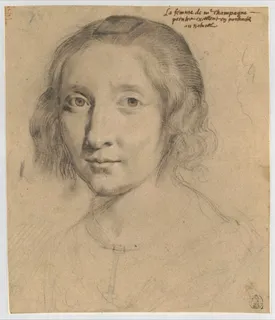 Portrait of Charlotte DuchesnePhilippe de Champaigneca. 1628
Too good to keep to yourself
This painting,
for someone who comes to mind
They open it at full size
and see every brushstroke.
About this work
- Artist
- Francisco de Zurbarán · 1598–1664
- Date
- ca. 1632–33
- Medium
- Oil on canvas
- Size
- 116.8 × 94 cm
- Collection
- The Metropolitan Museum of Art
- Image
- Original long edge 4000px · shown at 2560px
- Original
- View on the museum's website ↗