 Pyeongye
Artwork · 18th century · Ogata Kōrin
LeoTurn on Magnifier at the lower right and move slowly across the painting.
Full screen opens it edge to edge.Tap the painting to fill the screen.
Spread two fingers to look closer.
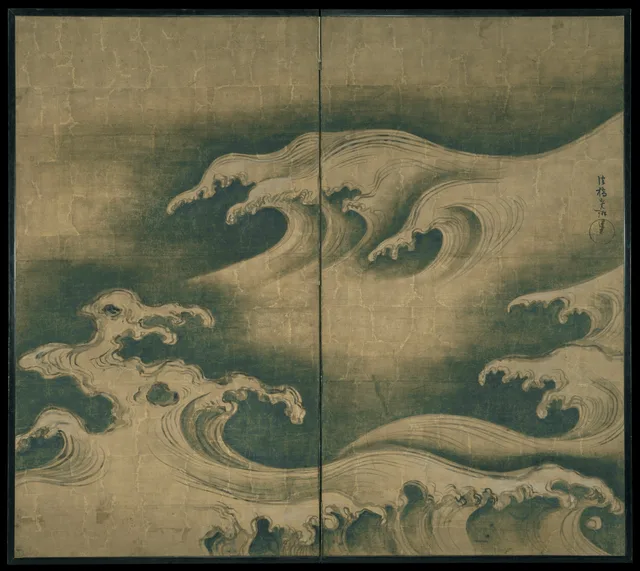
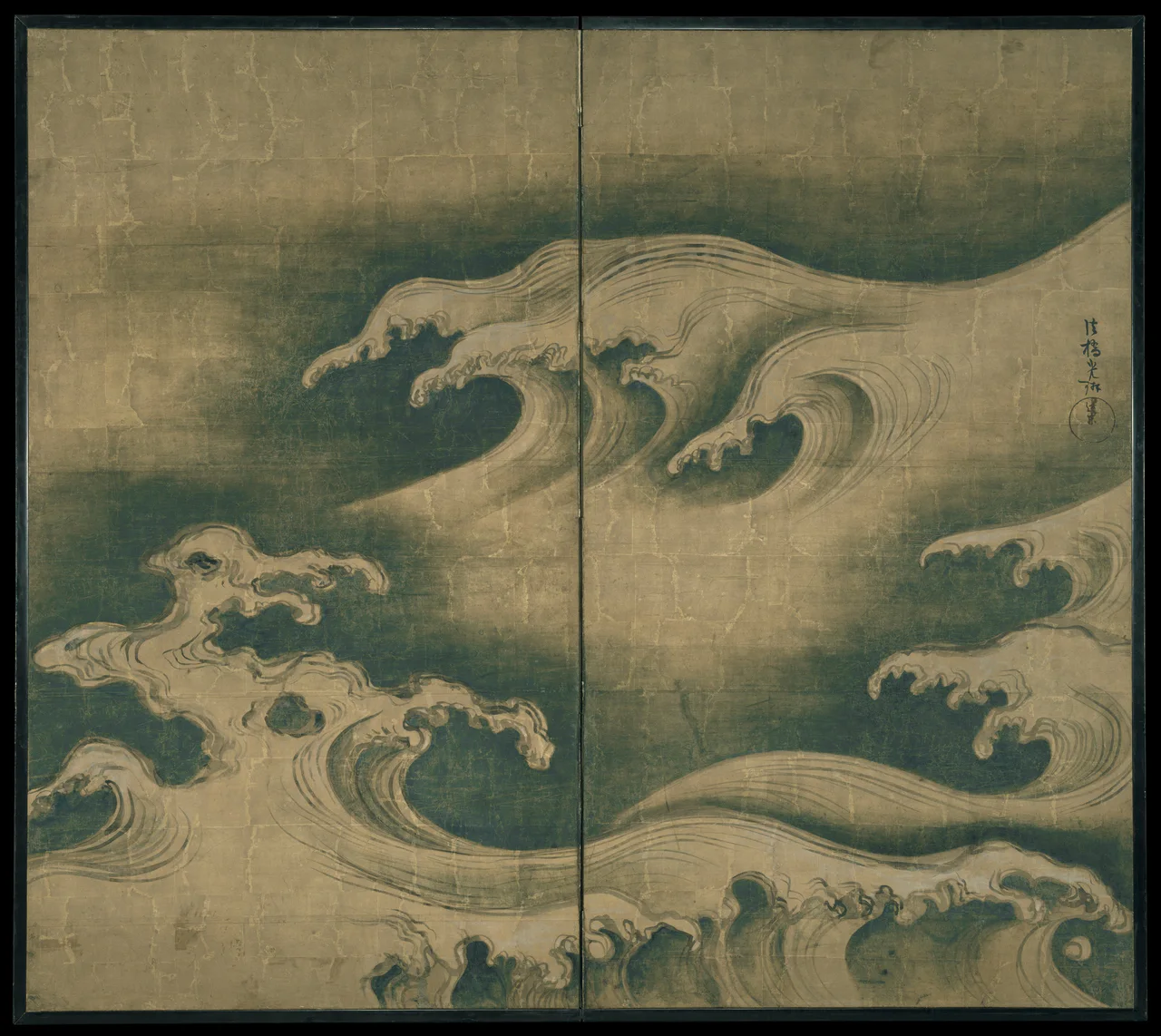
Rough Waves
Ogata Kōrinca. 1704–9Two-panel folding screen; ink, color, and gold leaf on paper146.5 × 165.4 cm
At a glance
- On a gold-leaf ground, deep blue-green waves surge up and fling out white foam like grasping fingers.
- Ogata Kōrin painted this two-panel folding screen in ink, color and gold leaf on paper around 1704 to 1709.
- There is no boat, no shore, no person. A screen about 5 feet tall is filled with nothing but waves.
Reading the picture
5 places to look closer
Tap a number on the painting to jump to its note, or a close-up to see that spot in the whole picture.
Zoom in on the tip of the wave at upper center. As the crest breaks, the white foam splits into several prongs, and each one curls into a little round tip. They look like fingers reaching to grab something, or the claws of an animal.
Look at the body of the big wave on the right. Several thin lines run side by side along the curve of the rising water. The gold ground shows between the lines, so you can feel the water racing past.
Move to the middle of the left side. Foam bunches up like a cloud and swirls, trapping a round pool of dark water inside it. The edges of the foam are drawn with gray lines laid over each other a few times, giving it weight.
Go to the bottom right corner. In the middle of the dark water floats a single white circle, like a ring. Is it a drop of spray, or a bubble? Among all these huge, rough waves, this small circle catches your eye.
Find the writing and the round seal along the right edge. It reads 法橋光琳, Hokkyō Kōrin. Hokkyō was first a rank given to Buddhist monks, and later it was also granted to well-known painters and craftsmen. Kōrin received the title in 1701.
When it was painted
Around 1704, at about forty-six, Kōrin packed up and left Kyoto for Edo. He was the second son of the family behind Kariganeya, a wealthy Kyoto dealer in kimono fabrics. When his father died in 1687, the family property passed to Kōrin and his younger brother Kenzan. The comfortable life did not last, and Kōrin went to the shogun's city to look for new work.
In Edo his supporters included the Fuyuki family of lumber merchants and the Sakai family of samurai lords. Back in Kyoto, meanwhile, Kenzan was making pottery and on his way to becoming a celebrated ceramic artist.
The Met dates this screen to Kōrin's years in Edo, between 1704 and 1709. One clue is the seal. It carries the name Dōsū, which Kōrin began using in 1704.
Around 1709 Kōrin returned to Kyoto and worked closely with Kenzan again. He died in 1716. Kōrin had studied the work of the earlier painter Tawaraya Sōtatsu, and later generations named the whole tradition Rinpa, taking one character from Kōrin's name. About a century on, the Edo painter Sakai Hōitsu, devoted to Kōrin's art, held a memorial in 1815 to mark the hundredth anniversary of his death. This screen came to the Metropolitan Museum through the Fletcher Fund in 1926.
Now look again at the round seal under the characters 法橋光琳 on the right. The name stamped there is the one Kōrin took up in Edo. Right beside it, the waves still throw their foam fingers out across the gold.
Questions to think about
- Look for itHow many places can you find where the tip of a wave splits into fingers?
- Why?Why do you think Kōrin left out the sky and the land and filled the screen with waves alone?
- What about you?If this wave stood by the door of your room, would it excite you or scare you? How has the way we feel about the sea changed since people looked at this screen 300 years ago?
Same period
Painted around the same time,
somewhere else
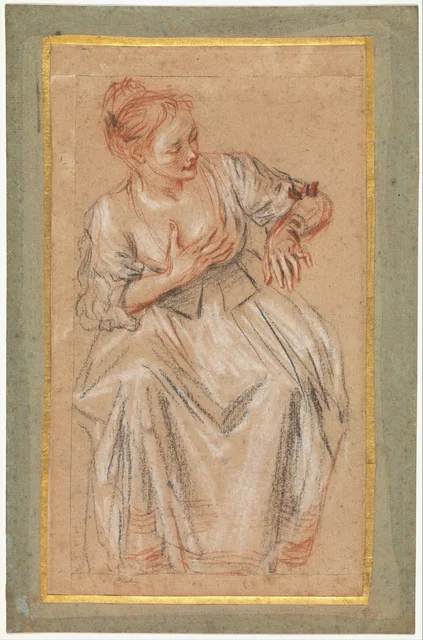 Seated WomanAntoine Watteau1716–17
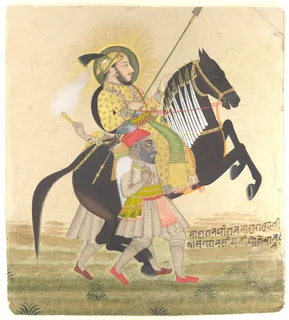 Maharana Sangram Singh Riding a Prize StallionStipple Masterca. 1712
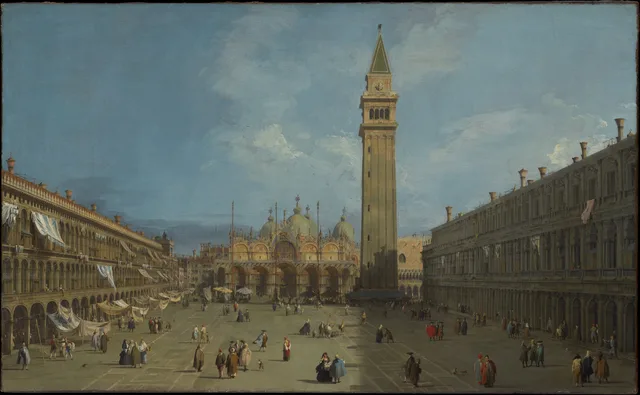 Piazza San MarcoCanalettolate 1720s
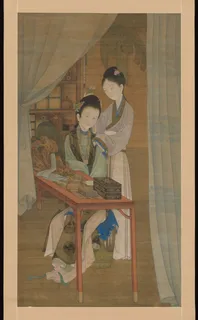 Woman at her dressing tableLeng Meiearly 18th century
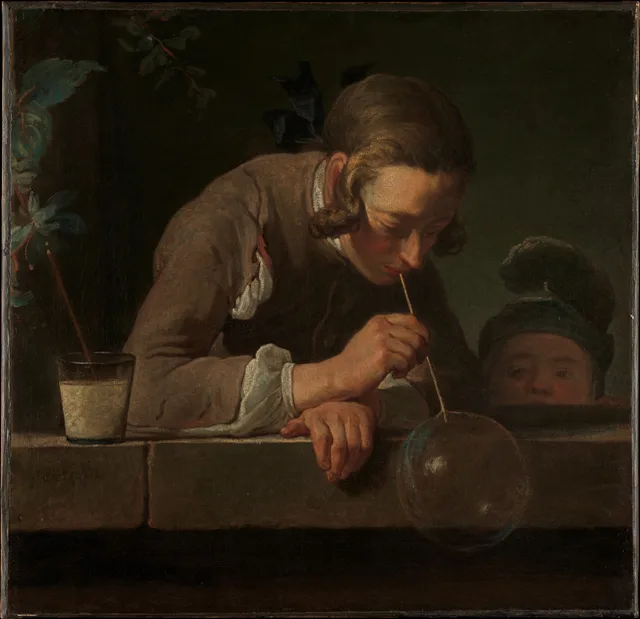 Soap BubblesJean Siméon Chardinca. 1733–34
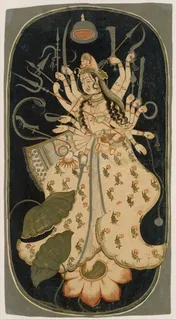 Mahadevi, the Great GoddessUnknown artist · India (Rajasthan, Bikaner)ca. 1725
Too good to keep to yourself
This painting,
for someone who comes to mind
They open it at full size
and see every brushstroke.
About this work
- Artist
- Ogata Kōrin · 1658–1716
- Date
- ca. 1704–9
- Medium
- Two-panel folding screen; ink, color, and gold leaf on paper
- Size
- 146.5 × 165.4 cm
- Culture
- Japan
- Collection
- The Metropolitan Museum of Art
- Image
- Original long edge 3811px · shown at 2560px
- Original
- View on the museum's website ↗